
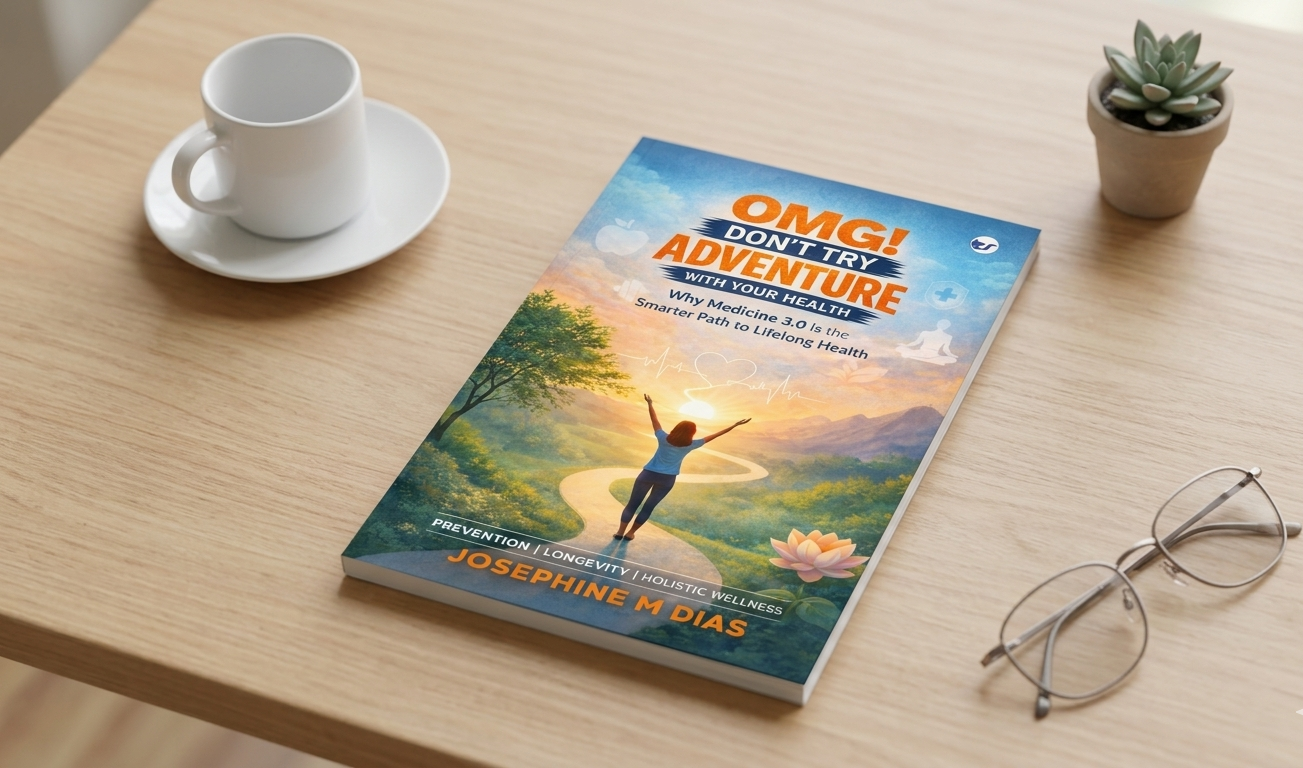
Rating:
⭐⭐⭐⭐ (4.5 out of 5)
I picked up OMG! Don’t Try Adventure With Your Health on a day when I was already feeling a bit… off. Not sick exactly, just that vague tiredness we all ignore. And within the first few pages, there’s this line about how people do nothing when the body whispers, and by the time it screams, it’s often too late.
I paused there. Actually closed the book for a minute.
In my years as Editor-in-Chief at Deified Publication, I’ve read countless health and wellness books. Some are too clinical, some too preachy, some try to scare you into changing your life overnight. This one felt different from the beginning. It didn’t rush me. It didn’t lecture. It almost… sat beside me and said, “look, just pay attention.”
And honestly, that tone stayed with me throughout.
What the Book Is About
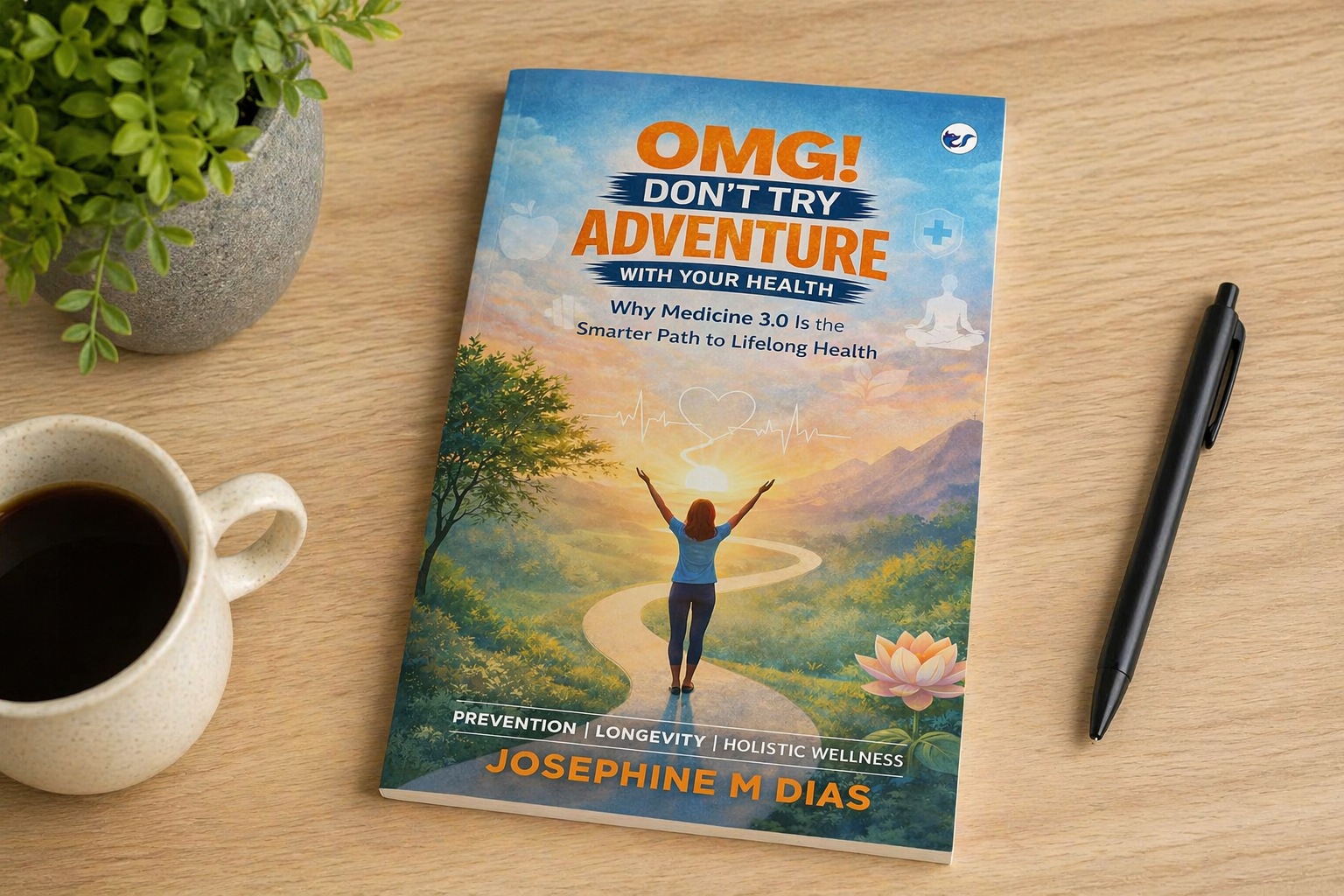
At its core, OMG! Don’t Try Adventure With Your Health by Josephine M Dias is about shifting how we think about health. Not in a dramatic, revolutionary way, but in a very simple, almost obvious way that we somehow keep missing.
The book introduces the idea of Medicine 3.0. If you’ve heard of this concept before, you’ll recognize it. If not, Josephine explains it in a way that feels accessible. Medicine 1.0 reacts to disease when it appears. Medicine 2.0 manages it over time. And Medicine 3.0, which she focuses on, is about prevention, personalization, and early awareness.
There’s a chapter early on titled “Why We Gamble With Our Health Without Realizing It.” And that word gamble… it stays. Because she builds this quiet argument that most of us are not intentionally careless. We just keep experimenting without understanding. One day a new diet, next day a supplement, then a workout trend.
It’s not framed as stupidity. It’s framed as confusion.
The book moves through everyday habits, the role of food, the misunderstanding around supplements, stress, sleep, and even the connection between mind and body. There are reflective sections, simple questions, and small insights that don’t overwhelm you.
And I appreciated that. Because health content can get exhausting very quickly.
What Stood Out to Me
There’s a clarity in Josephine M Dias’s writing that I don’t see often in this genre. She doesn’t try to sound overly scientific, but she doesn’t oversimplify either.
One section that stayed with me was about the illusion of “I feel fine.” She writes about how the body adapts and compensates for years before symptoms show up. I’ve seen this happen in real life. People who seemed perfectly okay, until suddenly they weren’t. And then the shock. “This came out of nowhere.”
But it didn’t.
Another thing I liked was her honesty about supplements. She doesn’t dismiss them, which many books tend to do in a reactionary way. Instead, she places them in context. They support, they don’t replace. That distinction sounds basic, but the way she explains it, you start noticing how often we treat them like shortcuts.
There’s also a strong emphasis on personalization. She keeps coming back to this idea that what works for one body might harm another. Diets, routines, even “healthy habits” can become harmful without context. I think that’s something a lot of readers need to hear, especially in 2026 where everyone is following someone else’s routine online.
The structure of the book also deserves mention. Chapters are short, focused, and often end with reflection prompts. The “Pause & Reflect” sections felt surprisingly effective. Not forced, not cheesy. Just simple questions like how do you feel when you wake up, how is your energy through the day.
And I found myself answering them. That rarely happens.
If I had to point out one small thing that didn’t fully land for me, it’s that at times the repetition of the core message becomes a bit noticeable. The idea of awareness and early action comes up again and again. Which is important, yes, but a few sections felt like they were circling the same thought. Not a major issue, just something I noticed as a reader who pays attention to pacing.
The Emotional Core
This is where the book quietly does its real work.
It’s not just about health systems or habits. It’s about responsibility, but not in a heavy or guilt-inducing way. More like a gentle nudge.
There’s a moment where Josephine talks about losing both her parents to cancer. It’s not over-dramatized. It’s brief, but it shifts the tone of everything that comes after. You understand why this book exists.
And suddenly, the message feels less like advice and more like something personal she’s trying to share before it’s too late for someone else.
I think that’s why the book doesn’t feel aggressive. It doesn’t try to scare you. It keeps saying, you still have time. Just start noticing.
There’s also a strong thread around not overwhelming yourself. One of the chapters talks about doing less, but doing it consistently. Improve sleep slightly. Add gentle movement. Simplify meals.
I liked that. Because most people don’t fail due to lack of knowledge. They fail because everything feels too much.
And this book seems aware of that.
Who This Book Is For
I don’t think this book is for someone looking for a hardcore medical breakdown or detailed scientific protocols. It’s not that kind of book.
This is for someone who feels a bit lost in all the health advice out there. Someone who is trying things, but not sure what actually matters.
If you’re a busy professional, constantly tired but pushing through, this will probably hit close.
If you’re someone who says “I’ll fix my health later,” you might feel a little uncomfortable reading this. In a good way.
If you’re already deep into biohacking or very advanced health strategies, you might find parts of it basic. But even then, the reminders around awareness and simplicity still hold value.
And honestly, I think it’s also for people who have seen illness up close. In family, in friends. Because the emotional undercurrent will resonate differently.
Final Thoughts
I keep thinking about one line from the book. Health is not found in packaging. It is experienced in the body.
It sounds simple. But when you sit with it, it changes how you look at a lot of things.
OMG! Don’t Try Adventure With Your Health doesn’t try to transform you overnight. It doesn’t promise dramatic results. What it does instead is shift your attention. And that might actually be more powerful.
In all the books I’ve read over the years, the ones that stay are not always the most detailed or the most technical. They are the ones that change how you see everyday things.
This is one of those.
Not perfect, not groundbreaking in every sense, but grounded. Honest. And timely, especially in 2026 when health advice feels louder than ever but clarity feels rare.
If you read it slowly, and actually pause where it asks you to, I think it will stay with you longer than you expect.
FAQ
Is OMG! Don’t Try Adventure With Your Health worth reading?
I’d say yes, especially if you feel overwhelmed by conflicting health advice. It brings things back to basics in a calm way.
What is OMG! Don’t Try Adventure With Your Health about?
It focuses on preventive health and introduces the idea of Medicine 3.0, which emphasizes early action, awareness, and personalization.
Who should read OMG! Don’t Try Adventure With Your Health?
Anyone who wants to take better care of their health without getting lost in trends or extremes.
Is this book too technical?
Not at all. It’s written in very simple language, which makes it easy to follow even if you’re new to these ideas.

With over 11 years of experience in the publishing industry, Priya Srivastava has become a trusted guide for hundreds of authors navigating the challenging path from manuscript to marketplace. As Editor-in-Chief of Deified Publications, she combines the precision of a publishing professional with the empathy of a mentor who truly understands the fears, hopes, and dreams of both first-time and seasoned writers.