
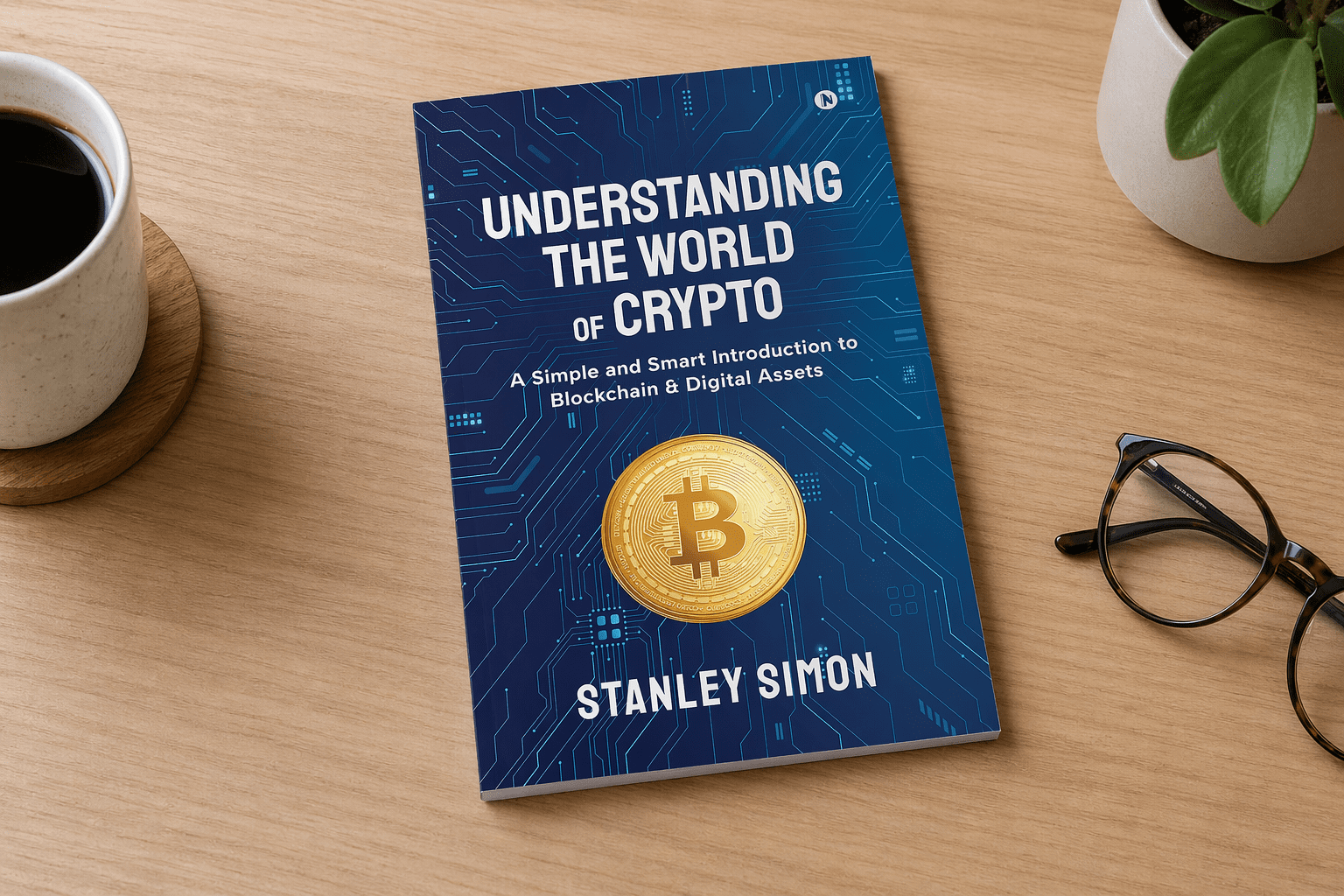
Rating:
⭐⭐⭐⭐ (4.4 out of 5)
I picked up Understanding the World of Crypto by Stanley Simon with a bit of hesitation. Not because I’m new to the space, but because I’ve read enough “simple guides” to know that simplicity is often promised and rarely delivered. Either the book becomes too technical too fast, or it stays so surface-level that you walk away with more buzzwords than clarity.
This one surprised me in a quieter way.
Not in a flashy, “wow I’ve never seen this before” sense. But in that steady, reassuring way where you feel like someone is actually trying to explain something to you, not impress you. And honestly, in 2026, when crypto conversations are either extreme hype or extreme fear, that tone felt… refreshing.
As Editor-in-Chief at Deified Publication, I read a lot of nonfiction like this. Some of it is sharp but cold. Some is passionate but messy. This book sits somewhere in between, and I think that’s why it works.
What the Book Is About – More Than Just Definitions
At its core, Understanding the World of Crypto is exactly what the subtitle says: a simple and smart introduction to blockchain and digital assets. But that description doesn’t fully capture its intent.
This isn’t just a “what is Bitcoin” type of book.
It starts from the basics. There’s a clean explanation of what blockchain actually is, using that notebook analogy where each page is a block connected to the previous one. I’ve seen that metaphor before, but here it’s explained without overcomplicating it. You get transparency, immutability, and consensus without feeling like you’re reading a technical manual.
Then it expands.
You move into how blockchain works step by step. Sending money, verification, blocks forming, the chain growing. It’s structured in a way that builds confidence slowly. Not overwhelming you all at once.
From there, the book opens up into bigger ideas:
- Why blockchain matters beyond crypto
- How it removes intermediaries
- Real-world use cases in banking, healthcare, supply chains
- Tokenization and smart contracts
- Evaluating crypto projects
- Risks, scams, and security
- And finally, a broader vision of where this is all heading
There’s also a strong thread running through the book that keeps coming back to one idea: this is not just about technology, it’s about power. Who holds it. Who gets access to it. And who has been left out until now.
That part stayed with me more than I expected.
What Stood Out to Me – The Way It Explains Without Talking Down
There’s a particular section early on where the author explains trust. Not as a feeling, but as something built into code. That line stuck.
“Trust is not placed in people, it’s built into code.”
I paused there. Because that’s really the shift, isn’t it? And the book keeps coming back to these small, almost conversational insights that make you stop and think.
Another part I liked was how tokenization was explained. The idea of breaking an apartment into 100 digital tokens so multiple people can own a piece of it. It’s simple, but it clicks immediately. You don’t need a finance background to understand why that matters.
The smart contracts section was also handled well. The freelancer example, where payment is automatically released once the job is done. It’s relatable. You can picture it happening.
And then there are the real-world examples:
- A Kenyan artist getting paid instantly through blockchain
- Farmers raising funds through tokenized crops
- Supply chains where you can trace products from origin to shelf
These aren’t overdone. They’re not exaggerated. They’re just… placed there quietly, like proof that this isn’t all theoretical.
I also appreciated the chapter on evaluating crypto projects. It asks simple but important questions:
- What problem is being solved
- Is blockchain even necessary here
- Is the problem real or just hype
That’s the kind of thinking more people need right now.
The Emotional Core – This Is Where It Gets Interesting
I didn’t expect to feel anything while reading this. It’s a crypto book, after all.
But there’s a subtle emotional layer running underneath everything.
Especially in the parts about decentralization and inclusion.
When the book talks about 1.4 billion people without access to banking, and then connects that to blockchain through mobile phones, it shifts something. Suddenly this isn’t just about investment or technology. It’s about access.
There’s also a section imagining a refugee carrying their identity and assets in a blockchain wallet. That stayed with me. Because it turns an abstract concept into something human.
And then towards the end, the tone becomes more reflective. Almost philosophical.
Lines about blockchain not being built for profit alone, but for principle. About lifting the forgotten. About creating systems that serve people, not control them.
Now, I’ll be honest. At times, this leans slightly toward idealism. You can feel the author’s belief in this space. And while that passion is genuine, not every reader will fully buy into it.
But I didn’t mind it.
Because it didn’t feel like blind hype. It felt like hope. And there’s a difference.
Who This Book Is For – And Who It Might Not Work For
If you’re completely new to crypto, this book will help you.
Not just in understanding terms, but in building a mental model of how things connect. That’s where it’s strongest.
If you’re someone who has heard about Bitcoin, NFTs, Web3, but never really understood how it all fits together, this is a good place to start.
If you’re an early investor trying to evaluate projects more clearly, there’s value here too, especially in the later chapters.
And interestingly, I think this book is also for people who are skeptical. Not dismissive, but curious. Because it doesn’t force belief. It explains, then lets you decide.
Now, who might not enjoy it?
If you’re deeply technical, this might feel too basic at times.
If you’re looking for advanced trading strategies or deep tokenomics breakdowns, you won’t find that here.
And if you’re someone who prefers a purely analytical tone, the philosophical parts might feel a bit much.
Final Thoughts – A Book That Wants You to Understand, Not Just Follow
I think what stayed with me most about Understanding the World of Crypto is its intention.
It doesn’t want to overwhelm you.
It doesn’t want to sell you something.
It wants you to understand.
And that’s rarer than it should be.
There are small imperfections. Some sections could go a bit deeper. A few ideas repeat in slightly different ways. And yes, the hopeful tone might not land for everyone.
But overall, it does something important. It makes a complex world feel accessible without making it feel trivial.
And maybe that’s enough.
Actually, maybe that’s exactly what people need right now.
FAQ Section
Is Understanding the World of Crypto worth reading?
Yes, especially if you’re new or slightly confused about crypto. It explains things clearly without making you feel lost.
Who should read this book?
Beginners, curious readers, and early investors who want a strong foundation without heavy technical language.
Is this book too basic for experienced readers?
If you already understand blockchain deeply, some parts might feel introductory. But the perspective and examples still add value.
Does the book talk about risks and scams?
Yes, there’s a full chapter on risks, scams, and how to spot red flags, which feels very relevant right now.

With over 11 years of experience in the publishing industry, Priya Srivastava has become a trusted guide for hundreds of authors navigating the challenging path from manuscript to marketplace. As Editor-in-Chief of Deified Publications, she combines the precision of a publishing professional with the empathy of a mentor who truly understands the fears, hopes, and dreams of both first-time and seasoned writers.