
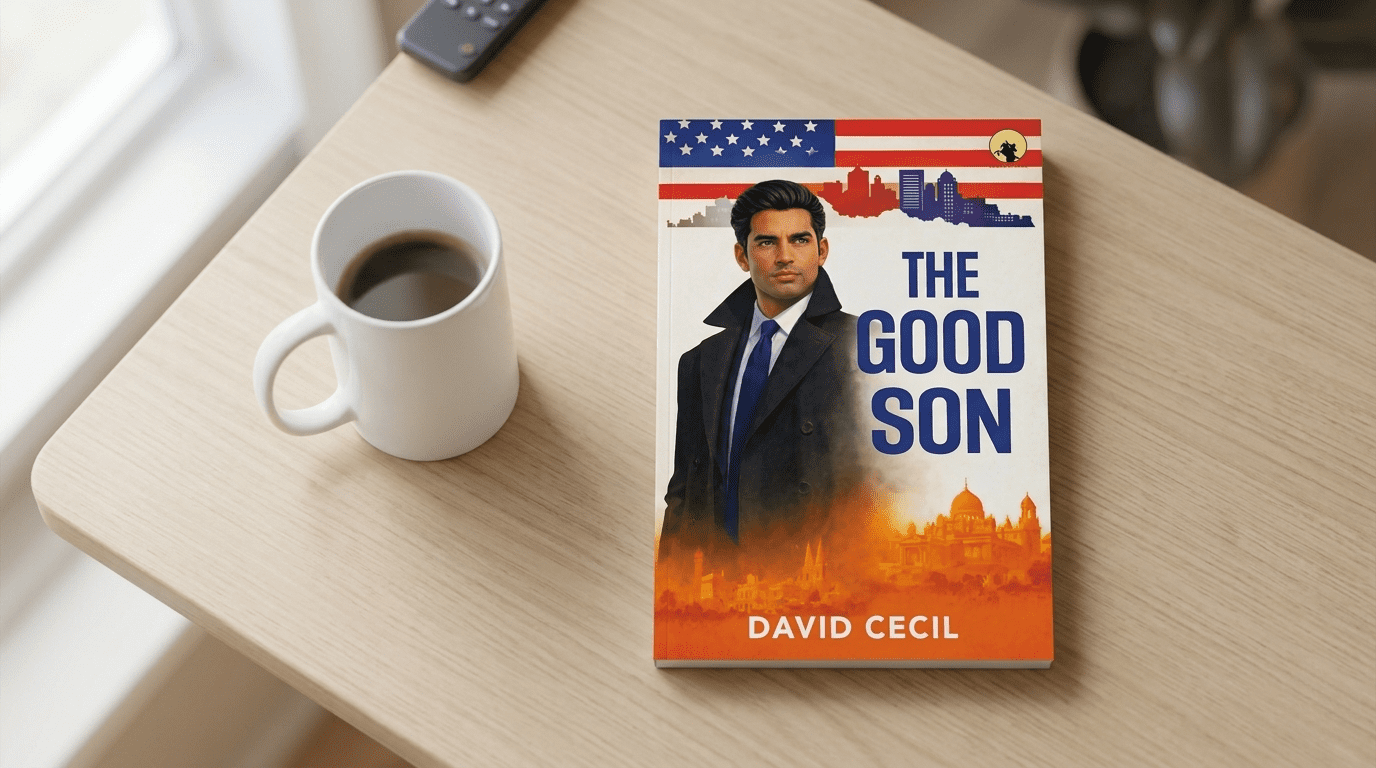
Rating:
⭐⭐⭐⭐ (4.4 out of 5)
There are some books you don’t “finish” in the usual sense. You close them, yes, but a part of your mind keeps circling back to certain scenes, certain people. The Good Son by David Cecil felt like that for me. I found myself thinking about Alpana sitting with her tea, about Niladri trying to understand a world that seems just a little too complex for his age, about Ashish drifting in a way that feels both frustrating and painfully human.
In my years at Deified Publication, I’ve read a lot of family dramas. Some are loud, full of conflict and dramatic confrontations. Others are softer, built on moments that look ordinary but carry a lot underneath. This one sits somewhere in between. It doesn’t shout, but it doesn’t hide either. It just lets things unfold, almost the way life does.
And honestly, that made it feel very real.
What the Book Is About
At its heart, The Good Son is about a family that begins to slowly come apart, not because of one big incident, but because of many small shifts.
Ashish and Alpana, once together, begin to drift. There isn’t a clear villain here, which I appreciated. Sometimes relationships don’t break because someone did something terrible. Sometimes they just… loosen. Ashish moves into a kind of restlessness, trying to find something new, something different. Alpana, on the other hand, is left to rebuild her life while raising their son Niladri.
Niladri grows up in the middle of this emotional space. He carries both presence and absence. And when he moves to America, the story widens. It’s no longer just about family in Calcutta, but also about identity, distance, and the kind of loneliness that doesn’t always have a name.
From the pages I went through, especially sections like “A Child Arrives,” “A Mother Cries,” and “A Grandmother Dies,” you can feel how the narrative moves across generations. The Sen family is not just one story. It’s many stories layered together. A grandmother’s rituals, a mother’s quiet resilience, a son’s confusion, a father’s distance.
What I liked is that the book doesn’t rush to tie everything neatly. It allows contradictions to exist.
What Stood Out to Me
One thing that struck me early on was the writing style. It has a certain old world rhythm. Not outdated, but reflective. There are passages where you can feel the author taking time with a moment. Like describing Alpana’s tea ritual or the way a room holds memory. It reminded me of the kind of storytelling where details matter, not for decoration, but for emotion.
There’s a scene around mourning rituals that stayed with me. The way Ashish chooses not to follow expected traditions after his mother’s death. That choice says so much about him without the author needing to explain it directly. As an editor, I always notice when writers trust the reader. David Cecil does that often.
Then there’s Niladri. I found him interesting because he isn’t written as a dramatic, rebellious character. His struggles feel internal. He observes more than he reacts. There’s something about his journey, especially when he moves away, that feels very familiar if you’ve ever left home and tried to build a life somewhere else.
And Alpana… I think she might be the emotional anchor of the book. There’s a scene where she reflects on loneliness versus being alone. That distinction is simple, but it hit hard. I’ve seen this in real life too. People who are surrounded by routines, responsibilities, even people, and yet there’s a gap somewhere inside.
The generational layering is another strong point. The grandmother’s presence, even after her passing, continues through habits, objects, memories. It’s subtle but effective.
If I had to point out one thing that didn’t fully work for me, it would be the pacing in some sections. There are stretches where the narrative lingers a bit too long on internal reflection. I understand why, but as a reader, I did feel the urge to move forward a little faster at times.
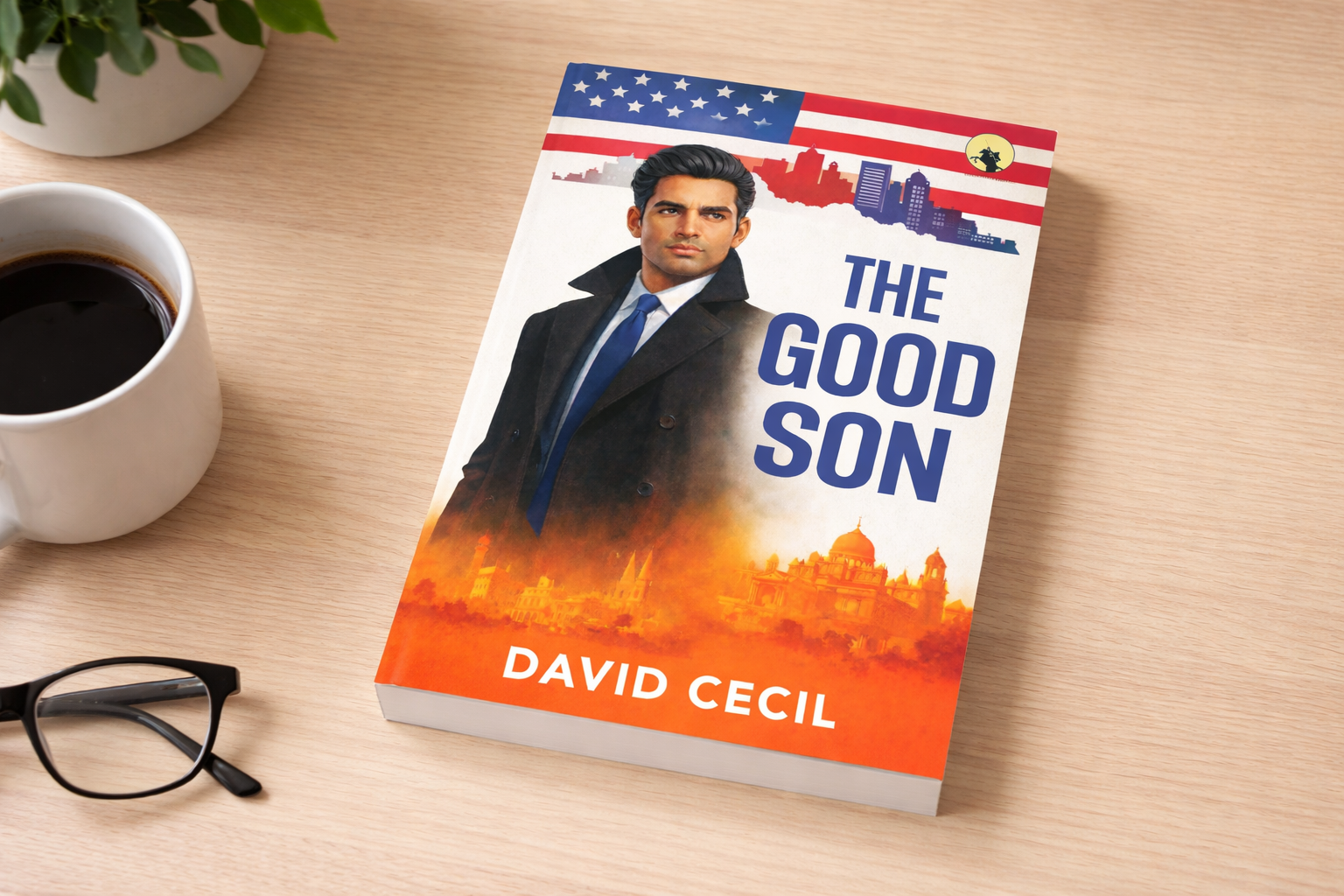
The Emotional Core
This is where The Good Son really comes alive.
It’s not about big emotional outbursts. It’s about the kind of feelings that sit in your chest quietly and don’t always come out in words. A mother adjusting to a new life. A father trying to escape something he can’t name. A son carrying questions he doesn’t know how to ask.
There’s this underlying idea of what it means to be “good.” A good son. A good mother. A good husband. And how these roles can sometimes feel like expectations rather than truths.
I kept thinking about how Niladri sees the adults around him. Not as perfect figures, but as people figuring things out. That shift, from seeing your parents as certain to seeing them as human, is something many of us experience. And the book captures that without making it overly dramatic.
There are also moments of tenderness. Small ones. A shared memory. A routine. A line of poetry. These moments balance the heaviness.
I won’t say this book made me emotional in an obvious way. But there were times I had to stop and just sit with a paragraph. Especially the parts dealing with loss. The way death is written here is not shocking or loud. It’s almost matter of fact, and somehow that makes it more affecting.
Who This Book Is For
I think this book will connect most with readers who enjoy character driven stories.
If you like fast plots with twists and constant action, this might feel a bit slow. But if you’re someone who pays attention to relationships, to small emotional shifts, to how families evolve over time, then this book has a lot to offer.
It’s also a good pick for readers who have experienced distance in some form. Physical distance, like moving to another country. Or emotional distance within a family.
And honestly, if you’ve ever sat alone with a cup of tea and found yourself thinking about your past, your parents, your choices, you might see parts of yourself in this story.
Final Thoughts
The Good Son Book Review is not about judging the characters. It’s about understanding them. And that’s what I appreciated the most.
David Cecil doesn’t try to simplify people. He lets them be inconsistent, confused, sometimes even frustrating. But always human.
As someone who has spent years reading and reviewing books, I can say this with some confidence. This novel doesn’t rely on tricks. It relies on observation. On patience. On letting the reader come closer slowly.
It’s not perfect. Some sections could have been tighter. Some emotional threads could have been explored a little more deeply. But overall, it feels sincere. And that matters.
I think this is the kind of book that different readers will connect with in different ways. For some, it will be Alpana’s story. For others, Niladri’s journey. And maybe for a few, even Ashish’s restlessness.
And maybe that’s the point.
FAQ
Is The Good Son worth reading?
I think yes, especially if you enjoy family stories that focus more on emotions than plot. It asks you to slow down a bit, but it gives you something meaningful in return.
What is The Good Son about?
It follows a family across generations, focusing on a drifting marriage, a mother raising her son, and the son’s journey into adulthood across two countries.
Who should read The Good Son?
Readers who like reflective, character driven fiction and stories about relationships, identity, and family dynamics.
Is The Good Son a fast paced book?
Not really. It moves at a steady pace and spends time on internal thoughts and relationships.

With over 11 years of experience in the publishing industry, Priya Srivastava has become a trusted guide for hundreds of authors navigating the challenging path from manuscript to marketplace. As Editor-in-Chief of Deified Publications, she combines the precision of a publishing professional with the empathy of a mentor who truly understands the fears, hopes, and dreams of both first-time and seasoned writers.