
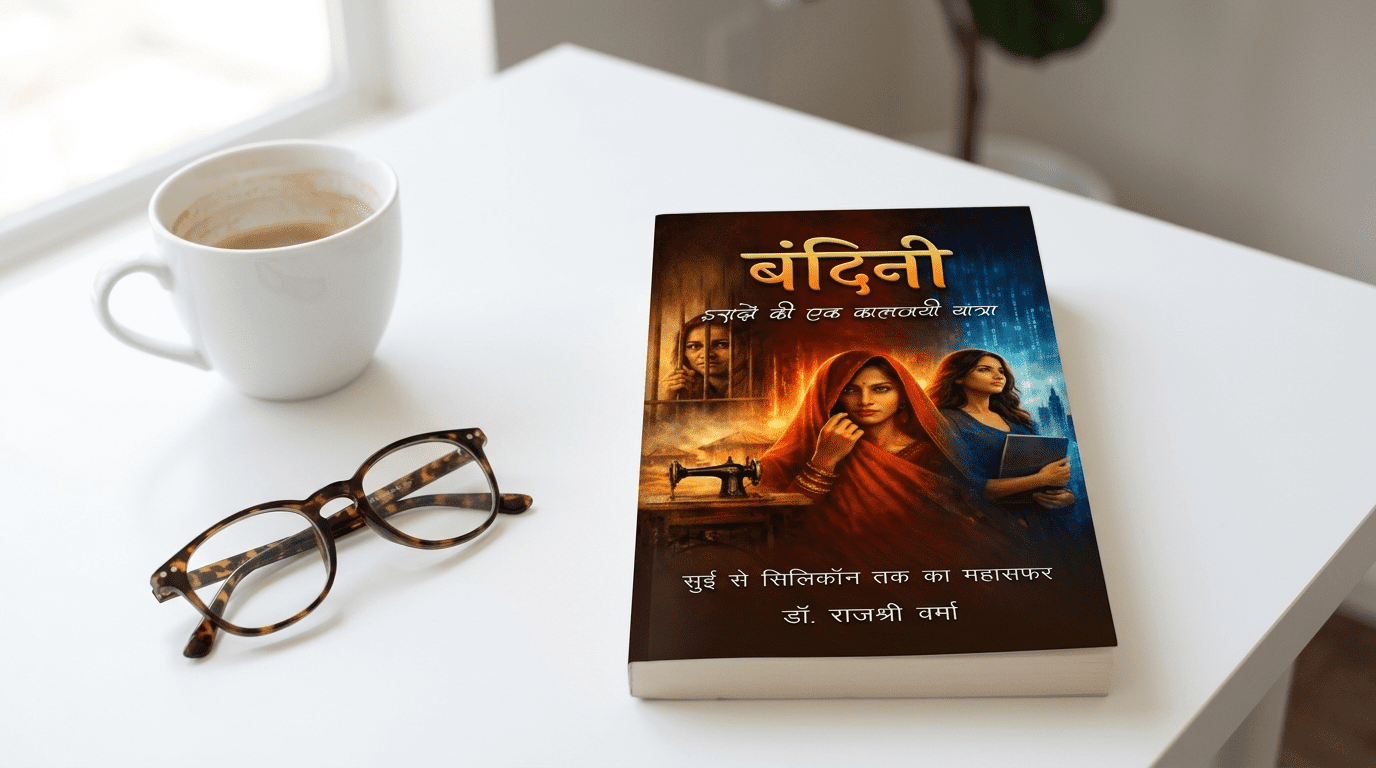
Rating:
⭐⭐⭐⭐ (4.2 out of 5)
I picked up Bandini with a certain expectation. The title itself carries weight. It hints at confinement, at struggle, at something deeply human. But what I did not expect was how familiar parts of this story would feel. Not because I have lived Sarla’s life or Vidya’s or Aradhana’s, but because I have seen versions of them around me. In homes, in conversations, in silences that nobody talks about openly.
As someone who has spent years reading manuscripts at Deified Publication, I have come across many stories about women’s struggles. Some feel distant, some feel overly dramatic. But here, there is something grounded. Something that feels like it could have happened just a few lanes away from where you live.
And honestly, that is what pulled me in.
What the Book Is About
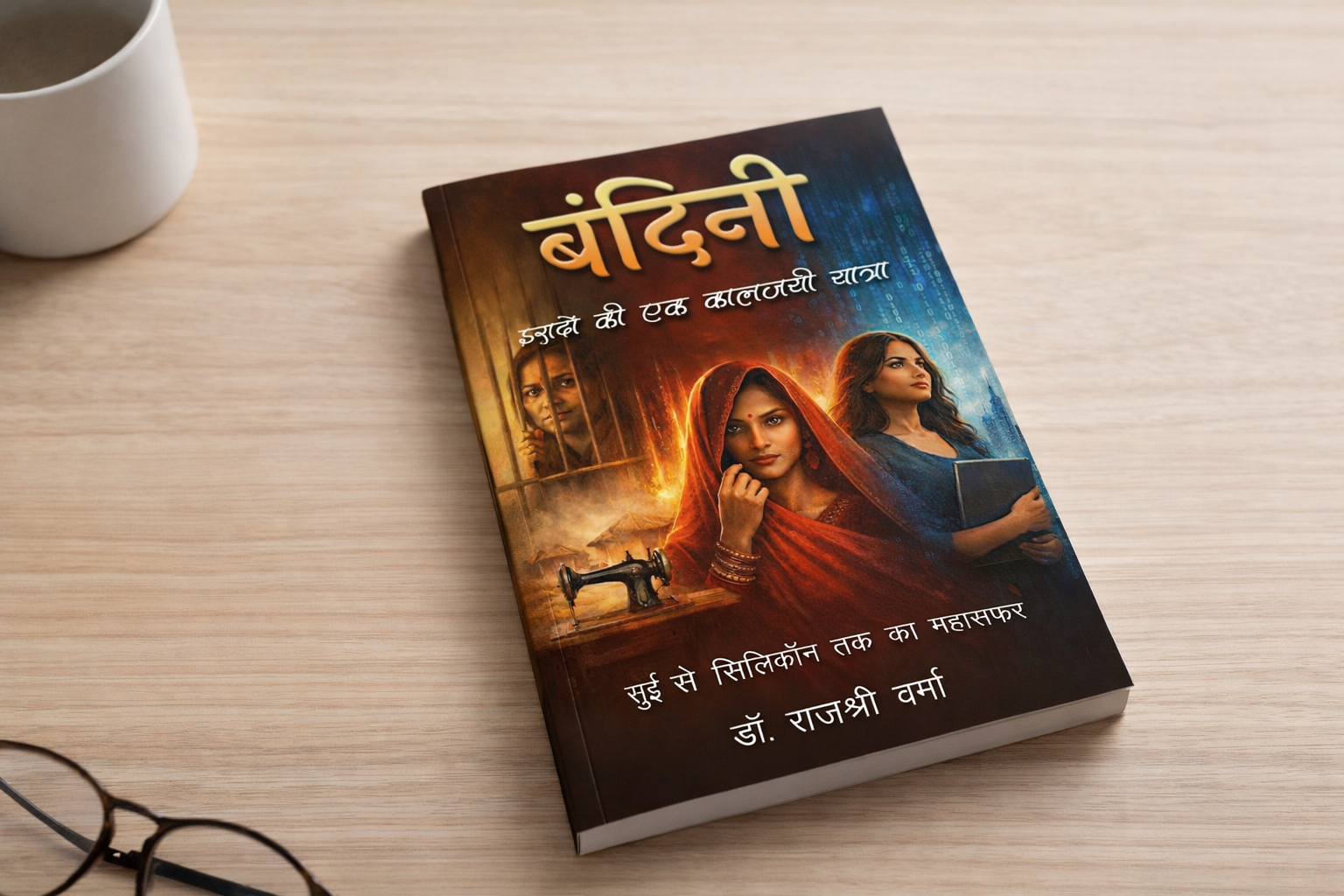
Bandini: Iraadon Kee Ek Kalajayee Yatra by Dr. Rajshree Verma is not just one woman’s story. It stretches across three generations. Sarla, Vidya, and Aradhana. Each of them standing at a different point in time, yet somehow carrying the same invisible weight.
The story begins in a setting that feels very real. Small-town India. Narrow lanes. Social expectations that are not written anywhere, yet followed strictly. Sarla’s life, especially in the early chapters, reflects that suffocating structure. There is a scene where she is negotiating something as basic as survival, asking for a place to stay, being judged for simply existing without a man. That moment stayed with me longer than I expected.
Then there is the marriage. The shift from one form of control to another. Her interactions with Rakesh feel uncomfortable at times, and I think that discomfort is intentional. The casual dismissal of her thoughts, the way domestic expectations are imposed without question. It reminded me of conversations I have overheard growing up, where a woman’s needs were always secondary, almost invisible.
As the story moves forward, we see Sarla slowly becoming aware. Not in a dramatic, sudden way, but in small realizations. There is a diary entry where she questions her own existence within the boundaries set for her. That felt very real. Change rarely comes in grand speeches. It comes in quiet questions we ask ourselves.
Vidya’s arc takes this further. There is a noticeable shift in tone when her story unfolds. Education, technology, and a sense of rebellion begin to enter the narrative. The mention of Vidya OS, digital identity, and ideas around systemic control adds a layer that I was not expecting when I started the book. It almost feels like the story is expanding from personal struggle to structural change.
And then Aradhana. Her journey feels like the culmination of everything that came before. There is a strong presence of technology, activism, and global awareness. The references to digital systems, public movements, and even legal battles suggest that the story is no longer confined to a home or a town. It has moved into a much larger space.
What Stood Out to Me
What I kept noticing throughout Bandini is how the author balances emotional storytelling with broader ideas.
The writing itself is straightforward. It does not try to impress you with complicated language. Instead, it lets the situations speak. And sometimes, that simplicity hits harder.
There is a scene in Sarla’s early married life where she is told to adjust, to fit in, to follow rules that were never explained to her. It is not written as a dramatic confrontation. It is almost casual. And that is exactly why it works. Because in real life, these things are rarely presented as cruelty. They are presented as normal.
Another moment that stayed with me is when Sarla questions why her identity is tied to someone else. That internal conflict is handled with care. It does not feel preachy. It feels like a genuine thought process.
With Vidya, what stood out was the introduction of systems. Not just emotional or social systems, but technological ones. The idea that control can exist not only within families but also within digital structures is interesting. There is a line about digital profiles and centralized systems that made me pause and think about how much of our lives are now recorded, tracked, and sometimes controlled without us realizing it.
Aradhana’s part brings in scale. Movements, global conversations, and the idea of using technology as a tool for liberation rather than control. I liked how the narrative shifts from individual resistance to collective action.
From a craft perspective, I think the transitions between generations are handled thoughtfully. Each voice feels slightly different. Sarla’s sections feel rooted and heavy. Vidya’s feel questioning and restless. Aradhana’s feel expansive.
That said, I did feel that in some places, especially when the story moves into the technological and global space, the pace becomes a bit uneven. There is a lot of information being introduced, and at times, I wanted the emotional thread to be held a little tighter.
The Emotional Core
At its heart, Bandini is about identity.
About what it means to exist in a space that constantly defines you before you can define yourself.
There is a recurring feeling in the book that I found hard to shake off. A sense that these women are always negotiating their right to exist as individuals. Whether it is Sarla trying to find dignity within marriage, or Vidya trying to navigate systems that are larger than her, or Aradhana stepping into a global arena, the struggle remains connected.
I think what moved me most was not any single dramatic moment, but the accumulation of small ones.
A question asked in a diary.
A conversation that goes nowhere.
A realization that something is not right, even if you cannot fully explain why.
I have seen women around me go through similar phases. Not always as intense, not always as visible, but present nonetheless. And maybe that is why parts of this book felt personal.
Who This Book Is For
If you are someone who enjoys stories rooted in social realities, this book will likely resonate with you.
If you have an interest in narratives about women’s lives in India, especially across generations, you might find a lot here to connect with.
At the same time, this book may not be for everyone. If you are looking for a fast-moving plot or a very tightly structured narrative, you might feel that the pacing varies in places.
But if you are open to a story that blends personal experiences with larger ideas, including technology and societal systems, then Bandini offers something different.
Final Thoughts
In my years at Deified Publication, I have often felt that the most meaningful stories are not the ones that try to impress you immediately, but the ones that slowly unfold.
Bandini is that kind of book.
It is not perfect. There are moments where the narrative could have been tighter, where transitions could have been smoother. But there is sincerity here. And that matters.
What stayed with me is not just the storyline, but the feeling that these characters are part of a larger conversation. One that is still ongoing.
And maybe that is the point.
FAQ
Is Bandini worth reading?
I think it is, especially if you are interested in stories about women’s experiences across generations. It offers both emotional and conceptual layers.
What is Bandini about?
It follows three generations of women, Sarla, Vidya, and Aradhana, tracing their struggles and evolution from domestic spaces to global systems.
Who should read Bandini?
Readers who enjoy socially rooted fiction with elements of technology and systemic critique will likely appreciate it.
Is Bandini a fast-paced novel?
Not really. It moves at its own rhythm. Some parts feel slower, especially where the story becomes more reflective.

With over 11 years of experience in the publishing industry, Priya Srivastava has become a trusted guide for hundreds of authors navigating the challenging path from manuscript to marketplace. As Editor-in-Chief of Deified Publications, she combines the precision of a publishing professional with the empathy of a mentor who truly understands the fears, hopes, and dreams of both first-time and seasoned writers.