
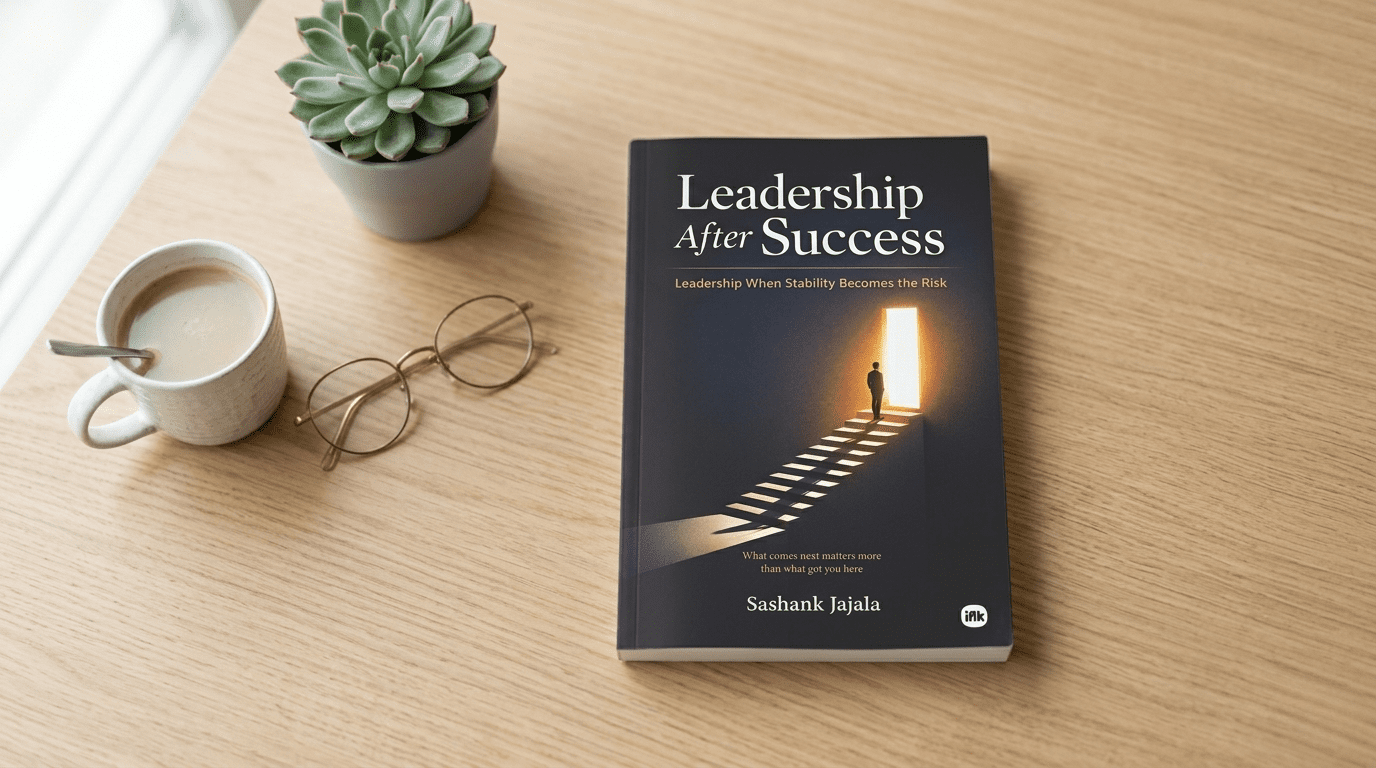
Rating:
⭐⭐⭐⭐ (4.4 out of 5)
I’ve read a lot of leadership books over the years. Some talk about ambition, some about failure, some about building something from scratch. But very few sit in that uncomfortable middle space where… things are actually going well.
And that’s exactly where Leadership After Success by Shashank Jajala begins.
I remember thinking, while flipping through the first few pages, this is not a book about becoming successful. It’s about what happens after you already are. And honestly, that’s a much harder conversation.
Because success is celebrated. Staying successful is rarely questioned.
And yet, this book keeps asking a slightly unsettling question: what if the very systems that made you successful are now the reason you’ll become irrelevant?
That idea stayed with me more than I expected.
What the Book Is About
At its core, Leadership After Success is about a phase most leaders don’t openly talk about.
Not the beginning, where everything feels new and uncertain. Not the collapse, where change becomes unavoidable.
But that in-between space where everything seems fine. Stable. Predictable. Almost too predictable.
Shashank Jajala builds this idea through what he calls “baselines” which are essentially the systems, habits, processes, and ways of thinking that organizations rely on. These baselines create order. They help scale. They make things work.
But over time, they harden.
There’s a section where he explains how baselines move from success to trust to protection and eventually identity. That progression felt very real to me. I’ve seen teams defend old processes not because they still work, but because those processes became part of how they see themselves.
The book walks through this entire lifecycle. From the early wins to normalization, then complacency, and finally decay. There’s even a simple five stage breakdown of success evolving into stagnation that makes you pause and think about where you might be right now.
Later chapters shift the focus from diagnosing the problem to actually responding to it.
Ideas like moving from control to context, building self challenging systems, designing for subtraction rather than addition, and treating stability as temporary instead of permanent.
There’s also a strong emphasis on something the author calls elastic leadership. Leadership that adapts, revises, and lets go instead of holding tighter.
And then toward the end, the tone becomes more personal. It talks about letting go, about being outgrown, about the courage it takes to step aside or evolve beyond what once defined you.
It’s not loud. It’s reflective.
What Stood Out to Me
A few things really stayed with me while reading Leadership After Success.
First, the idea that success can slowly turn into a trap without announcing itself.
There’s a chapter describing how this shift doesn’t arrive dramatically. It builds gradually. Your calendar fills up. Your decisions become easier. Your systems become smoother. And somehow, without noticing, you stop questioning things.
That felt uncomfortably accurate.
There’s also this concept of “Baseline Syndrome” where yesterday’s way of working starts controlling tomorrow. The book describes how people begin trusting the pattern more than the context. That line alone explains so many real world organizations.
Another thing I appreciated was how practical some parts were without feeling mechanical.
For example, the suggestion of “Stop Doing” reviews. Not adding more processes, but actively removing things that no longer matter. That’s rare advice. Most leadership books tell you to build more. This one asks you to remove.
There’s also a case example where a company reduces KPIs, simplifies approvals, and replaces heavy processes with guardrails. The result was faster decisions and better engagement. It’s simple, but it works because it’s grounded in reality.
I also liked how the book contrasts old leadership thinking with newer approaches.
Old model focuses on predictability and permanence. New model focuses on adaptability and change as a constant.
It sounds obvious when you read it. But in practice, very few organizations actually operate that way.
And then there’s the writing itself.
It’s clean. Almost minimal. No unnecessary storytelling. Just clear thoughts laid out in a way that makes you think in between paragraphs.
At times, I wished for a little more narrative or real life stories to emotionally anchor the ideas. Some sections feel more like structured notes than flowing conversation. But maybe that’s intentional.
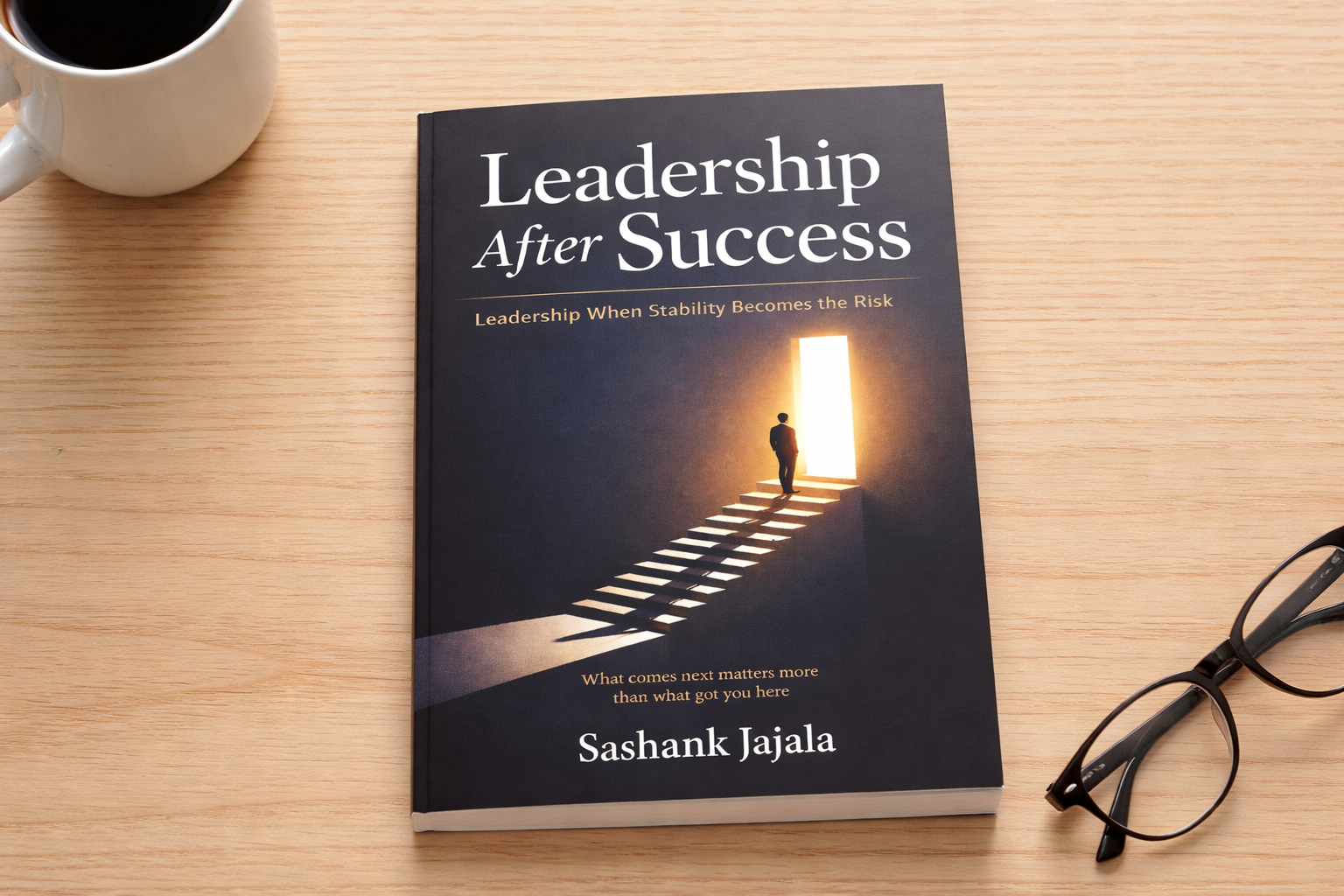
The Emotional Core
What surprised me most about Leadership After Success is that beneath all the frameworks and ideas, it’s actually about letting go.
- Letting go of control.
- Letting go of identity.
- Letting go of what once worked.
There’s a line about how the ultimate leadership achievement is being outgrown. That stayed with me.
Because it flips everything we usually believe.
We often think leadership means building something that lasts forever. This book gently challenges that. It suggests that real leadership might be about building something that knows when to change or even replace itself.
And that’s not easy.
There’s also a subtle emotional tension throughout the book. You can feel the discomfort of realizing that success might be making you less adaptable.
I found myself thinking about people I’ve worked with. Teams that were once innovative but slowly became rigid. Not because they failed, but because they succeeded too well.
That’s the emotional weight of this book.
It doesn’t scare you. It nudges you.
Who This Book Is For
I think Leadership After Success is not for everyone.
If you’re just starting out, you might not fully connect with it yet. This book speaks to a very specific stage.
It’s for people who have already built something.
For leaders managing stable teams.
For organizations that are doing fine… maybe even doing well.
But there’s a slight feeling that something is off.
It’s also for founders who feel their company is becoming too structured. For managers who notice their teams relying too much on old playbooks. For anyone who has ever thought, “we’re doing everything right, so why does this feel stagnant?”
That said, if you prefer highly narrative business books with lots of stories and case studies, this might feel a bit restrained.
But if you like clean thinking and sharp ideas, you’ll appreciate it.
Final Thoughts
As Editor in Chief at Deified Publication, I’ve seen many leadership books come and go. Most of them focus on growth, ambition, scaling.
Very few talk about the risk of stability.
Leadership After Success by Shashank Jajala does something different. It holds a mirror to a stage we don’t often question.
And it does it without drama.
I won’t say every section landed perfectly. A few parts could have been more vivid. A bit more storytelling might have made it even stronger.
But the core idea is strong. And more importantly, it’s relevant in 2026 where industries are shifting faster than ever.
This is the kind of book that doesn’t give you instant answers. It gives you better questions.
And sometimes, that’s more useful.
FAQ
Is Leadership After Success worth reading?
I think yes, especially if you’re already in a leadership role and things feel stable but slightly stagnant. It offers a different perspective.
What is Leadership After Success about?
It focuses on what happens after success. How systems become rigid, and why leaders need to evolve beyond what once worked.
Who should read Leadership After Success?
Leaders, founders, and professionals managing stable teams. Anyone questioning whether their current way of working is still relevant.
Is Leadership After Success a practical book or conceptual?
A mix of both. It has frameworks and actionable ideas, but it leans more toward reflective thinking.

With over 11 years of experience in the publishing industry, Priya Srivastava has become a trusted guide for hundreds of authors navigating the challenging path from manuscript to marketplace. As Editor-in-Chief of Deified Publications, she combines the precision of a publishing professional with the empathy of a mentor who truly understands the fears, hopes, and dreams of both first-time and seasoned writers.