
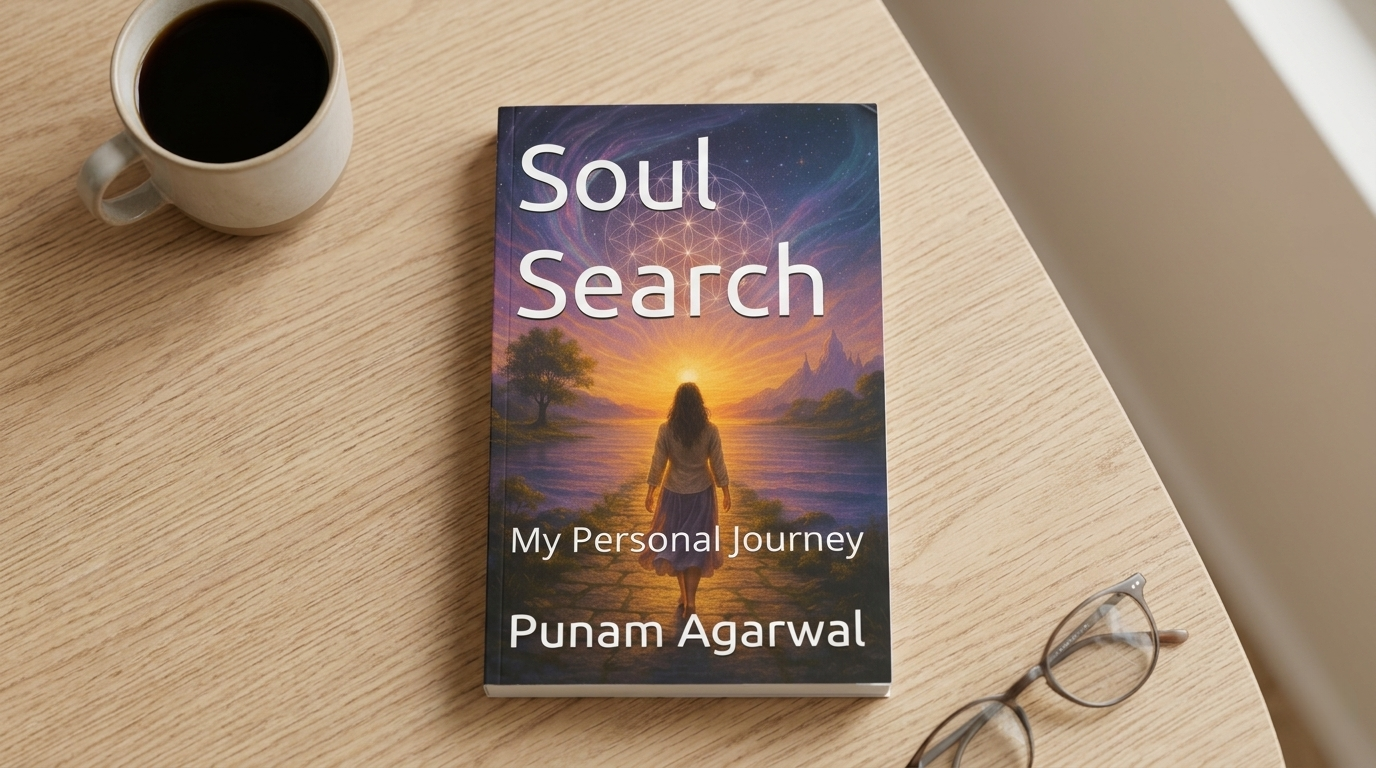
Rating:
⭐⭐⭐⭐ (4.3 out of 5)
A Story That Begins With a Question Most of Us Avoid
Sometimes a book begins with a grand idea.
Sometimes it begins with a confession.
Soul Search: My Personal Journey by Punam Agarwal begins with something much more raw.
A moment of pain.
When I started reading the opening pages, I paused almost immediately. Not because the writing is difficult. Actually the opposite. It is direct and deeply personal.
There is a moment early in the story where the narrator remembers being thirteen and sitting close to death after swallowing something she believed she deserved. The scene unfolds in a hospital room with machines clicking, doctors speaking quietly about survival chances, and her father refusing to give up on her life.
That image stayed with me for a while.
In my years as a reader and editor at Deified Publication, I have come across many spiritual memoirs. Some are philosophical. Some are instructional. Some are almost academic.
But this one begins in a place of vulnerability.
And honestly, that changes the tone of everything that follows.
Because when a spiritual search begins from a moment like that, it usually means the answers matter deeply to the person asking the questions.
What the Book Is About
At its core, Soul Search: My Personal Journey by Punam Agarwal is a memoir about awakening. But it is not a sudden enlightenment story. It is slow, layered, and sometimes confusing.
The book begins with a near death experience that becomes the catalyst for everything that follows.
There is a moment where the narrator describes floating outside her body and hearing a voice ask a simple question.
Do you want to live or do you want to die.
The narrator chooses life.
That moment becomes the starting point of the entire search.
And what follows across hundreds of pages is an attempt to understand that experience and everything it awakened inside her.
The chapters reveal the stages of that search. From early childhood reflections about identity to spiritual guidance from her father, who becomes her first teacher without formally calling himself one.
One line in the book really struck me. The narrator writes that long before she understood the meaning of the word guru, she was living with one.
Her father.
He did not preach or impose beliefs. Instead he encouraged curiosity. He simply said, “Find out for yourself.”
That philosophy shapes much of the book.
Later chapters describe encounters with various spiritual traditions and practices. The contents page alone gives a sense of how expansive the exploration becomes. There are sections about pranic healing, karma, the search for identity, and eventually deeper philosophical ideas like the nature of consciousness and the Self.
What I found interesting is that the story does not move in a straight line.
It moves the way real spiritual searching does.
Through confusion. Through experiments. Through moments of insight followed by more questions.
What Stood Out To Me
Several things stood out while reading the Soul Search.
First, the writing carries an unusual mix of memoir and philosophical reflection.
Many spiritual books focus entirely on ideas. Others focus entirely on storytelling. This book seems to sit somewhere in the middle.
For example, the author writes about discovering intuitive sensitivity at a young age. She describes noticing energies in rooms, sensing the emotional states behind people’s smiles, and feeling sudden shifts in the atmosphere when something unseen approached.
Those passages feel almost mystical.
But what I appreciated is that the author does not present them as grand supernatural claims. Instead she often expresses uncertainty about them.
She wonders whether she is imagining things. She questions whether she should pursue these abilities or walk away from them.
That honesty makes the narrative more believable.
Another interesting element is the role of her father.
He is not portrayed as a traditional spiritual teacher. He is simply a man living with quiet wisdom. He wakes early, reads scriptures, feeds guests who arrive at the door, and listens patiently to his daughter’s questions.
There is a moment in the book where he gives away his own meal to a guest and pretends he has already eaten.
That scene felt very real to me.
Sometimes the deepest spiritual teachings come through ordinary acts like that.
The book also describes the author experimenting with practices such as Reiki, pranic healing, meditation training, crystal healing, and other disciplines. Instead of presenting them as magical solutions, she treats them as tools that opened new questions about the nature of energy and karma.
I liked that approach.
It feels curious rather than dogmatic.
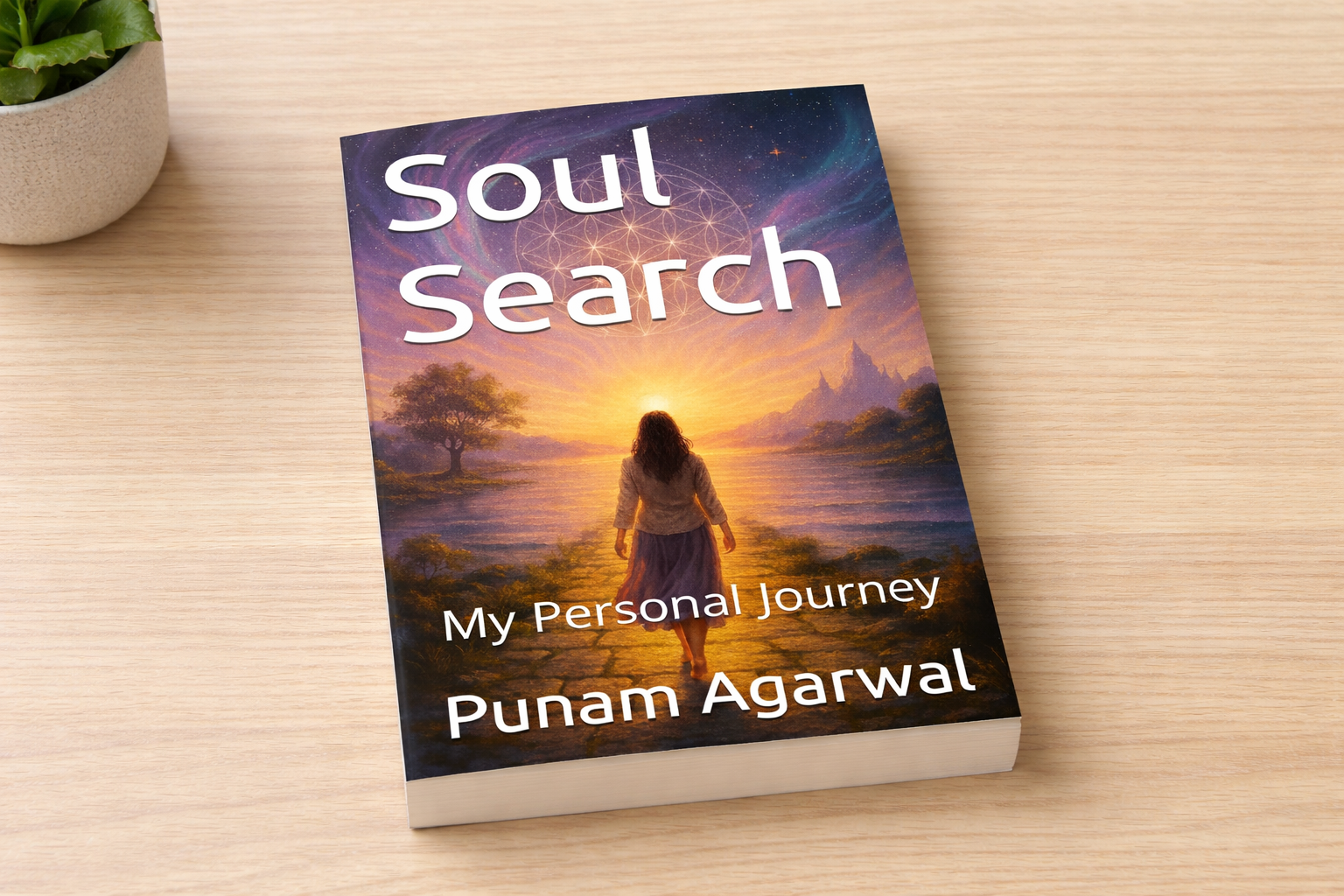
The Emotional Core
The emotional center of Soul Search is not the mystical experiences.
It is the relationship between pain and awakening.
The author repeatedly returns to the idea that suffering often becomes the doorway to deeper understanding.
The near death experience at thirteen plants a question that shapes her entire life.
Who was the “I” that rose above the body.
Who was the “I” that could not die.
Those questions appear again and again.
And honestly they are not easy questions.
But that is what gives the book its depth.
Another emotional thread that runs through the memoir is grief.
The loss of her mother leaves a quiet emptiness in the narrative. The author describes her father carrying that grief silently while continuing to guide his daughter with patience and kindness.
One dream sequence particularly stayed with me.
In the dream, the narrator sees her father climbing a steep mountain despite being physically handicapped. He turns back and smiles, encouraging her to follow.
I kept thinking about that image after reading it.
Sometimes spiritual guidance looks exactly like that.
Someone walking ahead on a difficult path and simply saying, come along.
Who This Book Is For
I think Soul Search: My Personal Journey will resonate most strongly with readers who are already curious about spirituality.
Especially readers who are exploring questions about consciousness, karma, or the nature of the Self.
The book references several traditions including Vedantic philosophy, healing practices like pranic healing, and broader ideas about intuition and energy.
So readers who enjoy spiritual memoirs may find this particularly engaging.
However, this is not a lightweight book.
It is a very large work, apparently stretching close to eight hundred pages. That means the journey unfolds slowly. Some readers may wish the narrative moved faster in places.
But honestly, spiritual searching rarely happens quickly.
For readers willing to sit with big questions, the length may actually become part of the experience.
Final Thoughts
After reading the Soul Search: My Personal Journey, I came away with the sense that this book is less about giving answers and more about documenting a lifetime of asking.
Punam Agarwal writes about mystical experiences, spiritual teachers, healing practices, and philosophical ideas. But beneath all of those themes there is one simple thread.
Curiosity.
A young girl who once heard a voice asking whether she wanted to live grows into a woman determined to understand why she was given that second chance.
That curiosity leads her through many different paths.
Some mystical. Some philosophical. Some deeply personal.
Not every reader will agree with every idea presented in the book. Spiritual memoirs are always shaped by the author’s individual experiences.
But what stayed with me is the sincerity of the search.
In a world where many people rush through life without asking deeper questions, a book like this feels like someone pressing pause and saying
Wait.
Let us look inward for a moment.
And sometimes that is exactly the kind of reminder we need.
FAQ
Is Soul Search: My Personal Journey worth reading?
If you enjoy spiritual memoirs and philosophical reflections about life, consciousness, and karma, this book offers a deeply personal perspective.
What is Soul Search by Punam Agarwal about?
The book chronicles the author’s life changing near death experience at age thirteen and the spiritual search that followed through meditation, healing practices, and philosophical inquiry.
Who should read Soul Search?
Readers interested in spirituality, Vedantic philosophy, intuition, and personal transformation may find this memoir meaningful.
Is Soul Search beginner friendly?
Yes and no. The storytelling is accessible, but the philosophical themes become deeper as the book progresses.

With over 11 years of experience in the publishing industry, Priya Srivastava has become a trusted guide for hundreds of authors navigating the challenging path from manuscript to marketplace. As Editor-in-Chief of Deified Publications, she combines the precision of a publishing professional with the empathy of a mentor who truly understands the fears, hopes, and dreams of both first-time and seasoned writers.