
Rating:
⭐⭐⭐⭐ (4.7 out of 5)
I have been reading and reviewing books for more than fifteen years now. Some weeks I go through heavy manuscripts on trauma, grief, history. Some weeks I find myself returning to children’s books, almost for comfort. This was one of those weeks.
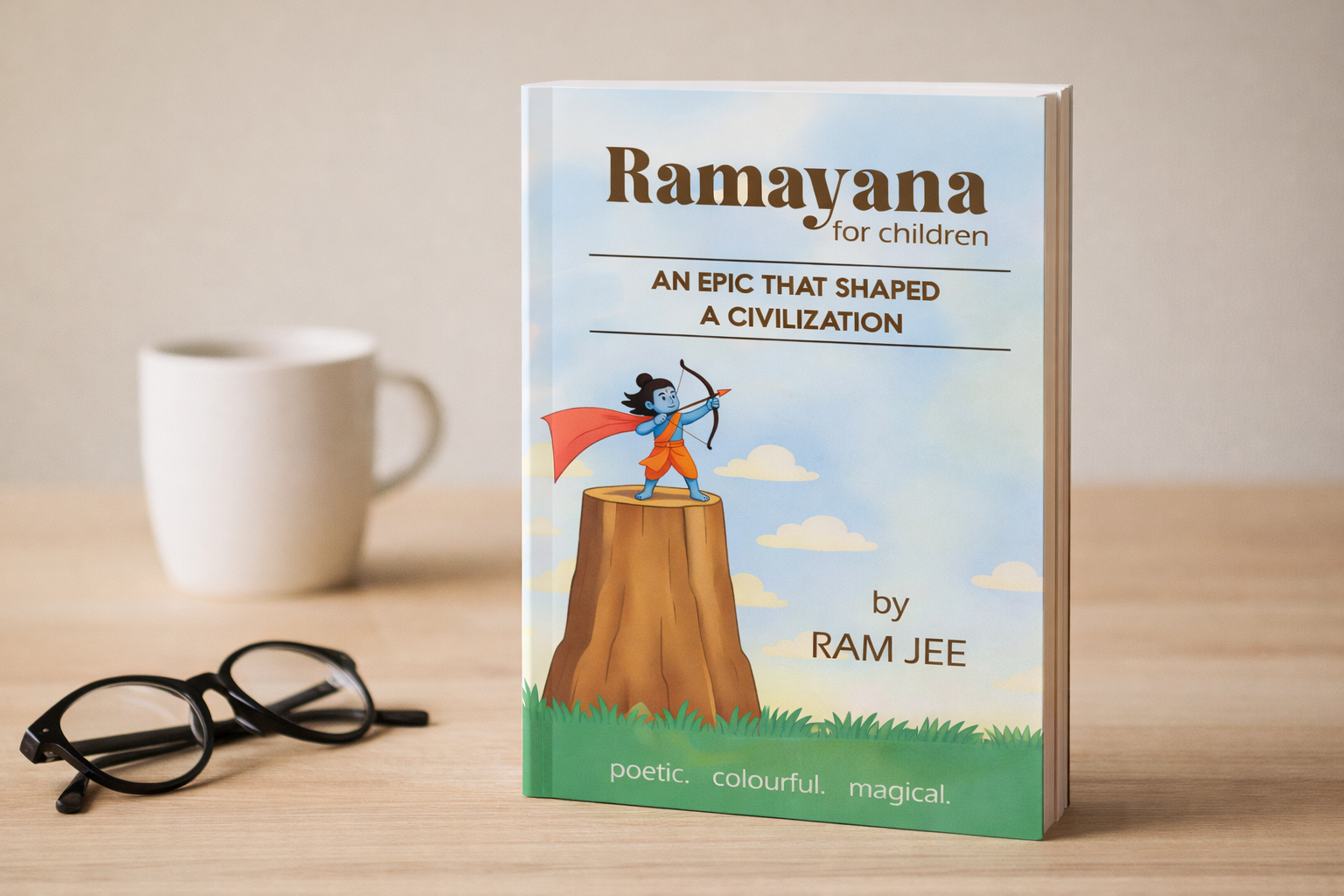
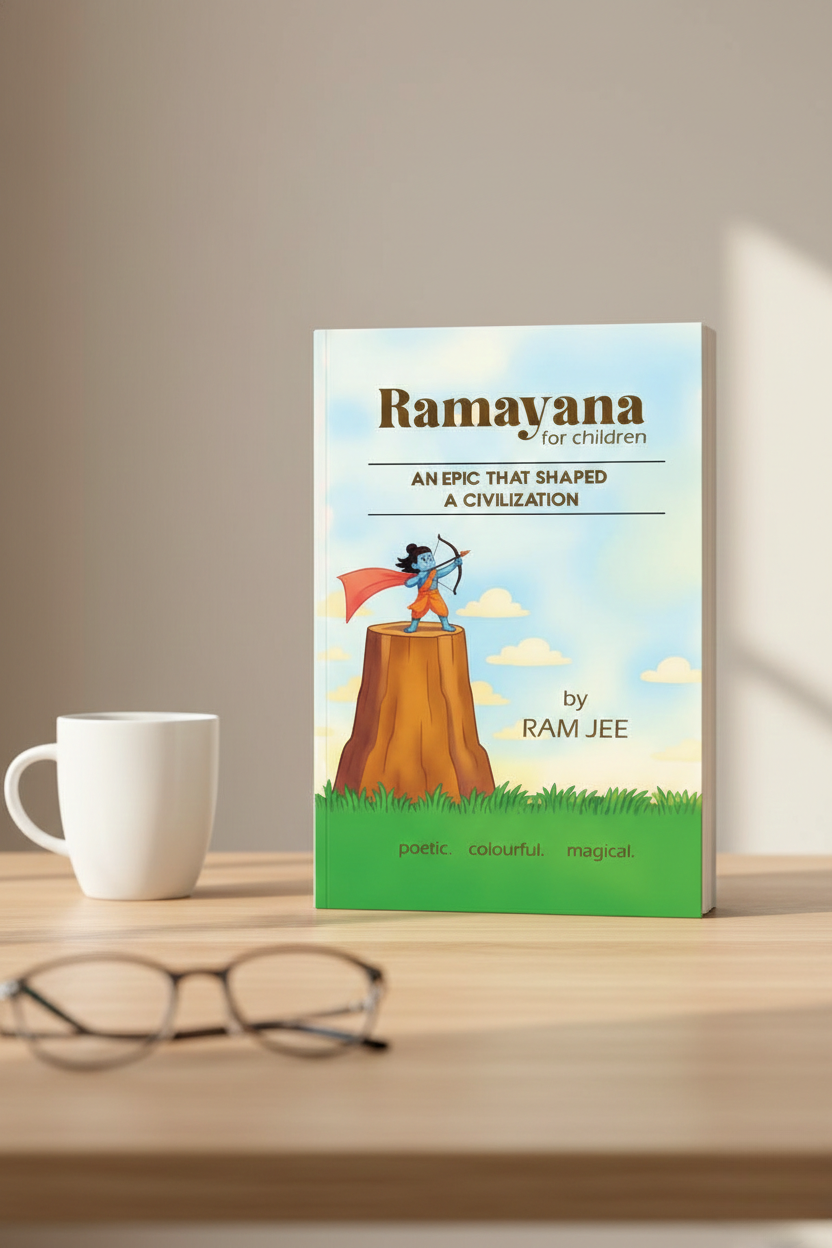
When Ramayana for Children by Ram Jee landed on my desk, I paused longer than usual. Maybe it was the cover. That little figure of Lord Ram standing steady, bow drawn, not fierce, not intimidating, just calm and focused. Or maybe it was the promise in the blurb, that word bedtime. As someone who grew up listening to stories rather than reading them, I felt curious. Slightly protective too. Retellings of epics for children can be tricky. They can become preachy, or overly simplified, or worse, loud. I wondered what kind of tone this book would choose.
I am glad I took the time to sit with it.
What the Book Is About
At its heart, Ramayana for Children is a retelling of the Ramayana meant for young readers, but not in a rushed or mechanical way. The book traces Lord Ram’s journey from his divine birth to his victory over Raavan, touching on forests, kingdoms, friendships, exile, devotion, and loss. If you know the epic, the arc will feel familiar. If you do not, this book feels like an invitation rather than a lesson.
From what the blurb suggests and what the cover reinforces, Ram Jee has chosen a lyrical approach. The focus is not on battles or spectacle. It is on moments. Values. Small turns of character. Courage that feels steady rather than dramatic. Kindness that shows up in actions, not speeches.
What I appreciated is that the story does not try to cram everything in. In my years reviewing books, especially adaptations for children, I have noticed a tendency to treat young readers like they need everything explained loudly and quickly. This book seems to trust its readers. It moves gently across kingdoms and forests, letting the story breathe.
What Stood Out to Me
The first thing that stood out was the tone. There is a softness here that I think many parents will appreciate. The blurb mentions poetic and colourful storytelling, and that feels accurate. This does not read like a moral science textbook disguised as mythology. It feels closer to how elders tell stories, slowly, with pauses, allowing imagination to do half the work.
The second thing is the emphasis on values without turning them into slogans. Courage, kindness, devotion, righteousness. These words are easy to list, harder to show. From what the book promises, these qualities are embedded in the journey itself. Lord Ram’s choices, his patience, his sense of duty. Even Raavan’s presence is framed as part of a moral contrast rather than just a villain to defeat.
I also liked that the book positions itself clearly as a first introduction. The illustrations, described as vibrant, paired with gentle prose, suggest a reading experience that works equally well for a child reading alone or being read to. As an editor, I always notice when a book understands its role. This one does not try to be definitive. It tries to be welcoming.
The Emotional Core
Children’s books about epics often forget that children feel deeply, even if they do not articulate it the same way adults do. What stayed with me while reading about Ramayana for Children is the emotional safety it seems to offer. This is a story of exile and separation, but also of trust. Of returning. Of standing by one’s word.
Honestly, this reminded me of evenings when I was young, sitting cross legged near my grandmother, half listening, half imagining forests and arrows and palaces. Those stories did not make me scared. They made me curious. They gave me a sense of right and wrong without saying “this is right” or “this is wrong” every page.
I think this book aims for that same feeling. It is the kind of book that lets children ask questions after. Why did Ram choose this. Why did Sita trust that. Why does devotion matter. Those questions matter more than memorizing events.
Who This Book Is For
This book is for parents who want to introduce the Ramayana to their children without overwhelming them. It is for grandparents who enjoy bedtime reading. It is for teachers looking for a culturally rooted story that speaks about values without preaching.
It might not be for someone looking for a detailed, scholarly retelling. And that is okay. This book knows its audience. Younger readers. Families. Homes where stories are shared, not assigned.
If your child enjoys illustrated books, gentle language, and stories that feel reassuring rather than loud, Ramayana for Children will likely find a place on your shelf. It also works well as a first mythology book before moving on to longer versions later.
Final Thoughts
As Editor in Chief at Deified Publication, I read with both my professional eye and my personal one. Professionally, I can say this book seems thoughtfully positioned, clear in its intent, and respectful of its source. Personally, I felt a sense of warmth reading about it. Not nostalgia exactly. Something calmer. Like remembering why stories matter in the first place.
Ramayana for Children by Ram Jee does not try to impress. It tries to connect. That matters, especially in 2025, when attention is short and noise is everywhere. This book feels like it wants to slow things down for a child. To sit beside them, not stand above them.
There might be readers who wish for more detail or more drama. I understand that. But for what this book sets out to do, introduce timeless values through a gentle retelling, it does its job with care.
Frequently Asked Questions
Is Ramayana for Children worth reading?
If you are looking for a calm, age appropriate introduction to the Ramayana that focuses on values rather than spectacle, yes, it is worth reading.
Who should read Ramayana for Children?
Young readers, parents, grandparents, and educators who want a gentle mythology book suitable for bedtime or early reading.
What age group is this book for?
Based on the language and illustrations described, it seems best suited for early readers and younger children, especially when read aloud.
Is this a complete version of the Ramayana?
No. It is a simplified, lyrical retelling meant as an introduction, not a comprehensive or academic version.

With over 11 years of experience in the publishing industry, Priya Srivastava has become a trusted guide for hundreds of authors navigating the challenging path from manuscript to marketplace. As Editor-in-Chief of Deified Publications, she combines the precision of a publishing professional with the empathy of a mentor who truly understands the fears, hopes, and dreams of both first-time and seasoned writers.