
Rating:
⭐⭐⭐⭐1/2 (4.5 out of 5)
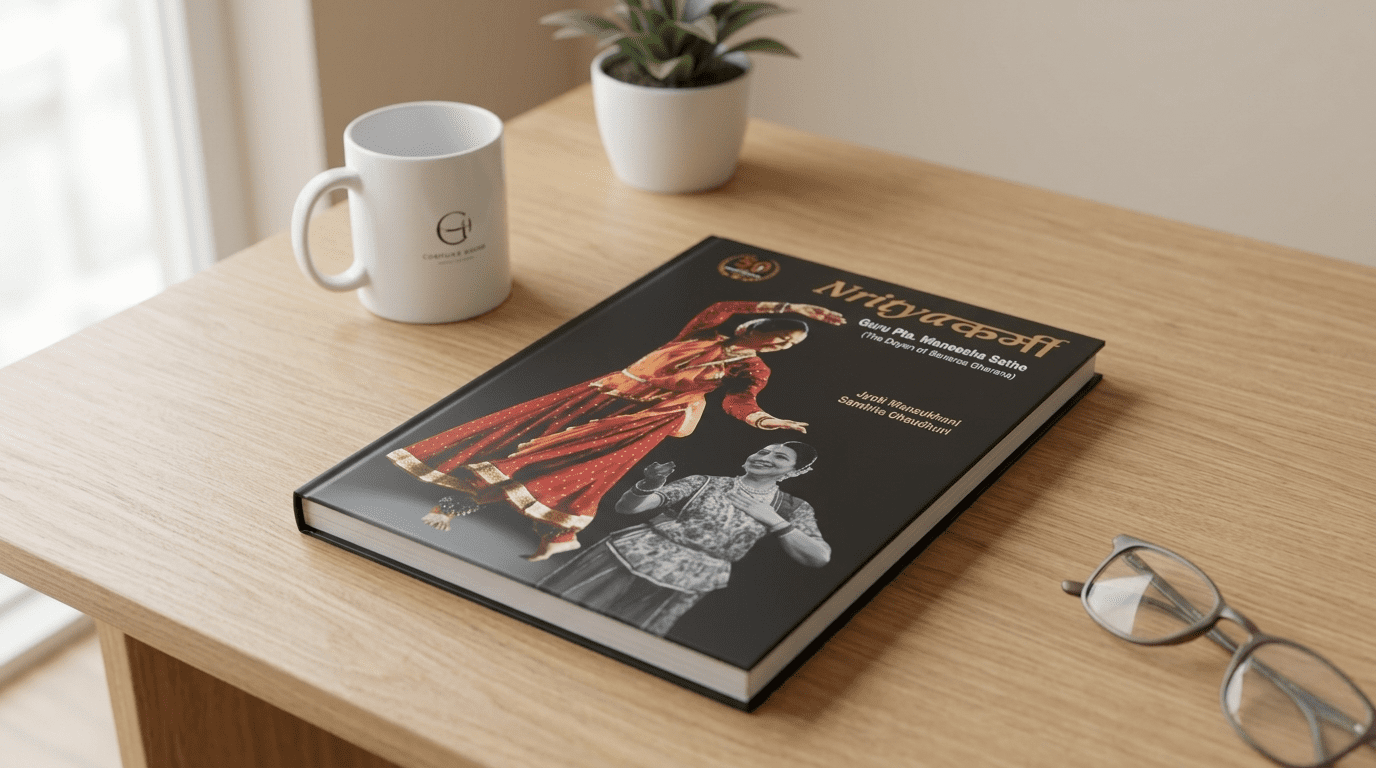
I don’t usually pause for long on biographies unless something in them feels… lived, not just written. With Nrityaकर्मी (Nrityakarmi), I found myself slowing down quite often. Not because it was difficult, but because certain pages made me sit back and think. About discipline. About devotion. About what it really means to give your whole life to something without constantly needing validation.
As someone who has spent over fifteen years reading and reviewing books at Deified Publication, I’ve come across many artistic biographies. Some feel distant, almost like a museum catalogue. But this one felt different. It felt like sitting across someone who has seen a lot, lived deeply, and doesn’t need to exaggerate anything.
There’s a calm confidence in this book. And honestly, that stayed with me.
What the Book Is About
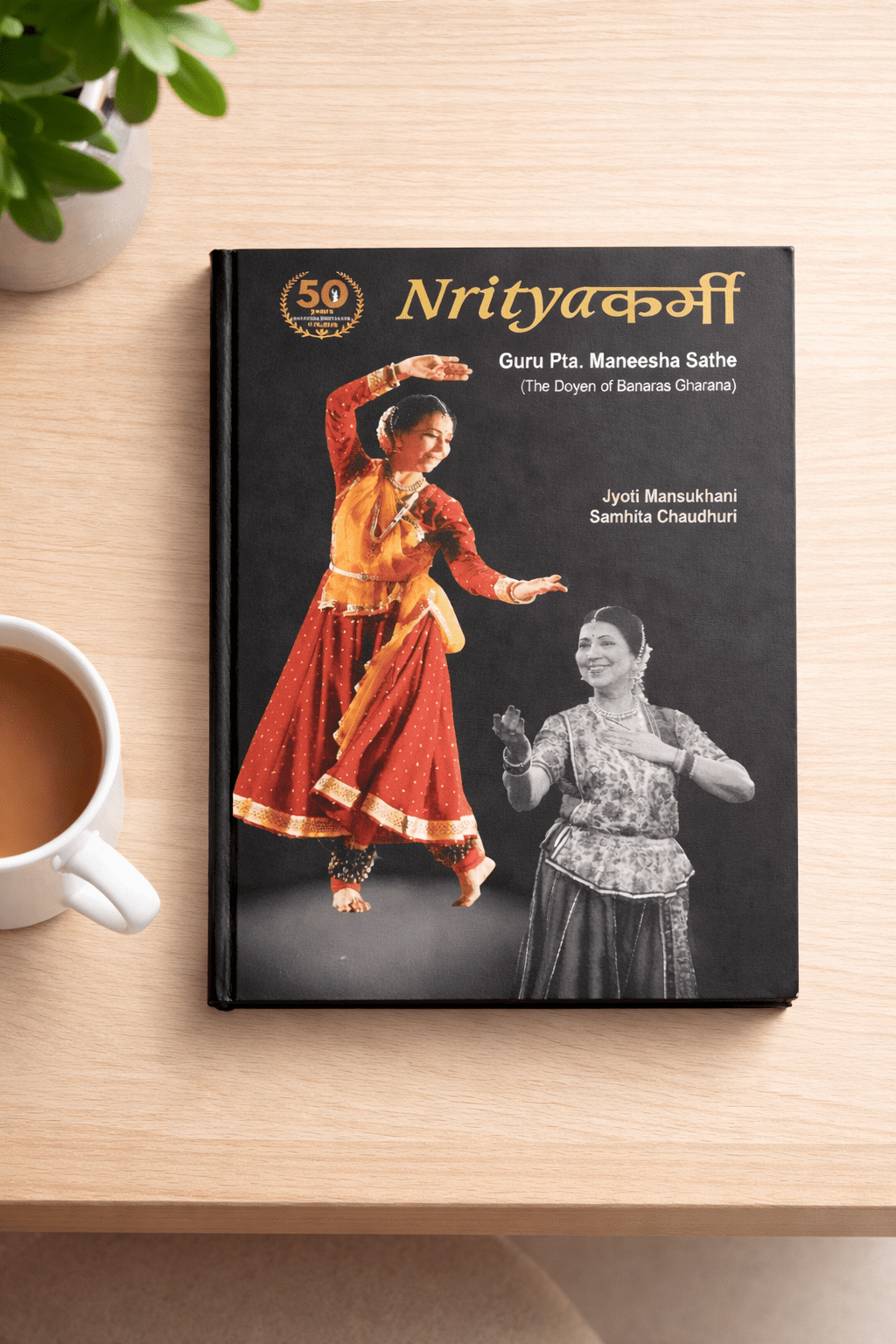
Nrityakarmi by Jyoti Mansukhani and Samhita Chaudhuri is a biographical compilation centered around Guru Pandita Maneesha Sathe, a respected figure in Kathak, particularly within the Banaras gharana tradition. But calling it just a biography feels a bit incomplete.
The book is structured across three sections and spans nearly 250 pages, blending narrative writing with photographs, archival material, and reflections from people connected to her journey. There’s something quite intentional about this structure. It doesn’t rush through her life. Instead, it allows you to witness it in layers.
We begin with her early life, including a fragile birth and the early encouragement from her family. There’s a striking moment where her parents recognize that her path will need more than just formal training. Exposure, environment, and artistic immersion become important very early on. That detail stayed with me because it reflects something true about any art form. Talent alone is never enough.
As the chapters move forward, we see her training under respected gurus, her formative years in Pune, and later, the defining moment when she meets Pandit Gopikrishna. That meeting feels like a turning point not just in her career, but in her identity as an artist.
The book doesn’t just stop at chronology. It expands into her role as a teacher, a mentor, and someone who shaped an entire generation through Maneesha Nrityalaya. There are also sections where students, collaborators, and fellow artists share their experiences with her. These parts feel less like formal testimonials and more like memories someone carries for years.
And then there’s the visual layer. The black and white photographs, the old newspaper clippings, the stage stills. They don’t feel decorative. They feel like proof. Like evidence of a life that has been consistently in motion.
What Stood Out to Me
There are a few things that kept returning to my mind while reading this.
First, the idea of discipline. Not in a strict or rigid way, but in a deeply internal way. There’s a passage describing how even as a young teacher handling fifty students, she chose patience over authority. That felt important. In a time where loudness is often mistaken for leadership, this quiet steadiness stands out.
Second, the relationship between guru and shishya. The book touches on this multiple times, especially in sections describing her bond with Gopi ji. There’s a line about how a guru shapes not just skill but destiny. I’ve read similar sentiments before, but here it didn’t feel exaggerated. It felt earned.
Third, the teaching philosophy. The introduction of the hastak series, the emphasis on muscle control, the structured way of building a dancer from basics. These are not surface-level details. They show how seriously she approached pedagogy. As someone who has read quite a few books on performing arts, I appreciated this. It shows craft, not just passion.
Also, the inclusion of QR codes that lead to performance videos is a thoughtful touch. It bridges the gap between reading and experiencing. You don’t just imagine her dance, you can actually see glimpses of it. In 2026, when attention spans are scattered, this kind of integration makes sense.
If I had to point out one thing that could have been slightly better, I’d say the transitions between sections sometimes feel a bit abrupt. At times, I wanted a smoother emotional flow between chapters. But honestly, that didn’t take away much from the overall experience.
The Emotional Core
What stayed with me most is the idea that for Maneesha Tai, dance is not separate from life. It is life.
There’s a line on the back cover that says dance flows through the dancer and the dancer becomes the dance. It sounds poetic, yes, but when you read the book, you begin to see what that actually means.
Her journey is not presented as a series of achievements. It’s presented as a way of being. Whether it’s teaching young students, performing on stage, or guiding someone through a small correction in posture, everything carries the same sincerity.
I also found myself thinking about aging. There’s a mention of her continuing to dance with grace and fitness even at seventy two. Not in a way that feels forced or performative, but simply because that’s who she is.
Honestly, that made me pause. Because we often think of art as something we do for a phase of life. This book quietly challenges that idea.
Who This Book Is For
I think this book will resonate most with a few kinds of readers.
If you are someone connected to dance, especially Kathak, this will feel very close to home. Not just technically, but emotionally.
If you are a student or someone navigating mentorship, the guru-shishya relationship explored here might give you a lot to think about.
And even if you are not from an artistic background, but you value discipline, consistency, and purpose, there’s something here for you. It’s not a loud book. It doesn’t try to impress you. But it stays with you.
That said, if you are looking for a fast-paced narrative or dramatic storytelling, this might not be the right fit. This book moves at its own rhythm, much like a classical performance. You have to meet it halfway.
Final Thoughts
As an editor and a long-time reader, I’ve learned to notice when a book is trying too hard. Nrityakarmi doesn’t do that. It trusts its subject. It trusts the reader.
And that, in itself, is rare.
I closed the book with a sense of calm. Not excitement, not overwhelm, just a quiet respect. For the artist. For the journey. And for the way it has been documented.
Maybe that’s what this book does best. It reminds you that a life doesn’t have to be loud to be meaningful. It just has to be consistent.
And honestly, I think we need more stories like this.
FAQ Section
Is Nrityakarmi worth reading?
Yes, especially if you appreciate biographies rooted in real discipline and artistic dedication. It’s not flashy, but it leaves an impression.
What is Nrityakarmi about?
It is a detailed account of Guru Pandita Maneesha Sathe’s life, her journey in Kathak, her teaching philosophy, and her impact on students and the art form.
Who should read Nrityakarmi?
Dance enthusiasts, students of classical arts, and readers interested in meaningful life stories will connect deeply with it.
Is Nrityakarmi a beginner-friendly book?
Yes, even if you are not familiar with Kathak, the writing and structure make it accessible.
With over 11 years of experience in the publishing industry, Priya Srivastava has become a trusted guide for hundreds of authors navigating the challenging path from manuscript to marketplace. As Editor-in-Chief of Deified Publications, she combines the precision of a publishing professional with the empathy of a mentor who truly understands the fears, hopes, and dreams of both first-time and seasoned writers.