
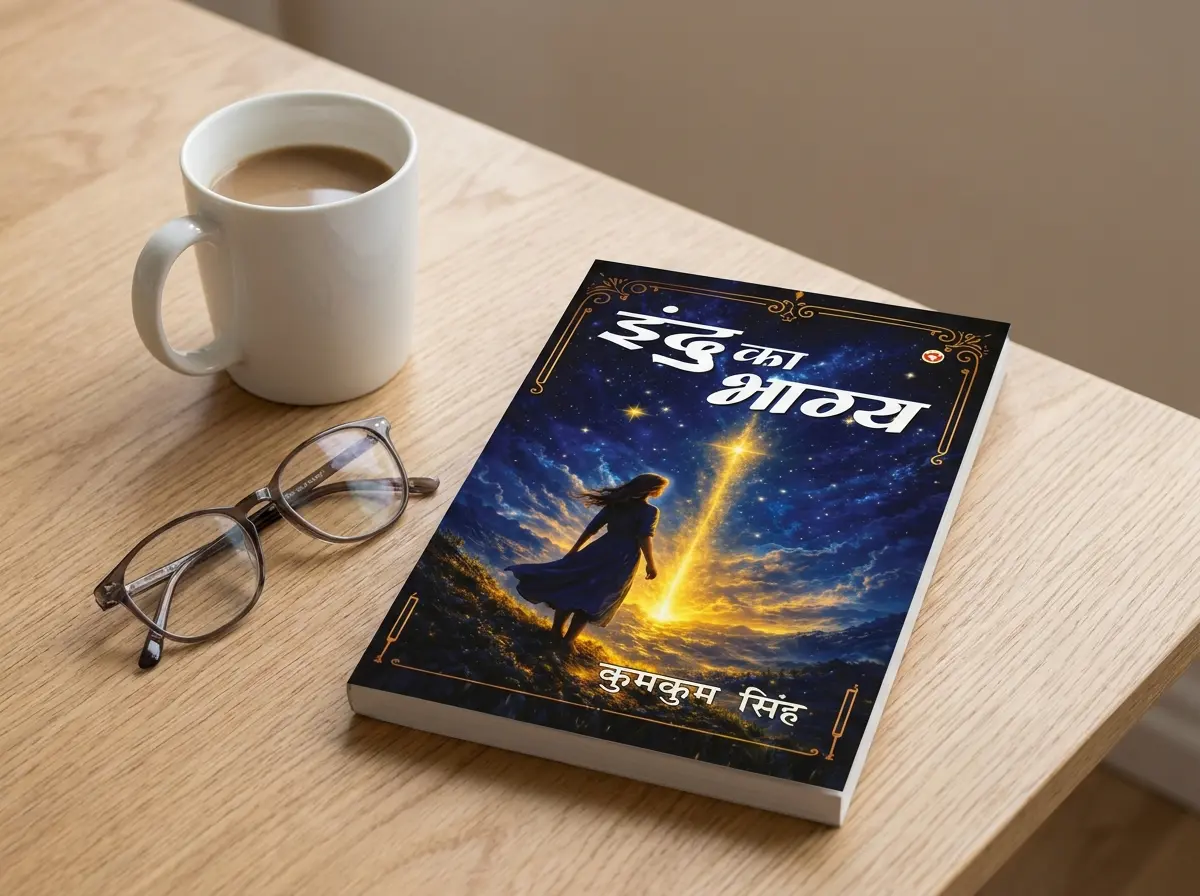
Rating: ⭐⭐⭐⭐ (4.1 out of 5)
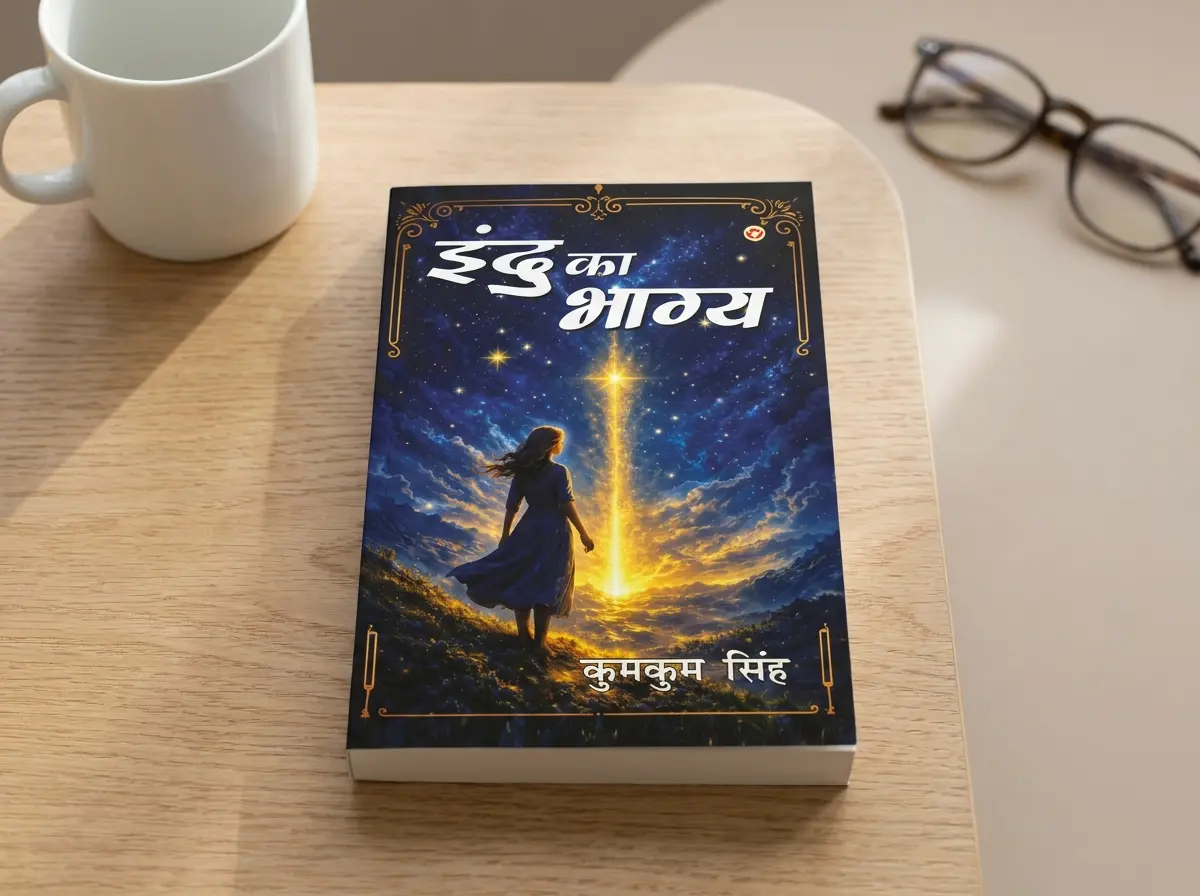
I have been editing and reading books for over fifteen years now, and every so often a story lands in my hands that reminds me why I started in the first place. Not because it is grand or sweeping or decorated with literary prizes, but because it feels real. It feels like something that could have happened to a girl I grew up knowing, or maybe to someone in my own extended family. Kumkum Singh’s Indu Ka Bhagya, published in 2026, is exactly that kind of story. It is a Hindi novel about a young woman named Indu whose life pivots entirely because of a single sentence spoken by a woman named Satya. I picked it up not quite knowing what to expect, and I finished it thinking about the strange, invisible forces that shape ordinary lives. That does not happen to me as often as you might think.
What This Book Is About
The story begins with Satya telling her bhabhi something casual, almost throwaway: that Indu, this girl, will do all the housework for free. Just like that, Indu becomes a domestic worker in a household that is not her own. She is treated less like a person and more like a machine, expected to function without complaint from morning to night. Kumkum Singh does not dress this up. The early chapters are a little uncomfortable to read, honestly, because the arrangement is so plainly unfair and yet so familiar. I kept thinking, I have heard of this. I have seen this. This is not fiction for many women in India.
But here is where the novel earns its title. Within this same household, something shifts for Indu. The word in Hindi, bhagyodaya, means the dawn of fortune, and the author frames this with an interesting philosophical note: that time, place, and circumstance together create the conditions for any event to occur. So Indu’s fortune does not arrive because she wished for it or fought for it in a dramatic way. It arrives because all three of those things aligned. I found this idea genuinely interesting, maybe because it sits somewhere between fatalism and hope in a way that feels very desi, very rooted in how many of us actually understand life.
The household she enters belongs to a Masterni ji, a schoolteacher, whose family includes her son Vishal, a young man who becomes increasingly important to Indu’s story. There is also Satya’s family, a web of relatives, and a host of characters including Laalchand and Madhav who populate the world around Indu. The plot moves across chapters numbered clearly, and by around chapter thirty the world of the book feels fully inhabited.
What Stood Out to Me
The thing Kumkum Singh does well is write characters who feel genuinely human in their contradictions. Masterni ji, for example, is not simply a villain or a saint. There is a scene early on where she seems genuinely invested in Indu’s welfare in small, practical ways, and then later she is also the person who benefits from Indu’s labor without much reflection on it. That ambiguity is honest. Most people who do harm in real life are not cartoons. They are people who are also capable of kindness, which somehow makes it worse.
I was also struck by the portrayal of the two Guddi figures in the story, two sisters who contrast sharply with each other. The older one is practical, a little calculating, concerned with appearances. The younger one has a kind of curiosity and openness that makes her more sympathetic. When Masterni ji talks about the younger Guddi in terms of her education and her future, there is a real tenderness there that lands differently than I expected. In 2026, when conversations about girls’ education in smaller Indian towns are still so charged, this felt timely in a way that did not feel forced.
There is a sequence involving Vishal and Indu in the middle section of the book, around chapters fifty and fifty-one, that I kept thinking about for a while after reading. Vishal has been away, there is some distance and tension between them, and when he returns and there is a confrontation at the college gate involving his motorcycle and Indu watching from a distance, the emotional geometry of that scene is handled with a lot of care. Singh does not over-explain the feelings. She trusts the situation. I appreciated that. A lot of writers would have inserted pages of internal monologue here. Singh does not.
The writing style is conversational Hindi, the kind that reads like someone telling you a story over chai. The sentences are not ornate or trying to be literary. They are clear and direct and sometimes quite funny in a dry, observational way. There is a moment where Satya is on the phone and the narrator notes her manner of speaking, and it is written with this affectionate, slightly comic eye that made me smile. Singh clearly knows these people.
The Emotional Core
I think what this novel is really about, underneath the story of one girl’s changing circumstances, is the question of dignity. What happens to a person’s sense of self when they are treated as less than? And what does it take, what combination of luck and circumstance and their own inner resilience, for that person to come into their own? Indu does not rage against her situation in the ways you might see in more dramatic fiction. She endures, she observes, she learns. And slowly, the world around her begins to treat her differently, not always because people have changed, but because the conditions around her have shifted.
I was not expecting to feel as moved as I did by the later chapters. There is a stretch toward the end of the book, around pages 204 to 208, where Vishal and Indu’s story reaches a kind of culmination and the people around them, including characters who had been skeptical or dismissive, begin to speak about her differently. The badi gudddi has a moment where she genuinely reflects on Indu’s quality as a person, and it is written so simply, so without fanfare, that it actually hit harder than a big dramatic speech would have. That is good writing. That is knowing where to put the weight.
There is also an emotional thread involving Madhav that runs through the middle section of the book and involves a serious illness, worry from family, Satya trying to navigate her loyalties, and a doctor named Shahid who becomes part of this circle. This subplot gave the novel a kind of texture and weight that kept it from feeling like a simple romance. Life keeps happening to these people, not just the main plot.
Who This Book Is For
I think Indu Ka Bhagya will resonate most with readers who enjoy character-driven Hindi fiction, the kind that is grounded in the rhythms of everyday Indian life rather than in big, cinematic gestures. If you have grown up reading Hindi novels or serials that center on women navigating family and society, this will feel like comfortable, engaging territory. It is also a good read for anyone who is drawn to the idea of fate not as something passive but as something that intersects with character, the idea that who you are has something to do with what comes to you.
That said, readers looking for fast-paced plotting or high drama might find the early sections a little slow. The book takes its time establishing the world and the people in it. I think this patience is a strength, but I can see how someone expecting a brisker pace might feel the first few chapters require some settling into. Also, the book is in Hindi, so it is naturally suited for readers comfortable with the language. The prose does not strain for complexity, so even readers who are not daily Hindi readers should find it accessible.
If you enjoy authors like Shivani or Mridula Garg in their more domestic, character-focused mode, you will likely find Kumkum Singh’s sensibility familiar and warm. She is not trying to reinvent the form. She is trying to tell a specific story well, and she largely succeeds.
Final Thoughts
At Deified Publication, we read a lot of books across languages and genres, and the ones that stay with me longest are usually not the ones that announced themselves the loudest. Indu Ka Bhagya by Kumkum Singh is a modest, warm, honestly observed novel about a young woman whose life is shaped by forces both beyond and within her control. It made me think about the girls I have known who ended up somewhere unexpected, sometimes better than they started, sometimes not, and the strange combinations of timing and people and accident that make the difference. That is not a small thing for a book to do. I would recommend this to anyone who reads Hindi fiction and wants a story that feels genuinely lived-in.
FAQs
Is Indu Ka Bhagya worth reading?
Yes, I think it is, especially if you enjoy Hindi fiction that is grounded in real domestic and social textures. It is not a flashy novel but it is an honest and emotionally satisfying one. The character of Indu herself is drawn with care, and the way the book handles the theme of fate without becoming preachy about it is something I genuinely appreciated.
Who should read Indu Ka Bhagya by Kumkum Singh?
This novel is best suited for readers who enjoy character-driven stories set in recognizable Indian middle-class or lower-middle-class environments. Fans of Hindi women’s fiction, readers interested in stories about class, dignity, and social mobility, and anyone who wants a story that unfolds with patience and warmth will find this rewarding.
What is Indu Ka Bhagya about, in simple terms?
It is the story of a girl named Indu who enters a household as an unpaid domestic worker and, through a combination of circumstance and character, finds her fortune there. It is about how the alignment of time, place, and opportunity can change a life, and about the quiet resilience of a woman treated as less than she is.
Is Indu Ka Bhagya a romance novel?
There is a romantic element involving Indu and Vishal, but I would not call it primarily a romance. It is more accurately a social drama with romantic threads woven through it. The book is as interested in family dynamics, class relationships, and questions of fate as it is in the love story itself.

With over 11 years of experience in the publishing industry, Priya Srivastava has become a trusted guide for hundreds of authors navigating the challenging path from manuscript to marketplace. As Editor-in-Chief of Deified Publications, she combines the precision of a publishing professional with the empathy of a mentor who truly understands the fears, hopes, and dreams of both first-time and seasoned writers.