
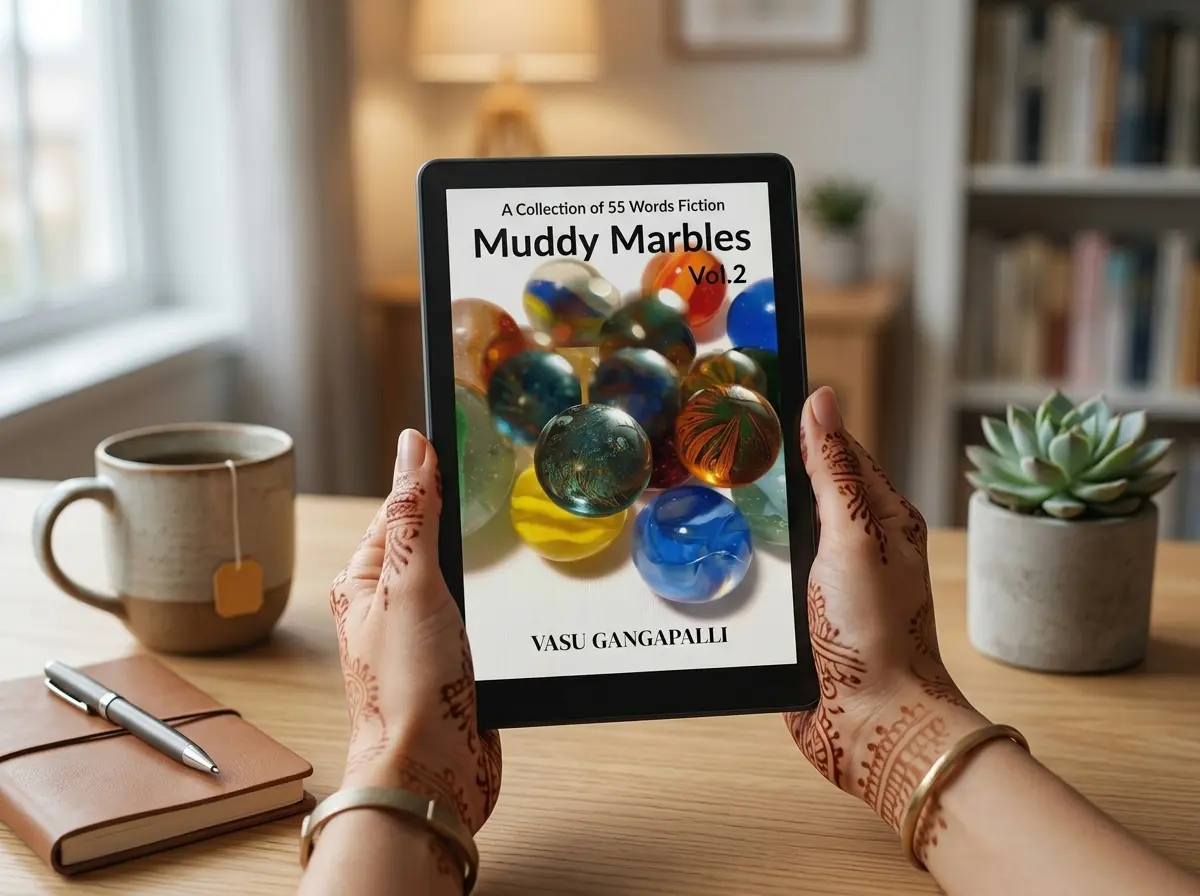
Rating: ⭐⭐⭐⭐1/2 (4.5 out of 5)
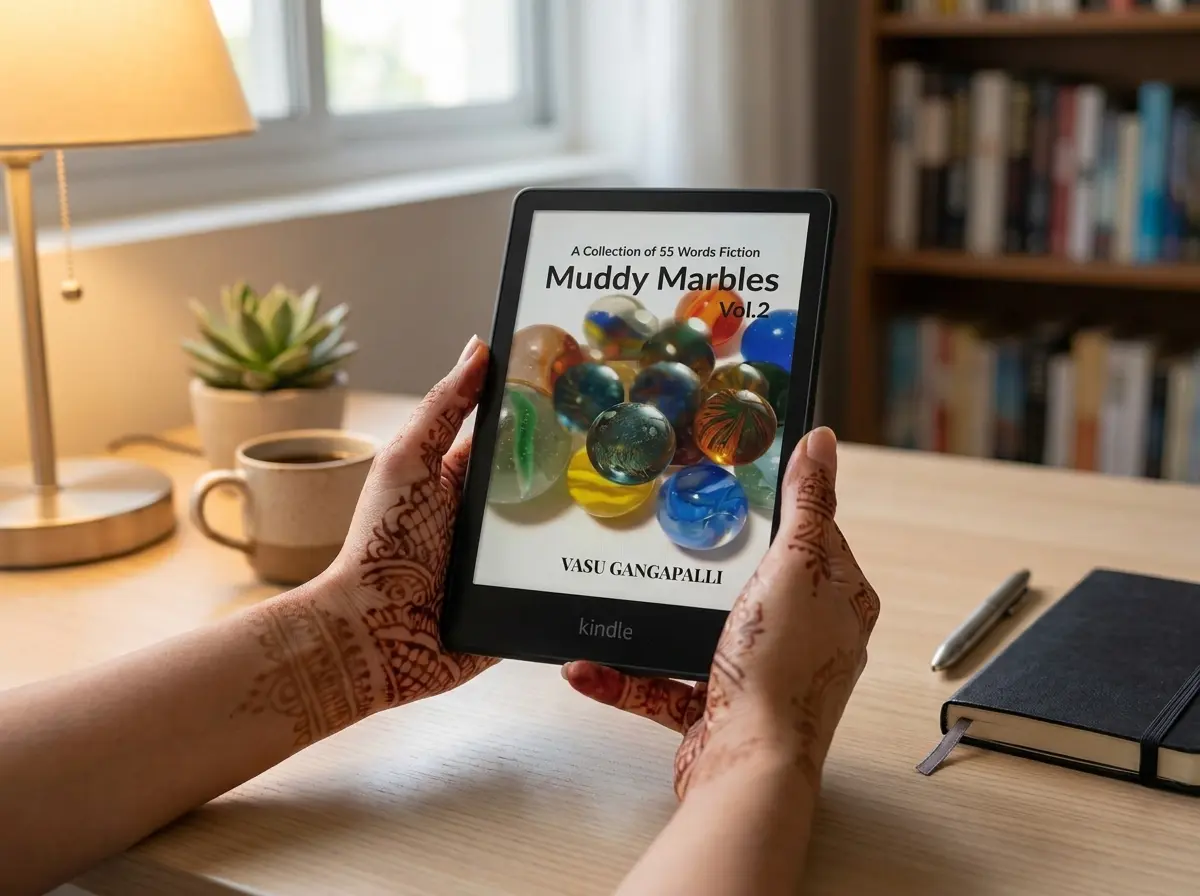
I have been reviewing books for over fifteen years now, and if there is one thing I have learned in that time, it is that length has almost nothing to do with impact. Long novels can leave you cold. A few lines can wreck you. Vasu Gangapalli’s Muddy Marbles Vol. 2 is proof of exactly that, and I say this as someone who went into it expecting a fun, light collection of flash fiction and came out of it thinking about certain lines for far longer than I expected to.
For anyone unfamiliar with the format, 55 fiction is exactly what it sounds like. Every story in this book is told in fifty five words, no more, no less. That is an unforgiving constraint. You cannot waste a sentence on setup, you cannot linger, every word has to earn its place. In my years reviewing books, I have read plenty of short story collections, but very few writers commit to a rule this strict across an entire book and actually pull it off story after story. Gangapalli does, and Muddy Marbles Vol. 2 is stronger for the discipline it demands of him.
What the Book Is About
Muddy Marbles Vol. 2 is a collection of fifty five word stories, each one opening its own small world and closing it just as fast. The genres jump around constantly. One story is horror, the next is a domestic joke, the one after that is a quiet gut punch about love or loss. There is no single thread running through the book except the format itself, and honestly that works in its favor. You never know what kind of story you are about to get, which keeps you turning pages even though each individual piece takes seconds to read. The book also includes a bonus one hundred word story near the end, which reads like a slightly longer breath after all the short, sharp ones before it.
The stories are arranged simply, numbered one through fifty seven with the bonus piece included, each with its own title on its own page. There is no filler between them, no lengthy introduction explaining the concept. Gangapalli trusts the format to speak for itself, and after reading through the collection, I think that trust is earned.
What Stood Out to Me
The first story in the book, titled Just Live, sets the tone for everything that follows. Two friends are talking, and one rattles off the usual list of wants, a new house, a new car, a smart phone, to lose weight. Her friend Anitha, smiling the whole time, says all she wants is to win her battle against cancer and live. That’s it. That is the entire story, and it lands with a weight that a much longer piece would have had to work far harder to earn. I have read enough short fiction to know how easy it is to overwrite a moment like this, to add extra lines explaining the irony or the sadness. Gangapalli doesn’t. He lets the contrast between the two answers do all the work, and it does.
That restraint shows up again in The Face, a horror piece where a man wakes in the night, looks into the bathroom mirror, and realizes the reflection isn’t his own, right down to the scar he can still feel under his fingers even though the mirror grins back at him. It’s a classic horror setup, but the pacing inside fifty five words is what makes it work. There is no space to explain, only to unsettle, and it does.
There’s a scene in Wife and Baby that I keep circling back to. A man’s wife wakes him up saying their baby is missing, and he tells her they don’t have a baby. She stares at him for a long moment and walks away. Then he realizes he doesn’t have a wife either. It’s a small, strange twist, the kind that makes you go back and reread the first two lines with completely different eyes, and I think that rereading instinct is exactly what this format is built for.
I also want to mention Love at First Sight, which takes a familiar romantic setup, a mother warning her son about love, and flips it into something darker and genuinely funny in its final line. And the bonus story, The Book, which stretches to a hundred words and uses that extra room to build a small, complete arc about a man who finds a book that predicts his future, doesn’t believe it, and ends up proving it right anyway. It’s a good closer, giving the reader a slightly longer story to sit with after fifty six rounds of blink and you’ll miss it fiction.
The Emotional Core
What struck me most while going through this collection is how often Gangapalli uses the twist not as a gimmick but as the actual emotional delivery mechanism. In a story like Grandpa’s Ghost, a boy tells his teacher his grandfather passed away, and she casually mentions seeing him post on Facebook minutes ago. The boy’s reply, that it must be his ghost then, turns a sentimental subject into something wry and a little unsettling in the space of five lines. Similarly, The Shadow of a Girl uses barely any words to build dread, a scratching sound, a shadow at the foot of the bed, and a whispered line from an unborn sister that closes the story with a bang, literally and narratively.
Not every story in the book is trying to scare you or twist the knife. Some, like The Window Seat, are just small, warm observations about kindness between strangers on a flight. That range matters. If every story in this book leaned on shock value, fifty seven stories of it would get exhausting fast. Instead, Gangapalli moves between horror, romance, domestic comedy, and quiet human moments, and that variety is what keeps the collection readable in one sitting, which I suspect a lot of readers will end up doing anyway.
Who This Book Is For
If you enjoy flash fiction, or you’re the kind of reader who likes a quick emotional hit during a commute or a coffee break, this book is built for exactly that. It’s also a good pick for anyone who wants to see what a fifty five word constraint can actually produce, writers especially might find it useful as a study in economy. I will say this might not be for everyone. If you prefer stories with room to breathe, character arcs that develop over pages, this collection will feel too fast, too clipped, by design. A few of the stories, particularly the ones leaning on a single twist ending, follow a similar rhythm back to back, and reading many of them in one go can make that pattern noticeable. Spacing the book out over a few sittings instead of one long read might actually serve it better.
Final Thoughts
As Editor-in-Chief at Deified Publication, I read a lot of collections that promise something different and end up feeling familiar by the tenth story. Muddy Marbles Vol. 2 mostly avoids that trap. Vasu Gangapalli clearly understands the format he’s working in, and the best stories here, Just Live, Wife and Baby, The Face, The Shadow of a Girl, prove that fifty five words is plenty of room if the writer knows exactly what to cut. In 2026, when most of us are reading in short bursts between notifications anyway, a book built entirely around the short burst feels almost overdue.
FAQs
Is Muddy Marbles Vol. 2 worth reading?
Yes, especially if you enjoy flash fiction or want quick, complete stories you can read in a spare few minutes. It won’t suit readers who prefer longer character driven fiction.
Who should read Muddy Marbles Vol. 2?
Fans of short fiction, horror twist endings, and anyone curious about the 55 fiction format, plus writers interested in studying economy of language.
What is Muddy Marbles Vol. 2 about?
It’s a collection of 55 word stories by Vasu Gangapalli spanning horror, romance, family, and unexpected twists, plus one bonus 100 word story.
How long does it take to read Muddy Marbles Vol. 2?
Given the format, most readers can finish the entire collection in one sitting, though spacing it out over a few days lets each twist land a bit better.

With over 11 years of experience in the publishing industry, Priya Srivastava has become a trusted guide for hundreds of authors navigating the challenging path from manuscript to marketplace. As Editor-in-Chief of Deified Publications, she combines the precision of a publishing professional with the empathy of a mentor who truly understands the fears, hopes, and dreams of both first-time and seasoned writers.