
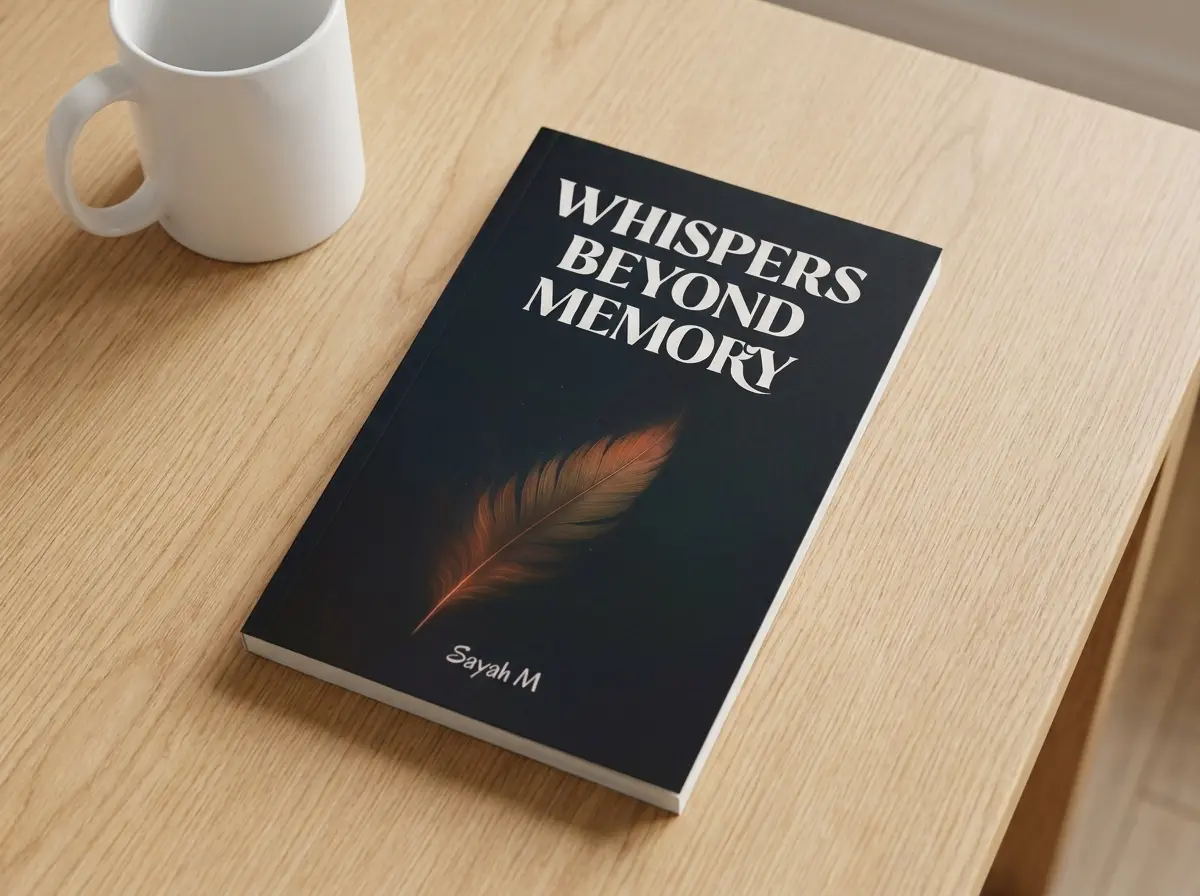
Rating:
⭐⭐⭐⭐ (4.2 out of 5)
I finished Whispers Beyond Memory on a Sunday afternoon and sat there for a long time not knowing what to do with myself. That does not happen often anymore. In my years reviewing books at Deified Publication, I have read enough memoirs and personal essays to know when someone is performing vulnerability for effect and when someone is actually handing you something real off their own chest. Sayah M is doing the second thing, and it made the reading experience feel closer to sitting across from a friend at 1 a.m. than reading a polished manuscript.
What the Book Is About
The book opens by telling you plainly what it is not. It is not poetry and it is not traditional prose, and honestly, that is the most accurate description I could give it too. Sayah M writes about a relationship that ended when he was young, and about how the grief from that ending pushed him into writing almost by accident, the way some people learn to swim because the water simply will not let them stand still. What starts as a book about heartbreak slowly turns into something much bigger, a book about the person writing the book, and about what four years of returning to the page over and over again does to a person’s understanding of memory, art, faith, and his own family. He calls the earlier draft of this manuscript a book he thought he had finished more than once, only to find every ending felt incomplete the moment he reached it. That structure, a person circling the same wound from different angles across years, is exactly what the book delivers on the page.
What Stood Out to Me
The thing I kept coming back to was how physically the author writes about memory. There is a passage early on where he describes how the body starts archiving a moment while it is still happening, before the mind has caught up to what is going on, comparing it to pressing flowers into old books even though you already know they were never built to survive the years. I have read plenty of writers describe nostalgia, but I have not read many who describe the actual mechanics of it this precisely, the way grief and love can sit inside the same rib cage without cancelling each other out.
The chapter about his years riding a motorcycle at night surprised me the most, if I am honest. He talks about how the road forced his mind into the present because a curve or a patch of wet gravel does not allow for spiraling thoughts, and how the engine noise sometimes drowned out whatever his head had been generating all day. Then a camera enters his life during a period when everything internally felt overcrowded, and photography becomes a way to frame the world into something survivable instead of something that has to be absorbed all at once. I found myself thinking about how many people use a physical hobby the exact same way without ever naming it, and how rare it is for a writer to trace that connection this clearly.
There is also a chapter where he writes about growing up between two very different parents, one who kept finding room for other people even while exhausted to the bone, and one who kept drifting further from his own values until the damage stopped being only his to carry. Sayah does not write this as a takedown of anyone. He writes it as the unspoken architecture that shaped what he chose to keep and what he chose to end with himself, and later ties that same instinct for honest self examination into a section about nineteen years of genuine religious belief slowly cracking under questions he could no longer stop himself from asking. I have read a fair number of memoirs that treat faith as either untouchable or as a punchline, and this is neither. It reads like someone actually wrestling with it in real time.
By the time the epilogue arrives, he shares a piece of advice that took him a year to fully understand, about hoping life eventually writes through a person more profoundly than that person can ever write about it, and about staying brave enough to keep rewriting yourself. After 150 pages of watching him do exactly that, the line landed with real weight rather than reading like a closing flourish.

The Emotional Core
This is not a book that builds toward a single emotional climax the way a novel might. It moves more like actual memory does, in waves, doubling back on itself, sometimes contradicting an idea from three chapters earlier because the person writing it had genuinely changed his mind by then. I found that honest rather than messy. There were sections that made me want to put the book down for a minute, not because they were overwritten, but because they described a very specific kind of loneliness, the kind where you are technically surrounded by people and still privately grieving a version of yourself that only existed next to someone who is now gone. If you have ever gone back to reread old messages from a relationship that ended years ago and felt your chest do something complicated, some of these chapters will land close to home.
I will say the book asks patience from its reader. Because it moves associatively rather than chronologically in a straight line, a few sections in the middle cover emotional ground that earlier chapters have already touched, and there were moments I wished for a slightly tighter edit. It did not lessen the impact for me, but readers who want a memoir with a clean forward moving arc might find themselves rereading a paragraph to place exactly where they are in the timeline.
Who This Book Is For
I would recommend Whispers Beyond Memory to readers who love memoirs built from fragments and reflection rather than a strict narrative arc, in the tradition of writers who treat the essay as a way of thinking out loud on the page. If you are someone who journals, who has ever tried to write your way out of a hard year, or who is simply curious what it looks like when a person spends four years rewriting the same book because they kept becoming someone new in the middle of writing it, this will speak to you. It is probably not the right pick if you want plot, dialogue heavy scenes, or a tidy three act structure. This is a book for sitting with a cup of chai rather than racing through in one sitting.
Final Thoughts
What struck me most, honestly, is how unguarded the writing feels. Sayah M does not dress up his confusion as wisdom he has already arrived at. He lets you watch him still figuring it out, admitting when he does not have language for something, admitting when an old wound reopened at a traffic light for no good reason. In my fifteen plus years doing this work, that kind of honesty is harder to fake than people think, and it is the reason this book earns its emotional weight instead of just claiming it.
Is Whispers Beyond Memory worth reading? If you want a memoir that trusts you to sit inside uncertainty alongside the author rather than handing you a neatly resolved lesson, yes, without hesitation. Is it for everyone? Probably not, and Sayah seems to know that about his own book too. But for the right reader, this is the kind of book you finish and then sit with for a while before you can talk about anything else.
FAQs
Is Whispers Beyond Memory worth reading?
Yes, especially if you are drawn to memoirs that read like honest reflection rather than a plotted story. The book earns its emotional moments through specific, lived detail rather than generic sentiment.
Who should read this book?
Readers who enjoy fragmented, essay style memoirs about grief, memory, faith, and self discovery will connect with it most. It rewards patience over speed.
What is Whispers Beyond Memory about?
It follows the author’s years long process of writing his way through a young relationship’s end, his family history, a period of deep religious belief and doubt, and how photography and long motorcycle rides became parallel ways of processing everything internally.
Does the book have a linear structure?
No. It moves the way memory actually moves, circling back to earlier feelings from new angles across its thirty chapters rather than following a strict timeline.

With over 11 years of experience in the publishing industry, Priya Srivastava has become a trusted guide for hundreds of authors navigating the challenging path from manuscript to marketplace. As Editor-in-Chief of Deified Publications, she combines the precision of a publishing professional with the empathy of a mentor who truly understands the fears, hopes, and dreams of both first-time and seasoned writers.