

Rating:
⭐⭐⭐⭐ (4.2 out of 5)
I want to start by saying this honestly. When I first looked at Science of Swaras, I felt a mix of curiosity and hesitation. Curiosity because the subject itself carries weight and history. Hesitation because books that talk about ancient sciences often walk a thin line. Some feel grounded. Some feel vague. I was not sure which way this one would lean.
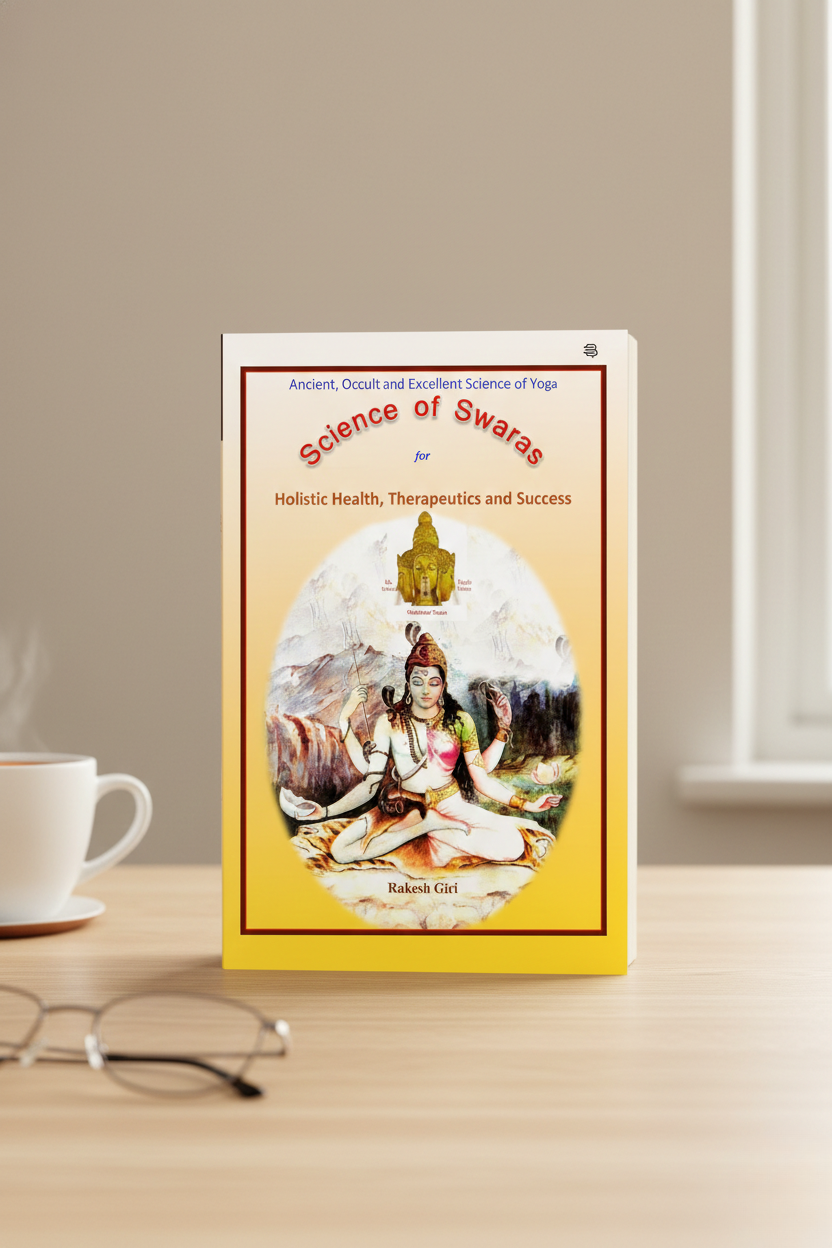
But the longer I sat with the cover, the back description, and the way the book presents itself, the more it made me slow down. The imagery of Lord Shiva, the references to Ida, Pingala, and Sushumna, and the very deliberate framing of Swara Yoga as both scientific and experiential made me pause. It reminded me of conversations I have had with yoga practitioners over the years who say, quietly, that we still know far less than we think.
In my years reviewing spiritual and wellness focused non fiction, I have learned to listen for intention. And here, the intention feels serious.
What the Book Is About
Science of Swaras positions itself as an academic and practical exploration of Swara Yoga, a branch of yogic science that focuses on nasal breathing and its connection to health, disease, daily life, and even decision making.
Dr. Rakesh Giri places Swara Yoga within the larger ecosystem of Indian yogic traditions. The book repeatedly acknowledges well known paths like Hatha Yoga, Bhakti Yoga, Karma Yoga, Kriya Yoga, Gyan Yoga, and Tantra Yoga. But it also points out something important. Despite decades of global yoga popularity, Swara Yoga has remained on the margins.
From the detailed blurb and the back matter, it is clear that this book is built on extensive textual study. The author mentions critical analysis of sixteen Swara Yoga texts, which immediately signals depth. This is not a surface level introduction. It feels closer to an academic reference, though written with an intent to reach practitioners, students, and serious learners.
The book frames Swara Yoga as a tool for understanding health and disease in percentage terms, which I found interesting. That language suggests a diagnostic mindset rather than abstract philosophy. There is also a strong emphasis on Swara Therapy, positioned as something that could complement modern yogic therapy, especially in treating psychosomatic conditions.
What Stood Out to Me
One of the first things that stood out to me was the confidence of the book. Not arrogance, but certainty. Dr. Rakesh Giri writes as someone who believes deeply in the relevance of what he is presenting. That belief seems rooted in years of study, not trend following.
I was also struck by how unapologetically academic the book feels. Many wellness books today try very hard to simplify everything. This one does not fully do that. It respects the intelligence of the reader. It assumes you are willing to sit with diagrams, terminology, and layered explanations.
The repeated emphasis on Swara Yoga as scientific and occult at the same time might not sit comfortably with everyone. Honestly, I think that is intentional. Indian knowledge systems have always lived at that intersection. This book does not try to modernize Swara Yoga by stripping it of its spiritual roots. Instead, it tries to explain those roots through structured study.
Another thing that stayed with me was the author’s hope that this subject becomes part of formal education. Schools, colleges, universities. That is a big ambition. But it comes across as sincere. Not as a marketing line, but as a long term vision.
The Emotional Core
This is not an emotional book in the way memoirs or narratives are emotional. Its emotional core is quieter, more contemplative. It speaks to a sense of loss. The loss of ancient knowledge that once shaped daily living.
I found myself thinking about how disconnected modern life feels from natural rhythms. Sleep cycles disrupted. Breathing patterns ignored. Bodies treated as machines rather than systems. This book seems to gently push back against that.
Some readers may feel overwhelmed at times. The density of information can be heavy. But there is also reassurance in that density. It tells you the author has done the work.
I also felt a sense of respect running through the pages, respect for ancient rishis, for disciplined study, and for the idea that healing is not always instant. That felt refreshing in 2025, when everything promises quick results.
Who This Book Is For
This book is not for casual readers looking for quick wellness tips. If you want easy lists or lifestyle hacks, this may not be your book.
But if you are a yoga practitioner, therapist, student of Indian philosophy, or someone genuinely interested in ancient sciences, Science of Swaras could be valuable.
It will likely appeal to readers who enjoy structured learning, who do not mind revisiting concepts slowly, and who appreciate references to classical texts. Medical professionals interested in complementary therapies may also find parts of it intriguing, especially the sections on Swara Therapy and psychosomatic disorders.
Final Thoughts
As Editor in Chief at Deified Publication, I read a wide range of non fiction. Some books inform. Some challenge. Science of Swaras does both.
It is ambitious. At times dense. Occasionally demanding. But it feels honest in its purpose. Dr. Rakesh Giri is not trying to sell enlightenment. He is trying to preserve and systematize a knowledge system he believes deserves attention.
This might not be for everyone, and that is okay. But for the right reader, it could be the kind of book that sits on a shelf and gets returned to, again and again.
FAQ Section
Is Science of Swaras worth reading?
Yes, if you are genuinely interested in yogic sciences and do not mind academic depth.
Who should read Science of Swaras?
Yoga practitioners, therapists, researchers, and serious students of Indian knowledge systems.
What is Science of Swaras about?
It studies Swara Yoga as a scientific and therapeutic system connected to breathing and health.
Is this a beginner friendly yoga book?
Not exactly. It suits readers who already have some familiarity with yoga concepts.

With over 11 years of experience in the publishing industry, Priya Srivastava has become a trusted guide for hundreds of authors navigating the challenging path from manuscript to marketplace. As Editor-in-Chief of Deified Publications, she combines the precision of a publishing professional with the empathy of a mentor who truly understands the fears, hopes, and dreams of both first-time and seasoned writers.