
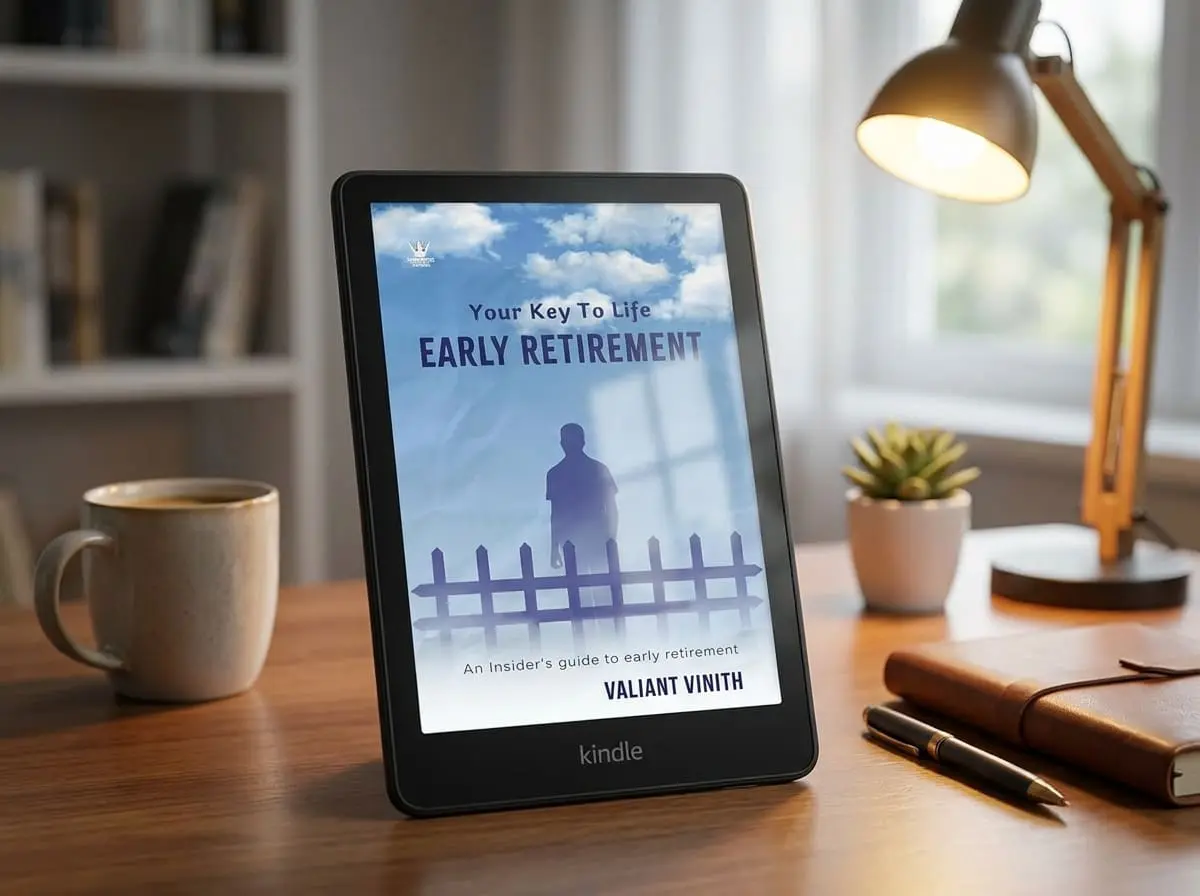
Rating:
⭐⭐⭐⭐1/2 (4.5 out of 5)
There is something strangely emotional about reading a book on retirement when you are still very much inside the chaos of working life. Maybe it is because most of us are trained to think of retirement as a far away event. Something for “later.” Something old people discuss after pension paperwork and blood pressure medicines enter the conversation.
But while reading Your Key To Life: Early Retirement by Valiant Vinith, I kept thinking about people I know personally. Bankers. Corporate employees. Managers. Friends who have forgotten what a weekday afternoon even feels like. People who keep saying, “बस थोड़ा और…” while looking permanently exhausted.
And I think that is where this book connects.
It is not written like a polished finance guru handbook. It reads more like a working professional sitting across from you and saying, “Listen, I’ve lived this life for 30 years. Maybe we should rethink what success actually means.”
Honestly, that sincerity mattered to me more than perfection.
What the Book Is About
Your Key To Life: Early Retirement is essentially about preparing emotionally, mentally, financially, and practically for leaving corporate life earlier than society expects you to.
The author, Valiant Vinith, comes from decades of corporate and operational experience. You can feel that lived experience throughout the pages. This is not somebody theorizing from a motivational stage. He talks like someone who has attended meetings, handled targets, managed teams, dealt with office politics, watched industries change, and eventually reached a point where he asked himself a difficult question:
“What exactly am I waiting for?”
The book opens with a strong observation about modern employment. Automation, AI, layoffs, salary cuts, shrinking benefits, workplace pressure, all of it forms the background of the discussion. One section mentioning how even administrative and HR functions are increasingly automated felt very current for 2026. There is a page where Vinith talks about ChatGPT, AI systems, reskilling, and how employees either adapt or become irrelevant. That section genuinely surprised me because many books written around retirement completely ignore technological anxiety.
Here, it becomes part of the emotional equation.
And honestly, I appreciated that.
The book gradually moves from defining early retirement into something deeper. It asks readers to examine what they truly want from life before age and health make those dreams harder.
Travel. Family time. Peace. Spirituality. Creativity. Health. Freedom from targets. Freedom from constant reporting structures.
The author repeatedly returns to one core idea: why postpone living?
There are practical chapters too. The section called Have a Plan B stood out because it avoids fantasy. Vinith does not romanticize quitting your job impulsively. He repeatedly reminds readers about emergency funds, consulting opportunities, maintaining professional networks, and financial preparation.
That balance helped the book feel trustworthy.
What Stood Out to Me
I think the strongest aspect of this book is that it understands the psychology of corporate exhaustion very well.
There is one line where the author says professionals spend decades obeying someone. First parents, then teachers, then managers, then seniors. That observation may sound simple, but I think many readers will recognize themselves there instantly.
In my years reviewing books, I have noticed that the most effective nonfiction is rarely the smartest sounding book in the room. It is usually the one that makes readers stop and think, “Wait… this is exactly how I feel.”
This book has many such moments.
For example, there is a section listing things people secretly dream about after leaving corporate life. Shopping on weekdays. Watching rain without worrying about traffic. Spending more time with parents. Going on pilgrimages. Avoiding office politics. Sleeping without Monday anxiety.
These are ordinary desires. Nothing glamorous. And maybe that is why they feel real.
Another thing I genuinely liked was the structure. The chapters are short and readable. The author does not overload readers with complicated financial jargon or investment theory. He stays focused on mindset, preparedness, and emotional transition.
I also found the “What You Can Control” and “What You Cannot Control” section surprisingly useful. It sounds basic at first glance, but many people approaching retirement become consumed by uncertainty. Vinith simplifies the conversation into manageable categories like savings, asset allocation, inflation, policy changes, and health.
It creates clarity.
The final chapter titled Faith was probably the most personal section of the book. The author talks about adding “Faith” alongside fight, flight, and freeze responses. Faith in yourself. Faith in your abilities. Faith in family and experience.
That emotional shift gives the book warmth. It stops being just about retirement planning and becomes a conversation about identity.
I also want to mention the pencil sketch pages near the end.
I loved those.
There is something deeply human about including personal sketches in a book about early retirement. It quietly reinforces the author’s message that many people abandon their hobbies and artistic instincts while chasing corporate responsibilities. Seeing those drawings made the entire book feel more personal and believable.
Not polished for branding. Just honest.
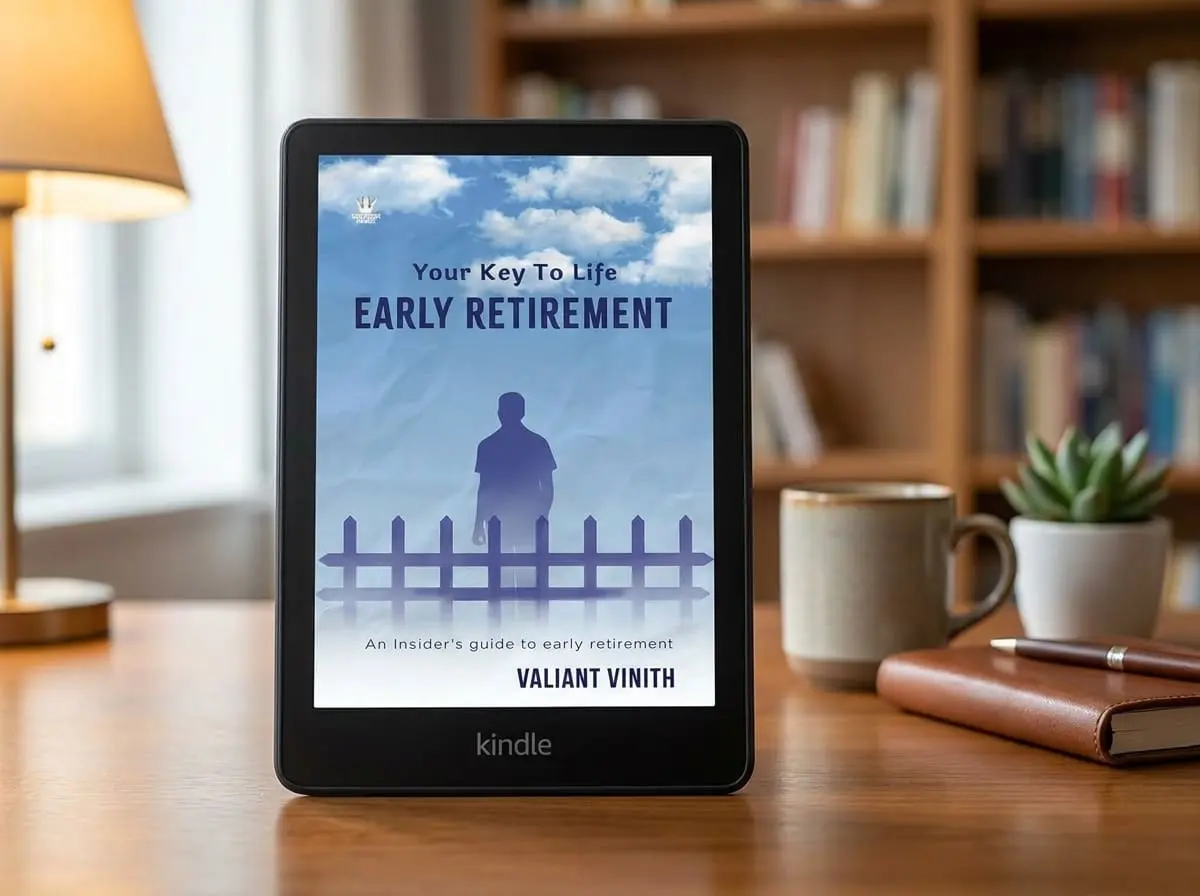
The Emotional Core
At its heart, this is not really a finance book.
It is a book about reclaiming life before burnout becomes your permanent personality.
And I think readers in India especially will connect with that because our work culture often glorifies sacrifice to an unhealthy extent. Many people are conditioned to believe exhaustion equals success. You work harder, earn more, postpone joy, then maybe someday you finally rest.
Vinith challenges that thinking directly.
There is one part where he talks about people waiting until sixty to finally travel or pursue hobbies, only to realize health problems or global situations make those plans difficult later. That section genuinely hit me because I have seen this happen around me too. People spend decades planning “future happiness” and suddenly life changes direction.
The book repeatedly asks readers to stop treating life like a waiting room.
At the same time, I should mention this book may not work equally for every reader.
If somebody is expecting advanced retirement calculations, investment formulas, FIRE movement analytics, or deep financial modeling, this is probably not that kind of book. The writing is more reflective than technical. Sometimes the editing could have been tighter too. A few ideas repeat themselves across chapters.
But strangely, I did not mind that too much because the conversational repetition felt natural. It sounded like someone speaking from experience rather than constructing a corporate presentation.
And honestly, I would rather read a sincere imperfect book than a perfectly engineered empty one.
Who This Book Is For
I think Your Key To Life: Early Retirement will connect most strongly with:
- Corporate employees in their late thirties, forties, or fifties.
- Bankers and professionals dealing with burnout.
- Readers questioning long term work culture.
- People thinking about life after corporate identity.
- Anyone emotionally tired of targets, appraisals, and endless meetings.
It may also resonate with younger professionals because the author repeatedly encourages early planning instead of waiting until retirement is near.
This book probably will not satisfy readers searching for hardcore financial retirement systems or highly data driven wealth frameworks. But if you want a human conversation around retirement, purpose, and personal freedom, there is genuine value here.
Final Thoughts
When I finished Your Key To Life: Early Retirement, I did not come away thinking about money first.
I thought about time.
That says a lot.
Valiant Vinith writes with the voice of somebody who has spent decades inside structured corporate environments and finally decided to ask difficult questions many people avoid. The book does not pretend life becomes magically perfect after early retirement. In fact, it repeatedly warns readers to prepare carefully. But underneath the practical advice is a deeper emotional message:
Do not postpone your entire existence waiting for permission to live.
I think many readers, especially working professionals in India, will see parts of themselves inside these pages.
And maybe that is the biggest strength of this book.
It feels lived.

With over 11 years of experience in the publishing industry, Priya Srivastava has become a trusted guide for hundreds of authors navigating the challenging path from manuscript to marketplace. As Editor-in-Chief of Deified Publications, she combines the precision of a publishing professional with the empathy of a mentor who truly understands the fears, hopes, and dreams of both first-time and seasoned writers.