
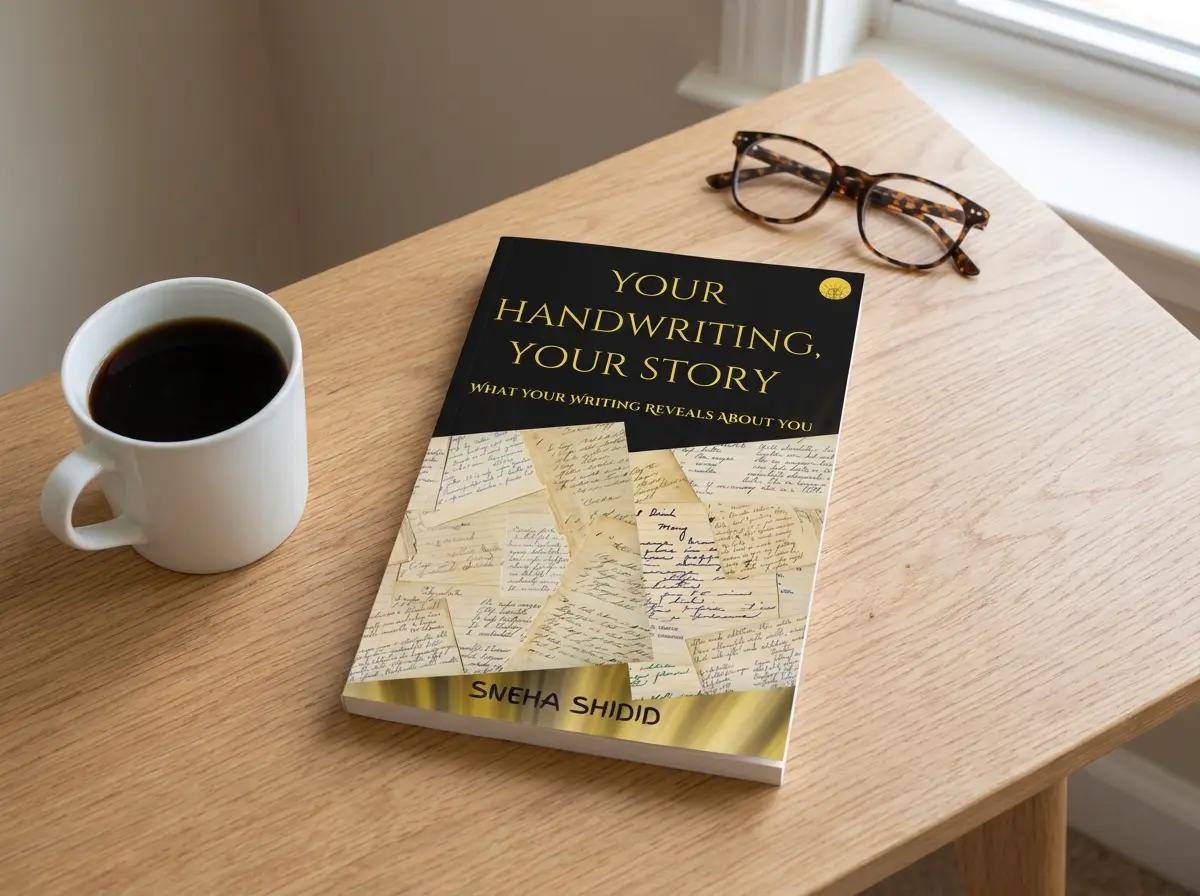
Rating: ⭐⭐⭐⭐ (4.2 out of 5)
As someone who has spent more than fifteen years reading books across genres and now serves as Editor in Chief at Deified Publication, I have learned that every non fiction book asks readers for a different kind of trust. Some books ask us to believe research. Others ask us to believe experience. Your Handwriting Your Story by Sneha Shidid belongs to the second category. It presents graphology not simply as a subject to study but as a way of looking at ourselves through something we create every single day, our handwriting.
I’ll admit, I began reading this book with curiosity mixed with a little skepticism. Graphology has always been one of those topics that sparks debate. Some people believe handwriting reveals personality with surprising accuracy, while others dismiss it entirely. What interested me was not whether the book could settle that debate. I wanted to know whether Sneha Shidid could explain her perspective clearly enough to make readers think differently about the way they write.
By the time I finished reading, I felt the book had succeeded in exactly that. It doesn’t overwhelm readers with complicated theories or academic language. Instead, it introduces one idea after another in a straightforward manner, encouraging readers to observe habits they have probably never noticed before. Even if you don’t accept every conclusion presented, the book gives you plenty to think about.
What the Book Is About
Your Handwriting Your Story focuses on the idea that handwriting reflects the subconscious mind. Right from the opening pages, Sneha Shidid describes handwriting as “brain writing,” explaining that our hands simply become the tool through which the brain expresses thoughts and emotions. That central idea forms the backbone of the entire book.
The book gradually expands this concept into different aspects of everyday life. According to the author, handwriting can reveal personality traits, confidence, emotional patterns, relationships, leadership qualities, work habits, and even certain lifestyle tendencies. Rather than treating graphology as entertainment, she presents it as a practical observation tool that could be useful for teachers, counsellors, HR professionals, business owners, parents, and individuals interested in personal development.
One thing I appreciated was the way the book follows a logical progression. It begins with the importance of handwriting itself before moving into page margins, spacing, line direction, handwriting size, slant, letter formation, signatures, and finally practical suggestions for designing a better signature. Each chapter introduces one concept at a time, making it approachable even for someone encountering graphology for the first time.
What Stood Out to Me
The chapter that first caught my attention discusses why graphologists often ask people to write about themselves on a blank sheet rather than copying existing text. Sneha explains that writing freely about oneself allows emotions and subconscious patterns to appear more naturally, making handwriting analysis more meaningful. Whether or not readers fully agree with the science, I found this reasoning interesting because it shifts attention from handwriting alone to the mental state behind it.
Another section I genuinely enjoyed was the explanation of page margins. Before reading this book, I had never considered that the blank spaces around our writing could carry symbolic meaning. The author associates the left margin with family and past experiences, the right side with opportunities and decision making, the top with morning routines, and the bottom with evening habits. It is one of those ideas that immediately makes you want to grab a notebook and compare your own writing.
The discussion around spacing between words also stood out. Sneha suggests that closely packed words may indicate someone who enjoys constant social interaction, while wider spacing could reflect a stronger preference for privacy. She extends this thinking to spacing between lines as well, connecting cramped writing with multitasking and poor time management. Reading these sections, I found myself remembering old school notebooks and wondering how my own handwriting has changed over the years.
I also appreciated the chapter explaining line direction on blank paper. According to the book, ascending lines may indicate optimism, straight lines suggest stability, curved lines hint at changing moods, and descending lines may reflect discouragement. These examples are simple enough that readers can immediately test them against samples of handwriting from friends or family members.
One of the more memorable parts discusses doctors’ handwriting. Instead of repeating the familiar joke that doctors write illegibly, Sneha connects small and difficult to read handwriting with deep thinking, sharp memory, and rapid mental processing. I smiled while reading this section because it takes a stereotype most of us have heard and tries to explain it through the lens of graphology.
The final chapters on signatures were probably my favorite. The distinction between handwriting representing one’s inner personality and a signature representing one’s public identity gives the closing section a practical feel. The author offers specific suggestions, such as avoiding unnecessary strokes, circles, multiple underscores, or unreadable signatures, while encouraging readers to design a signature that reflects clarity and confidence. Whether readers adopt these recommendations or not, this part feels especially actionable because almost everyone signs documents regularly.
The Writing Style
Sneha Shidid writes with enthusiasm. That comes across from the very first chapter. Rather than sounding academic, the book reads like someone sharing ideas they genuinely enjoy discussing. I think that works well for readers who are new to graphology because it makes the subject feel less intimidating.
There are places where the language could have benefited from stronger editing. Some grammatical errors, repeated ideas, and sentence construction issues occasionally interrupt the flow. None of these make the book difficult to understand, but polishing the manuscript further would have made the reading experience smoother.
Another observation is that many of the claims are presented confidently without referencing scientific studies or broader research. Readers approaching graphology from a scientific perspective may wish for additional evidence or citations. On the other hand, readers who enjoy self improvement literature, spirituality, or personality analysis may be perfectly comfortable engaging with the author’s experiential approach.
For me, honesty in a review matters. This is not the kind of book that tries to convince readers through dense academic references. It invites readers to observe, compare, and decide for themselves.
The Emotional Connection
One thing I genuinely liked was that the book keeps bringing the conversation back to self awareness. Every chapter encourages readers to observe their own habits instead of immediately judging someone else’s handwriting. That subtle shift changes the reading experience.
I found myself reaching for a pen more than once while reading. I looked at how I space my words, how much pressure I use while writing, and even where I place the dot over the letter “i.” The chapter discussing whether that dot appears directly above the letter, slightly left, or slightly right is surprisingly engaging because it turns an everyday habit into something worth noticing.
The sections discussing graphotherapy for improving confidence, health, and mental wellbeing also reveal the author’s optimism. Sneha clearly believes handwriting practice can encourage positive behavioural changes. Readers may have different opinions about those claims, but her intention comes across as encouraging rather than sensational.
Reading this book reminded me that we often overlook ordinary things simply because they are familiar. We type on phones and laptops almost every hour, yet many of us rarely stop to examine the handwriting that once filled our school notebooks. That reflection alone made the book enjoyable for me.
Who Should Read This Book?
I think Your Handwriting Your Story will appeal most to readers who enjoy psychology, personality analysis, self improvement, body language, astrology, or behavioural observation. If you’ve ever been curious about why people write differently, or if you’ve wondered whether handwriting reflects habits beyond neatness, you’ll probably enjoy exploring the author’s perspective.
Teachers, counsellors, HR professionals, coaches, and parents may also find several ideas worth reflecting upon, particularly because the book repeatedly discusses handwriting in educational and professional settings.
However, readers looking for rigorous scientific validation may finish the book wanting more research support. That’s not necessarily a weakness as long as expectations are set correctly. This book presents graphology through practical observations and the author’s own understanding rather than through an academic framework.
Final Thoughts
In 2026, when almost every conversation happens through keyboards and touchscreens, there is something refreshing about reading a book that asks us to slow down and pay attention to handwriting again. Whether readers fully embrace graphology or remain skeptical, Your Handwriting Your Story succeeds in making handwriting feel interesting instead of ordinary.
Sneha Shidid clearly cares about this subject. That enthusiasm carries the book from beginning to end. I appreciated that the chapters remain concise, the examples are easy to understand, and the practical suggestions encourage readers to participate instead of simply reading passively.
Could the writing benefit from another round of professional editing? Yes. Would stronger references strengthen some of the larger claims? Absolutely. But those observations do not take away from the book’s sincerity. It is written by someone who genuinely believes handwriting can become a tool for greater self awareness, and that belief gives the book its identity.
If you’re searching for an introductory book on graphology that is accessible, conversational, and filled with observations you can immediately test using your own handwriting, I think Your Handwriting Your Story is worth picking up.
FAQs
Is Your Handwriting Your Story worth reading?
Yes, especially if you are curious about graphology, personality analysis, or self improvement. It offers a beginner friendly introduction and plenty of practical observations.
Who should read Your Handwriting Your Story?
Readers interested in handwriting analysis, teachers, counsellors, HR professionals, students of behavioural studies, and anyone curious about self observation may find it enjoyable.
Is Your Handwriting Your Story based on science?
The book presents graphology from the author’s practical perspective. Readers looking for extensive scientific research may want to explore additional resources alongside this book.
Does Sneha Shidid make the subject easy to understand?
Yes. One of the book’s strengths is its straightforward language and chapter structure. Each concept is introduced gradually, making it approachable for readers who are completely new to graphology.

With over 11 years of experience in the publishing industry, Priya Srivastava has become a trusted guide for hundreds of authors navigating the challenging path from manuscript to marketplace. As Editor-in-Chief of Deified Publications, she combines the precision of a publishing professional with the empathy of a mentor who truly understands the fears, hopes, and dreams of both first-time and seasoned writers.