
Rating:
⭐⭐⭐⭐½ (4.5 out of 5)
As someone who has spent more than fifteen years reading and reviewing books across genres, I have learned that most books about geopolitics usually fall into one of two traps. They either become so academic that ordinary readers struggle to connect with them, or they become so opinion driven that every chapter feels like an argument waiting to happen.
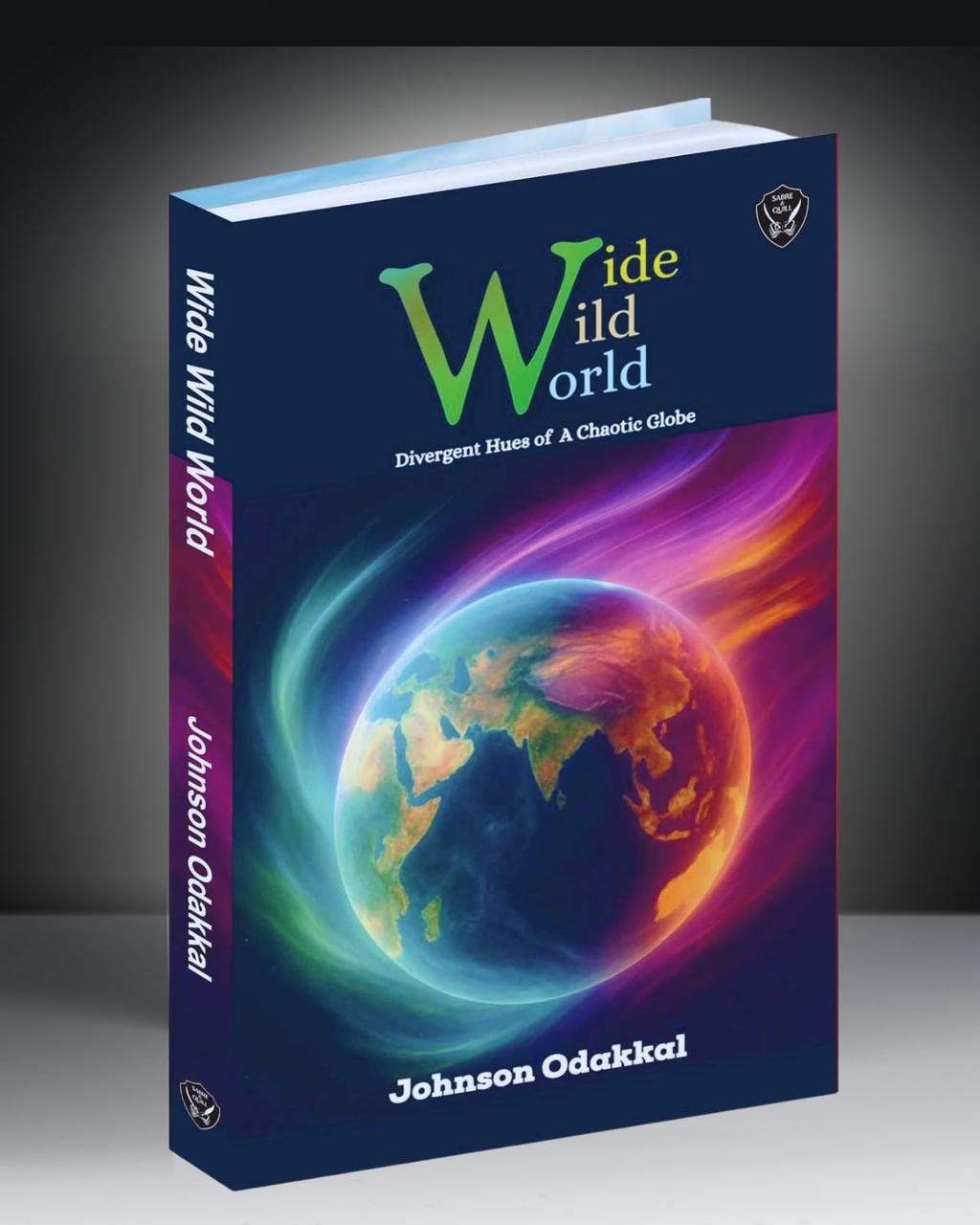
Wide Wild World: Divergent Hues of A Chaotic Globe by Commodore (Dr) Johnson Odakkal surprised me because it avoids both extremes.
I picked up this book expecting a collection of geopolitical essays. What I found instead was something closer to a global snapshot of a world that seems to be changing faster than our ability to fully understand it. The author does not rush readers toward easy conclusions. He presents events, contexts, tensions, contradictions, and competing interpretations, then allows readers to think for themselves.
As Editor in Chief at Deified Publication, I read a lot of books that try to explain the modern world. Very few manage to combine accessibility with intellectual seriousness. This one comes remarkably close.
What I appreciated most was that the book never treats countries as headlines. Behind every crisis, election, border dispute, trade conflict, or strategic rivalry, there are people, histories, institutions, ambitions, fears, and consequences. That perspective gives the book a human dimension that many geopolitical books lack.
What the Book Is About
At its heart, Wide Wild World is a collection of essays examining major political, economic, strategic, and social developments across different regions of the world.
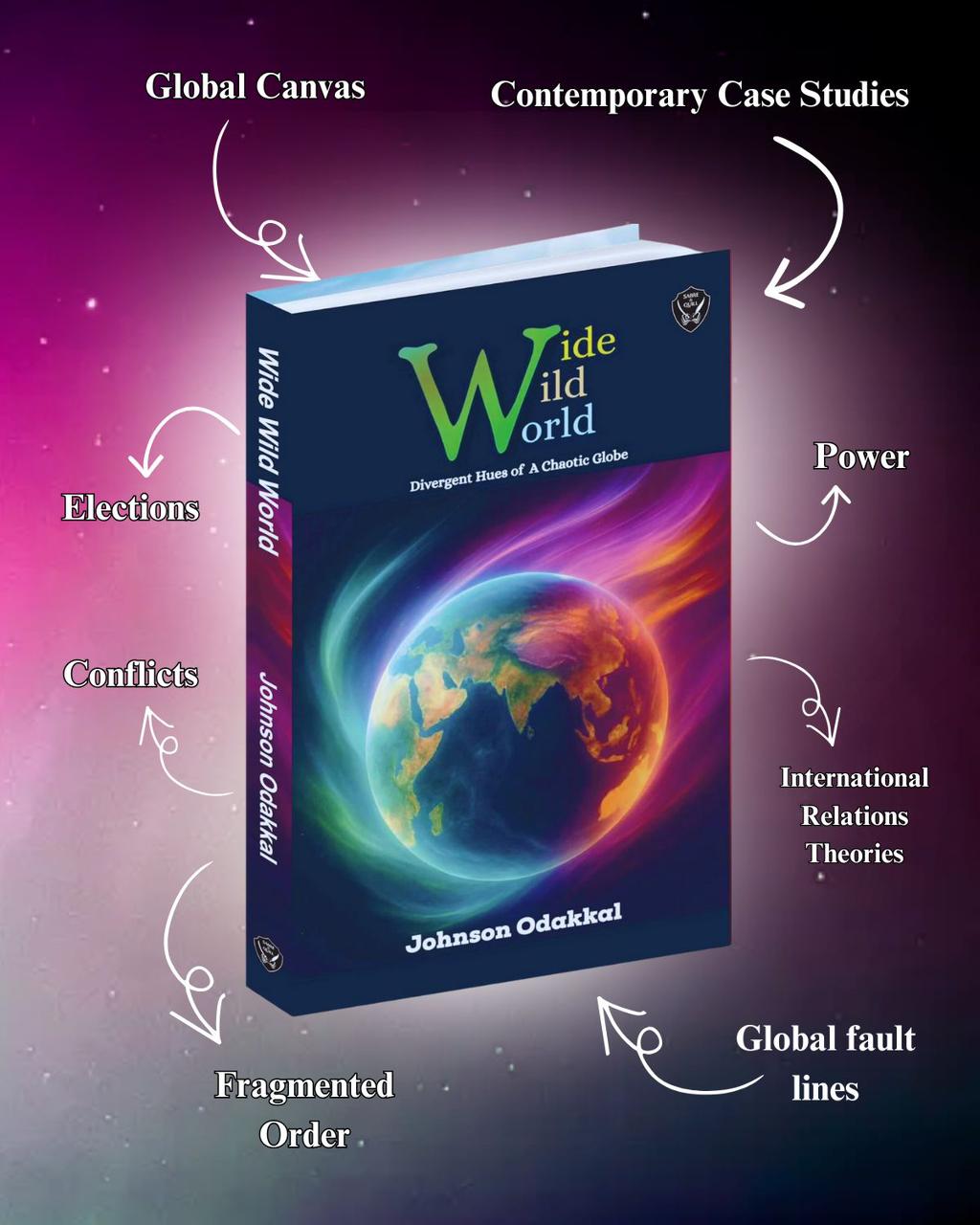
The table of contents itself gives readers a sense of the book’s wide scope. The author moves from Serbia’s lithium debate to Africa’s youth protests, from Venezuela’s contested mandate to France’s democratic challenges, from the Korean Peninsula to maritime insecurity in the Red Sea, from Ecuador’s drug violence to the changing nature of space politics.
Yet this is not a random collection of current affairs articles.
A connecting thread runs throughout the book. The author repeatedly asks a larger question: What happens when old systems face new pressures?
In chapter after chapter, we see institutions being tested, borders being challenged, technologies reshaping power, and citizens demanding accountability. Whether the subject is Kenya’s protests, France’s fragmented politics, Ecuador’s security crisis, or South Korea’s tensions with North Korea, the author keeps returning to the interaction between power, governance, identity, technology, and public response.
One thing I genuinely liked is that the book does not pretend the world can be understood through a single theory. In the chapter on the Red Sea crisis, for example, the author discusses realism, geoeconomics, securitisation theory, and constructivist perspectives. Rather than declaring one framework correct, he shows how each explains part of the picture.
That approach appears throughout the book. Complexity is not treated as a problem. It is treated as reality.
What Stood Out to Me
Several things stood out while reading this book.
First, the author has a rare ability to connect events happening in completely different parts of the world.
A reader may begin with youth protests in Africa and later find themselves reading about France’s electoral fragmentation or Ecuador’s security crisis. On the surface these topics seem unrelated. Yet the book consistently highlights recurring patterns. Questions about legitimacy, governance, identity, economic opportunity, public trust, and institutional resilience appear across continents.
I found that particularly interesting.
The chapter on Africa’s digitally connected youth movements was one of the most memorable sections. The author discusses how social media became both a tool of mobilisation and, at times, a weapon of manipulation. Reading those pages in 2026 feels especially relevant because debates around online influence, misinformation, activism, and state responses continue to shape politics around the world.
Another standout chapter was the discussion of France’s 2024 elections. Instead of reducing the story to political winners and losers, the author examines deeper structural issues such as fragmented mandates, coalition challenges, and questions surrounding democratic governance. It reminded me that elections are often symptoms of broader social currents rather than isolated events.
I was also fascinated by the chapter titled Orbits and Outsourcing: Private Actors Rewriting the Politics of Space. Many people still think of space exploration as something controlled almost entirely by governments. The author shows how commercial players are increasingly reshaping the landscape. The discussion surrounding Sunita Williams, NASA, SpaceX, and changing institutional relationships made the topic feel much more immediate and relevant than many traditional space policy books.
Then there is the Red Sea chapter, which may be one of the strongest pieces in the book. The author explains how a conflict linked to Yemen can influence shipping routes, insurance costs, supply chains, inflation, and international security. I think many readers will finish that chapter with a better appreciation of how interconnected the modern world really is.
The writing style deserves mention as well.
Dr. Johnson Odakkal writes with clarity. He clearly knows his subject matter, but he does not write to impress other academics. He writes to communicate. That distinction matters.
The Emotional Core
At first glance, a book about geopolitics may not seem like something that carries much emotional weight.
Yet I found an emotional thread running beneath many chapters.
The book repeatedly reminds readers that behind political systems are human beings. Behind elections are citizens hoping for change. Behind conflicts are communities living with uncertainty. Behind economic statistics are families trying to build better futures.
The chapter discussing youth protests across several African nations particularly captured this idea. The protests were not presented merely as political events. They were shown as expressions of frustration, aspiration, dignity, and hope.
Similarly, the chapter on Ecuador’s security crisis is not simply about crime statistics or state capacity. It becomes a story about what happens when institutions struggle to keep pace with rapidly changing realities.
Even the chapters focused on strategic competition carry this human dimension. Whether discussing South Korea and North Korea, maritime security, or global supply chains, the author frequently reminds readers that policy decisions eventually affect ordinary lives.
I think that is what gives the book its strongest quality.
It encourages intellectual curiosity without losing sight of human consequences.
Who This Book Is For
This is not a book for readers looking for simple answers or ideological certainty.
If you want a book that tells you exactly who is right and who is wrong in every global conflict, you may find this approach frustrating.
However, if you enjoy understanding how different pieces of the global puzzle connect together, there is a lot to appreciate here.
Students of political science, international relations, public policy, and contemporary history will find substantial value in these essays. Educators may also find several chapters useful as discussion starters because the author introduces complex issues without overwhelming readers.
I also think curious general readers will enjoy this book.
You do not need a background in geopolitics to follow the arguments. The explanations remain accessible while still respecting the reader’s intelligence.
In a media environment dominated by hot takes and instant conclusions, this book encourages something increasingly rare: careful observation.
Final Thoughts
When I finished Wide Wild World, my strongest impression was not that I had learned a specific lesson. Instead, I felt I had gained a broader lens through which to view current events.
That may sound simple, but it is actually quite difficult for an author to achieve.
Commodore (Dr) Johnson Odakkal does not present the world as a collection of isolated crises. He presents it as a network of interconnected developments shaped by history, economics, technology, geography, institutions, and human choices.
Some chapters are naturally stronger than others, and a few readers may wish for deeper exploration of certain topics. Given the book’s global scope, that is probably unavoidable. Covering so many regions inevitably means some subjects receive less space than they deserve.
Still, the overall achievement is impressive.
In 2026, when international affairs often feel overwhelming, polarised, and reduced to slogans, Wide Wild World offers something more valuable: perspective.
FAQs
Is Wide Wild World worth reading?
Yes, especially if you enjoy understanding current global events through historical, political, economic, and social perspectives rather than through headlines alone.
Who should read Wide Wild World?
Students, educators, policy observers, international relations enthusiasts, and curious readers interested in global affairs will likely enjoy it.
What is Wide Wild World about?
The book examines major geopolitical developments across different regions, including Africa, Europe, Latin America, the Middle East, Asia, and the Indo Pacific, while highlighting broader patterns shaping the modern world.
Is Wide Wild World difficult to read?
Not particularly. While the subject matter is serious, Dr. Johnson Odakkal writes clearly and explains complex issues in an accessible way.

With over 11 years of experience in the publishing industry, Priya Srivastava has become a trusted guide for hundreds of authors navigating the challenging path from manuscript to marketplace. As Editor-in-Chief of Deified Publications, she combines the precision of a publishing professional with the empathy of a mentor who truly understands the fears, hopes, and dreams of both first-time and seasoned writers.