
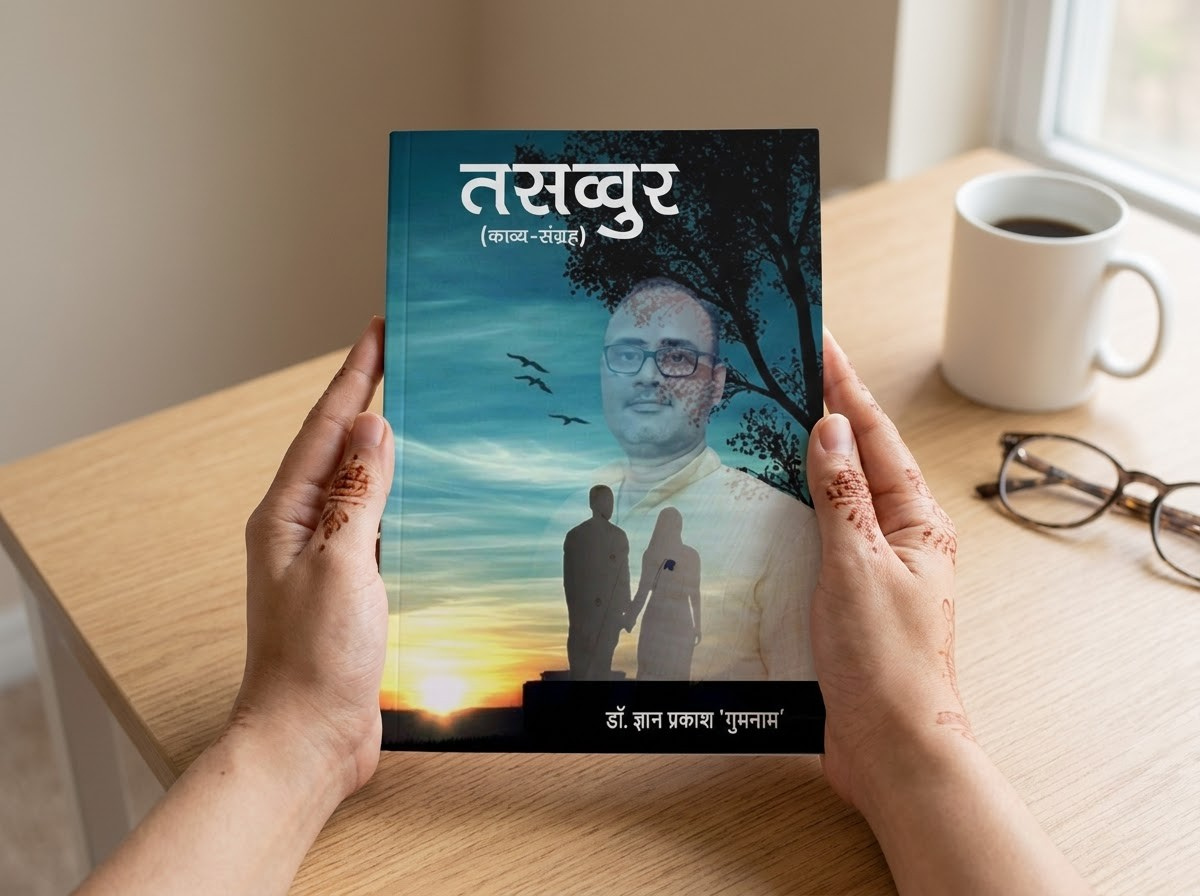
Rating: ⭐⭐⭐⭐ (4.4 out of 5)
I have a small wooden table near my balcony where I drink my evening chai, piled high with heavy manuscripts. After reading books for over fifteen years, my eyes often get tired of complex plots. The other evening, I decided to ignore my usual stack and picked up a slim volume of Hindi poetry. There was no grand marketing material, just a simple promise of verses. I was not expecting to feel this way, but those simple pages made me slow down my racing thoughts. It is the kind of book that sits with you, making you look at mundane details with a slightly softer gaze.
A Warm Encounter in the Pages
As the Editor in Chief at Deified Publication, writing this TASAAVUR Book Review allows me to share a rare find. This little book, titled TASAAVUR, is a very short collection spanning only thirty-six pages. The author, writing under the name Dr. Gyan Prakash (Ghumnaam), does not try to impress us with heavy, academic vocabulary. Instead, he speaks in a language that feels like an old friend sitting next to you on a bus. I wanted to offer a genuine reader review that cuts through standard marketing language. I kept thinking about this simple layout for days, realizing how much we miss when we only chase thick novels.
If you are reading this TASAAVUR Book Review to get a clear book summary, it is helpful to know that this is a curated collection of thirty-six short poems. But what is it about on a deeper level? It is an artistic record of everyday life, blending romantic longing with sharp social commentary. We see verses that speak of intense love, like the opening poem titled Dastaan-e-Ishq, which paints a picture of stolen glances. Yet, just a few pages later, the tone shifts drastically to address national pride and social duty. The author moves from the personal space of the heart to the dusty streets of ordinary towns easily. It feels like a diary where a person records their deepest feelings.
Discovering Extraordinary Voices in the Ordinary
What stood out to me most in terms of craft was the sheer variety of voices the author adopts throughout this slim volume. In one remarkable piece on page eight, the speaker talks about a simple conversation between a driver named Gupta ji and a conductor named Asgar. This little poem captures a moment of returning from Delhi and finding mutual acceptance and warmth. It is such a specific, ordinary scene, yet it shows how Dr. Gyan Prakash (Ghumnaam) finds beauty in places most writers would ignore. The structure of the book is quite loose, which might disappoint those who prefer a rigid thematic progression. Still, I found this unpredictability rather charming.
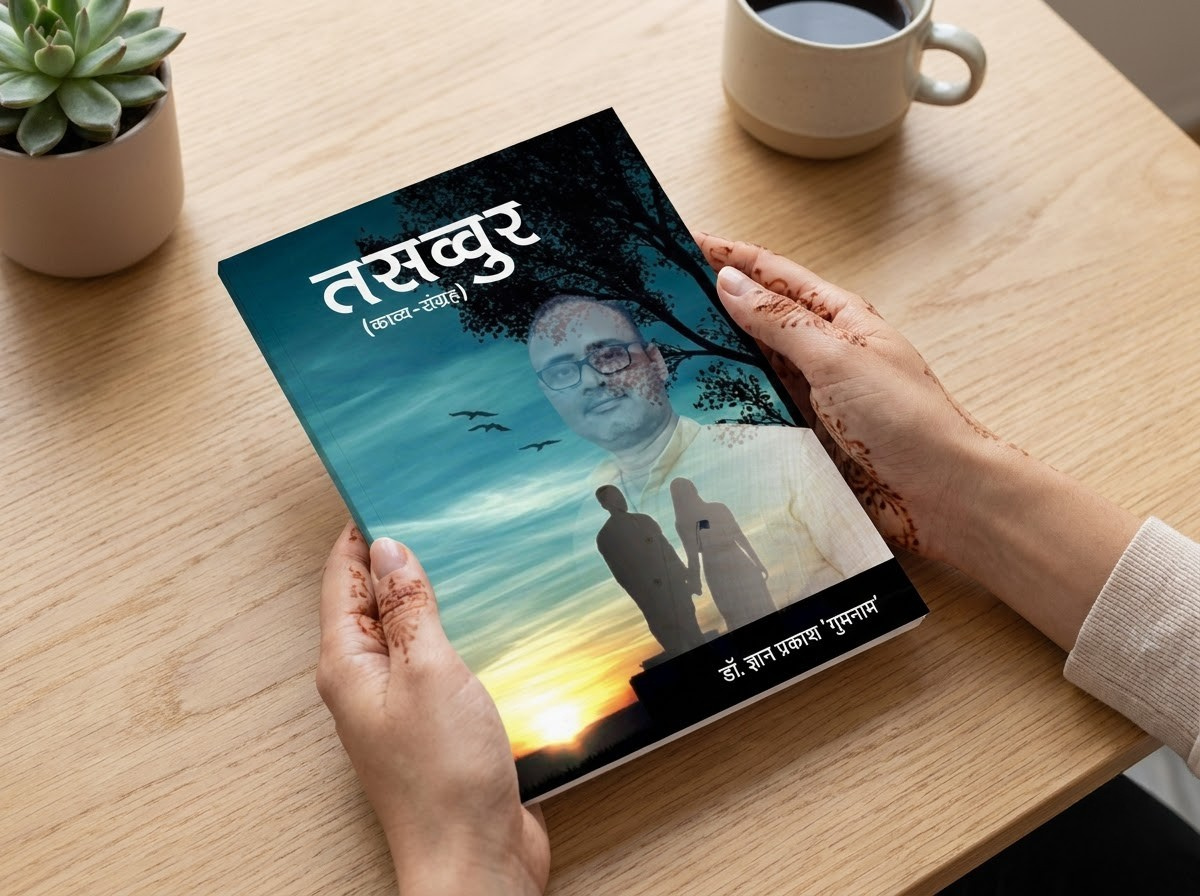
In terms of style, the rhyming schemes are mostly simple, reminiscent of traditional Hindi geet and ghazal formats. However, this simplicity can sometimes border on repetitive, which is my one mild criticism of the book. Some poems use very predictable end rhymes that feel a bit dated, almost like the verses in a school textbook. When I compared this to some of the contemporary Hindi poetry collections I read back in 2024, the style feels very traditional. We can only wonder how this style will be perceived when looking ahead to 2026. There are moments where a line feels slightly stretched just to fit the meter, which breaks the natural flow.
The Heavy Weight of Human Reality
The emotional core of the collection really hit me when I reached the nineteenth poem, titled Tu chal ki main aata hoon. There is a line where the speaker says that playing with colors during Holi does not feel right under the shadow of weapons, because sadness still lingers in the streets of humanity. Honestly, I teared up a bit reading that because it captures the heavy feeling of trying to celebrate life when the world around us is hurting. The author does not shy away from the ugly realities of conflict and human suffering. He balances this sadness with a call for persistence, stating that this struggle will continue until the very end, even to an unnamed grave.
Another moment that lingered with me was the thirty-third poem, titled Aage badh, which translates to moving forward. The speaker asks the reader why they spend so much time listening to others and ignoring their own heart. He writes about how those who always try to please everyone else end up with no one listening to them. I have seen this happen in real life so many times, where people lose themselves trying to be good to everyone. This poem acts as a gentle, reassuring nudge, telling us that we should try living for ourselves for once. It is written with the warm concern of an elder sibling who wants to see you succeed.
Who Should Walk This Path of Words?
To wrap up this TASAAVUR Book Review, let us talk about who should read this collection, or is it worth it only for a specific audience? If you enjoy complex poetry with abstract metaphors that require a dictionary to decode, you will probably want to skip this one. This book is also not for those who dislike traditional rhyming structures or those who only read long fiction. However, if you appreciate simple, heartfelt verses that you can read in a single sitting, this is a wonderful choice. It is perfect for an afternoon with a warm cup of tea when you want something light. This book is for the person who still finds beauty in a simple conversation.
In the end, I think TASAAVUR is a sincere effort that deserves a place on your shelf if you love the Hindi language. It does not pretend to be a flawless piece of art, but its minor flaws make it feel more human. The print length of thirty-six pages makes it a very quick read, but the thoughts behind the words will remain in your mind for much longer. I appreciate that the publisher kept the price accessible at one hundred and twenty-five rupees, making it easy for anyone to pick up. It is a humble reflection on the power of simple words in a loud, busy world.
FAQs
To help you decide if this slim poetry collection is the right choice for your reading shelf, I have compiled some of the most common questions about the book. Here are my honest answers based on my complete reading of these verses. I want to make sure you have all the details before you make a decision. Let us look at some of the key aspects of this work.
What is the book TASAAVUR about?
This book is a collection of thirty-six short Hindi poems and couplets written by Dr. Gyan Prakash under his pen name Gumnam. The book summary covers a wide variety of themes, ranging from romantic love and personal longing to social issues, patriotism, and the struggles of ordinary people. It is a brief, reflective work that focuses on finding deeper meaning in everyday moments and human relationships. The author tries to capture the essence of life through very brief, accessible verses that do not require deep study to appreciate.
Is TASAAVUR written in simple Hindi or complex Urdu?
The author uses a very accessible blend of simple Hindi and common Urdu words, making it easy for average readers to understand. You do not need a background in classical literature to appreciate these poems. The language feels very conversational, like a dialogue between friends, though it maintains a traditional poetic structure and rhyming scheme throughout the book. This makes the collection highly approachable for those who might find academic poetry intimidating or dry.
Should you read this book if you are new to Hindi poetry?
Yes, this is an excellent starting point for beginners because of its short print length of thirty-six pages and straightforward style. It is not intimidating like some classical poetry collections, and the emotional messages are very direct. If you are wondering if it is worth it, the gentle tone and relatable themes make it a very welcoming entry into the world of modern Hindi verses. It provides a quick, satisfying reading experience that might inspire you to explore more Hindi literature in the future.

With over 11 years of experience in the publishing industry, Priya Srivastava has become a trusted guide for hundreds of authors navigating the challenging path from manuscript to marketplace. As Editor-in-Chief of Deified Publications, she combines the precision of a publishing professional with the empathy of a mentor who truly understands the fears, hopes, and dreams of both first-time and seasoned writers.