
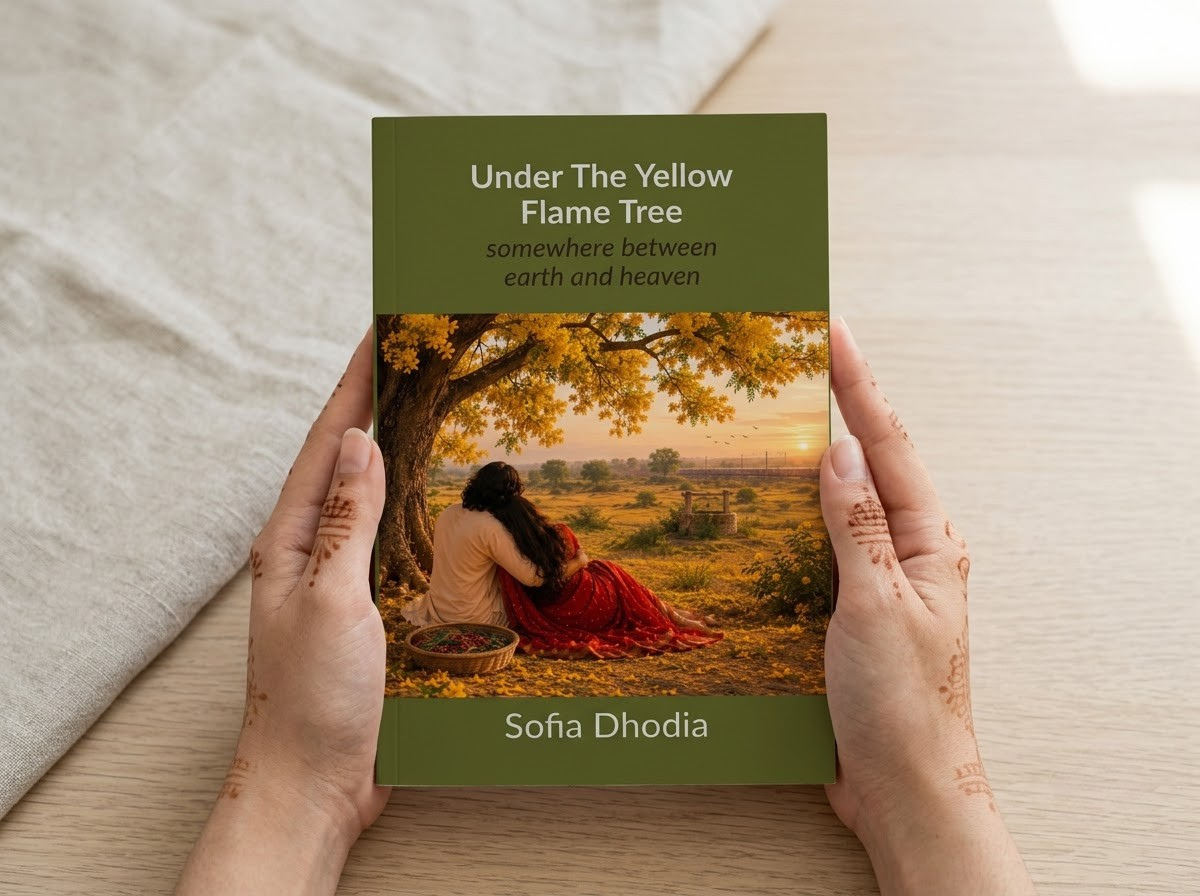
Rating: ⭐⭐⭐⭐1/2 (4.5 out of 5)
Every once in a while, I run into a novel that does not try to shake you by the shoulders or blind you with high drama. Instead, it invites you to sit down on a wooden bench, take a deep breath, and watch two ordinary people attempt to rebuild their lives. As Editor-in-Chief at Deified Publication, I read dozens of manuscripts every month, spanning massive fantasy worlds, fast thrillers, and heavy literary works. Yet it is often the smaller, human moments that end up occupying my thoughts long after I turn the final page. Sofia Dhodia has written a novel that feels almost like a gentle conversation over a cup of hot chai on a slow afternoon. I found myself thinking about my own hometown and the old trees that stood near the railway line while reading these pages.
There is a specific kind of comfort in finding a story that respects ordinary struggles. We live in a culture that constantly demands the extraordinary, yet most of our actual lives are spent navigating small heartbreaks, family obligations, and broken promises. When I picked up Under The Yellow Flame Tree, I was not sure if it would be another standard romance or something that touched on real domestic reality. It turns out to be a story that blends tender romance with some very stark, harsh truths about family dynamics, social expectations, and personal endurance. It reminded me of classic Indian family dramas where love exists right alongside pain, and where a single physical location becomes the anchor for multiple generations.
What Is Under The Yellow Flame Tree About?
If you are looking for a quick book summary, the narrative centers on Vasudha and Mahtaab, two souls who find comfort in each other under the sweeping branches of a massive Yellow Gulmohar tree outside an old town. The book opens by introducing this grand yellow flame tree, standing tall near a railway track, serving as a sanctuary for birds, squirrels, and weary lovers alike. Vasudha is a woman who has endured unimaginable hardship. Her husband, Ravi, is an abusive man who blames her for not bearing a son, subjected her to domestic cruelty, and eventually brought another woman named Gauri into their home to act as his second wife. Vasudha is pushed into the background of her own household, treated almost like a domestic servant while trying to protect her young daughter, Simar.
Mahtaab enters her life not as a grand savior on a white horse, but as a gentle, steadfast presence who listens without judgment. He is a man who understands her pain and offers a safe harbour when her world falls apart. Their secret meetings under the yellow tree give Vasudha the strength to survive her daily torment. However, the story expands far beyond a simple romance. As the chapters unfold, we see the ripple effects of these choices on the next generation, particularly through Vasudha’s daughter Simar, who grows up carrying the weight of her mother’s secret history, facing her own marital struggles with an unkind mother-in-law named Bimla. It is a story about how love survives through decades of sorrow, secret meetings, and societal judgment.
Character Craft, Pacing, and Writing Style
Sofia Dhodia writes with a decorative, poetic prose style that places heavy emphasis on atmosphere and emotional reflection. Right from chapter one, titled The Lovers, the author paints vivid pictures of jasmine blossoms, the golden sun filtering through leaves, and the rhythmic sound of distant passing trains. The yellow flame tree itself becomes a full character in the book. In fact, chapter thirty is literally written from the perspective of the Gulmohar tree itself, reflecting on human cruelty, love, and the passing of time. I loved that creative choice, as it gave the whole novel an fable-like, timeless quality that elevated it above standard commercial fiction.
When it comes to character development, Vasudha’s resilience is the heart of the book. You feel the heavy injustice of her situation when Ravi brings Gauri into the house and insolently tells the entire village that he is marrying again. The scene where Vasudha sits quietly near the door frame, listening to the laughter of her husband and his new bride from the inner bedroom, is deeply painful to read. Mahtaab is crafted as a soft, patient contrast to Ravi’s violence. His dialogue is filled with steady promises, such as when he tells Vasudha that there is no power in the world that can truly separate their souls. If I have one mild critique regarding craft, it is that the dialogue can occasionally feel a bit overly formal or dramatic for modern ears. Characters sometimes speak in poetic aphorisms rather than everyday spoken language, which might pull you back slightly if you prefer strictly realistic prose.
The Emotional Core and How It Lands on the Reader
The true power of this novel lies in its unfiltered depiction of generational trauma and the silent endurance of women. I was deeply moved by the relationship between Vasudha and her daughter Simar. In chapter twenty-seven, titled Metamorphosis, the emotional tension reaches a boiling point when Simar learns the true horror of how her mother and Mahtaab were treated by the village elders, Gagan and Nagesh, who tried to frame their deaths as a dishonorable tragedy to protect local land interests. The fury and shock Simar feels upon discovering how her uncle and father plotted against her mother hit me right in the chest. It felt so authentic to real life, where family secrets eventually surface to demand justice from the young.
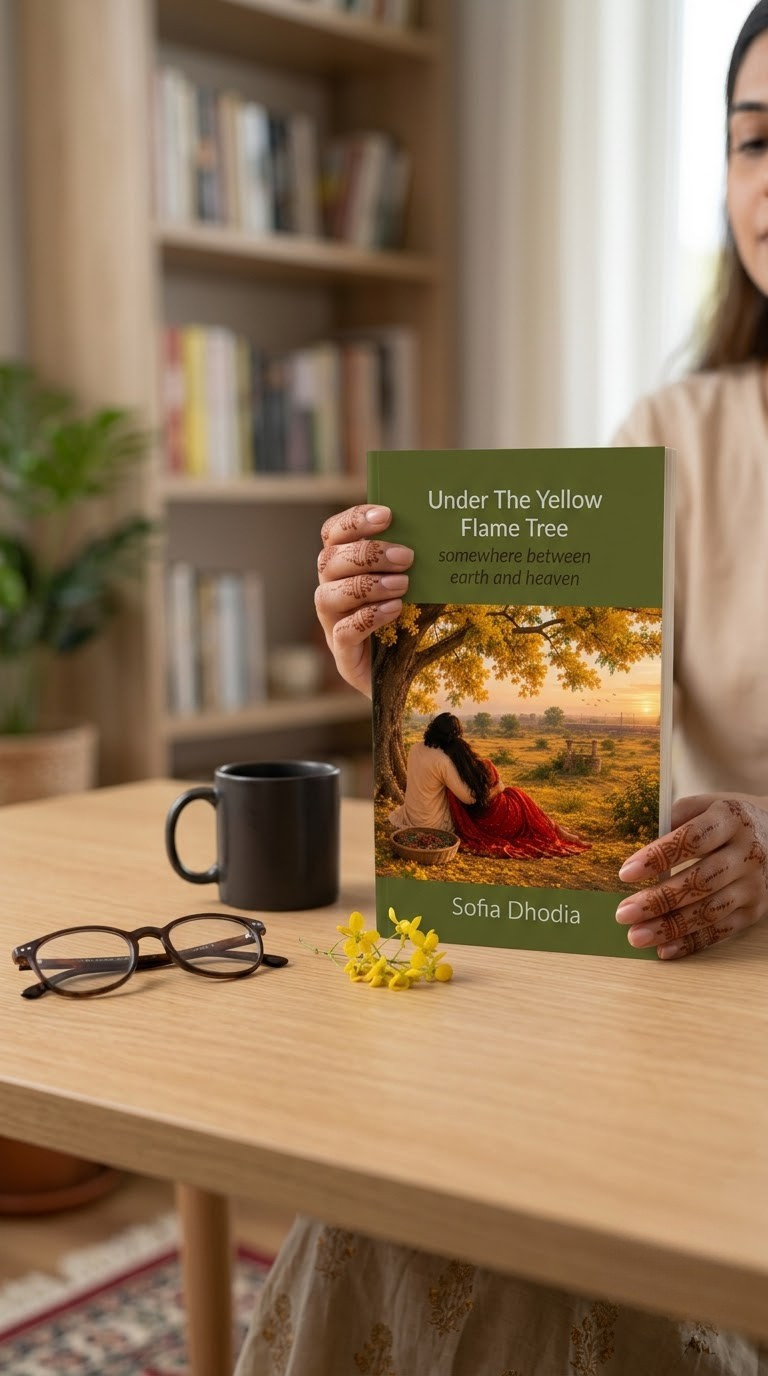
There is also an incredible sense of hope running beneath the tragedy. In the chapter titled The Fair, Mahtaab takes young Simar to a local carnival, buying her treats and lifting her onto his shoulders so she can see the shrine on the hill. In that moment, Mahtaab acts as the true father figure Simar deserved, creating a memory of safety that sustains her through her own difficult marriage later in life. Reading these chapters made me reflect on how small acts of kindness from adults can shape a child’s entire emotional landscape. The novel demonstrates that even when society strips away a person’s dignity, genuine love provides a fortress that cannot be easily destroyed.
Should You Read It or Skip It?
If you are wondering whether you should read Under The Yellow Flame Tree, the answer depends entirely on what you want out of a novel. If you love sweeping family sagas, traditional Indian settings, poetic language, and stories about forbidden love that endures across time, this book is completely worth it. Readers who enjoy authors like Chitra Banerjee Divakaruni or Roy will likely appreciate the rich atmospheric descriptions and the focus on female endurance. It is the kind of book that invites you to slow down and reflect on human relationships.
On the flip side, if you are looking for a fast, lighthearted, contemporary romantic comedy, you might want to skip this one. The book deals with heavy domestic abuse, forced marriages, societal hypocrisy, and tragic loss. The pacing is deliberate, taking its time to build setting and internal emotion rather than rushing toward quick plot resolutions. Furthermore, if you dislike stories that jump forward in time to focus on children and secondary family members, the structural shift in the second half might feel slightly jarring. It demands emotional investment from the reader, so enter with that expectation.
Honest Closing Thoughts
Under The Yellow Flame Tree is a moving, tender, and sometimes painful exploration of what happens when ordinary people are tested by cruelty and social constraints. Sofia Dhodia has built a world that feels grounded in real cultural history while maintaining a romantic, almost magical reverence for nature. The image of the yellow flame tree standing as a silent witness to generation after generation of human sorrow and joy is something that will remain in my mind for a long time. It is a heartfelt story that proves love does not need to be loud or celebrated by the world to be profoundly transformative.
FAQs
What is the main plot of Under The Yellow Flame Tree?
The novel follows Vasudha, a woman trapped in an abusive marriage in a small town, who finds secret solace and love with Mahtaab under a grand yellow flame tree near a railway line. Their secret bond and the cruelty of Vasudha’s husband, Ravi, set off a chain of events that impacts Vasudha’s daughter, Simar, as she grows up and uncovers the truth about her family history.
Is Under The Yellow Flame Tree a standalone novel?
Yes, this book tells a complete, multi-generational story within its pages. It covers the lives of the primary lovers, Vasudha and Mahtaab, while following the growth and adult life of Simar, offering a fully resolved narrative arc by the final chapter.
Is this book suitable for book clubs in 2026?
Absolutely, it is an excellent selection for book clubs looking for rich discussion topics in 2026. The story offers plenty of material regarding traditional family roles, domestic endurance, the ethics of social judgment, and how trauma is inherited and confronted across generations.
Is the book very sad or does it offer a hopeful ending?
While the story contains intense emotional hardship, domestic abuse, and tragedy, the ultimate message is one of profound hope and spiritual connection. The focus remains on how love survives hardship and gives the next generation the strength to seek their own peace.

With over 11 years of experience in the publishing industry, Priya Srivastava has become a trusted guide for hundreds of authors navigating the challenging path from manuscript to marketplace. As Editor-in-Chief of Deified Publications, she combines the precision of a publishing professional with the empathy of a mentor who truly understands the fears, hopes, and dreams of both first-time and seasoned writers.