
Rating:
⭐⭐⭐⭐ (4.2 out of 5)
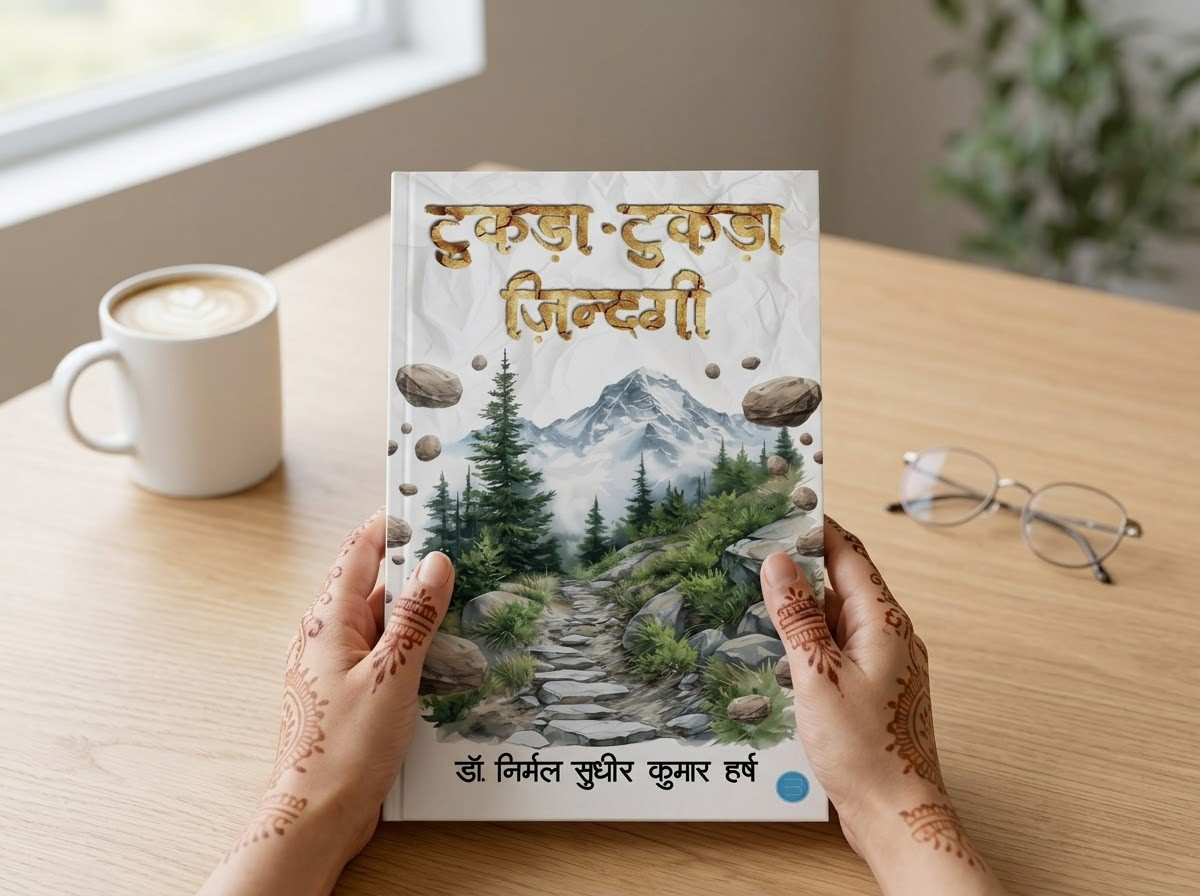
I’ll be honest with you. When a short story collection lands on my desk at Deified Publication, I brace myself a little. So many of them feel like the writer had one good idea and stretched it across ten stories. So I picked up Tukda-Tukda Zindagi by Nirmal Sudhir Kumar Harsh with that same low hum of caution in my head. What changed my mind wasn’t any single dramatic moment. It was how ordinary and specific everything felt. A photographer whose shop board says “since 1965.” A wedding singer whose bookings dry up because nobody wants a live band anymore. A retired engineer who cannot stop thinking about a storm from twenty five years ago. These aren’t people I’d normally notice on the street, and that’s exactly the point of this book.
What the Book Is About
Tukda-Tukda Zindagi is a collection of short stories in Hindi, closing with a longer novella called Wapasi. The author tells us in his own note that the stories came from people he met and observed during his years of service and travel, both in India and abroad, and honestly, that shows. There’s no single plot holding this book together the way a novel would. Instead, Harsh gives you a set of lives, mostly men in their later years, looking back at something that got away from them, whether that’s love, relevance, or a version of themselves they used to be. Some stories are barely ten pages. The novella at the end runs much longer and gives the collection a proper anchor to close on.
What struck me while reading is how many of these characters are people society tends to walk past. A man named Verma has run the only photography shop in a small town for fifty years and watches it get replaced by a shiny new digital studio that his own former apprentice opens practically next door. A singer named Edward, once the star act at every wedding and celebration in his city, quietly loses his bookings one season at a time as DJs and rap take over, until his band disbands and, in Harsh’s words, nobody in the city even notices. There’s an ache in these two stories in particular that comes from watching your skill become irrelevant while you’re still very much alive to see it happen.
What Stood Out to Me
In my years reading Hindi short fiction, I’ve noticed that a lot of writers reach for heavy, poetic language when they want a moment to land emotionally. Harsh doesn’t really do that. His sentences are plain, almost conversational, the way someone would actually tell you a story over tea. That restraint works in his favor more often than not. In “Bhilma,” for instance, an engineer overseeing a project near a river recalls a night during a storm when something happened between him and a young worker’s daughter named Kammo, something he never processed properly at the time. Years later, while dropping his own daughter at her boarding school, he keeps noticing a street child with an odd, squinting gaze who begs near the road, and it takes him far too long to understand who that child actually is. The way Harsh writes the engineer’s slow, reluctant realization, without a single dramatic reveal line, made the whole thing land harder than if he’d spelled it out.
The novella Wapasi is where I think Harsh’s control over pacing really shows itself. It follows a man who left a hill town for higher studies, built an entire career as a professor in Michigan, and returns to India after twenty five years for an honor in Bangalore. On the flight, he notices an air hostess whose face and voice remind him so strongly of a woman named Gayatri he once loved that he actually gets up and approaches her, only to be told, understandably, to sit back down and stop bothering the crew. That small, almost embarrassing scene does more to show his guilt and disorientation than pages of inner monologue could have. I also appreciated how the story doesn’t forget the uncle, Bhuvan Chacha, who raised him and whose sacrifice gets revisited with real tenderness rather than being used just as backstory filler.
There’s also a shorter piece, tucked before the novella, about a retired teacher who runs into a former student named Nazir working as a chef in a hotel in Dubai. Nazir survived the 2013 Kedarnath disaster that killed the rest of his family, and gave up on finishing his education afterward to build a new life abroad. The teacher’s quiet regret at not having pushed him harder, mixed with his own daughter’s blunt question about whether he wanted to be “just a master,” is one of the more understated character studies in the whole book. Harsh doesn’t tell you what to feel about it. He just lets the scene sit there.
If I have one honest complaint, it’s that a few of the shorter stories, particularly the ones dealing with old age and lost relevance, start to feel a little similar in rhythm if you read the book in one sitting. The men in these stories share a certain resigned, backward looking tone, and by the fourth or fifth story of that kind, I found myself wanting a bit more variety in mood. It’s a minor thing, and honestly may say more about reading habits than about the writing itself, but I’d be doing you a disservice if I pretended every story hit with equal force.
The Emotional Core
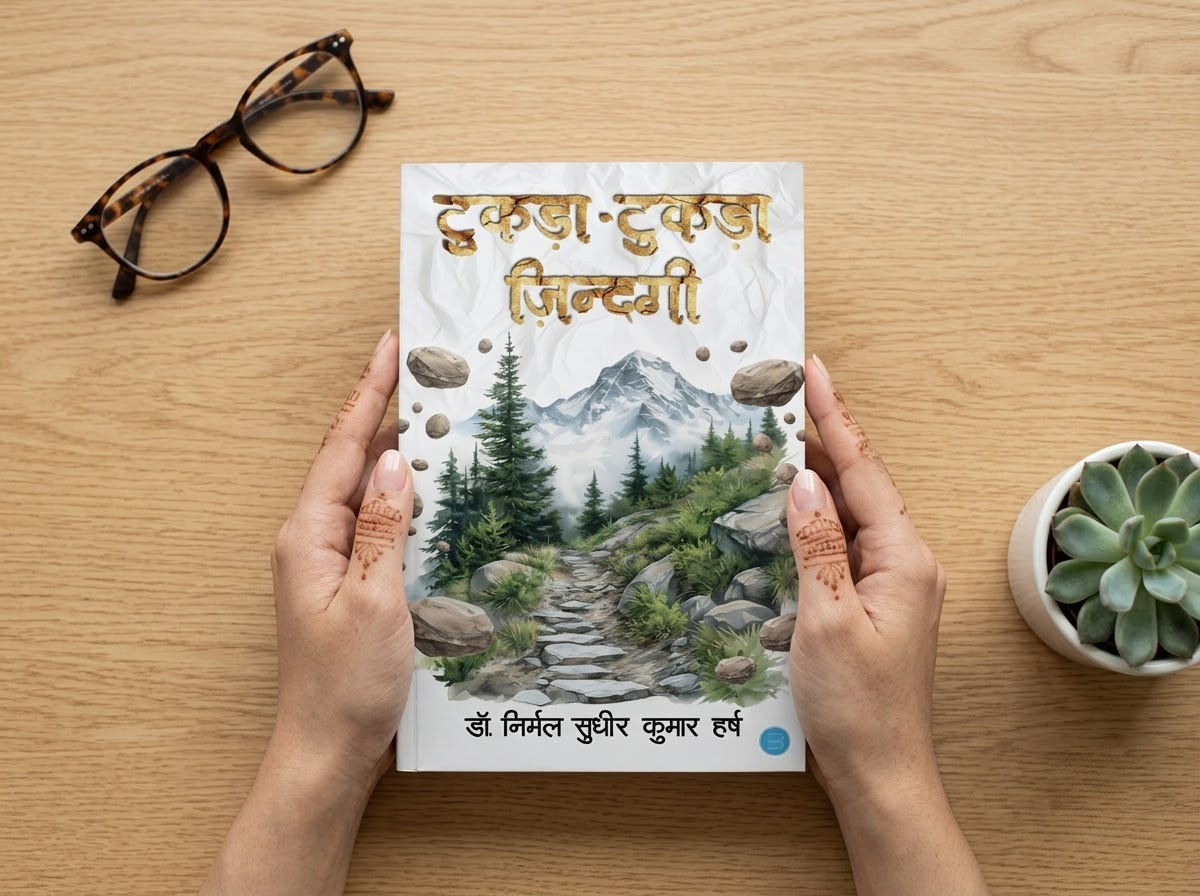
What ties Tukda-Tukda Zindagi together, for me, is guilt and time, and how little control we actually have over either. Almost every character in this collection is dealing with something they can’t undo, whether it’s an affair they never owned up to, a career that became obsolete around them, or a love they let slip away because of circumstances outside their control. There’s a story about the founder of an ashram, Swami Sachidanand, whose entire respectable, saintly public image gets complicated after his death by a letter revealing a hidden wife and son. I won’t spoil how that story resolves, but I’ll say it made me reconsider how much we actually know about the people we admire from a distance, and how much of that admiration depends on things simply never coming to light.
Who This Book Is For
If you enjoy Hindi literary fiction that moves at a human pace rather than a thriller’s pace, this is very much for you. Readers who grew up around small hill towns like Nainital, Almora, or Bhowali will probably feel an extra layer of recognition in the settings, since Harsh clearly knows this geography from the inside. If you’re someone who wants twists, fast plotting, or clean resolutions, some of these stories might frustrate you, since Harsh tends to let things stay unresolved or bittersweet rather than tying them up neatly. I’d also say this book rewards readers who are okay sitting with an uncomfortable feeling for a while instead of having it explained away by the last page.
Final Thoughts
I came into Tukda-Tukda Zindagi expecting a fairly forgettable collection and came out of it thinking about at least three of these characters days later, particularly the engineer from “Bhilma” and the professor in “Wapasi.” Nirmal Sudhir Kumar Harsh writes like someone who has actually watched people up close for a long time, and it shows in the small, specific details he chooses over big dramatic ones. It’s not a flawless collection, and a few stories blur together in tone, but as a longtime editor at Deified Publication, I can say this is a genuinely thoughtful piece of Hindi short fiction that earns its emotional moments instead of manufacturing them.
FAQs
Is Tukda-Tukda Zindagi worth reading?
Yes, especially if slice of life Hindi fiction interests you more than fast paced plots.
Who should read Tukda-Tukda Zindagi?
Readers who enjoy character driven stories about regret, aging, and small town India, along with anyone who wants a strong closing novella rather than just a set of short pieces.
What language is Tukda-Tukda Zindagi written in?
The book is written entirely in Hindi.
Is Wapasi a separate book?
No, Wapasi is the closing novella included within Tukda-Tukda Zindagi itself, not a standalone release.

With over 11 years of experience in the publishing industry, Priya Srivastava has become a trusted guide for hundreds of authors navigating the challenging path from manuscript to marketplace. As Editor-in-Chief of Deified Publications, she combines the precision of a publishing professional with the empathy of a mentor who truly understands the fears, hopes, and dreams of both first-time and seasoned writers.