
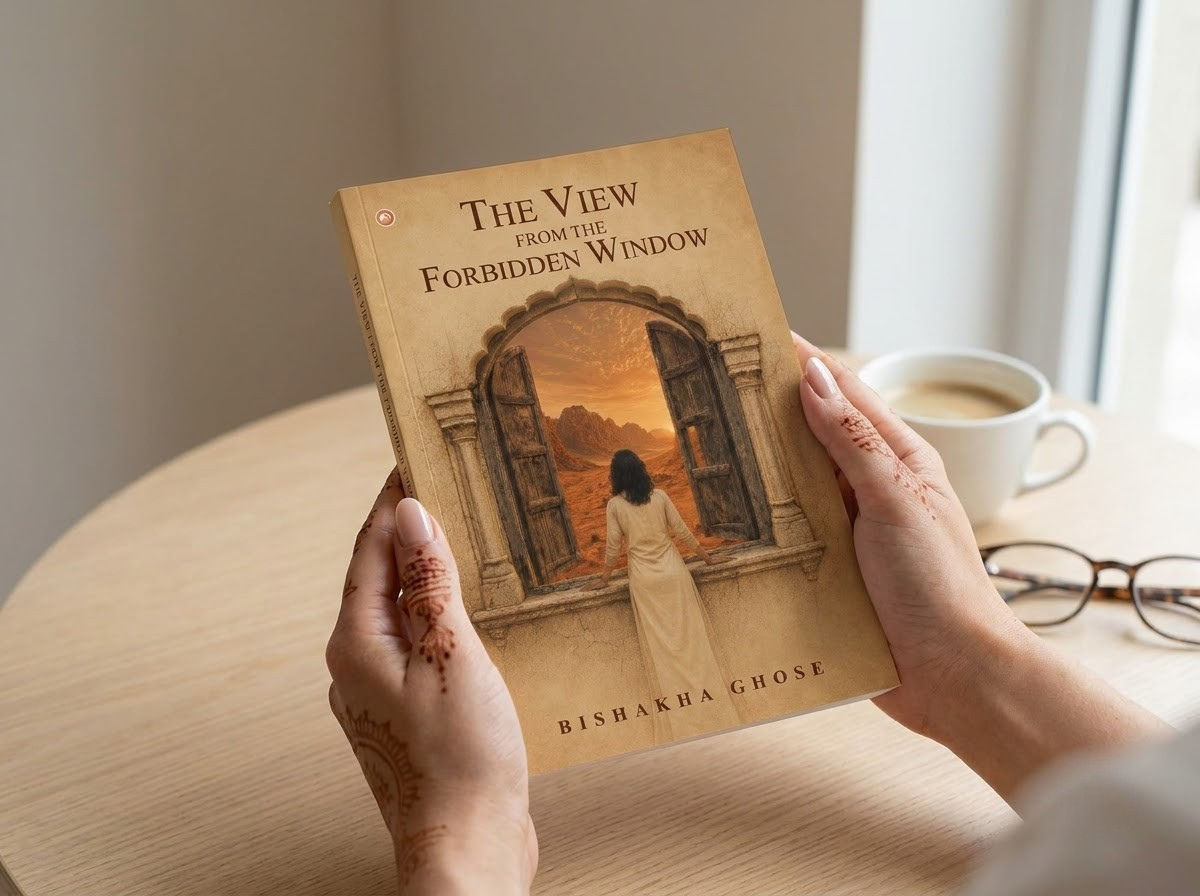
Rating: ⭐⭐⭐⭐1/2 (4.5 out of 5)
When I first sat down with my morning tea and opened this book, I expected a standard memoir about travel and personal growth. As Editor-in-Chief at Deified Publication, I read dozens of personal narratives every month, and many follow a familiar template. But every once in a while, a story comes along that completely shifts your perspective on how a life can be lived across different countries and hidden conflict zones. Bishakha Ghose has created something truly unusual here, blurring the lines between personal history, political drama, and deep reflection. It made me reflect on how little we actually know about the unseen connections that shape international events, and how individual choices ripple across borders in ways we rarely notice.
I found myself thinking about how we construct our own identities when we are removed from everything familiar. The narrative follows Kritika, a young woman from India who breaks off a conventional engagement to Krish, her childhood friend, and moves to Spain on a scholarship to study Spanish at the University of Valladolid. What begins as a personal search for freedom quickly evolves into something far more complex. Over the course of the narrative, Kritika transitions from a language student into a cultural mediator, working alongside the Spanish police, intelligence agencies, and international bodies. Along the way, she crosses paths with an enigmatic network of individuals, including Major Saneim Zaid, a Jordanian security official who first rescues her confiscated Ganesha idols at the Amman airport and later becomes a central anchor in her life.
What The View From The Forbidden Window Is About
To understand what is happening in this book, you have to look at how language acts as both a bridge and a shield. The story traces Kritika’s evolution through multiple countries, including Spain, Jordan, Egypt, Uzbekistan, and the Kashmir Valley. In Spain, she helps translate for Bangladeshi migrants and African refugees, realizing that translation is not just about words, but about preserving human dignity in bureaucratic systems. Her work catches the attention of officials like Officer Carlos and later Mr. Srikant Subramanyam at the Indian Embassy in Madrid, leading her into the world of intelligence, profile analysis, and mind mapping. The narrative balances these high-stakes geopolitical environments with deeply personal milestones, including her brief marriage to Ranil, her journey as a single mother raising her daughter Mia, and her return to her ancestral roots in Kolkata and Bangladesh.
What makes the plot so expansive is the way historical events are woven directly into the personal lives of the characters. We see the heavy impact of global conflicts, from the hijacking of flight IC 814 and the aftermath of 9/11 to the 2006 Lebanon war and the complex political shifts in Kashmir leading up to the 2019 abrogation of Article 370. Through her interactions with people on opposing sides of these conflicts, like her Lebanese friend Hadi, her military friend Krish, and various activists in Srinagar, Kritika attempts to maintain a position of absolute neutrality. She documents her observations in detailed journals, capturing the human cost of war and political maneuvering. It is a book summary that spans decades, showing how personal relationships can survive even when international borders and state policies create immense friction.
Craft, Character, and Style
The writing style in The View From The Forbidden Window by Bishakha Ghose is rich with atmospheric detail, though it occasionally moves at a disjointed pace. Ghose has a remarkable talent for capturing the specific mood of a location, whether it is the ancient, unhurried streets of Valladolid, the stark, windswept red sands of Wadi Rum, or the emotionally charged atmosphere of Gupkar Road in Srinagar. There is a distinct moment in the book where Kritika visits her ancestral mansion in Bhowanipore, Kolkata, and plays her father’s favorite tune from Dr. Zhivago on an old guitar while her grandfather listens in tears. That specific scene felt so authentic and grounded, showcasing Ghose’s ability to pull delicate emotional threads out of heavy historical settings.
In terms of character development, Kritika is a fascinating, if sometimes elusive, protagonist. She is fiercely independent, cold as steel when standing up to harassment on a Madrid metro train, yet deeply compassionate when comforting an aging Spanish grandmother who is terrified of dying from cancer. However, the book sometimes moves so rapidly between major life events, security assignments, and historical lectures that certain secondary characters feel more like symbolic figures than fully fleshed-out people. For example, her relationship with Ranil deteriorates almost entirely in the background, and I wished the narrative had given a bit more breathing room to those interpersonal dynamics. Despite this minor structural flaw, the ambition of the craft is impressive, reminding me of complex cross-cultural narratives like Elif Shafak’s The Bastard of Istanbul or the sweeping historical reflections found in the works of Amitav Ghosh.
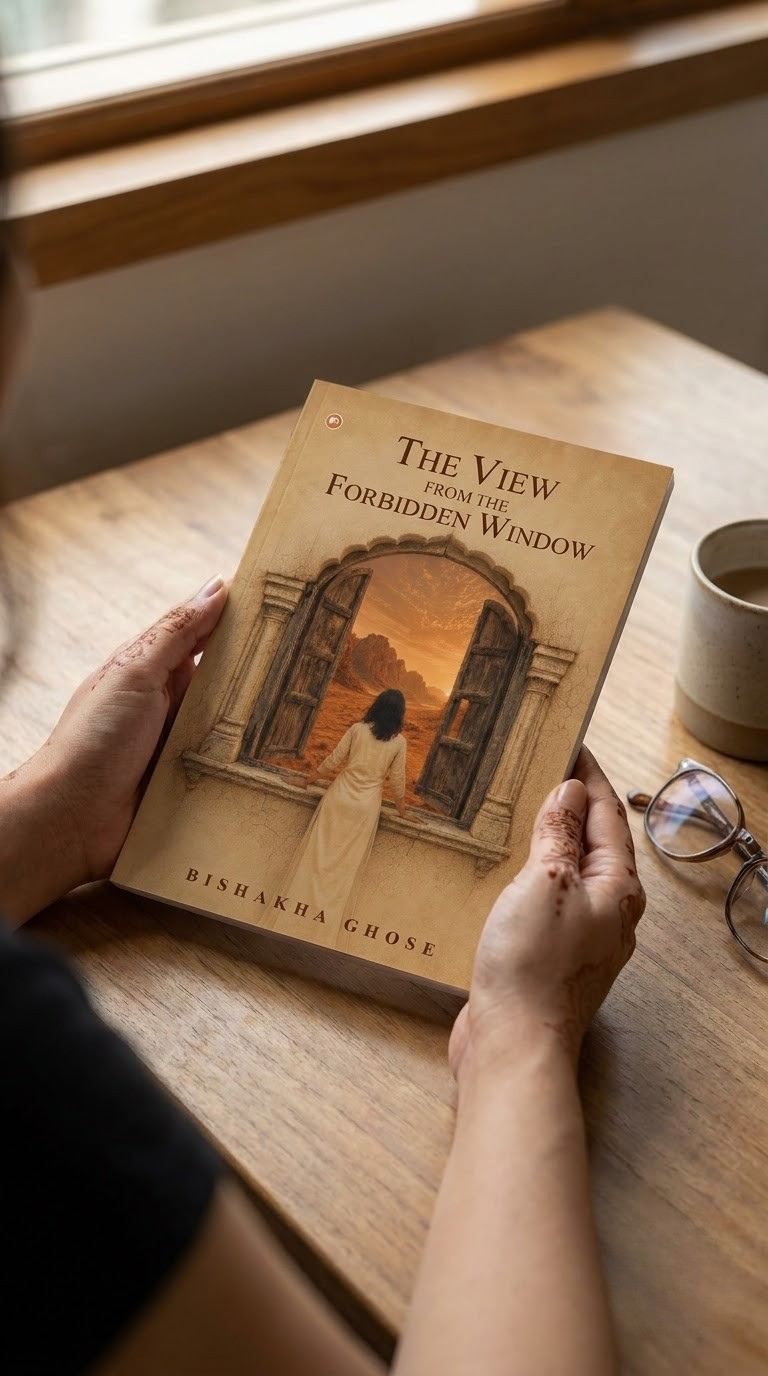
The Emotional Core of the Narrative
At its heart, this book is an exploration of non-conformity and the heavy price of living on one’s own terms. The emotional core does not lie in grand political victories, but in the small, shared moments of understanding between people whom the world tells us should be enemies. I kept thinking about the recurring motif of the Ganesha idols, which travel from India to Amman, get saved from a shredder by an Arab officer, comfort a dying Christian woman in Barcelona, and eventually end up placed in a coffin. It is a beautiful illustration of how faith and human warmth can transcend rigid religious doctrines. If you are wondering whether you should read this book, it is these quiet moments of cross-cultural empathy that make the experience genuine and worthwhile.
There is also an inescapable sense of grief running through the later chapters, particularly after the death of Major Saneim in a targeted attack in Amman and the passing of Kritika’s father after a long struggle with a neurological disease. When Kritika receives Saneim’s final package containing his military stripes, journals, and Patek Philippe watch, the emotional weight is palpable. Ghose captures the sharp reality of how people in conflict zones learn to carry on despite overwhelming loss. The book shows that true courage is not the absence of fear or sorrow, but the willingness to keep your heart open, even when the world repeatedly tries to harden it.
Who Should Read This Book and Who Might Want to Skip It
If you are a reader who enjoys sweeping, multi-generational sagas that combine real-world history, political intrigue, and philosophical musings on language and identity, this book is definitely worth it. Readers who appreciate stories about strong, unconventional women carving out their own paths will find a lot to admire in Kritika’s journey. It is also an excellent choice for anyone interested in the human dynamics of the Middle East, South Asia, and Southern Europe, as it offers a perspective that avoids simple binaries of good versus evil. Reading this release in 2026 felt particularly timely given current global events.
On the other hand, if you prefer tightly plotted thrillers with linear storytelling and traditional romance, you might find this book challenging. The narrative shifts fluidly between memoir and fiction, often pausing for long historical digressions on topics ranging from the reign of Genghis Khan to the Ottoman court of Hurrem Sultan and the history of Dogra rule in Kashmir. If you dislike books that blend political commentary with personal narrative, or if you prefer fast-paced, action-driven plots without heavy exposition, this might not be the right match for you.
Honest Closing Thoughts
In the end, Bishakha Ghose has delivered a deeply reflective and ambitious work that defies easy categorization. The View From The Forbidden Window is a book that asks difficult questions about loyalty, patriotism, and what it means to truly understand another human being across cultural divides. While the pacing can feel uneven in places where historical detail takes over the story, the sheer depth of experience and the sincerity of the narrative voice carry the reader through. It left me reflecting on my own assumptions about conflict zones and the silent networks of empathy that exist beneath the surface of global politics.
FAQs
Is The View From The Forbidden Window a fiction novel or a true memoir?
The book is structured as a hybrid of memoir and fiction. While it draws heavily from real historical events, geographical settings, and authentic geopolitical contexts, it frames the story through a creative narrative lens that blends personal experience with dramatized storytelling. This allows the author to explore complex themes of diplomacy, intelligence work, and emotional truth without being strictly bound by the traditional conventions of a standard autobiography.
What are the main themes explored in Bishakha Ghose’s book?
The central themes of the book include the power of language and translation, the nature of personal freedom, the human cost of political conflict, and the importance of cross-cultural empathy. It examines how borders, both literal and ideological, shape human behavior, and highlights the quiet, unofficial networks of trust that individuals build across nations to survive and bring about resolution in turbulent times.
Is this book suitable for readers interested in international relations and history?
Yes, absolutely. Readers with an interest in history and political science will find a wealth of detailed commentary on key historical periods, including the Kashmir conflict, the Israeli-Palestinian struggle, post-9/11 geopolitical shifts, and historical deep dives into the Ottoman Empire, Central Asian history, and the Bengal Renaissance. The author integrates these historical backgrounds directly into the protagonist’s personal journey and professional assignments.

With over 11 years of experience in the publishing industry, Priya Srivastava has become a trusted guide for hundreds of authors navigating the challenging path from manuscript to marketplace. As Editor-in-Chief of Deified Publications, she combines the precision of a publishing professional with the empathy of a mentor who truly understands the fears, hopes, and dreams of both first-time and seasoned writers.