
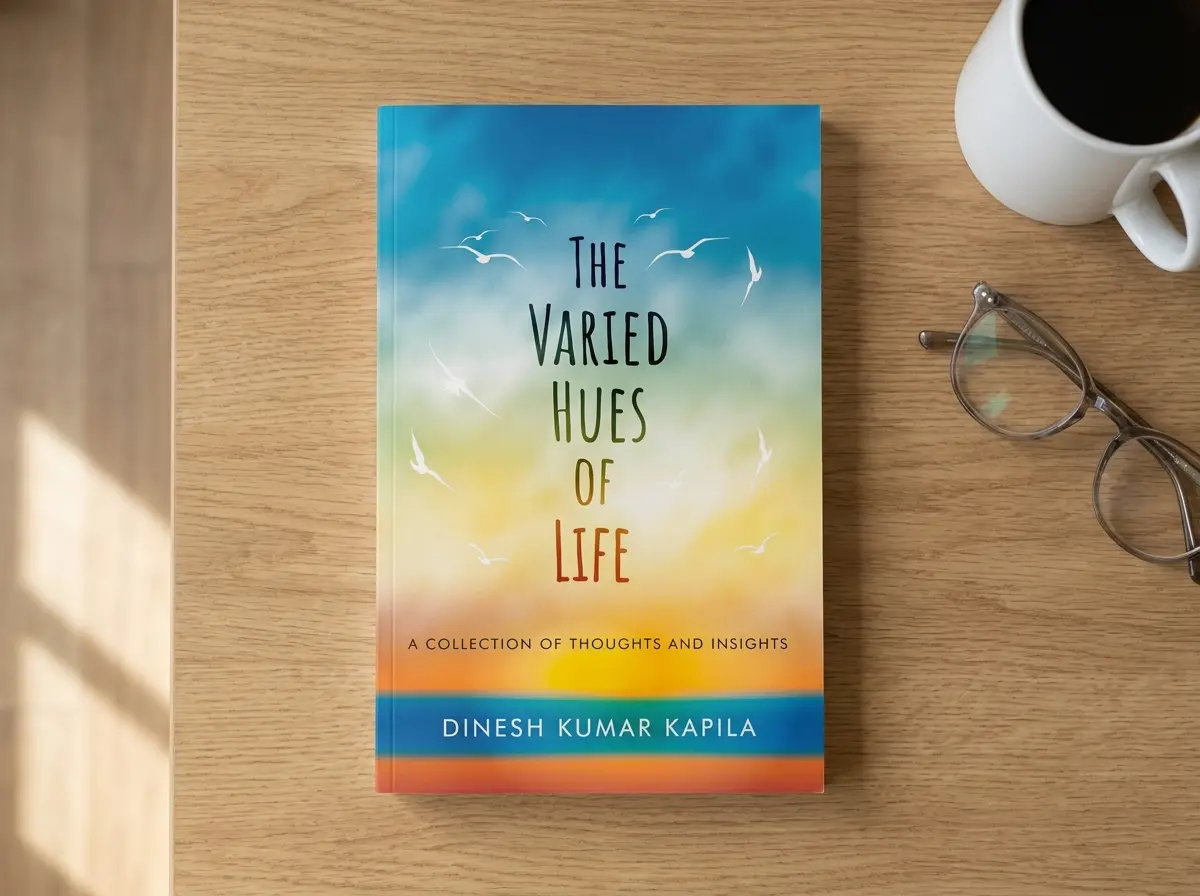
Rating: ⭐⭐⭐⭐ (4.2 out of 5)
I have been reading collections and essay compilations for most of my career at Deified Publication, and I can tell you that the ones which stay with me are never the ones trying hardest to be profound. They are the ones where the writer clearly had no agenda beyond sharing something real. That is what I felt within the first few pages of picking up this book. Dinesh Kumar Kapila writes the way a well-read, well-travelled uncle talks when he has had a good cup of tea and someone finally asked him to just say what he thinks. It is relaxed, it is observant, and honestly, it is a little refreshing in a world full of carefully packaged wisdom.
What This Book Actually Is
The Varied Hues of Life is a collection of short essays, observations, personal anecdotes, and what the author himself calls snippets, spread across several distinct sections. There are lighter humorous pieces, some genuinely moving military tributes, a section on gender equality, a few travel observations, and even a handful of poems. The book does not pretend to be a unified narrative and it does not need to be. The author draws from his decades as a developmental banker working in Punjab districts and his close connection to the Indian Army through his father, Major General Rajendra Nath, PVSM Retd. The range of material here is genuinely wide, and the author seems comfortable moving between registering the absurdity of a washing room levy to reflecting on what home means when you drive through your ancestral city at midnight.
One thing worth knowing before you pick this up: this is not a book you read in one sitting. The author actually says as much in his blurb. I think he is right. These pieces work best when you read one or two, sit with them for a bit, and then come back. I tried to rush through a section once and found myself skimming. When I slowed down, the book opened up considerably.
What Stood Out to Me
I kept thinking about the piece on Brigadier AP Dutta, Vir Chakra, for days after reading it. Author describes sitting with this decorated officer and requesting him to speak about the 1971 War, and what comes through is not battlefield heroics but something stranger and more human. The Brigadier remembers reading through captured letters of Pakistani soldiers and noticing that the men in West Pakistan seemed completely unaware of what was happening in East Pakistan. He describes a Major Shah whose wife wrote him meticulous, fond letters full of concern about their son’s runny nose and her unhappiness living with in-laws, letters that contained not a single word about the war unfolding around her husband. That detail, of the wife worrying about homeopathy and cantonment comfort while her husband was in the middle of a conflict, is the kind of thing that makes history feel startlingly real. Mr. Dinesh does not dramatize it. He just tells you what the Brigadier said, and lets it sit there.
The piece on his father, Major General Rajendra Nath, is one of the more personal essays in the book and it lands quite differently from the rest. Author describes his father commanding a brigade during the battle of Madhumati in December 1971, sitting on the leading tank himself as they crossed the river at night. He also shares a moment from much later, when a cardiologist tried to write a note about his father and his father, then ninety-two, apparently stood up and told the doctor in no uncertain terms how he felt about being written off. I was not expecting to laugh in that section but I did. That small scene tells you more about the man than a paragraph of description would.
There is also a gender sensitivity test included in the collection, written by Mr. Dinesh in his capacity as a developmental banker who worked on gender issues in Punjab districts. It is structured as twenty-five statements with agree, disagree, or maybe responses, covering everything from whether daughters need vehicles to whether women should hand their salaries to their in-laws. The test is blunt in the best way. The scoring key at the end is even blunter, noting that men scoring below fifty-five have failed badly and need to re-educate themselves. I appreciated that Mr. Dinesh did not dress this section up in soft language. The observations are grounded in real fieldwork and the directness is earned.
The lighter essays are genuinely funny at times. The piece on speed networking describes a young duo at a management event who pitch Mr. Dinesh breathlessly, realise he cannot offer them what they need, take their visiting card back, and walk away, leaving him holding his amber drink in bewilderment. There is also a long, warm piece on cafes in Chandigarh where he describes watching a retired colonel with him at a tony cafe, observing a retired General at another table with a series of different young women across several visits, including eventually walking in with all three simultaneously. The storytelling here is light and mischievous without being mean.
The Emotional Core
What I was not expecting from The Varied Hues of Life is the essay on ancestral homes, which I think is among the strongest pieces in the book. Mr. Dinesh describes driving through Hoshiarpur at midnight, the city where his grandfather built the family home, with a colleague who had no idea what the drive meant to him. He writes about the memories surfacing as headlights lit up each passing tree, and then mentions telling his father the next day that he had driven past the house. His father asked which roads he took, then asked if he had driven past the house itself, and when author said yes, his father nodded and left it at that. That is the whole scene. And somehow it is enough. There is a lot of life compressed into that nod.
The essay on fear is also unexpectedly rich. Mr. Dinesh moves from a childhood memory of ten cousins running in genuine terror from a creaking hospital window at night, to funerals, to military decision-making, to India’s strategic posture against Pakistan. It is an ambitious sweep and he does not fully pull it off in every section, but the transitions are interesting to watch and the central observation, that fear substitutes for analysis at every level of human behaviour, is worth sitting with.
A Few Things That Could Be Stronger
I want to be fair here because I think this book deserves honest engagement. Some of the shorter observational pieces feel underdeveloped, like notes toward an essay rather than completed thoughts. The section called Kapila’s Laws is charming enough but a few entries feel like they ran out of steam before finding a real punchline. The writing style is also uneven across the collection, which makes sense given that some pieces were clearly written years apart, but it does mean the reading experience is a little bumpy in places. Readers who prefer a consistent voice throughout a collection may find this adjustment takes some getting used to.
Who Will Enjoy This Book
If you grew up in or around a military family in India, or if you have spent time working in public service or banking in smaller districts, I think this book will feel like someone finally put your own observations into words. The references to Chandigarh, Punjab, NABARD, gender dynamics in North West India, and the social texture of service life are specific enough to feel authentic rather than generic. But even if none of those worlds are familiar to you, the pieces on fear, home, grief, and connection are human enough to translate across contexts. In 2025, when so much writing is trying very hard to be relevant, there is something to be said for a writer who is simply trying to be honest about what he has noticed.
Final Thoughts
Reading The Varied Hues of Life feels like being invited into someone’s sitting room and handed a folder of things they have been meaning to share for years. Not everything in the folder is equally polished, but enough of it is genuinely good that you are glad you sat down. Dinesh Kumar Kapila has a real eye for the telling detail, especially in his military writing, and his humour works best when it is driest. I would recommend reading this in the way it is meant to be read: a piece at a time, with something warm in hand, without hurrying anywhere.
FAQs
Is The Varied Hues of Life worth reading?
I think it is, especially if you enjoy personal essay collections that move between humour and reflection without forcing a tidy conclusion. This is not a book with a single argument or narrative arc. What it offers instead is a genuine and varied record of one observant person’s experience across several decades and contexts. Some pieces are stronger than others, but the best ones, particularly the military tributes and the essay on ancestral homes, are very good indeed. If you go in expecting a polished literary memoir you may be surprised by the rougher edges. If you go in expecting an honest and often entertaining collection, you will find that.
Who should read The Varied Hues of Life by Dinesh Kumar Kapila?
This book will resonate most with readers who have some connection to Indian public service, the Indian Army, or life in Punjab and Chandigarh. The cultural references are specific and Kapila does not always explain them, which gives the writing an insider warmth but may occasionally leave other readers needing context. That said, the essays on fear, loneliness, home, and gender are accessible to anyone. Readers who enjoy writers like Ruskin Bond or who appreciate the essay tradition of personal observation over academic analysis will likely feel at home here.
How is The Varied Hues of Life Book Review useful for deciding whether to buy it?
The Varied Hues of Life Book Review is meant to give you a real sense of the reading experience rather than simply summarising the contents. This is a collection with genuine variety and some unevenness, and knowing that going in helps you approach it correctly. The book rewards readers who treat it as something to dip into rather than race through. If you have read this far and found yourself curious about the brigadier’s captured letters or the midnight drive through Hoshiarpur, that curiosity is probably a good sign that this book is for you.
What makes Dinesh Kumar Kapila’s writing style distinctive?
Kapila writes in a conversational register that feels like it comes directly from how he actually thinks, which is both the charm and the occasional limitation of this collection. He does not perform wisdom. He also has a genuine ability to find the human detail inside larger events, whether that is a soldier’s wife worried about her son’s cough during a war, or a father’s single nod when told his son had driven past the family home at midnight. That instinct for the telling small moment is what distinguishes the best pieces in this book and what I suspect will stay with readers longest.

With over 11 years of experience in the publishing industry, Priya Srivastava has become a trusted guide for hundreds of authors navigating the challenging path from manuscript to marketplace. As Editor-in-Chief of Deified Publications, she combines the precision of a publishing professional with the empathy of a mentor who truly understands the fears, hopes, and dreams of both first-time and seasoned writers.