
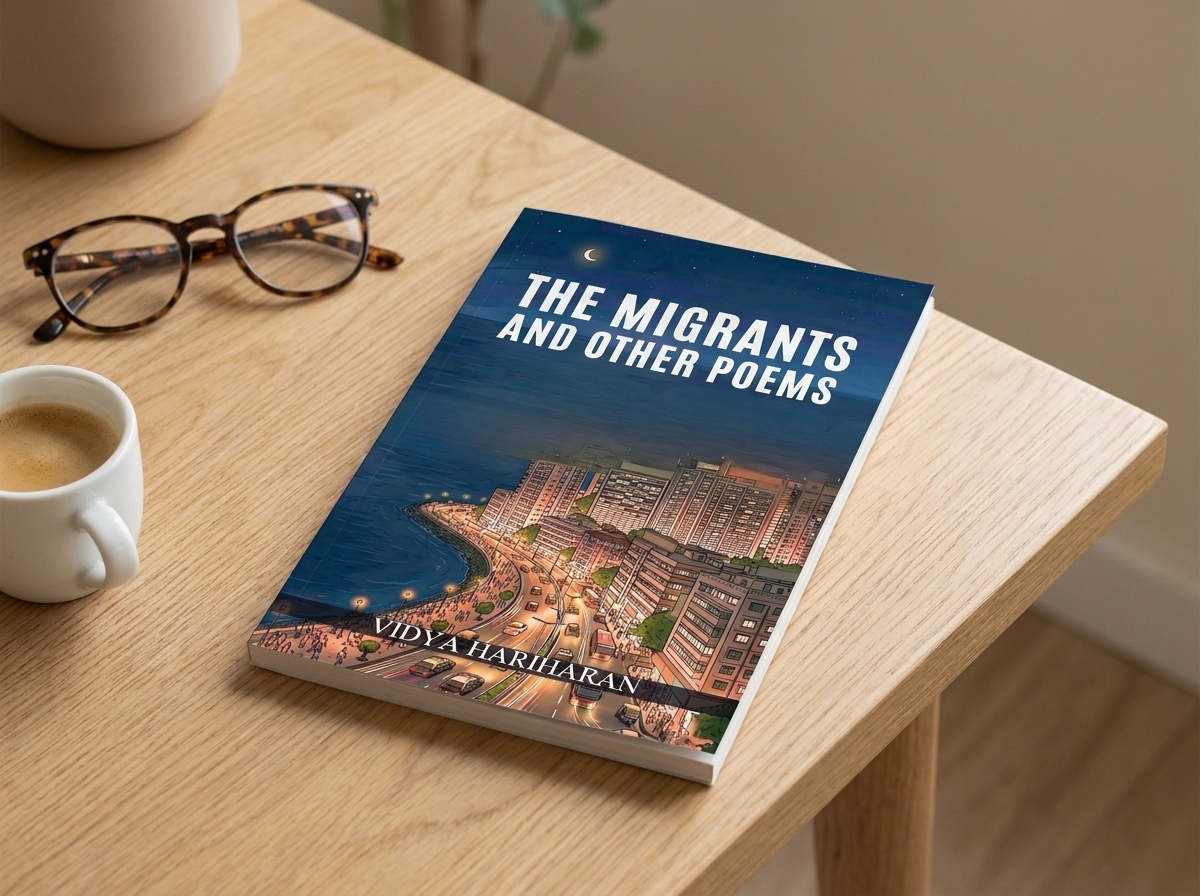
Rating:
⭐⭐⭐⭐1/2 (4.5 out of 5)
As someone who has spent years reading poetry collections from both celebrated and emerging writers, I have noticed something interesting. Many poetry books today are intensely personal. They focus inward. Memory, heartbreak, loneliness, identity. There is nothing wrong with that, of course. Some of my favourite poetry books do exactly that.
But every once in a while, a poet attempts something much larger. They try to write about a city itself. Not just the buildings or landmarks, but its emotional pulse. The contradictions. The people brushing past each other every day without truly knowing one another. That is much harder to do well.
Reading The Migrants and Other Poems by Vidya Hariharan, I felt very strongly that this book comes from decades of observation. Not surface observation either. The kind that only happens when someone has lived in a city long enough to love it, complain about it, feel exhausted by it, and still defend it fiercely when outsiders misunderstand it.
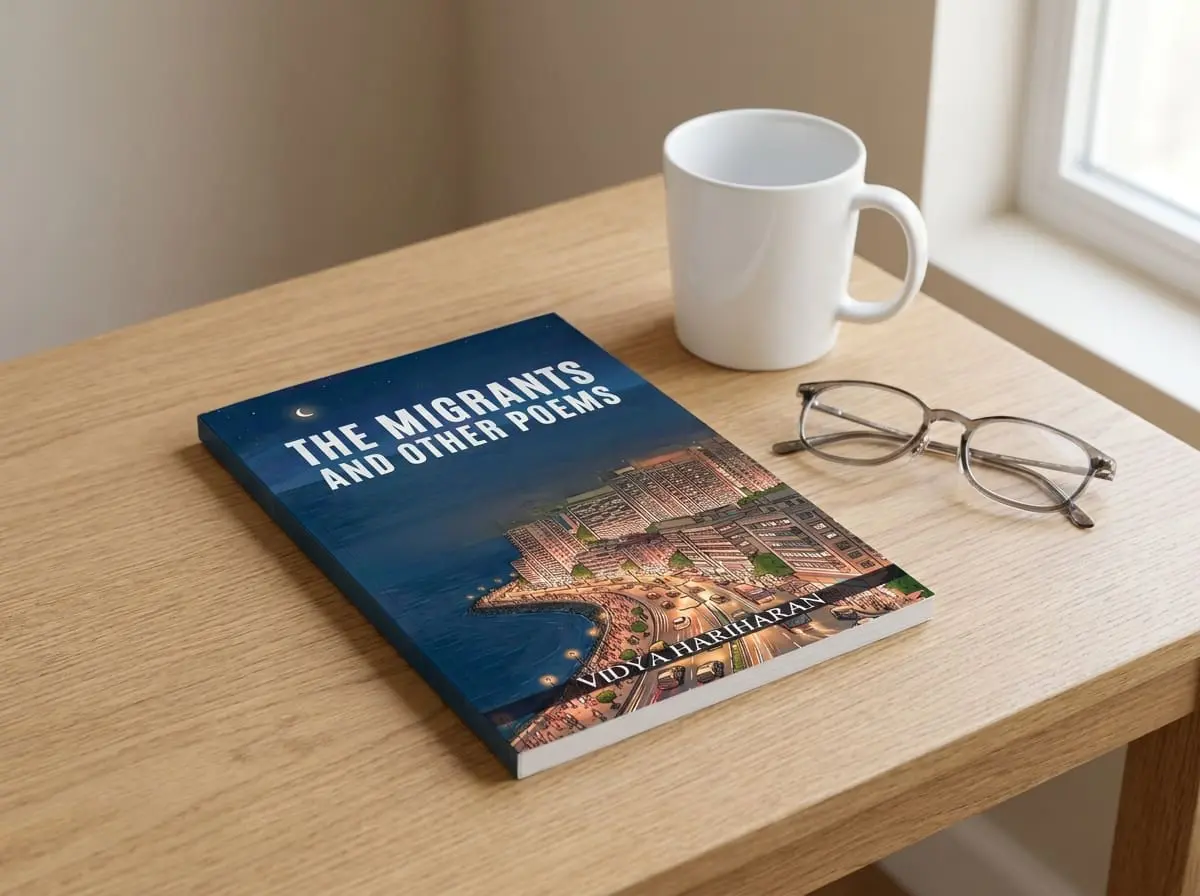
This collection is deeply rooted in Mumbai. Not the glamorous cinematic version alone, though Bollywood certainly appears here too. This is the Mumbai of crowded trains, office workers, migrants, maids, taxi drivers, old apartment buildings, endless construction, overflowing roads, rain-flooded tracks, and tiny moments of humanity hidden inside chaos.
Honestly, while reading it, I kept thinking about how difficult it is to write about an enormous city without becoming repetitive or romanticising suffering. Vidya Hariharan mostly avoids that trap because she writes with both affection and realism.
And I appreciated that balance a lot.
What the Book Is About
The Migrants and Other Poems is a poetry collection centered around Mumbai and the people who shape the city every day. The poems move through multiple perspectives, social classes, professions, neighbourhoods, emotions, and experiences.
The title poem, “The Migrants,” immediately establishes the emotional foundation of the collection. It reflects on the migrant crisis during the pandemic lockdowns, when workers who had built and sustained the city suddenly found themselves abandoned and forced to return home under heartbreaking conditions.
What struck me there was the simplicity of the language. The poem does not rely on heavy symbolism or overly decorative imagery. Instead, it speaks directly about labour, invisibility, and indifference. That straightforwardness gives the poem emotional force.
But the collection does not remain confined to grief or social commentary alone. It constantly shifts tones. One moment you are reading about the emotional loneliness of commuters forming “train friendships.” Another moment you are smiling at poems about online shopping, office parties, or bargaining at Colaba Causeway.
There are also poems dedicated to specific Mumbai spaces and landmarks. Matunga temples, Five Gardens, the Taj Hotel, Udipi restaurants, flyovers, BEST buses, Bandra cafés, local markets, and crowded highways all appear throughout the book.
And honestly, that variety helps the collection breathe.
I never felt trapped in one emotional register for too long.
What Stood Out to Me
One of the strongest things about Vidya Hariharan’s writing is her ability to notice ordinary people without reducing them into symbols.
Take “The Domestic,” for example. It would have been easy to write a predictable poem glorifying domestic workers sentimentally. Instead, the poet captures the exhausting routine, emotional dependency, class dynamics, and practical realities surrounding these women in urban homes. The final line calling the domestic worker a “Goddess” could have felt exaggerated in another poem, but here it works because the earlier details earn that emotional conclusion.
I also loved “Taxi Drivers are Philosophers!” because it captures something genuinely true about Mumbai cab drivers. They often become accidental witnesses to hundreds of fragmented lives. The poem understands that strange intimacy very well.
Then there are poems like “The Upstairs Neighbour” and “Rush Hour Traffic,” which made me laugh because they are painfully accurate. Anyone who has lived in a crowded Indian city apartment will instantly recognise those frustrations.
What I found particularly effective was the way humour and sadness coexist throughout the collection. A poem may begin playfully and then suddenly reveal loneliness underneath. “That Crazy Old Lady” does this beautifully. At first the woman seems eccentric and irritating through society’s eyes. Slowly, the poem reveals her past youth, desirability, loneliness, and invisibility in old age.
That poem honestly hit me harder than I expected.
As an editor, I also noticed that the poet writes in accessible language. This is not abstract academic poetry meant only for literary scholars. Readers who usually feel intimidated by poetry may actually find this collection approachable because the imagery comes from familiar urban life.
At the same time, there are moments where the rhythm becomes slightly uneven or explanatory. Some poems could probably have benefited from tighter editing. A few lines spell out emotions that were already understood through imagery. But strangely, I did not mind this too much because the voice throughout the collection feels sincere rather than performative.
And sincerity matters a lot in poetry.
The Emotional Core
At its emotional center, this book is about belonging.
Not perfect belonging. Complicated belonging.
Mumbai in this collection is exhausting, noisy, expensive, crowded, emotionally overwhelming, and perpetually unfinished. But it is also magnetic. People complain about it constantly while continuing to love it.
I think Vidya Hariharan understands that contradiction deeply.
The poem “Megalopolis” probably captures this feeling most clearly. It speaks about migrants arriving with hope, artists chasing dreams, workers enduring hardship, and generations slowly building lives inside tiny apartments and crowded neighbourhoods. The city is described almost like a living creature that consumes and nurtures people simultaneously.
That emotional duality runs through the entire collection.
I was also genuinely moved by poems dealing with grief and memory. “Breakdown” especially felt emotionally raw. The poem captures the terrible experience of grief arriving unexpectedly in public spaces where life around you continues normally.
And then there are softer poems like “Train Friend” or “The Corner Bookstore and Library” that speak about connection in fleeting urban environments. Those poems reminded me of how cities create temporary intimacies between strangers.
One thing I admired throughout the collection is that Mumbai itself never becomes romantic fantasy. Vidya Hariharan acknowledges class divides, infrastructure chaos, emotional fatigue, overcrowding, and inequality repeatedly. Yet she still writes about the city with affection.
That feels emotionally honest to me.
Who This Book Is For
I think this collection will resonate most strongly with readers who have lived in Mumbai or any fast moving Indian city. There are so many small details here that feel instantly recognisable. Local trains. Building politics. Monsoon flooding. Tiny apartments. Street vendors. Late night traffic. Shared loneliness among crowds.
But even readers unfamiliar with Mumbai may connect with the emotional observations because the poems are ultimately about human behaviour inside urban life.
This book may especially appeal to readers who enjoy socially observant poetry rather than highly abstract experimental verse. If someone likes poets who write about ordinary people, cities, migration, labour, memory, and changing social realities, there is a good chance they will appreciate this collection.
I also think readers who normally avoid poetry because it feels inaccessible should consider giving this book a chance. The language remains grounded and conversational across most poems.
That said, readers looking for intensely lyrical or structurally experimental poetry may not find this collection stylistically radical. Vidya Hariharan is more interested in storytelling, observation, and emotional clarity than formal experimentation.
Personally, I think that choice works for the themes she is writing about.
Final Thoughts
By the end of The Migrants and Other Poems, what remained strongest for me was not a single poem but the cumulative feeling of the city itself.
- The noise.
- The fatigue.
- The humour.
- The longing.
- The resilience.
In my years reviewing books at Deified Publication, I have read many works attempting to capture Indian cities through literature. Some focus only on nostalgia. Others focus only on suffering. Vidya Hariharan manages to hold both affection and criticism together without simplifying either.
That balance gives this collection authenticity.
No, every poem does not land with equal impact. A few feel more descriptive than emotionally layered. Some could have been edited tighter. But the strongest poems here genuinely capture aspects of urban Indian life that literature often overlooks.
And honestly, I think readers who have loved and struggled within a city will recognise themselves somewhere inside these pages.
FAQ
Is The Migrants and Other Poems worth reading?
Yes, especially if you enjoy poetry rooted in everyday urban life, migration, memory, and social observation.
Who should read The Migrants and Other Poems by Vidya Hariharan?
Readers interested in Mumbai, Indian city life, migration stories, and accessible contemporary poetry will probably connect most with this collection.
Is this poetry collection difficult to understand?
No. The language is mostly direct and conversational, which makes the poems approachable even for readers who do not usually read poetry.
What is The Migrants and Other Poems about?
The collection reflects on Mumbai’s changing identity through poems about migrants, workers, commuters, markets, loneliness, family life, traffic, and urban survival.

With over 11 years of experience in the publishing industry, Priya Srivastava has become a trusted guide for hundreds of authors navigating the challenging path from manuscript to marketplace. As Editor-in-Chief of Deified Publications, she combines the precision of a publishing professional with the empathy of a mentor who truly understands the fears, hopes, and dreams of both first-time and seasoned writers.