
Rating:
⭐⭐⭐⭐½ (4.4 out of 5)
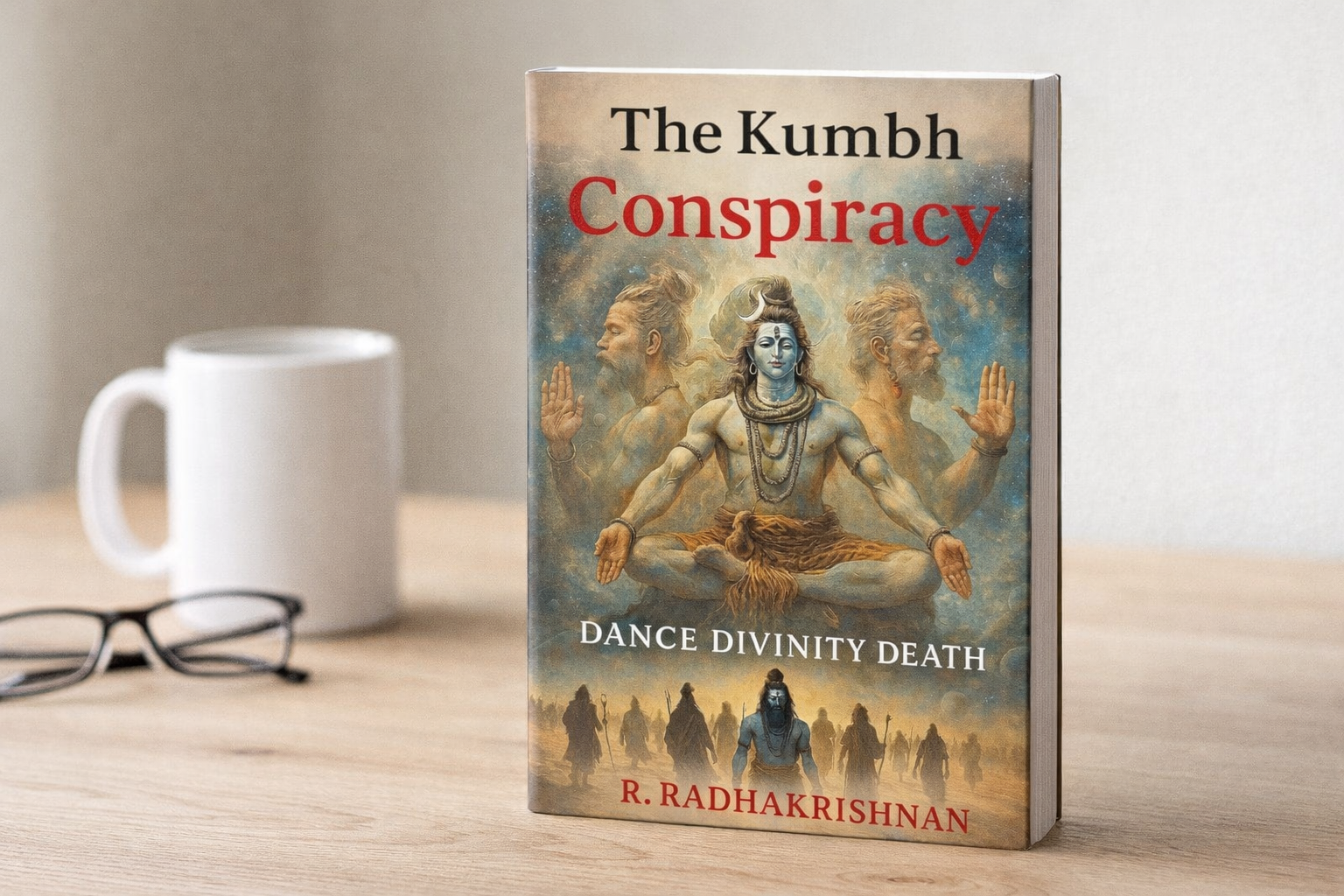
I didn’t expect The Kumbh Conspiracy to linger the way it did. I picked it up thinking it would be one of those fast spiritual thrillers you finish, enjoy, and move on from. But a few days after closing it, I found myself still thinking about certain images. A yantra hidden in plain sight. A monk who once belonged to a world of intelligence files and coded truths. A modern engineer standing in the middle of something far older than him. That feeling stayed.
In my years reading fiction across genres, especially books that blend mythology with modern tension, I’ve learned to trust that feeling. When a story refuses to leave quietly, it’s usually because the author touched something deeper than just plot mechanics.
What the Book Is About
At a surface level, The Kumbh Conspiracy reads like a spiritual thriller. There is a hidden artifact. There is a secret lineage. There is a powerful group willing to destroy lives to control knowledge. But the book does not stop there.
The story begins with the discovery of a yantra in Chidambaram, a place already loaded with symbolic weight. This yantra is not just decorative or religious. It is described as a key. A key that can unlock immense spiritual power and, if mishandled, something destructive. That duality sets the tone early.
Swaminathan Iyer, or Swamy, is introduced as a brilliant software engineer. I liked that choice. A man trained in logic, systems, and code, suddenly learning that his family has been guarding an ancient secret for generations. That contrast between modern rational thinking and inherited spiritual responsibility is one of the book’s strongest ideas.
Then there is Swami Shankaranand. Former intelligence officer turned monk. I’ve read versions of this character before, but here the transition feels earned. His presence bridges two worlds. One built on surveillance and strategy. The other on renunciation and inner discipline. Their journey across India, eventually leading to the Kumbh Mela, becomes both physical and symbolic.
The Octopus Group, the antagonistic syndicate, is not just evil for the sake of it. They represent a global hunger for control. Control over belief, over power, over narratives. That makes the conflict feel larger than personal survival.
What Stood Out to Me
The first thing that stood out was the setting. R Radhakrishnan uses India not as an exotic backdrop but as a living participant in the story. Temples are not just locations. They carry memory. The Kumbh Mela is not just a spectacle. It becomes a crossroads where faith, chaos, devotion, and danger coexist.
I’ve read enough thrillers inspired by Indian spirituality to know when an author is borrowing imagery versus engaging with it. Here, the details feel researched and respectful. The yantra is treated with seriousness, not as a mystical shortcut. The geography matters. The transitions between places feel purposeful.
I also appreciated the pacing. The story moves quickly, but not recklessly. There are pauses where the reader is allowed to absorb the weight of what is being uncovered. Some sections slow down to explain ideas, and while that might test impatient readers, I felt it added credibility.
Character wise, Swamy’s internal conflict felt believable. He is not suddenly brave. He hesitates. He questions. That made him relatable. Swami Shankaranand, on the other hand, carries a calm authority that comes from lived experience. Their dynamic reminded me of conversations I’ve witnessed between elders who have seen too much and younger people who are just beginning to question the world they inherited.
If I had to point out something that might not work for everyone, it would be the density of ideas. There are moments where myth, philosophy, and conspiracy converge tightly. Some readers might wish for more breathing space. But for me, those moments added texture.
The Emotional Core
What surprised me most was the emotional undercurrent beneath the action. This is not just a chase story. It is about legacy. About what we protect without always knowing why. About the tension between faith and fear.
There were scenes set around spiritual gatherings where I felt a strange mix of awe and unease. Anyone who has attended large religious congregations will recognize that feeling. The devotion is real. The vulnerability is real too. The book captures that without judgment.
I also felt a sense of sadness in the idea that ancient knowledge is always under threat. Either from those who want to exploit it or from those who forget its value entirely. In 2025, when everything is reduced to content and consumption, this message feels timely.
Some parts hit differently if you have grown up around temples, rituals, or stories passed down casually by elders. There is a familiarity here that is hard to explain but easy to feel.
Who This Book Is For
This book will appeal strongly to readers who enjoy thrillers layered with spirituality and cultural depth. If you like stories where ancient symbols intersect with modern technology and global politics, this will likely hold your attention.
Fans of Dan Brown style narratives will find familiar structures here, but with a distinctly Indian soul. Readers interested in mythology, sacred geometry, and philosophical questions about power will also find a lot to engage with.
That said, this might not be ideal for readers looking for a purely fast paced action novel without pauses for reflection. The book asks you to think. To absorb. To connect dots that are not always spelled out.
Final Thoughts
As Editor in Chief at Deified Publication, I read many manuscripts that aim high. Some succeed through spectacle. Others through sincerity. The Kumbh Conspiracy leans toward sincerity, even while delivering suspense.
R Radhakrishnan has written a story that respects its subject matter. It does not treat Indian spirituality as a prop. It treats it as a living force, capable of creation and destruction, depending on who holds it.
Is it flawless. No. A few explanations could have been tightened. Some transitions might feel heavy to readers unfamiliar with the cultural context. But the ambition, the respect, and the emotional grounding make up for that.
This is the kind of book that sits with you. You don’t finish it and immediately forget the details. Certain images return when you least expect them.

With over 11 years of experience in the publishing industry, Priya Srivastava has become a trusted guide for hundreds of authors navigating the challenging path from manuscript to marketplace. As Editor-in-Chief of Deified Publications, she combines the precision of a publishing professional with the empathy of a mentor who truly understands the fears, hopes, and dreams of both first-time and seasoned writers.