
Rating:
⭐⭐⭐⭐ (4.3 out of 5)
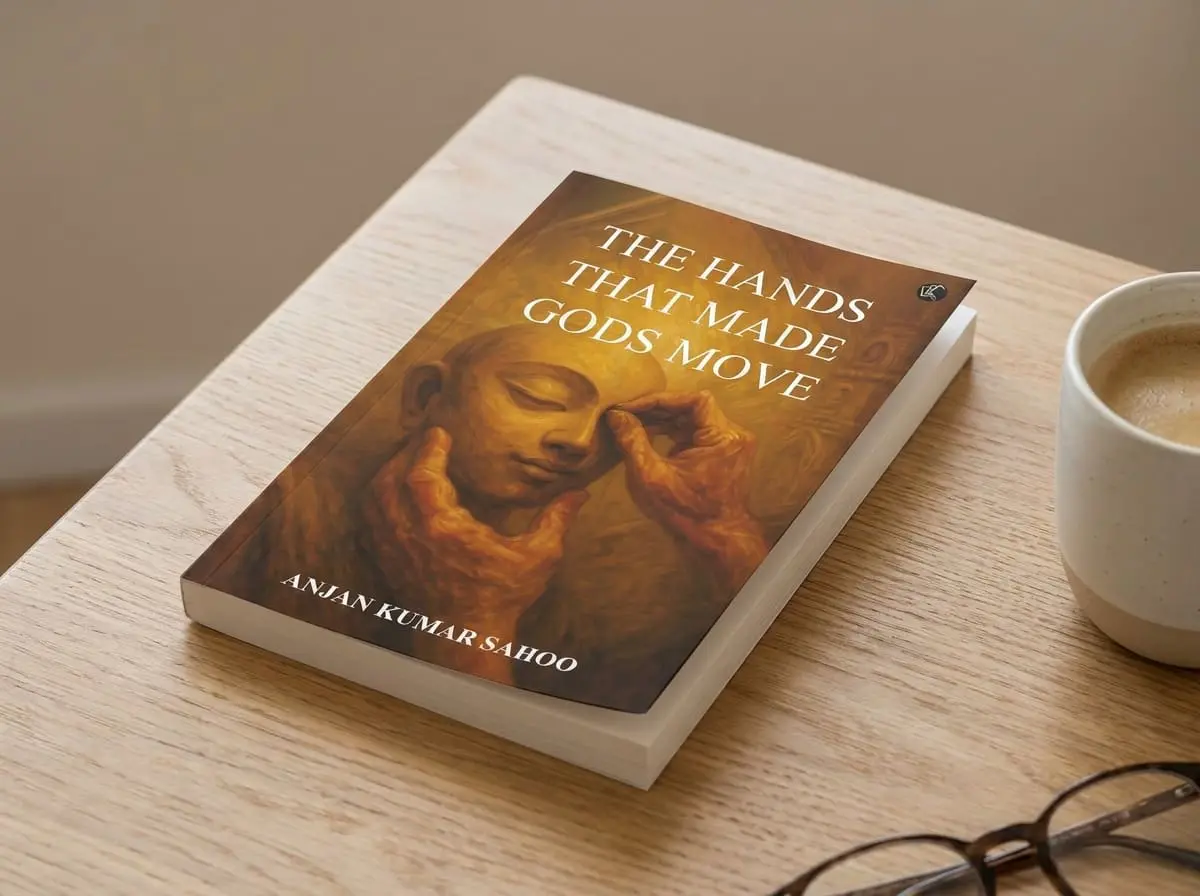
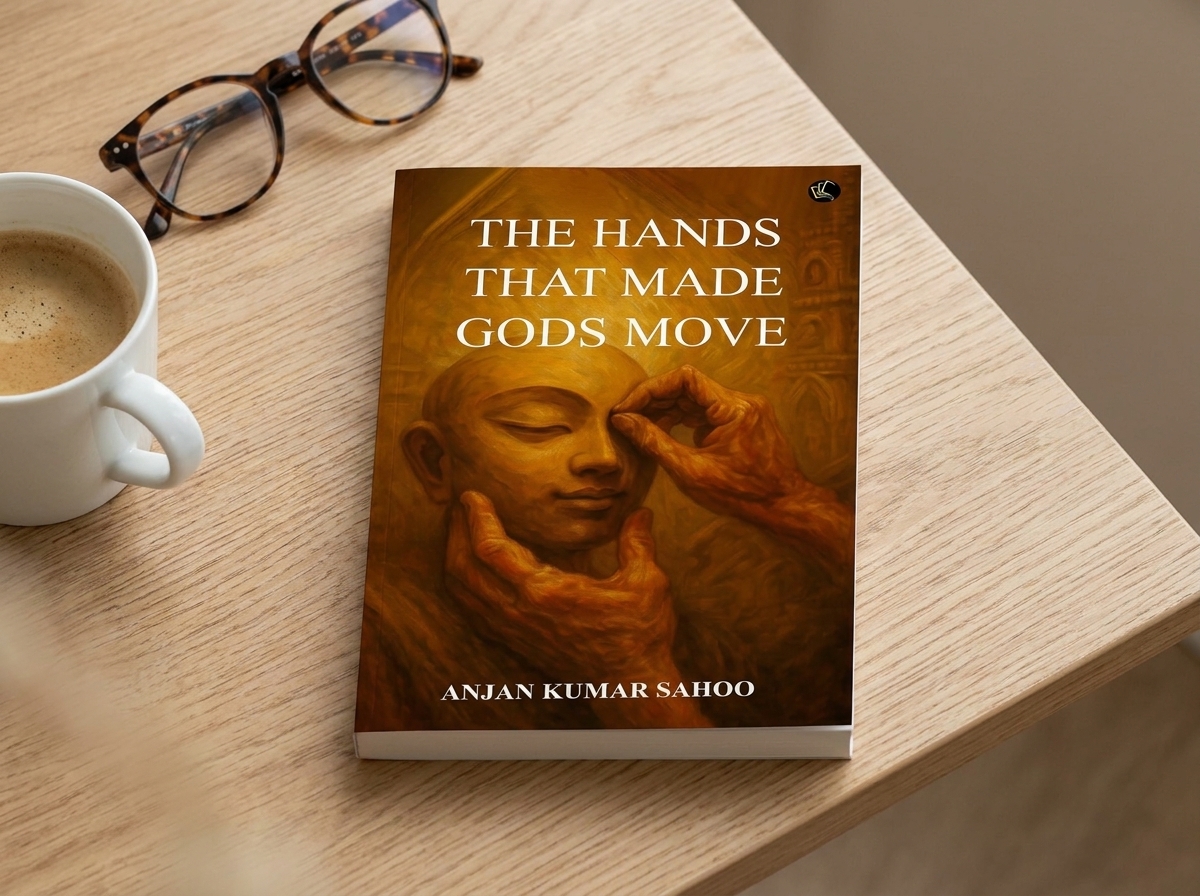
Some books impress you with plot twists. Some impress you with language. And then there are books like The Hands That Made Gods Move by The Hands That Made Gods Move that affect you in a more personal way. They remind you of people whose work shaped communities but whose names rarely enter mainstream conversations.
I finished reading this book thinking less about “art” in the glamorous sense and more about labour. Hands covered in clay. Sleepless nights before festivals. The emotional burden of carrying tradition while also trying to reinvent it. There is a tenderness in this book that feels earned, not manufactured.
In my years reviewing books and working with writers at Deified Publication, I have come across many stories about artists and creators. But what struck me here was how grounded this narrative feels. The book never tries too hard to sound intellectual. It comes from memory, admiration, grief, and lived experience. You can feel that the author, Anjan Kumar Sahoo, is writing not just about an artist, but about a father, a community, and a disappearing world.
And honestly, in 2026, when everything is becoming faster, digital, and disposable, this message feels strangely important.
What the Book Is About
At its heart, The Hands That Made Gods Move tells the story of Kirtan Chandra Sahoo, an image maker and innovator from Odisha who transformed traditional idol making into something almost theatrical. Through clay, mechanics, devotion, and imagination, he created moving deities that blinked, danced, and seemed alive before audiences.
But the book is much bigger than that description.
It begins with Kirtan as a child in Khanditar in 1936, sitting cross legged with clay in his hands while the village slowly wakes up around him. Those opening chapters immediately establish something important. This is not a flashy biographical account. It is deeply rooted in atmosphere, memory, and place. The descriptions of Odisha, village life, Kumortuli in Calcutta, festival preparations, artisans working together, and the emotional weight of craftsmanship give the book its soul.
There is one line early in the book that really captures the spirit of the story:
“This is where gods are born.”
That sentence appears during Kirtan’s arrival in Kumortuli, and from there the book opens into something larger. We see his artistic awakening, his struggles, his mentors, his experiments with movement and mechanics, and eventually his attempts to create kinetic sculptures that could emotionally move crowds.
The narrative also follows devastating moments, especially the fire at Kalakunjia. Those chapters genuinely affected me. The destruction is not treated like cinematic drama. Instead, it feels intimate and painful because the author understands what was really lost. Not just objects. Years of labour, identity, memory, and belief.
I also appreciated how the book moves across decades without losing emotional continuity. The chapters on Odisha’s cultural life, kabaddi tournaments, village gatherings, artisans, and evolving performance traditions create a larger portrait of community life. This is not simply one man’s story. It becomes the story of how art and ordinary people shape one another.
What Stood Out to Me
The first thing that stood out was the sincerity of the writing.
There are books that constantly remind you that the author is trying to sound literary. This one rarely does that. Even when the language becomes poetic, it still feels connected to emotion and memory instead of performance. I think that balance is difficult to achieve.
The structure also surprised me. Looking at the table of contents, I expected a straightforward biography. Instead, the book blends memoir, historical reflection, creative non fiction, cultural documentation, and spiritual meditation. Chapters like Ashes in the Wind, From Clay to Glory, Unforgeable Conversations with Legends, and The Evolution of Form from Clay to Motion each reveal different dimensions of Kirtan’s life and philosophy.
I especially liked the sections involving Kumortuli and Ramkinkar Baij. Those chapters feel alive because they show artistic growth through conversation and observation rather than dramatic speeches. There is a moment where Ramkinkar tells Kirtan:
“Sculpt him doing.”
I loved that line. It says so much about movement, emotion, and artistic truth in just two words.
Another strength of the book is its treatment of innovation. Usually when Indian art traditions are discussed, people separate “traditional” and “modern” as if they are enemies. This book does not do that. Kirtan’s experiments with moving sculptures, recycled materials, gears, pulleys, and performance mechanics feel organic. They emerge from necessity and imagination.
The chapters around page 112 onwards were especially fascinating to me because they describe the practical mechanics behind movement. Wooden gear wheels, threads attached to limbs, manual choreography behind kinetic idols. These details make the artistic process feel tangible. I could almost imagine exhausted artisans working late into the night, trying to make divinity breathe before an audience arrived.
And honestly, I think readers who love books about forgotten creators or regional artistic histories will find a lot to admire here.
That said, I do think the book occasionally becomes repetitive in its emotional emphasis. Certain ideas about devotion, resilience, and artistic legacy appear multiple times in similar language. A tighter edit in some sections could have made the pacing even stronger. There were moments where I wanted scenes to breathe through action rather than reflection.
But strangely, even that repetition started feeling human after a point. When people remember someone they deeply loved or admired, they often circle around the same emotions again and again.
The Emotional Core
For me, the emotional centre of The Hands That Made Gods Move is not ambition. It is inheritance.
This is a son trying to preserve a father’s spirit before memory fades.
That feeling becomes stronger in the later chapters. Especially Echoes of Clay. Those pages carry a sense of ageing, disappearance, and transition that many readers will connect with, even if they know nothing about sculpture or Odisha’s artistic traditions.
There is a heartbreaking beauty in the way the book describes old performance spaces becoming empty, sounds disappearing, artisans ageing, and traditions slowly losing public attention. But the book never becomes cynical. It keeps returning to the idea that meaningful work survives through people who continue remembering and creating.
I think many readers will also connect with the relationship between art and sacrifice here. Kirtan’s life is not romanticised as some glamorous creative existence. We see financial strain, exhaustion, social change, loss, and physical ageing. The book repeatedly reminds us that art is often built through invisible labour.
One passage near the ending genuinely moved me. Kirtan no longer sees crowds, applause, or fame as the centre of his work. What matters instead is whether the spirit behind the art survives. That emotional shift gives the ending a lot of maturity.
And maybe that is why this book affected me more than I expected. It is not trying to impress you every second. It simply wants to honour a life honestly.
Who This Book Is For
I think this book will resonate deeply with readers who enjoy literary non fiction, regional histories, artistic biographies, and stories rooted in Indian cultural traditions.
If you like books about craftsmanship, memory, heritage, and creators who worked outside mainstream fame, you will probably connect with this. Readers who appreciated works centred around artisans, theatre traditions, or intergenerational storytelling may also find this meaningful.
It may not work equally well for readers looking for fast moving commercial fiction. The pacing is reflective and layered. The narrative often values atmosphere and emotional memory over plot momentum.
But for readers willing to immerse themselves in the world of artisans, idol makers, and cultural transformation, there is something deeply rewarding here.
I can also see this book being important for younger Indian readers who have grown up disconnected from the people behind festival culture. We celebrate giant idols every year, but very rarely think about the exhausted hands that built them.
This book asks us to look at those hands.
Final Thoughts
I think The Hands That Made Gods Move succeeds because it comes from affection instead of ambition. The author is not trying to create a flashy literary monument. He is trying to preserve memory before time erases it.
And because of that, the book feels genuine.
There are scenes here that I know I will remember for a long time. Kirtan arriving in Kumortuli. The fire at Kalakunjia. The mechanics behind moving idols. The ageing artist sitting among silent sculptures near the end. Those moments carry emotional truth.
As an editor and lifelong reader, I also appreciated the cultural specificity of the book. It never flattens Odisha into a decorative backdrop. The villages, festivals, workshops, artisans, and evolving artistic traditions feel lived in.
I do think a slightly more restrained approach in certain reflective passages could have made the narrative sharper. But even with that, this is a sincere and emotionally rich work that deserves attention.
More than anything else, the book reminded me that behind every spectacle people admire, there are usually invisible workers whose names history forgets first.
Books like this help correct that.
FAQ
Is The Hands That Made Gods Move worth reading?
Yes, especially if you enjoy books rooted in Indian culture, artistry, memory, and family legacy. It offers much more than a simple biography.
Who should read The Hands That Made Gods Move?
Readers interested in sculpture, artisan traditions, Odisha’s cultural history, and emotionally driven creative non fiction will likely connect strongly with it.
What is The Hands That Made Gods Move about?
The book follows Kirtan Chandra Sahoo, an innovative image maker who created moving deities and kinetic sculptures while navigating artistic ambition, personal loss, and changing cultural landscapes.
Is this book fiction or non fiction?
It reads like creative non fiction. The storytelling feels literary and immersive while remaining rooted in memory, history, and real lived experiences.

With over 11 years of experience in the publishing industry, Priya Srivastava has become a trusted guide for hundreds of authors navigating the challenging path from manuscript to marketplace. As Editor-in-Chief of Deified Publications, she combines the precision of a publishing professional with the empathy of a mentor who truly understands the fears, hopes, and dreams of both first-time and seasoned writers.