
Rating:
⭐⭐⭐⭐ (4.4 out of 5)
I have been reviewing books for many years, and one thing I have noticed is that most business books talk about markets, products, leadership, productivity, or growth. Very few ask a different question: What happens when the world itself changes shape beneath your feet?
That is what immediately caught my attention about The Fluid Entrepreneur by Patric Rozario.
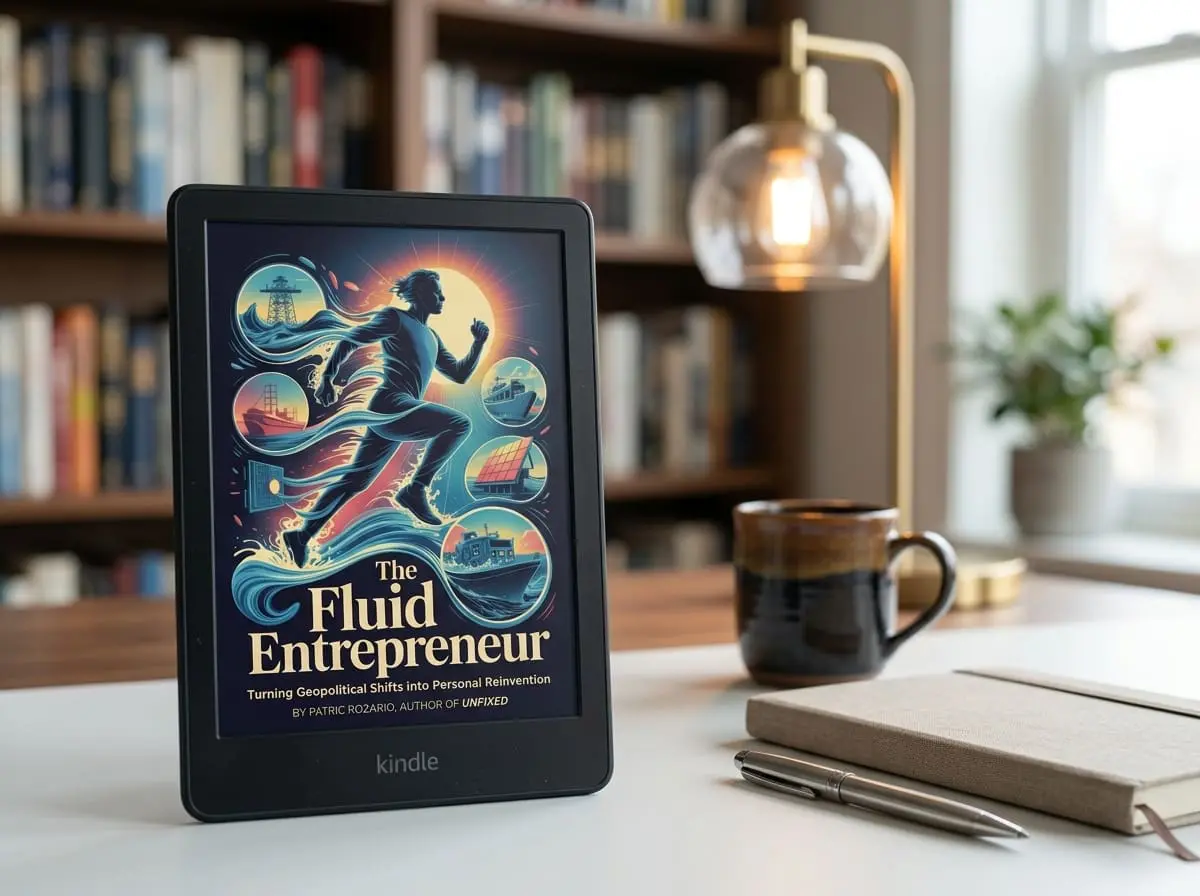
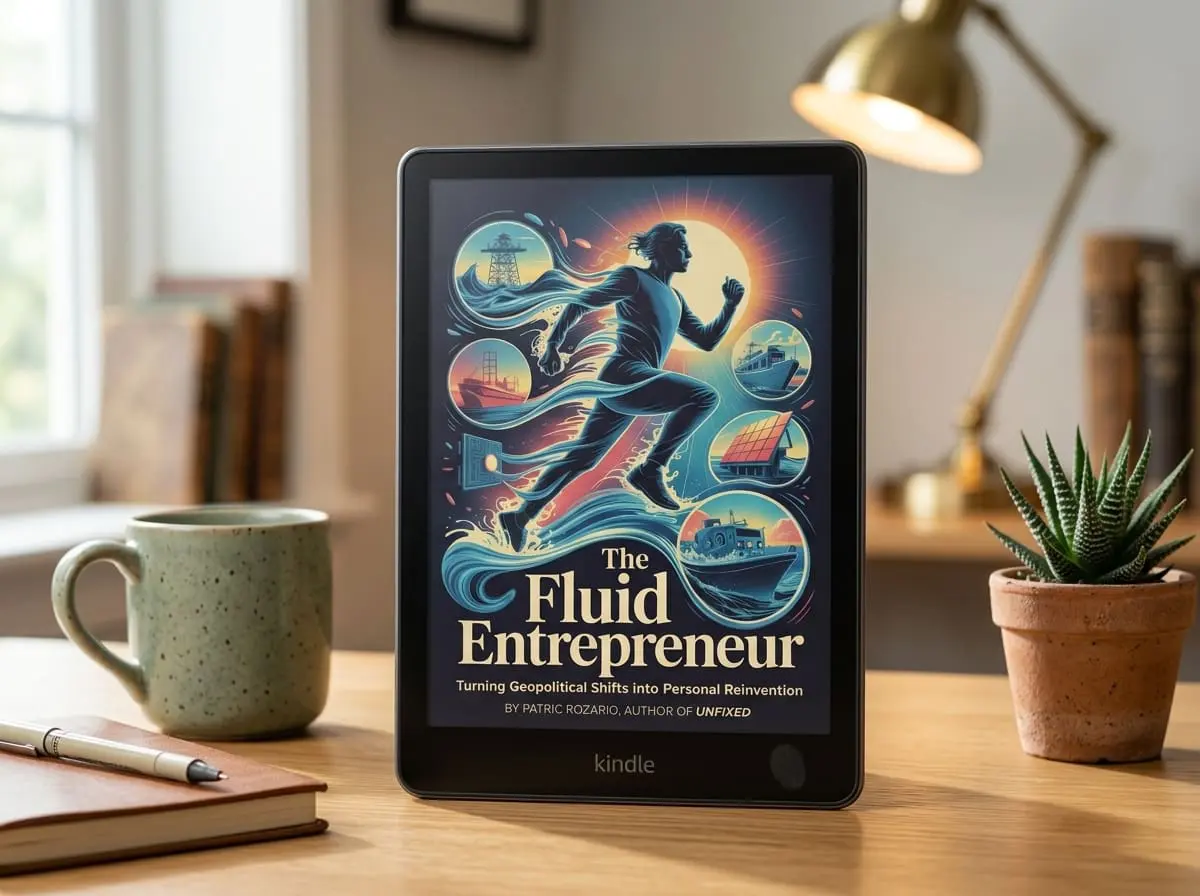
The title sounds modern, almost futuristic. The cover shows a figure moving through waves, ships, energy infrastructure, and trade symbols. Before even opening the book, you get a sense that this is not really a book about starting a business. It is a book about adapting when the environment changes. After reading it, I think that impression is accurate.
What surprised me most was that the author is not interested in motivational slogans. Instead, he focuses on geopolitical disruption, trade routes, energy markets, migration, and entrepreneurship. That combination sounds unusual, but it works remarkably well.
In 2026, when global events can reshape industries within weeks, the message feels especially relevant.
What the Book Is About
At its heart, The Fluid Entrepreneur argues that major disruptions create opportunities for those who know how to read them correctly.
Patric Rozario builds the book around the idea that entrepreneurs should not simply react to headlines. They should learn to read beneath them. Throughout the book, he repeatedly encourages readers to move from the headline itself to the market consequence and then to the human need created by that consequence. That framework becomes one of the central ideas of the book.
The author draws heavily from developments across the Middle East, including shifting trade routes, energy transitions, migration patterns, reconstruction economies, and Gulf investment flows. Rather than presenting these events as distant geopolitical stories, he treats them as commercial signals that can reveal emerging opportunities.
One of the strongest aspects of the book is its structure. The chapters move logically from understanding disruption to identifying opportunities, building new business models, managing stress, maintaining ethical standards, and eventually creating a personal framework for long term adaptability. The inclusion of the 3R Pivot Model, which stands for Read the Signal, Reposition Your Offer, and Rebuild for the New Customer, gives readers a practical framework instead of abstract theory.
What Stood Out to Me
The first thing that stood out was the author’s perspective.
Most books about geopolitics and business come from Western financial centers. Rozario writes from a different vantage point shaped by Malaysia, Kerala, and Qatar. That gives the book a refreshing voice. There is a strong understanding of the Gulf, but there is also an appreciation for the Indian entrepreneur who operates between cultures and markets.
The second thing that impressed me was the emphasis on adaptability without glorifying chaos.
The author spends considerable time explaining what “fluidity” actually means. He makes it clear that being fluid does not mean being reckless or constantly changing direction. Instead, it means developing habits such as signal literacy, capability awareness, structural patience, and ethical grounding. I liked this distinction because many business books celebrate endless pivoting. This book argues for disciplined adaptation rather than impulsive movement.
Another strength is the use of stories.
The examples of entrepreneurs such as Meera, Fawaz, Priya, Rajan, and others help bring abstract concepts to life. These stories demonstrate how people identify emerging needs and reposition existing capabilities rather than starting from scratch. Again and again, the message is that successful reinvention is usually a rereading of what you already know, not a complete reinvention of who you are.
I also appreciated the discussion around the “Fixed Mindset Tax.” The story of Hassan in Lebanon is one of the most memorable parts of the book because it captures something many people experience. Sometimes failure comes not from making the wrong move but from refusing to make any move at all. The psychological analysis in this section feels grounded and practical rather than theoretical.
The Emotional Core
At first glance, this looks like a book about business strategy.
I don’t think that’s the whole story.
Beneath the discussion of shipping routes, energy signals, investment flows, and reconstruction markets lies a deeper theme: identity.
Many readers will recognize themselves in the tension between stability and change. Most of us build our lives around certain assumptions. We assume our industry will remain stable. We assume our skills will remain valuable. We assume the world tomorrow will resemble the world today.
This book challenges those assumptions.
What makes the message emotionally effective is that Rozario never portrays adaptation as easy. He openly discusses the cost of pivoting. Relationships may change. Professional identities may evolve. Certainty may disappear. There is an honesty here that I appreciated. The book acknowledges that reinvention often involves loss before it creates opportunity.
I also found the ethical dimension refreshing.
Many books that discuss crisis opportunities risk sounding cold. Rozario actively pushes back against that tendency. He repeatedly emphasizes value creation over value extraction and argues that entrepreneurs should build with communities rather than simply profit from them. His discussion of Islamic commercial traditions and Stoic philosophy adds an interesting moral layer to the business advice.
That emphasis gives the book a stronger human foundation than I expected.
The Writing Style
The writing is clear and accessible.
Despite discussing complex topics such as geopolitical realignment, supply chains, energy markets, and capital allocation, the author rarely becomes overly technical. He uses stories and examples to keep readers engaged.
I also liked the recurring “Signal” exercises at the end of chapters. These sections encourage readers to apply concepts immediately rather than simply consuming information. It gives the book a workshop like quality that many business books lack.
If I had one minor criticism, it would be that some readers looking for a traditional entrepreneurship guide may find the geopolitical focus heavier than expected. This is not a book about social media marketing, startup fundraising, or productivity hacks. It requires readers to think at a larger systems level.
Personally, I found that refreshing, but it may not suit everyone.
Who This Book Is For
I think The Fluid Entrepreneur will resonate most with:
- Entrepreneurs working across international markets
- Professionals connected to the Gulf region
- Consultants, logistics professionals, exporters, and investors
- Readers interested in geopolitics and business
- People considering career or business reinvention
Interestingly, the book is not only for entrepreneurs. Teachers, consultants, freelancers, professionals, and even corporate employees may find value in its central question:
What has this disruption made newly possible?
That mindset extends beyond business.
Final Thoughts
I think the greatest achievement of The Fluid Entrepreneur is that it reframes disruption.
Most people see disruption and immediately focus on danger. Patric Rozario asks readers to notice something else as well: the emerging needs, new markets, changing behaviors, and opportunities hidden inside the disruption.
That does not mean ignoring suffering. In fact, the book repeatedly argues for ethical entrepreneurship and responsible value creation. What it suggests is that adaptation itself can become a service to society when it helps solve real problems.
As someone who reads a large number of business books every year, I can honestly say this one feels different. It combines geopolitics, psychology, ethics, and entrepreneurship into a framework that feels timely for the decade ahead.
Not every prediction in the book will unfold exactly as described. The author himself acknowledges the uncertainty of forecasting the Middle East over the next decade. But the habits he advocates, particularly signal literacy, adaptability, and ethical grounding, feel valuable regardless of what the future brings.
FAQ
Is The Fluid Entrepreneur worth reading?
Yes, especially if you are interested in entrepreneurship, geopolitics, international trade, or business reinvention. It offers a perspective that differs from most conventional business books.
Who should read The Fluid Entrepreneur?
Entrepreneurs, consultants, exporters, investors, startup founders, and professionals working with Gulf or international markets will likely find the most value.
What is The Fluid Entrepreneur about?
The book examines how geopolitical disruptions create commercial opportunities and introduces frameworks such as signal literacy and the 3R Pivot Model to help readers adapt effectively.
Is The Fluid Entrepreneur only for business owners?
No. Many of the ideas around adaptability, career reinvention, and reading change can apply to professionals across industries.

With over 11 years of experience in the publishing industry, Priya Srivastava has become a trusted guide for hundreds of authors navigating the challenging path from manuscript to marketplace. As Editor-in-Chief of Deified Publications, she combines the precision of a publishing professional with the empathy of a mentor who truly understands the fears, hopes, and dreams of both first-time and seasoned writers.