
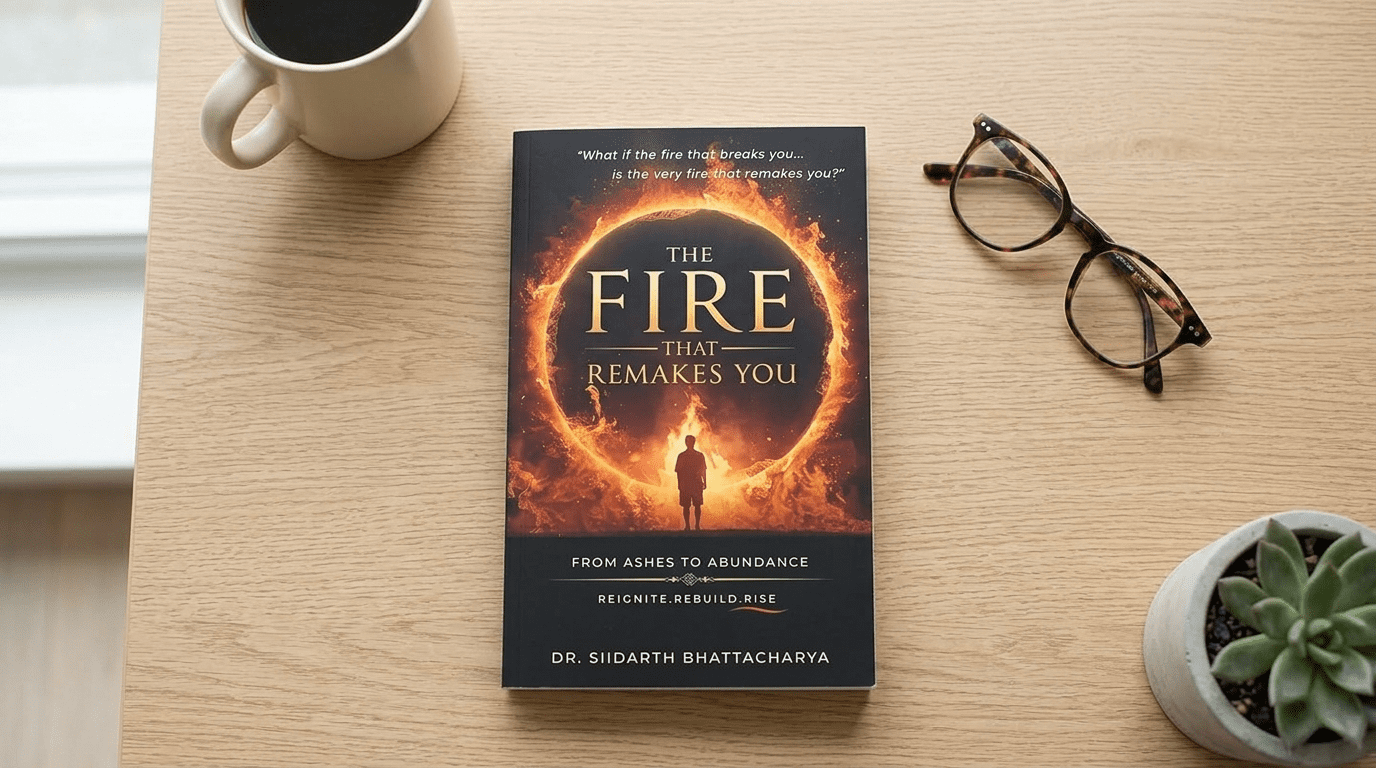
Rating:
⭐⭐⭐⭐½ (4.5 out of 5)
I don’t know when exactly self help books started feeling… distant. Maybe it’s just me. Or maybe it’s because so many of them talk at you instead of sitting beside you.
But The Fire That Remakes You by Dr. Siidarth Bhattacharya didn’t feel like that.
It felt closer. Almost like someone had written it after actually living through something, not just studying it.
There’s a line early in the book where he says this wasn’t written as an expert, but as a human trying to make sense of collapse.
And I paused there.
Because you can feel that tone throughout.
In my years at Deified Publication, I’ve read a lot of books about healing, reinvention, identity. Some are structured well but feel cold. Some are emotional but lack direction. This one… sits in between. It tries to hold your hand, but also asks you to look at things you might be avoiding.
And honestly, I wasn’t expecting it to stay with me the way it did.
What the Book Is About
At its simplest, The Fire That Remakes You is about what happens when life breaks in ways you didn’t plan for.
Not small disruptions. Not surface level stress.
I’m talking about the kind of collapse where your identity cracks. Where the roles you built your life around suddenly disappear.
The book is structured into four stages. The Ashes, The Embers, The Spark, and The Flame. And I liked that this wasn’t just a poetic choice. Each section actually reflects a phase of emotional rebuilding.
The Ashes is where everything falls apart. And I think this is the strongest part of the book. It doesn’t rush you out of pain. It almost insists that you stay there long enough to understand it.
There’s a section where he talks about how collapse doesn’t always look dramatic. Sometimes it’s subtle. You’re still showing up, still functioning, but inside something is slowly dissolving.
I’ve seen this in people around me. Maybe even in myself at certain points.
Then comes The Embers, where you begin to hear yourself again. The Spark, where something small starts shifting. And finally The Flame, which is less about becoming someone new and more about becoming more honest with who you already are.
What I appreciated is that the book doesn’t position healing as a straight line. It actually says healing loops, pauses, spirals.
That felt real.
What Stood Out to Me
There are a few things that stayed with me even after I finished.
One is how the book talks about identity.
There’s this idea repeated in different ways that many of us build ourselves around roles. Job titles. Relationships. Expectations. And when those collapse, we don’t just lose something external. We lose the version of ourselves attached to it.
There’s a part where he writes about staring at life after everything falls apart and asking, who am I without all this?
That question lingers.
Another thing is how the book handles emotional honesty. It doesn’t push positivity too quickly. In fact, it gently pushes back against what we usually hear. Things like “be strong” or “move on.”
There’s a section in Chapter 2 where he breaks down how being “the strong one” can actually become a burden. How constantly holding everything together can slowly disconnect you from yourself.
I think a lot of people will recognize themselves there.
Also, the way the book blends personal stories with psychological insights works quite well. It doesn’t feel like theory. It feels grounded.
There’s an example of a corporate professional losing his job and realizing he didn’t just lose income, he lost identity.
And that shift, from external loss to internal impact, is where the book keeps returning.
I also noticed the practical side. The journal prompts, the “Try This Today” sections, the reflections. They aren’t overwhelming. They’re simple, but they ask uncomfortable questions.
Like, what part of my life no longer feels like mine?
That one stayed with me.
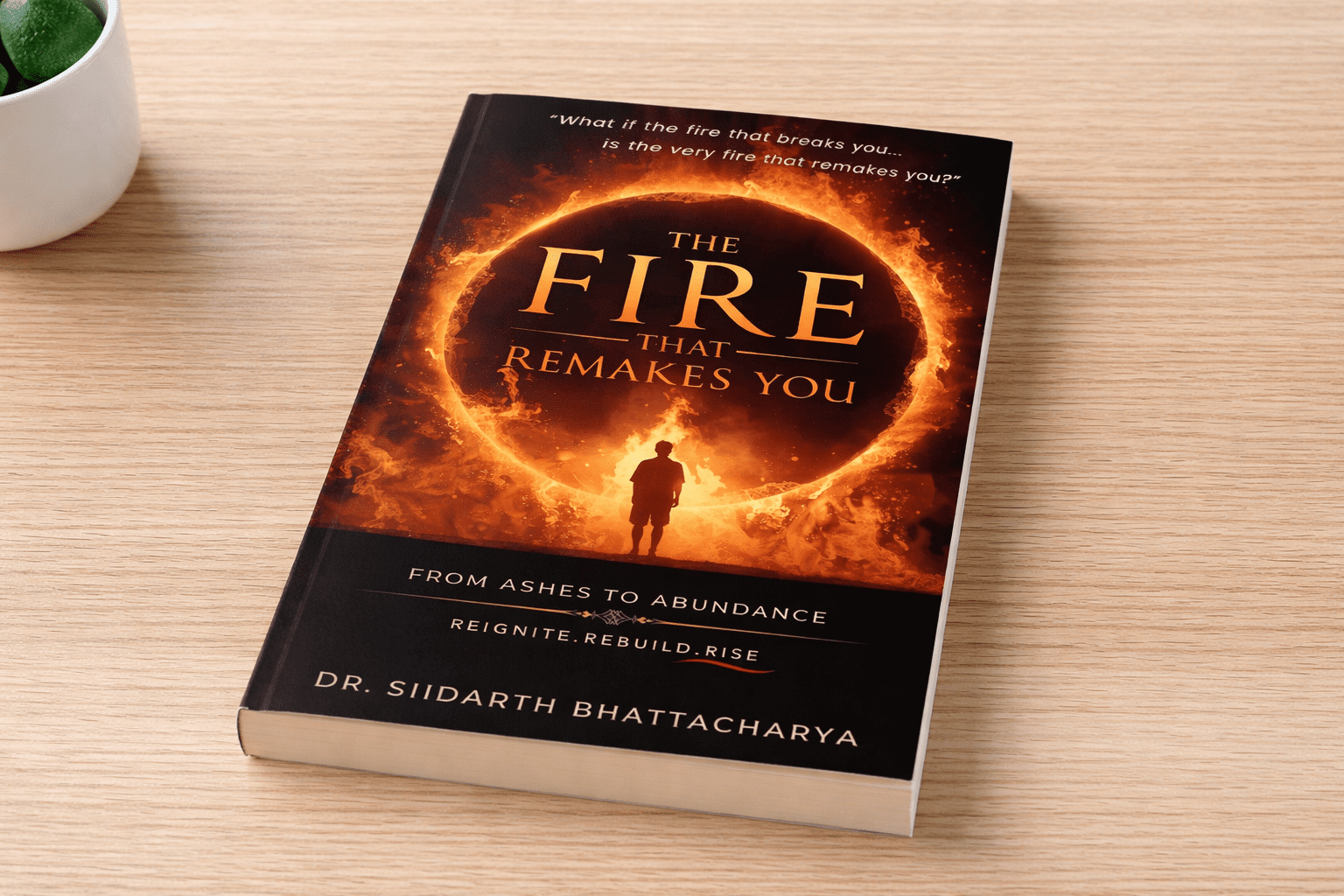
The Emotional Core
If I had to describe what this book feels like, I’d say it feels like being given permission.
Permission to fall apart.
Permission to not rush your healing.
Permission to admit that something isn’t working anymore.
There’s a letter in the book addressed to someone who feels like everything is breaking. And it says, you are not broken, you are breaking open.
I don’t know… something about that line.
It’s simple, but it shifts how you look at pain.
The emotional strength of this book is not in dramatic storytelling. It’s in recognition. You see your own patterns reflected back at you. The way you’ve been coping. Avoiding. Performing.
And slowly, the book nudges you to sit with that.
Not fix it immediately. Just sit with it.
That’s rare.
Most books rush to solutions. This one lingers in the questions.
Who This Book Is For
I think this book is for people who are in the middle of something they can’t fully explain.
Maybe a breakup. Maybe burnout. Maybe a career shift that didn’t go as planned.
Or even that strange feeling where everything looks fine from the outside, but inside something feels off.
If you’re looking for quick hacks or step by step formulas for success, this might not satisfy you.
But if you’re okay with slowing down, reflecting, and being honest with yourself, then this book might meet you in a very real way.
Also, I feel this would resonate with professionals especially. People who have built identities around achievement and then suddenly find themselves questioning everything.
At the same time, I’ll say this. The tone can feel intense in parts. It asks you to confront things you might not be ready to face. So maybe this isn’t something you rush through.
It’s something you sit with.
Final Thoughts
I keep coming back to one idea from The Fire That Remakes You.
That collapse is not just an ending. It’s a threshold.
And I think that’s what the book is really trying to say.
Not that pain is beautiful. Not that everything happens for a reason.
But that within the mess, there is a possibility to rebuild in a more honest way.
It’s not perfect. Some ideas repeat across chapters. At times, the language leans a little heavy on metaphors.
But maybe that’s also part of its voice.
It’s not trying to be clinical. It’s trying to be human.
And for many readers, I think that will matter more.
FAQ
Is The Fire That Remakes You worth reading?
I think yes, especially if you’re going through a period of change or emotional uncertainty. It offers clarity without rushing you.
Who should read The Fire That Remakes You?
Anyone dealing with burnout, heartbreak, identity shifts, or feeling lost in life.
Is this book very practical or more emotional?
It’s a mix. There are reflections and exercises, but the focus is more on emotional understanding.
Does it help with real life problems?
It doesn’t give quick fixes, but it helps you understand yourself better, which can lead to real changes.

With over 11 years of experience in the publishing industry, Priya Srivastava has become a trusted guide for hundreds of authors navigating the challenging path from manuscript to marketplace. As Editor-in-Chief of Deified Publications, she combines the precision of a publishing professional with the empathy of a mentor who truly understands the fears, hopes, and dreams of both first-time and seasoned writers.