
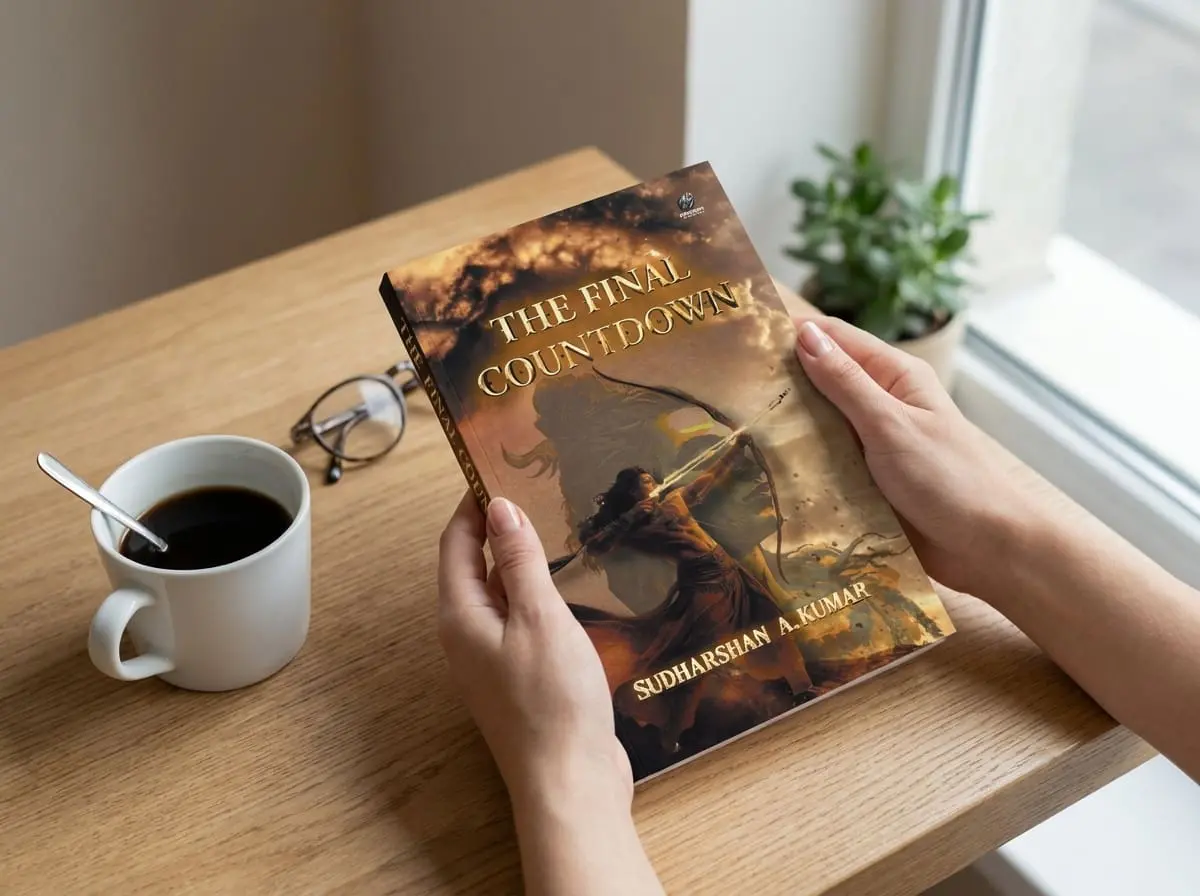
Rating
⭐⭐⭐⭐1/2 (4.5 out of 5)
As someone who has spent more than fifteen years reading and reviewing books across genres, I have learned that mythological fiction is one of the hardest categories to get right. It is easy to fill pages with gods, prophecies, ancient weapons, and grand battles. It is much harder to make readers care about the people caught in the middle of those events.
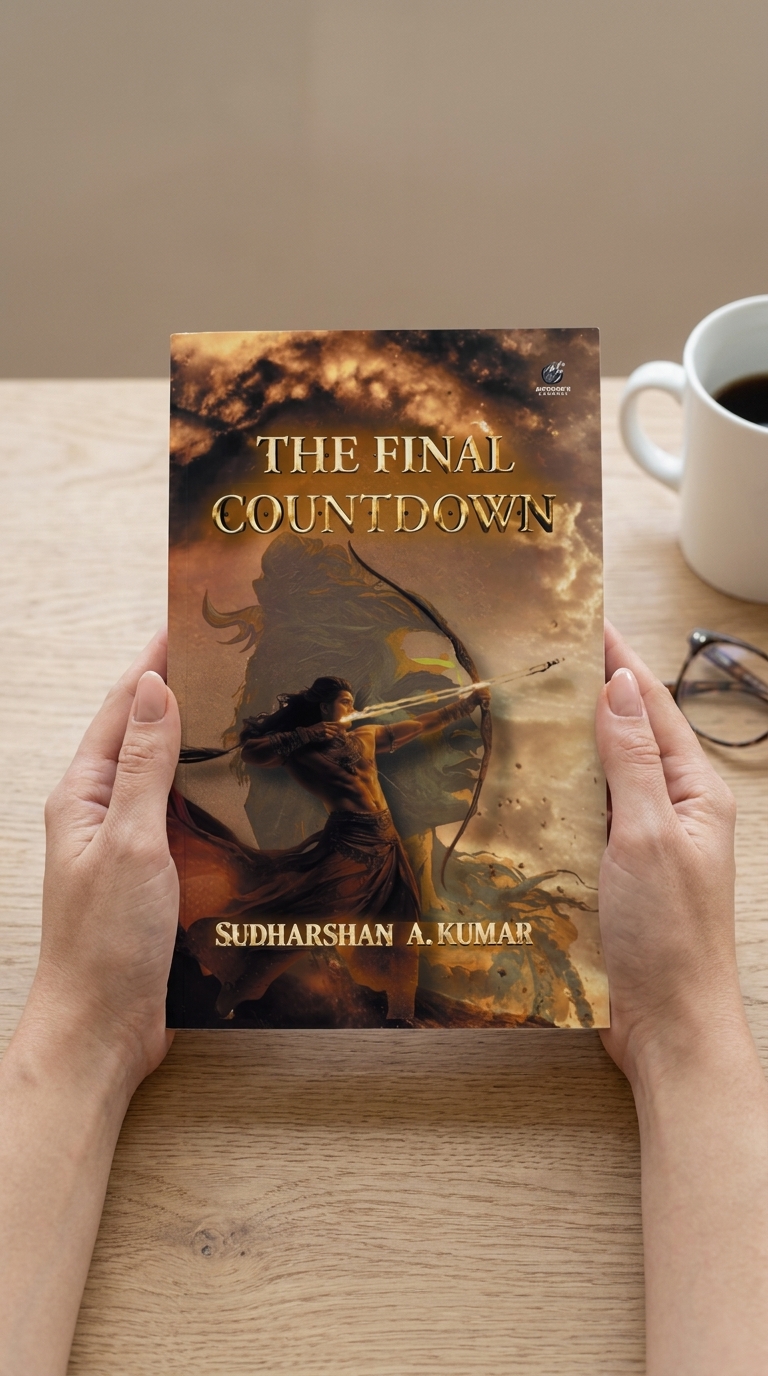
That is what caught my attention while reading The Final Countdown by Sudharshan A Kumar.
At first glance, the novel looks like a classic mythological fantasy thriller. There is an ancient mystery. There are forgotten truths hidden beneath a lake. There are references to figures from Indian mythology. There is a looming conflict that threatens the future. But beneath all of that, I found something else. I found a story about confusion, belief, disappointment, hope, and the search for meaning in a world where nobody seems to have all the answers.
I think that is what makes this book different from many mythological adventures currently available.
Rather than presenting mythology as something distant and untouchable, Sudharshan A Kumar brings it into conversations between ordinary people, travellers, seekers, and individuals trying to understand what is happening around them. Sometimes those conversations are philosophical. Sometimes they are humorous. Sometimes they become surprisingly emotional.
By the time I reached the later chapters, I found myself less interested in who would win the coming battle and more interested in what the characters would ultimately learn about themselves.
What the Book Is About
The story follows Vikram, a traveller and content creator who arrives near Pangong Lake while filming for his audience. What begins as a seemingly ordinary journey quickly becomes something much larger.
An unusual encounter near the lake introduces Vikram to mysterious individuals who appear to know more about him than they should. Strange conversations hint at forces operating beyond ordinary human understanding. Ancient symbols, forgotten histories, and hidden truths begin emerging one piece at a time.
As the story progresses, Vikram finds himself pulled into events connected with figures such as Vasudev, Ashwatthama, Krupacharya, Kali, and others whose existence challenges everything he believes about reality.
The novel gradually expands from a local mystery into something much larger. Questions surrounding destiny, time, mythology, divine intervention, and humanity’s future become central to the narrative. The later chapters build toward a conflict that feels less like a traditional war and more like a struggle over the direction of civilization itself.
What I appreciated is that the book does not rush into revealing everything. The title itself, The Final Countdown, becomes increasingly meaningful as the story advances and the sense of an approaching turning point grows stronger.
What Stood Out to Me
One of the first things that stood out was Vikram himself.
He is not introduced as a warrior, a chosen hero, or a larger-than-life figure. He feels approachable. He makes observations that many readers would probably make themselves. He asks questions. He gets confused. He reacts with curiosity, skepticism, excitement, and frustration.
That grounded perspective helps the reader enter a world that could otherwise become overwhelming.
I also found the structure interesting. Looking at the chapter titles alone gives readers a sense of progression. Titles such as The Presence, The Surprise, Dreams To Reality, The Childish Kidnap, The Realm Of Truth, The Hope, The Disappointment, The Announcement, The Love Stories, The First Kill, The Curse Of Dead, The War, The Enlightenment, and finally Countdown Begins create a feeling that the story is building toward something significant.
Another aspect that stood out was the author’s willingness to reinterpret mythological figures.
Without giving away major spoilers, there are several moments where readers encounter versions of familiar mythological concepts presented through a fresh lens. The discussions involving Ashwatthama and Krupacharya, in particular, add a layer of intrigue because they connect ancient mythology with questions about time, destiny, and humanity’s future.
Some readers will love these reinterpretations. Others may disagree with them. Personally, I think books are often most interesting when they encourage readers to think rather than simply accept everything presented to them.
The novel also contains several moments where characters openly debate morality, faith, leadership, and responsibility. These sections reveal that the book is interested in ideas as much as action.
The Emotional Core
What surprised me most was that the emotional center of the story is not mythology. It is disappointment. That may sound strange for a fantasy thriller, but hear me out.
Throughout the book, characters repeatedly encounter situations where expectations collide with reality. We see this in Vikram’s reactions. We see it in conversations involving Vasudev. We see it in moments where characters expect greatness, miracles, justice, or certainty and instead receive something far more complicated.
One chapter that particularly stood out was The Disappointment. The scenes involving Vasudev helping an elderly woman while others expect a dramatic display of power create an interesting tension. The surrounding characters interpret events differently. Some expect strength to look a certain way. Others believe wisdom requires patience. The result is a discussion that feels surprisingly relevant to modern life.
I found myself thinking about how often people build expectations around leaders, heroes, public figures, and even spiritual teachers. Reality rarely matches those expectations perfectly. The book repeatedly returns to that idea.
Another emotional thread running through the novel is loneliness. Despite being surrounded by extraordinary events, many characters seem to be searching for understanding. They are looking for answers, validation, or connection. That human element helps balance the larger mythological framework.
There are also moments of humor scattered throughout the story. Some conversations between characters feel almost casual despite the enormous stakes involved. Those moments prevent the book from becoming overly serious and make the characters feel more believable.
The Writing Style
Sudharshan A Kumar writes with enthusiasm and imagination.
The book often feels cinematic. Many scenes seem designed visually, almost as though the author can already see them unfolding on screen.
Readers who enjoy mythology mixed with adventure will likely appreciate the ambitious scope. Ancient idols, mysterious travellers, hidden truths beneath lakes, legendary weapons, forgotten timelines, and approaching cosmic conflicts all contribute to a story that consistently aims big.
At the same time, I think some readers may notice occasional pacing unevenness. Certain conversations become lengthy because the characters are discussing ideas, theories, or explanations. Readers who enjoy mythology and philosophical discussions will probably welcome those sections. Readers looking only for action may find themselves wanting the plot to move faster in a few places.
For me, those discussions were part of the book’s identity. They reveal what the author is trying to say about humanity, belief systems, and the choices that shape civilizations.
Why This Story Feels Timely in 2026
Reading The Final Countdown in 2026 feels interesting because many of its questions reflect conversations happening in the real world. People everywhere are debating technology, spirituality, identity, truth, leadership, and the future of society.
The book approaches those concerns through mythology rather than contemporary politics, but the underlying questions remain familiar.
- Who should people trust?
- What happens when traditions are forgotten?
- Can progress exist without wisdom?
- What role does faith play in a rapidly changing world?
Those questions appear throughout the story in different forms.
I think readers who enjoy finding modern relevance inside mythological fiction will appreciate that aspect.
Who This Book Is For
This novel will likely appeal to readers who enjoy Indian mythology mixed with fantasy, adventure, mystery, and speculative ideas. If you enjoy stories that combine ancient legends with modern characters, there is a good chance you will connect with this book.
Readers who liked books involving hidden histories, mythological reinterpretations, secret knowledge, and larger-than-life stakes may find plenty to enjoy here. It may also appeal to readers who enjoy discussing theories. There are several moments where the story presents ideas that encourage debate and interpretation.
On the other hand, if you prefer tightly focused literary fiction with minimal mythology or fantasy elements, this may not be your preferred style. The book embraces big concepts and ambitious storytelling.
Final Thoughts
When I finished The Final Countdown, I found myself thinking less about individual battles and more about the questions the story raises.
- Who controls destiny?
- Can history repeat itself in new forms?
- What happens when ancient forces intersect with modern lives?
- And perhaps most importantly, how much of our future is already shaped by the choices we make today?
In my years reviewing books, I have learned that readers remember stories for different reasons. Some remember plot twists. Some remember characters. Some remember ideas. I suspect many readers will remember The Final Countdown because of its ideas.
Sudharshan A Kumar has written a novel that combines mythology, fantasy, philosophy, adventure, and speculation into a single narrative. It is ambitious. It occasionally takes risks. It asks readers to engage with concepts bigger than the immediate plot. Not every idea will resonate with every reader, but the book’s willingness to think big is part of its appeal.
If you enjoy mythological fiction that is interested in questions as much as answers, this is a book worth considering.

With over 11 years of experience in the publishing industry, Priya Srivastava has become a trusted guide for hundreds of authors navigating the challenging path from manuscript to marketplace. As Editor-in-Chief of Deified Publications, she combines the precision of a publishing professional with the empathy of a mentor who truly understands the fears, hopes, and dreams of both first-time and seasoned writers.