
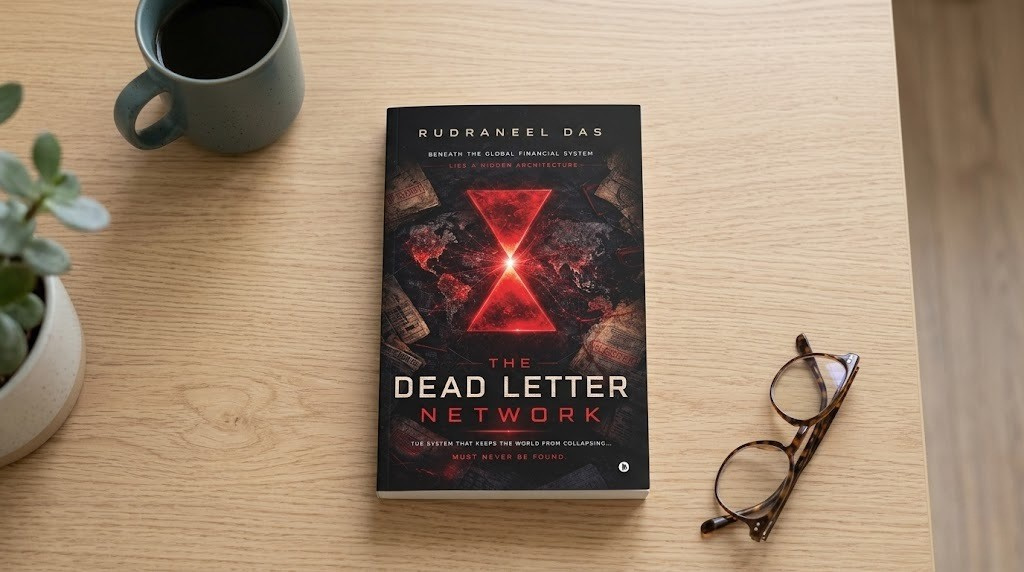
Rating:
⭐⭐⭐⭐ (4.6 out of 5)
This one stayed in my mind longer than I expected
I have been reading fiction for over fifteen years now, and as Editor in Chief at Deified Publication, I have learned to trust the feeling I get when a book’s ideas continue running in the background of my day. The Dead Letter Network by Rudraneel Das gave me exactly that kind of lingering aftereffect.
I finished it with the strange sensation that the world’s financial plumbing might actually have shadows inside shadows.
What moved me most was not just the murder mystery that opens the novel, or even the secret architecture beneath global finance. It was the human question sitting under all that institutional machinery: who should be trusted with systems powerful enough to save the world, but invisible enough to escape accountability?
That’s the kind of question that doesn’t leave you easily.
And honestly, in 2026, when conversations around fragile supply chains, market stress, and invisible institutional power feel so current, this novel lands with unusual force.
What the Book Is About: More than a thriller, it’s a map of hidden control
At the surface level, The Dead Letter Network begins with the disappearance of a sealed envelope carried by a murdered courier. What first looks like an isolated crime gradually opens into something far larger: a covert stabilization architecture operating beneath governments, banks, and even formal regulatory systems.
The secret system, known as the Dead Letter Network, exists to stabilize moments of systemic stress across global markets. Its activation depends on fragmented authorizations, courier chains, timing windows, and a hidden operational framework called Meridian.
But the real narrative strength lies in how the book expands from that initial crime into a wide institutional chessboard.
From Basel to Mumbai, Dubai to Singapore, London to Lisbon, the story threads together analysts, council architects, investigators, sovereign fund representatives, and trade finance systems. What impressed me was how Rudraneel Das never lets the scale become abstract. Even when the book is talking about repo spreads, settlement corridors, liquidity tightening, or insurance collateral timing, it still feels grounded in people making morally loaded decisions under pressure.
Ayesha Khan, especially, becomes the emotional and intellectual anchor of the novel. Her gradual realization that the “hidden corridor” is no longer theoretical gives the book its most gripping sections. The later movement toward governance, accountability, and whether a stabilization system can ethically govern itself becomes even more interesting than the original murder mystery.
I think many readers searching for a The Dead Letter Network book summary will expect a financial conspiracy novel. It is that, yes. But it is also a story about inheritance, responsibility, institutional memory, and the frightening elegance of systems built by people who assumed future generations would “choose well.”
What Stood Out to Me: The architecture of suspense
The biggest strength of Rudraneel Das as a writer is structural patience.
This is not a book that relies on constant shock moments. Instead, it builds dread through pattern recognition.
There’s this recurring motif of settlement windows closing, authorization fragments missing, nodes glowing amber or green, and the invisible corridor waiting for the final key. I loved how these technical signals gradually become emotional signals too. By the time the Mumbai node remains incomplete while Dubai, Singapore, and London adjust, you are not just reading data movement. You are feeling pressure.
The chapters around “The Closing Window,” “Ayesha Sees the Activation,” and “The Intervention” were especially strong for me because they show how tension can come from timing rather than violence. The countdown structure works beautifully.
Another thing that stood out was the book’s symbolic language.
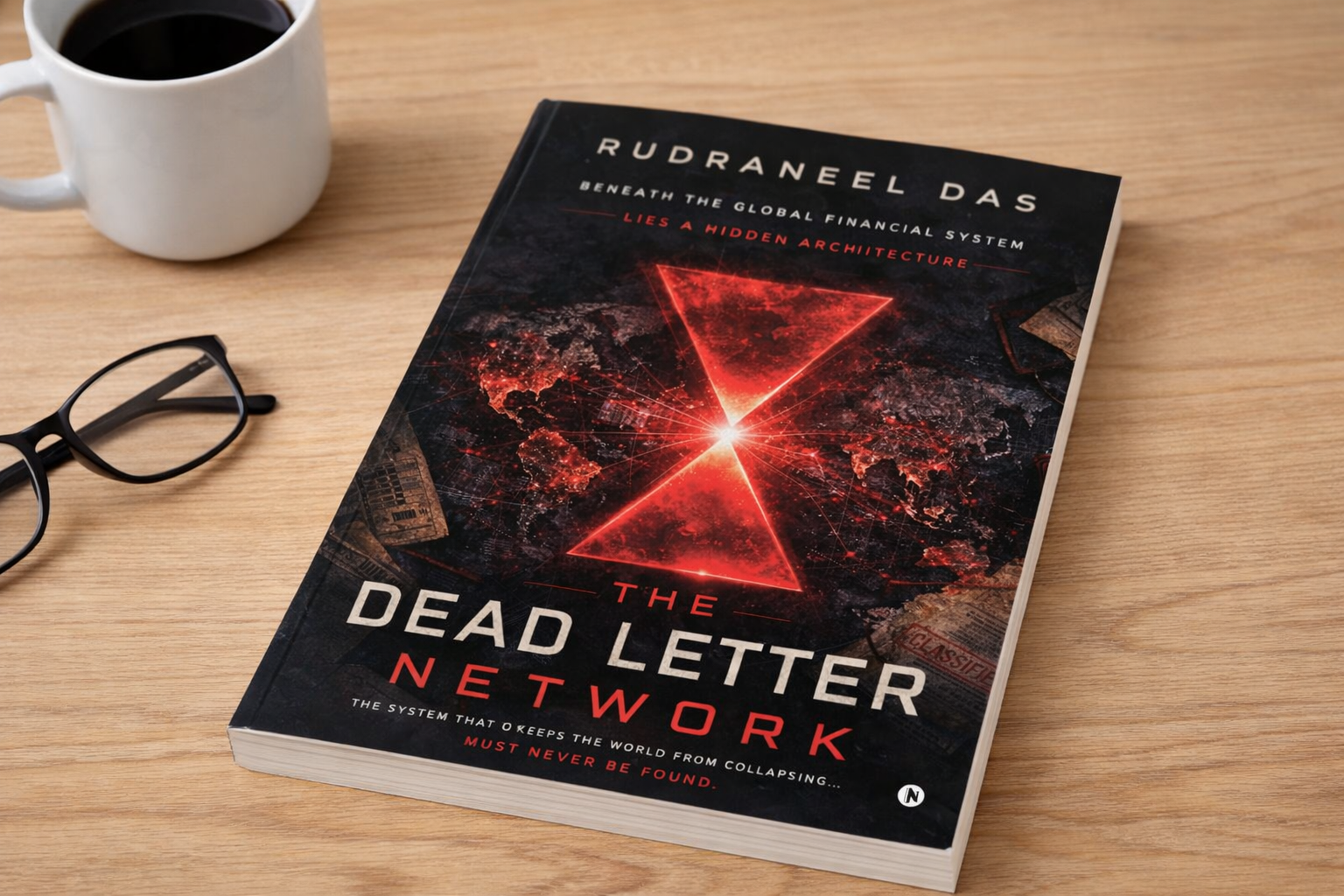
The upright pyramid and inverted pyramid touching at a point is one of the smartest recurring images in the novel. It functions as a design philosophy, a metaphor for visible and invisible power, and later a moral question about where authority actually resides.
As someone who edits fiction closely, I notice when authors use symbols merely for style. Here, it is built into the book’s operating logic. That’s much harder to do well.
I also appreciated that the ending does not reduce the whole system into a simplistic “destroy the conspiracy” payoff. Instead, the later chapters move toward a more mature question: if the system is real, necessary, and effective, how should it be governed without destroying what makes it useful?
That is a much smarter narrative choice than easy exposure.
If I had one small critique, it’s this: some readers may find the dense institutional conversations in the later governance sections slightly repetitive. The philosophical distinctions between accountability, oversight, architecture, and control are fascinating, but they do ask for attention. Personally, I enjoyed that. But if someone is expecting a fast crime thriller throughout, those later pages may feel more cerebral than emotional.
Still, I think the payoff justifies it.
The Emotional Core: The loneliness of people who see too much
For me, the emotional heart of The Dead Letter Network is not fear.
It is loneliness.
Ayesha, Hallberg, Deshmukh, Voss, and later Leila Kasim all occupy positions where they understand only part of the system, yet each is forced into decisions with global consequences. There is something deeply human in that.
I kept thinking about the scenes where characters receive fragments: a photograph of a child, a notebook line, an unsigned message, a four sentence reply that changes the future of governance. These are small moments, almost understated, but they carry real weight because the book understands that institutions are still made of private human hesitation.
The epilogue, especially, hit me in an unexpectedly emotional way.
Ayesha not getting the FSB liaison role, yet eventually being moved into a more structurally meaningful research mandate, felt honest. Life often works like that. The visible reward does not always go where the deepest truth does.
And the line of thought around “the difference between a stabilization system and a governance process is who controls the activation key” stayed with me because it applies far beyond finance. Families, companies, governments, even relationships sometimes break at exactly that point: who actually holds the key.
That emotional truth is why this novel works.
Who This Book Is For: Should you read The Dead Letter Network?
If you are wondering is The Dead Letter Network worth it, I’d say yes, especially if you enjoy fiction where ideas matter as much as plot.
This book is for:
- readers who enjoy intelligent financial or geopolitical thrillers
- fans of institutional mysteries and systemic conspiracy fiction
- people who liked novels where information itself becomes suspense
- readers interested in BIS, Basel, trade finance, or hidden infrastructure fiction
- anyone who enjoys books that ask ethical questions about power
This might not be for everyone, though.
If you want highly intimate domestic drama or fast action every chapter, this may feel more technical than personal. But if you enjoy stories where systems themselves become characters, this novel gives you a lot to think about.
Final Thoughts: A rare systems novel with a real human pulse
I think what makes The Dead Letter Network Book Review difficult to reduce into a simple yes or no is that the book succeeds on two levels at once.
On one level, it is a sharp, deeply researched financial suspense novel by Rudraneel Das.
On another, it is a meditation on invisible stewardship: the people who build mechanisms the world may never know saved it.
That second layer is what made it memorable for me.
The final movement, where the system remains active not as secrecy but as licensed, studied infrastructure, felt emotionally right. Not triumphant. Not cynical. Just honest.
And that honesty matters.
Some books entertain you for a weekend. Some books make you look differently at the systems around you on Monday morning.
This one definitely did the second.
FAQs
Is The Dead Letter Network worth reading?
Yes, especially if you enjoy intelligent financial fiction, global systems, and morally layered institutional thrillers.
Who should read The Dead Letter Network?
Readers of geopolitical fiction, financial suspense, BIS and Basel themed narratives, and novels about hidden governance structures.
What genre is it?
A financial conspiracy thriller with institutional mystery, global trade infrastructure, and governance drama.
Is it more plot driven or idea driven?
I’d say both, but the ideas are what make it memorable.

With over 11 years of experience in the publishing industry, Priya Srivastava has become a trusted guide for hundreds of authors navigating the challenging path from manuscript to marketplace. As Editor-in-Chief of Deified Publications, she combines the precision of a publishing professional with the empathy of a mentor who truly understands the fears, hopes, and dreams of both first-time and seasoned writers.