
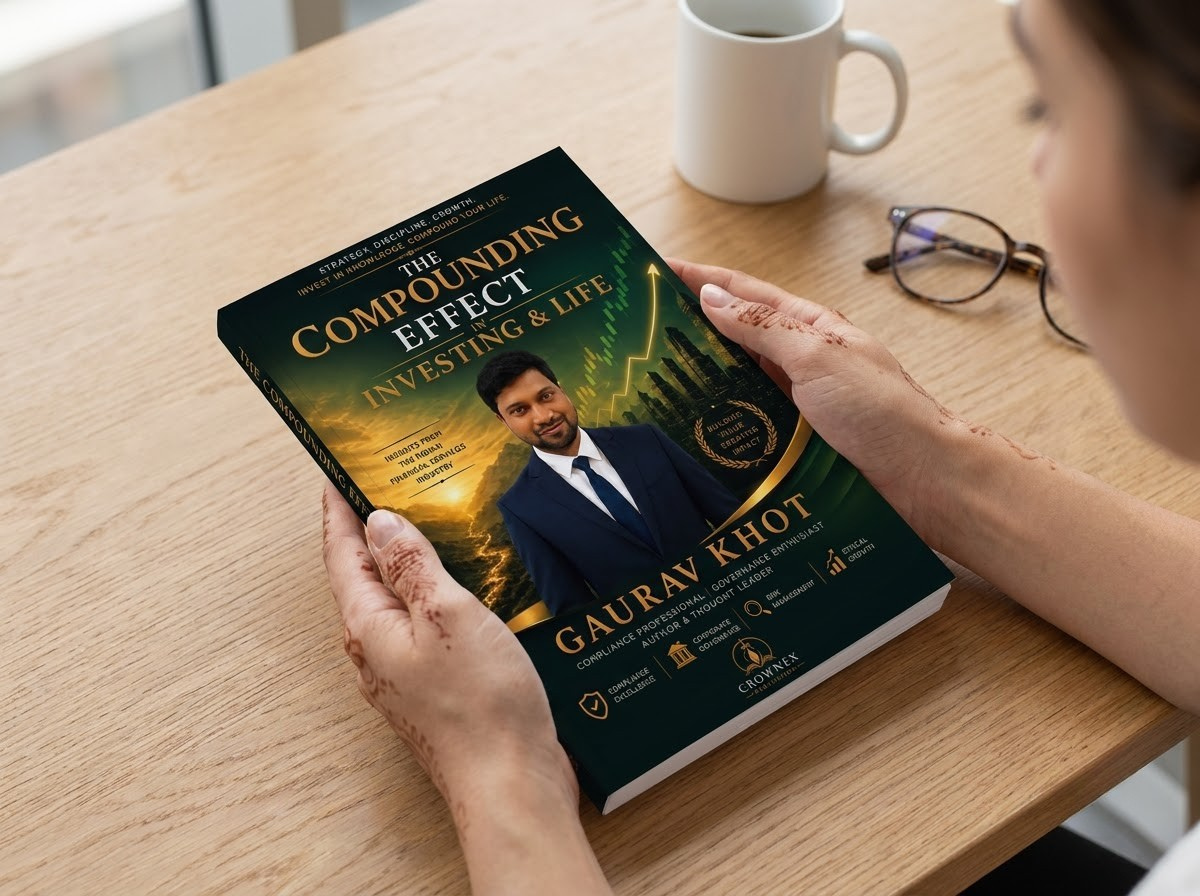
Rating: ⭐⭐⭐⭐ (4.2 out of 5)
I sat on my balcony yesterday evening with a hot cup of masala chai, watching the slow, deliberate sunset over the city skyline. It made me think about how much we rush our lives, always looking for a sudden leap or a massive win to change our fortunes. As a lifelong reader who has spent more than fifteen years reviewing books of every shape and size, I have noticed that the most impactful lessons are often the simplest ones. We live in an era where everyone wants a quick fix, yet real progress behaves like a seed growing into a tree. Today, I am sharing my The Compounding Effect in Investing & Life Book Review to help you decide if this volume is worth adding to your bookshelf.
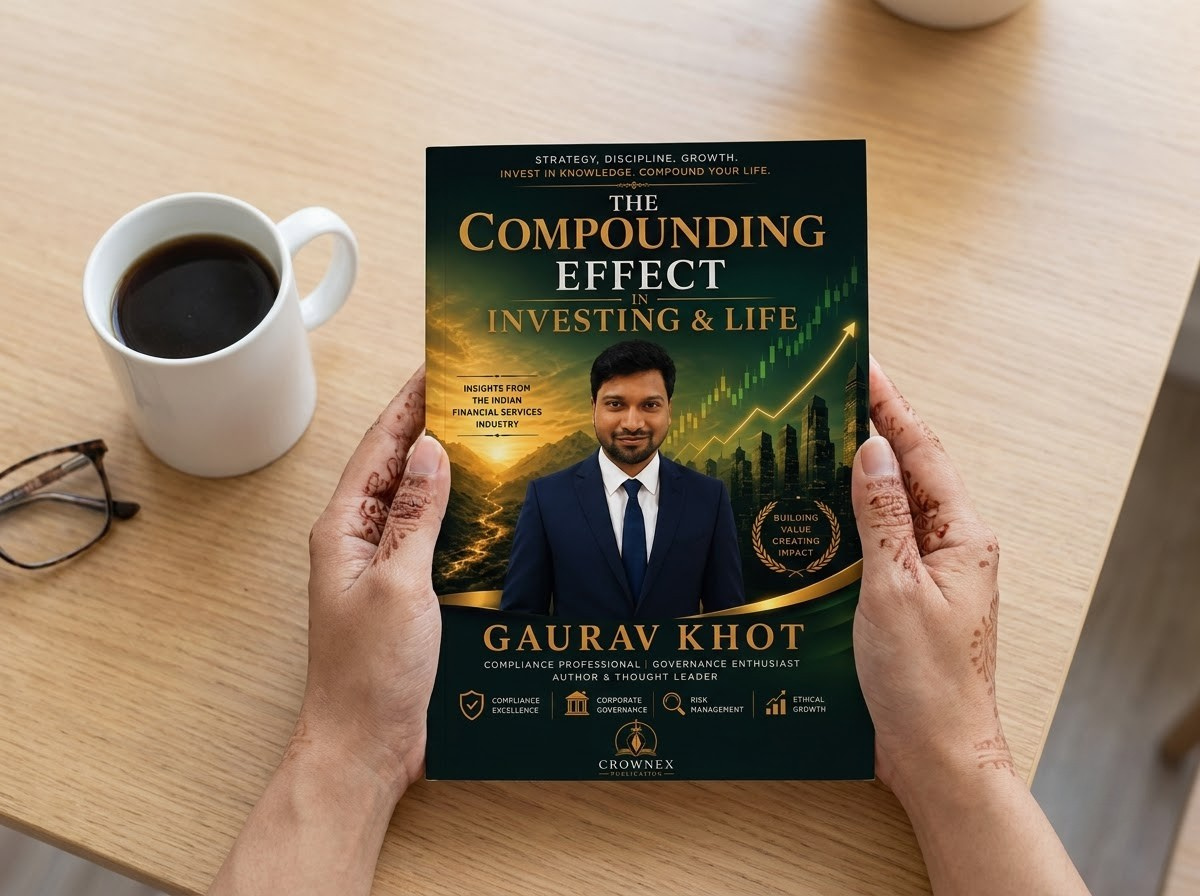
The book in question is The Compounding Effect in Investing & Life by Gaurav Khot, an author who brings a grounded perspective from his background in financial services. Published with a copyright date of 2026, this volume feels ahead of its time in how it addresses the modern attention deficit. When I first picked up the book, I was slightly skeptical because the market is already flooded with dry, repetitive personal finance manuals. However, this specific volume caught my eye because it connects financial growth directly with our personal behaviors. The author argues that our habits, our relationships, and even our knowledge grow through the exact same mathematical process that builds a retirement fund.
What Is the Book About?
To understand what is it about, we have to look at the basic definition of compounding, which is earning returns on top of previous returns. In this book summary of The Compounding Effect in Investing & Life, the author divides his analysis into twelve distinct chapters that build a comprehensive framework. He starts by explaining how small actions, such as saving a tiny amount of money each month, accumulate over years to create substantial financial security. He then transitions into the foundations of value investing, discussing how to find undervalued companies by focusing on their actual worth rather than their volatile market prices. The structure is logical and easy to follow, making complex financial concepts accessible to ordinary readers.
In this The Compounding Effect in Investing & Life Book Review, I want to emphasize that the book is not just about the stock market. Gaurav Khot spends significant time showing how the same exponential curve applies to learning, physical fitness, and professional relationships. For example, he explains that reading just a few pages of a book every day can result in the completion of dozens of volumes over several years. This accumulation of knowledge behaves exactly like compound interest, where each new concept builds upon previous understanding to make future learning much easier. It is a simple yet profound truth that we often forget when we are chasing instant gratification.
Real Stories of Financial Discipline
One of the elements that stood out to me most was the author’s clever use of relatable case studies to ground his theories. As the Editor-in-Chief at Deified Publication, I read dozens of manuscripts a year, and I often find that finance books become too abstract. Gaurav Khot avoids this trap by introducing us to characters like Rohan, a twenty-two-year-old engineering graduate who starts a monthly investment of two thousand rupees on his father’s advice. His sister, Neha, delays her investment by ten years because she wants to wait for a higher salary, and she eventually realizes she cannot accumulate the same wealth despite putting in larger monthly amounts later. This simple story illustrates the incredible advantage of starting early far better than any complex spreadsheet could.
Another wonderful moment occurs in the third chapter, where we meet a school teacher named Priya who decides to invest five thousand rupees every month. Unlike her colleague Rahul, who earns a much higher salary but constantly withdraws his returns to fund luxury vacations and shopping, Priya disciplines herself to reinvest every dividend and capital gain. Within twenty years, her portfolio is vastly superior to his because she allowed her money to remain undisturbed. I loved this comparison because I have seen this exact dynamic play out in real life among my own friends and colleagues. It shows that financial success is more about our daily discipline than the size of our initial paycheck.
The style of the book is also enhanced by clear, clean diagrams that visually demonstrate these mathematical curves. For instance, in the first chapter, the author includes Figure 1.4, which illustrates the power of compounding over a fifty-year horizon with a ten-thousand-dollar initial investment at different interest rates. Seeing the lines for six percent, eight percent, and ten percent remain relatively flat for the first twenty years before exploding upward was a real revelation. It visualizes the patience required for long-term growth and serves as a visual guide for why people often give up too early when they do not see immediate results.
I also appreciated the case study of Meera in the fifth chapter, a marketing executive earning sixty thousand rupees who was constantly struggling before the end of the month due to impulsive shopping and expensive outings. After attending a financial literacy workshop, she creates a strict budget, cuts down her online shopping, and manages to save nearly twenty-five percent of her income. She even builds a solid emergency fund that can cover six months of living expenses, which gives her immense peace of mind during economic uncertainty. The contrast with her friend Karan, who earns more but has zero savings and struggles during a salary reduction, is incredibly stark and realistic.
The Emotional Core of Wealth
At its heart, this book is not really about money, but about our relationship with time and self-control. The emotional core of Gaurav Khot’s writing lies in his deep understanding of human vulnerability, especially our fear of missing out and our tendency to panic. In the eighth chapter, which covers the psychology of compounding, the author discusses how our emotions often drive us to make irrational decisions during market volatility. He notes that the pain of losing money is felt much more strongly than the pleasure of gaining it, a psychological bias known as loss aversion. This section felt incredibly validating to me because we have all felt that sudden knot of anxiety when our plans do not yield immediate success.
Reading these chapters made me feel a sense of calm reassurance that I was not expecting from a finance guide. The author reminds us that setbacks and slow periods are a natural part of any long-term process, whether we are building a career, a savings account, or a healthy body. It encourages the reader to adopt a long-term perspective and forgive themselves for past mistakes, focusing instead on the small choices they can make today. This gentle, behavioral approach can help reduce the immense stress and anxiety that many people feel when they think about their financial future, shifting the conversation from shame to empowerment.
Should You Read This Book?
If you are wondering should you read this book, the answer depends entirely on what you are looking for in a guide. It is a perfect fit for young professionals who are just starting their careers, college graduates who want to build a solid foundation, and anyone who feels overwhelmed by traditional investment manuals. The writing is incredibly clear and avoids dense financial jargon, making it an excellent introductory text. However, if you are an experienced investor who already understands value investing, intrinsic value, and portfolio rebalancing, you might find some of the material a bit basic. The book focuses heavily on fundamental principles rather than advanced technical strategies, so seasoned traders may want to skip it in favor of more specialized literature.
You might ask, is it worth it to spend your time on a book that repeats some of its core concepts? My only minor criticism of the work is that it can feel slightly repetitive in its middle chapters, as the author reiterates the importance of patience and consistency across different topics. Some readers might feel that the chapters on personal habits and financial saving cover very similar ground, and the book could have been condensed slightly to maintain a brisker pace. Nevertheless, this repetition might be intentional, as the author clearly wants to hammer home his central thesis until it becomes second nature to the reader. Honestly, I think the benefits far outweigh this minor pacing issue, and the overall message remains incredibly valuable for anyone willing to learn.
Final Thoughts
In the end, this book is well worth the cover price because it offers a realistic, sustainable path to both financial security and personal fulfillment. Gaurav Khot has written a guide that feels like a warm conversation with a trusted mentor, helping us see that our smallest daily actions are never wasted. As an honest reader review, I want to emphasize that this book is a practical tool that sits with you, inviting you to make small, deliberate improvements to your daily routine. I hope my The Compounding Effect in Investing & Life Book Review gives you a clear picture of what to expect from this insightful guide.
FAQs
What is Gaurav Khot’s central message in the book?
The central message is that consistency and time are far more valuable than the size of your initial contributions. Whether you are saving money, learning a new language, or building physical fitness, making small, manageable improvements every day creates a powerful compounding effect over time. The author emphasizes that we must reject the culture of instant results and learn to practice patience. By allowing our efforts to accumulate undisturbed, we can achieve remarkable, long-term success that feels almost effortless in its later stages.
Is it worth it for experienced investors to read this guide?
If you are already a seasoned investor who regularly analyzes balance sheets and manages complex portfolios, this book might not offer many new technical insights. The author focuses primarily on the fundamental principles of finance, value investing, and the psychology behind our market decisions. It is designed to be an accessible introduction to financial literacy rather than an advanced guide for professional traders. However, if you are looking for a gentle refresher on the behavioral aspects of money management, you may still find value in the psychological insights and case studies.
How does the author suggest we build a compounding mindset?
Building a compounding mindset begins with setting realistic, clear financial goals and breaking them down into manageable daily actions. The author suggests focusing on the process of consistent improvement rather than worrying about immediate results or short-term market fluctuations. We must learn to manage our emotions, especially fear and greed, by relying on logic and research rather than market rumors. By practicing delayed gratification and focusing on future value rather than present price, we can develop the discipline needed to let our investments grow over many years.

With over 11 years of experience in the publishing industry, Priya Srivastava has become a trusted guide for hundreds of authors navigating the challenging path from manuscript to marketplace. As Editor-in-Chief of Deified Publications, she combines the precision of a publishing professional with the empathy of a mentor who truly understands the fears, hopes, and dreams of both first-time and seasoned writers.