
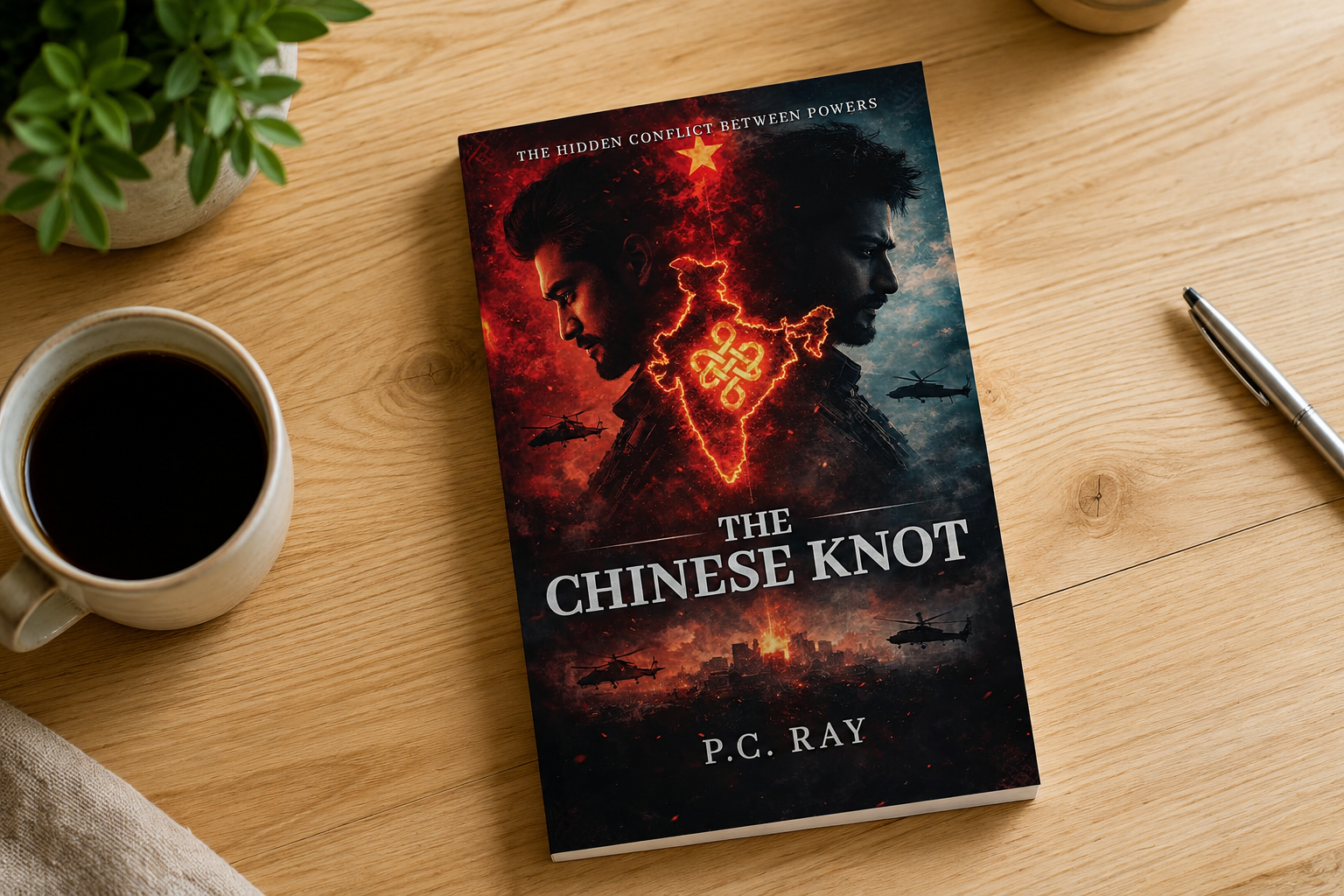
Rating: ⭐⭐⭐⭐ (4.3 out of 5)
I’ve been reading spy fiction long enough to know when a book is genuinely trying to say something versus when it’s just borrowing the trappings of the genre, the ticking clocks and the dramatic extractions, to fill a plot-shaped hole. The Chinese Knot by P.C. Ray is very much the former. I picked it up expecting a serviceable thriller and found myself sitting with it far longer than I’d planned, turning back to earlier pages, trying to figure out exactly when it had gotten under my skin. I’m still not entirely sure I can explain it. But I’ll try.
What The Book Is About
The Chinese Knot follows Major Avinash Rathore, a RAW operative who is officially dead and very much alive, working for a covert multilateral coordination network called Network Alpha. The setup is intricate without being overly complicated. There’s a Chinese intelligence officer named Colonel Chen Wei who has been running assets inside India, a compromised DRDO scientist named Dr. Rajesh Khanna who is passing quantum computing secrets, and an Israeli Mossad agent named Maya Feldman who is watching a Noida warehouse and slowly assembling a picture that nobody has fully seen yet. What begins as a thread, identifying who is surveilling whom, gradually tightens into something much more uncomfortable, not just geopolitically but personally for every character involved.
P.C. Ray anchors all of this in Delhi very specifically, which I appreciated. The Rajiv Chowk metro station, the South Block corridors, Lodhi Gardens at dawn, a safehouse above an Old Delhi bookshop. The city feels lived-in and real, not like a backdrop painted for foreign readers but like a place someone actually knows.
What Stood Out To Me
There’s a scene early in the book where Avinash is being briefed by Pradhaan Nirikshak, an older intelligence figure who works out of a sparse office with a faded photograph of a former Prime Minister on the desk and water-damaged walls peeling in shapes that “looked almost like continents.” That detail stopped me. It’s the kind of small, precise image that tells you more about the atmosphere of institutional India than three pages of exposition could. The office smells of old files. The door was never locked. These things matter in how they accumulate.
I also kept thinking about the confrontation in the parking structure in Chapter 5 where Avinash approaches Dr. Khanna. He doesn’t threaten, not exactly. He lays out what he knows: the Macau gambling debts, the meetings with Chen Wei’s handlers, the DRDO systems that have been compromised. And then he offers Khanna a choice framed as a business transaction rather than a life-or-death ultimatum. “Just confession,” he says. “Your pension stays intact.” It’s chilling precisely because it sounds so reasonable and so hollow at the same time.
What P.C. Ray does well throughout The Chinese Knot is show characters doing their jobs with real competence while the moral floor beneath them keeps shifting. Maya Feldman tracking the Innova, photographing Dr. Khanna, running facial recognition while simultaneously making Earl Grey tea in her hotel room and missing her dead brother, that combination of operational precision and private grief felt very human to me. She missed arguing with Daniel about whether milk belonged in tea. That one line did more character work than most novels manage in a chapter.
The Chapter 15 conversation between Avinash and Maya in Lodhi Gardens at dawn is probably the emotional centerpiece of the book. They sit on a stone ledge and essentially audit themselves. Maya has just learned that seventeen eliminations across four continents are in her operational history and she’s not sure five of them were actually necessary. Avinash admits he’s been “measuring the wrong distance” for eighteen months, calculating geometry when the real gap was between what he believed was happening and what was actually being orchestrated. It’s one of those conversations that spy novels rarely have because it’s uncomfortable and doesn’t resolve cleanly. I respected that a lot.
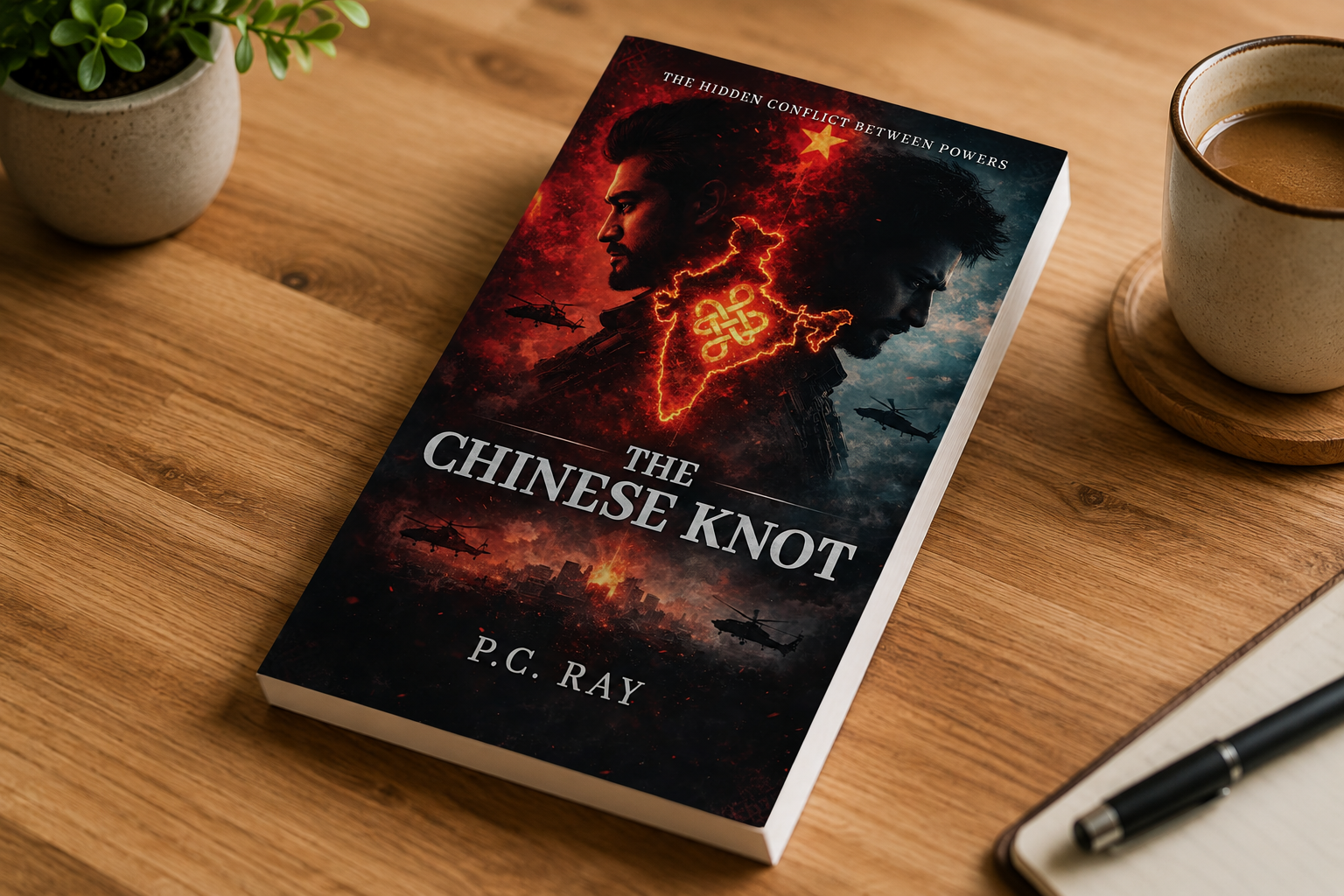
The Emotional Core
Honestly, what I wasn’t expecting from The Chinese Knot was how much it sits with grief and complicity together. Avinash was recruited through manipulated trauma, his Beirut posting staged to break him in a specific way so that he’d accept covert work three months later. When he finds this out from Station Chief Kapoor, who has been alive all along and orchestrating from the shadows, he doesn’t explode. He processes it with the same structured discipline he applies to everything. And that restraint is almost sadder than anger would have been.
There’s also the thread about Rhea, a woman Avinash loves and who believes he’s dead. By the end he decides not to tell her the truth because, as he puts it, some truths create more damage than the lies they replace. I’m not sure I fully agreed with that decision. But I believed he believed it, and the book doesn’t frame it as noble, it frames it as pragmatic. That distinction matters.
Who This Book Is For
I think readers who enjoy le Carré’s moral weight but want it set in a South Asian context will find a lot here. If you’ve been looking for Indian spy fiction that doesn’t reduce itself to jingoistic spectacle, The Chinese Knot by P.C. Ray is a genuinely satisfying option. It assumes its reader is intelligent. It doesn’t over-explain geopolitics. The Iran-Israel nuclear thread introduced toward the end sets up a sequel (titled The Persian Knot, apparently coming soon) and while the book does feel like it’s building toward something larger, it also concludes the central crisis satisfyingly.
One thing I’ll mention honestly: the book is dense in places. The early surveillance chapters require patience. Not every reader will want to sit with that pacing. But if you do, the payoff in the later chapters is real.
Final Thoughts and Rating
At Deified Publication, we read across genres and I’ll say plainly that The Chinese Knot left an impression that most thrillers I’ve read this year haven’t. It’s not about spectacle. It’s about the slow accumulation of compromise and the question of whether people shaped by institutions can ever truly choose. P.C. Ray has written something that trusts its readers. The last pages, with Avinash on his balcony and that italicized final thought about doing work “that someone has to do,” stayed with me in the way that good endings do, not because they’re triumphant but because they’re honest.
FAQs
Is The Chinese Knot worth reading?
Yes, especially if you like espionage fiction that prioritizes psychology and moral complexity over action sequences. It’s a slow build but it pays off.
Who should read The Chinese Knot?
Readers who enjoyed John le Carré, Amitav Ghosh’s more political work, or anyone curious about Indian intelligence fiction that takes its subject seriously. Also great for anyone interested in the India-China strategic dynamic without wanting to read a policy paper.
Is The Chinese Knot part of a series?
Yes. The book ends by setting up Book Two called The Persian Knot, which will apparently continue with the same characters in an Iran-Israel nuclear context. The first book does work as a standalone for its central plot.
Is the book slow?
The opening chapters require patience, particularly the surveillance sequences. But the pacing is deliberate, not lazy, and the later chapters reward the investment significantly.

With over 11 years of experience in the publishing industry, Priya Srivastava has become a trusted guide for hundreds of authors navigating the challenging path from manuscript to marketplace. As Editor-in-Chief of Deified Publications, she combines the precision of a publishing professional with the empathy of a mentor who truly understands the fears, hopes, and dreams of both first-time and seasoned writers.