
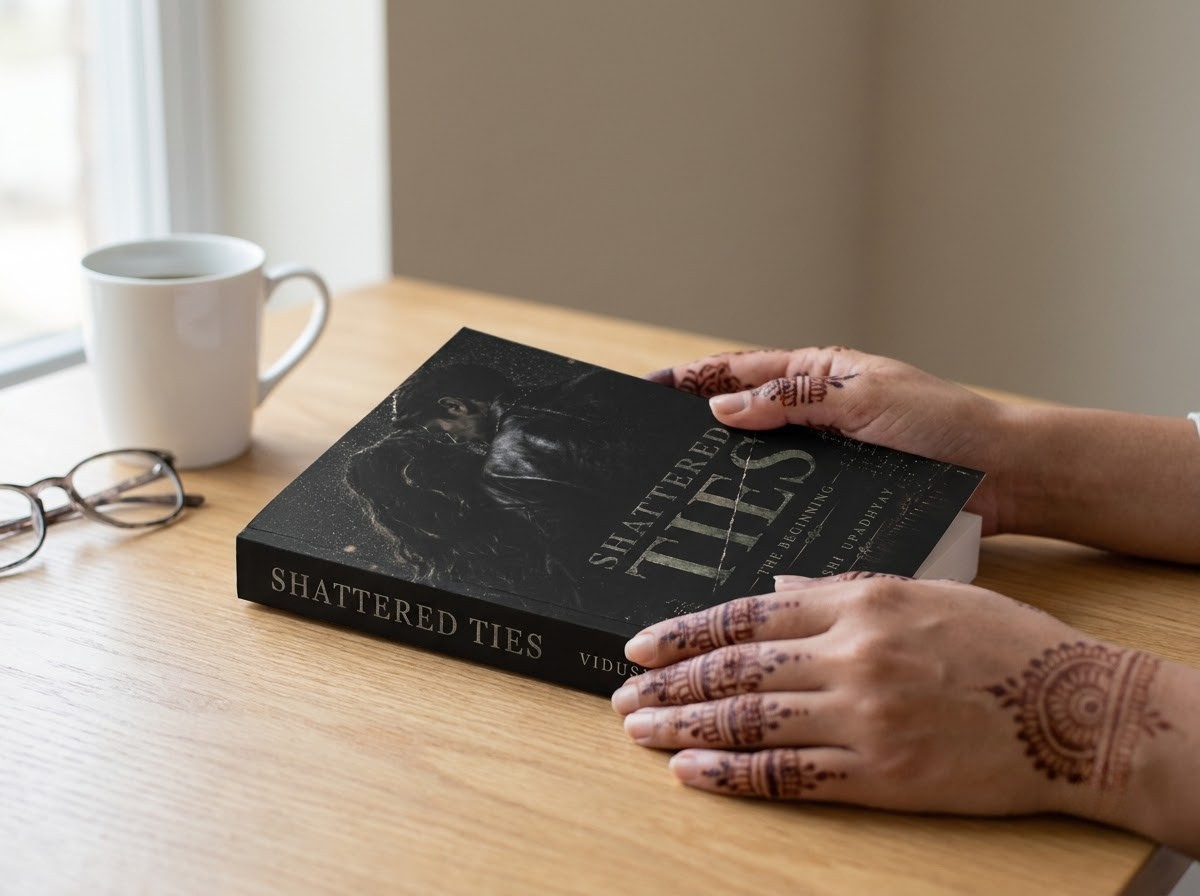
Rating: ⭐⭐⭐⭐ (4.2 out of 5)
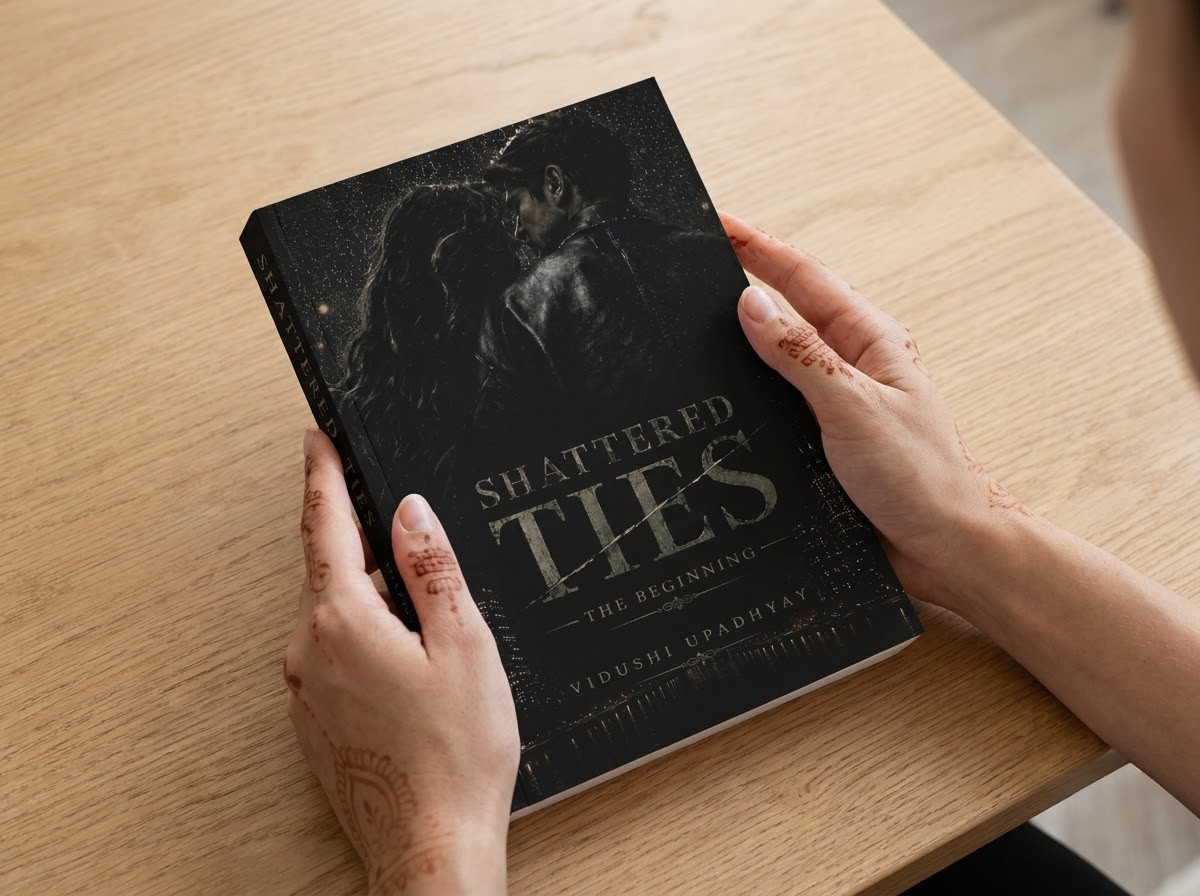
I finished Shattered Ties: The Beginning close to one in the morning, and I sat there for a good ten minutes just staring at my ceiling fan, honestly not sure what to do with everything I had just read. I have been reviewing books for Deified Publication for years now, romance especially, and I thought I had built up a decent tolerance for the genre’s usual tricks. This one still got under my skin, in the uncomfortable way more than the swoony way, and I think that is exactly what Vidushi Upadhyay was going for when she wrote it.
Shattered Ties follows Ekansh Raisinghani and Avantika Sharma, two teenagers on opposite ends of the same elite school. Ekansh is the son of the school’s owner, captain of the football team, head of pretty much everything that carries a title, and used to getting exactly what he wants the moment he wants it. Avantika is a scholarship student who would rather disappear into a textbook than be noticed by anyone, let alone the boy who runs the place like his own kingdom. Their story starts almost by accident, with a mess of papers on a football field, and it grows from there into something neither of them asked for and both of them get pulled into anyway. Upadhyay splits the narration between both of their heads, chapter by chapter, so you get Avantika’s nervous, overthinking inner voice sitting right next to Ekansh’s cold, calculating one, and watching the same moment through two completely different people is one of the more effective choices in the book.
I want to talk about the early chemistry class scene because it is a good example of how Upadhyay builds tension without needing anything big to happen on the page. Avantika is at the board solving an equation when Ekansh walks in to drop off a list for an event. The whole scene is just her trying not to look at him while he lies to their teacher about a missing script, covering for the fact that he got distracted watching her instead of finishing it. Nothing is said between them directly. And yet you feel the whole room shift. That is craft, and I do not say that lightly, especially for a book that started as an online serial.
Then there is the day Ekansh decides to make things public, pulling Avantika out of her seat in front of the entire class to announce, loud enough for everyone to hear, that she belongs to him. I remember reading that scene and actually setting my phone down for a second. It is written to make you uncomfortable, and it works. The disclaimer at the front of the book warns readers upfront that Ekansh’s version of love leans closer to control than affection, and by the time you reach this point, you understand exactly what that warning meant. Some readers are going to eat this trope up completely, the possessive, obsessive male lead who claims a girl in front of a room full of people, because it is genuinely one of the most requested tropes in the online romance spaces this book grew out of, and Upadhyay clearly knows her audience.
There is also a stretch later in the book where Avantika tries to end things over text, telling Ekansh flatly that she does not love him and never did. His response is not sadness. It is refusal. He shows up at her hostel, locks her inside a room, and tells her there is no version of this story where she gets to walk away on her own terms. I found this section genuinely hard to sit with, not because it is badly written but because it is written well enough that the fear in it lands. In my years reading this genre, I have seen plenty of books soften a moment like this into something romantic far too quickly. Upadhyay does not do that here, and I respected the choice even while wincing through it.
The scene I keep thinking about, though, is the one near the end, in a temple, after a tragedy involving Ekansh’s younger sister pulls both families into a hospital corridor together. What follows is a forced marriage sequence that Upadhyay writes with real restraint, which surprised me given how much the earlier chapters lean into big, loud confrontations. The sindoor slipping through Ekansh’s fingers, the priest being ordered out the moment the ceremony ends, Ekansh dragging his palm across Avantika’s forehead afterward to smear the mark he had just placed there, it is brutal in a controlled, deliberate way that the rest of the book does not always manage. This is the point where Shattered Ties stops being a school romance and turns into something much heavier.
If you have read enough dark romance, you know the genre runs on a specific kind of ache, the distance between how much two people clearly want each other and how much damage they keep doing to get there. Shattered Ties leans hard into that gap. Avantika spends most of the book absorbing consequences that were never entirely hers to carry, from her sister’s mistakes to her family’s reputation to Ekansh’s own temper. Ekansh, meanwhile, spends most of it convinced that control and love are the same emotion wearing different faces. I found myself frustrated with both of them more than once, and I think that frustration is the point. This is not a story about a healthy relationship, and the book never pretends otherwise. It is a story about two people who hurt each other badly enough that any real healing is going to take an entire second book to earn.
This one is for readers who already know they like dark, intense, possessive romance and are not looking for something gentle. If you have enjoyed stories with obsessive love interests, forced proximity, and family drama layered on top of teenage romance, you will probably move through this fast, the chapters are short and the momentum rarely lets up. If you need your male lead to be soft and respectful from the first page, this is not going to be the book for you, and honestly, the disclaimer tells you that before you even reach chapter one, which I appreciated as an editor. I would also point out that this reads more like an eighteen-plus title given some of the content, despite the characters starting the story as teenagers.
My honest critique is that the middle third drags a little. There are a handful of scenes at the Raisinghani mansion, family banter over coffee and smoothies, cousins bickering about movies, that feel more like filler than forward motion, and I found myself wanting to get back to Avantika and Ekansh directly. I also would have liked a bit more room given to Avantika’s inner life outside of fear and guilt, since she spends so much of the book reacting to things done to her rather than choosing things for herself. But the ending genuinely earned my reaction. I closed the book and immediately wanted the second half, which is really the only metric that matters for a story built to be read in two parts.
Vidushi Upadhyay, who many readers will already know online as Ishiii, clearly understands how to write an ending that leaves you a little wrecked, and I mean that as a compliment. Shattered Ties: The Beginning is not a comfortable read, and it does not try to be. It is a book about the ugly side of first love, the kind that leaves marks, and it sets up its second installment, Shattered Ties: After The Fall, with a cliffhanger sharp enough that I am already looking for it.
FAQs:
Is Shattered Ties worth reading?
If you already enjoy dark, possessive romance tropes, yes. If you prefer softer male leads, this probably is not your book, and that is completely fine.
Who should read Shattered Ties?
Fans of intense, forced-proximity romance with heavy family drama, especially readers who already follow Vidushi Upadhyay’s work on Wattpad or Scrollstack.
Does Shattered Ties: The Beginning have an ending, or is it a cliffhanger?
It covers chapters one through forty-two and ends on a genuine cliffhanger. The story continues in Shattered Ties: After The Fall.
What age group is Shattered Ties appropriate for?
Given the intensity of some scenes, I would recommend this for mature readers, eighteen and above, despite the characters being younger at the start of the book.
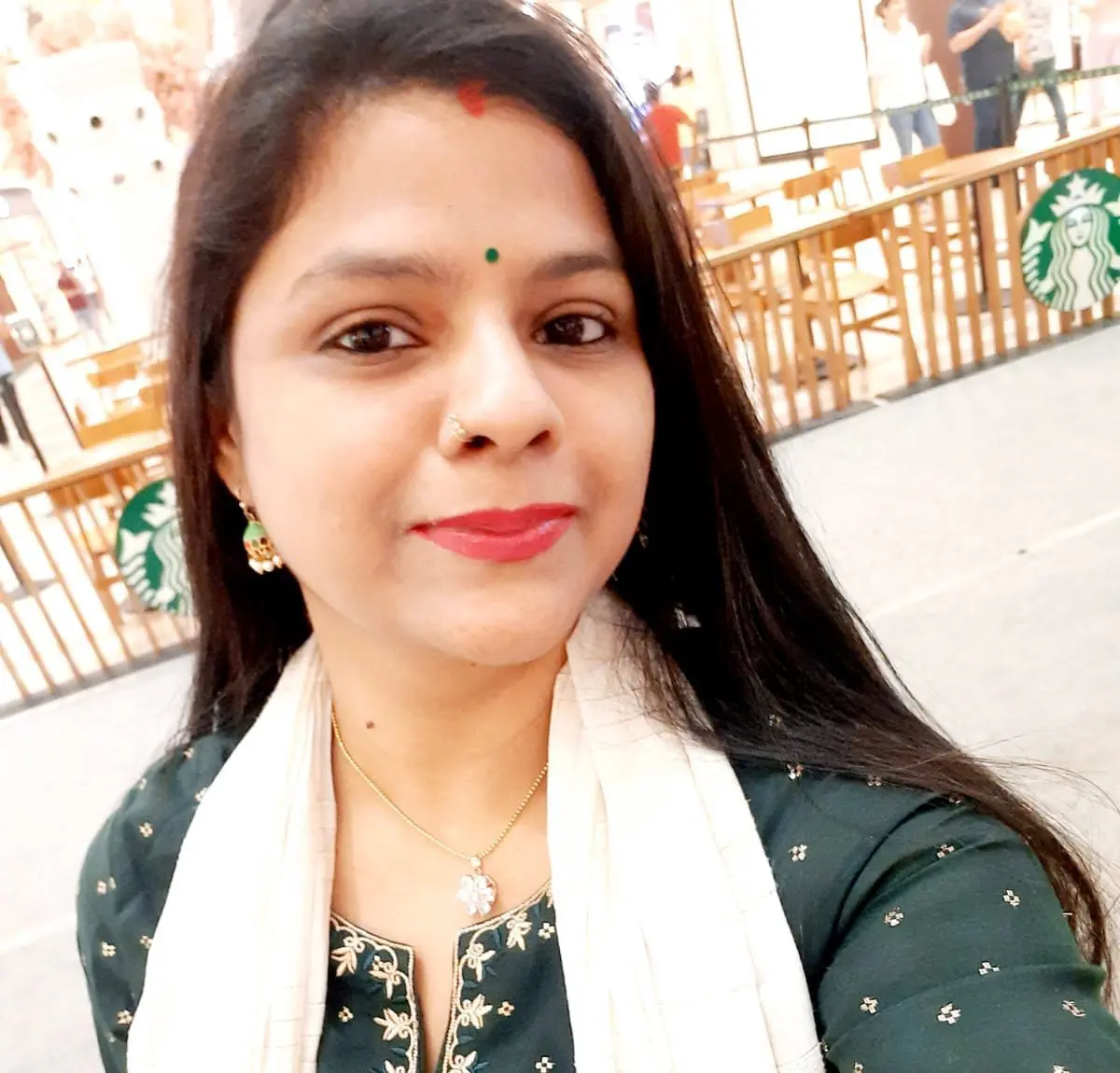
With over 11 years of experience in the publishing industry, Priya Srivastava has become a trusted guide for hundreds of authors navigating the challenging path from manuscript to marketplace. As Editor-in-Chief of Deified Publications, she combines the precision of a publishing professional with the empathy of a mentor who truly understands the fears, hopes, and dreams of both first-time and seasoned writers.