
Rating:
⭐⭐⭐⭐½ (4.5 out of 5)
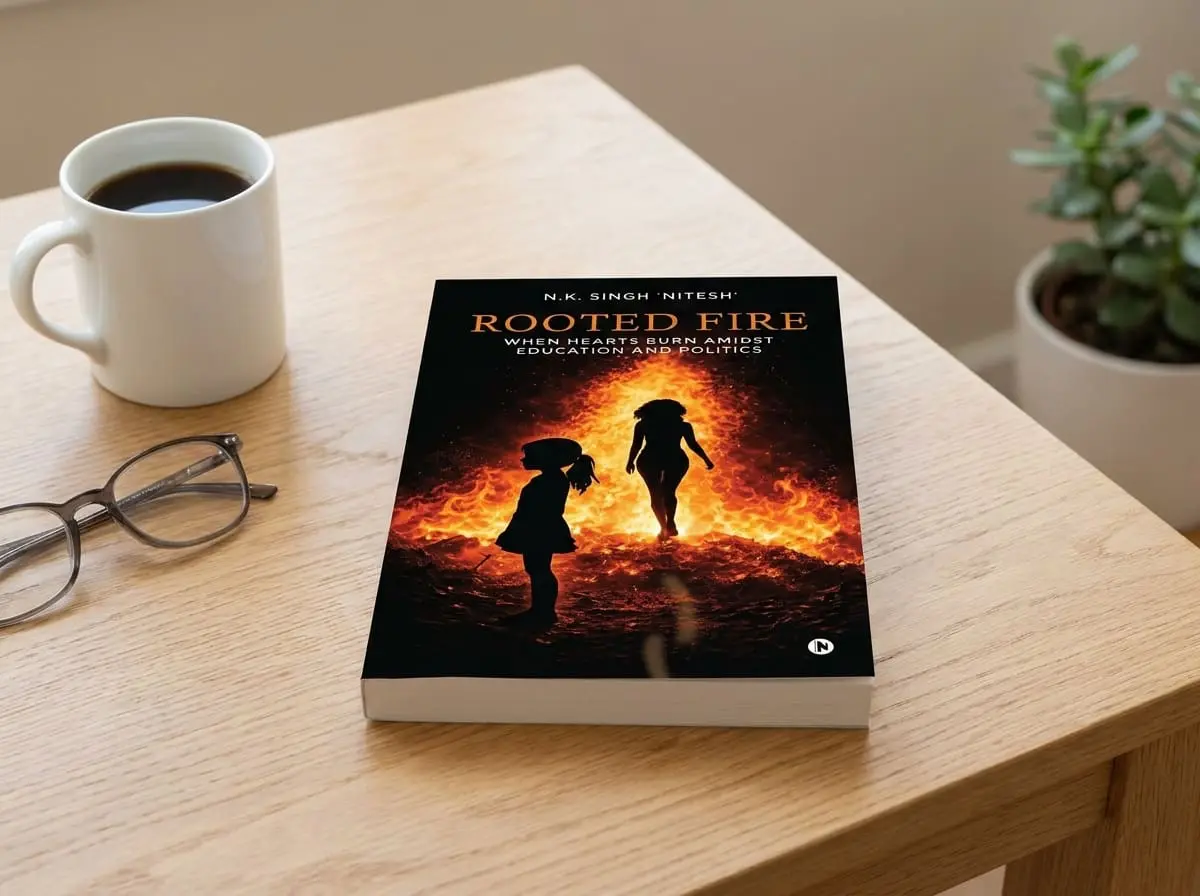
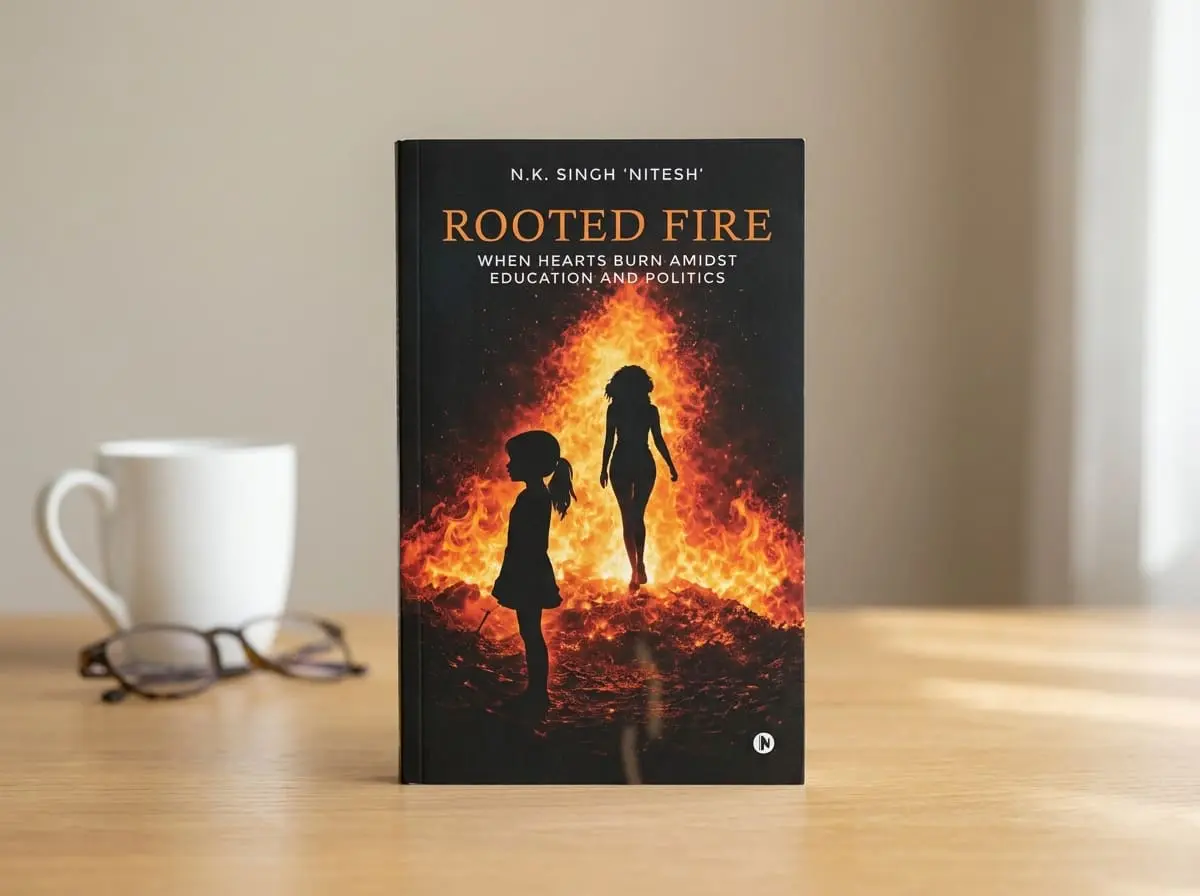
There are some books that try very hard to sound important. Big words, dramatic twists, endless speeches. And then there are books like Rooted Fire by N.K. Singh ‘Nitesh’ that feel deeply connected to real soil, real people, real hunger, real sacrifice. I finished this book with that strange heaviness readers sometimes carry after meeting characters who feel less fictional and more remembered.
Honestly, I was not expecting the emotional pull this novel carries beneath its simple language.
In my years reviewing books at Deified Publication, I have read many novels about social reform, women’s education, politics, and village life. Some become too preachy. Some become so romanticized that the struggle no longer feels human. But Rooted Fire manages to keep its emotional centre alive. It talks about education, but never as a slogan. It talks about politics, but not like television debates. It talks about love in a way that feels bruised, unfinished, and painfully real.
And maybe that is what affected me the most.
This book understands that transformation is rarely glamorous.
It is dusty roads.
It is old men grieving under banyan trees.
It is girls carrying dreams inside houses where even survival feels difficult.
It is someone learning to say “I matter” after years of being told otherwise.
What the Book Is About
Rooted Fire: When Hearts Burn Amidst Education and Politics follows the life of Shradha, a girl born in a tribal village where early marriage is normal and girls are expected to shrink their ambitions before they fully understand them.
The opening chapters immediately establish this atmosphere through Chhagan, Shradha’s grandfather, who becomes one of the emotional anchors of the story. There is a heartbreaking section where he remembers losing his son and daughter in law in an accident while sitting beneath a banyan tree near the Ganga. Those pages genuinely hurt to read because the grief is written without manipulation. The writing trusts the emotion.
There is this line about memory becoming both punishment and connection, and I remember stopping there for a moment.
Chhagan is raising Shradha and her younger sister Shobha in poverty, but also with dignity and spiritual grounding. Their world is fragile. Their kitchen barely has enough oil for the next day. The walls are darkened by smoke. Yet inside that small home there is affection, faith, and this stubborn belief that life can still become larger.
The novel slowly follows Shradha’s growth from a village girl into someone who begins understanding the power of education. One of the strongest parts of the book is how education is not treated as some abstract ideal. It is survival. It is rebellion. It is identity.
There is a beautiful sequence where an older Shradha gives a speech years later after completing her education. She speaks about how girls are not born only to serve and how education is not a luxury. That scene felt earned because we had already seen the child version of her carrying confusion, grief, and fear.
The story then expands into politics, social work, schools, reform movements, public resistance, and emotional conflict.
And then come the two men around her life.
Raghav, the boy she was married to in childhood, represents her past but also the possibility of change. What I appreciated is that the novel does not reduce him into a cartoon villain forever. At first, he reflects the patriarchal thinking around him. There is even a painful scene where he confronts Shradha publicly and accuses her of bringing shame. But later the novel allows him to evolve slowly through action rather than dramatic redemption speeches.
Arjun, meanwhile, enters as someone intellectually aligned with Shradha’s vision. Their relationship develops through shared work, educational reform, field visits, policy discussions, and emotional understanding. Some of the later sections involving Arjun are genuinely tender.
There is one passage where Shradha says, “Silence is safer. The world listens only to noise made by power.” That line stayed in my mind because it captures the emotional exhaustion of people who constantly fight systems larger than themselves.
The political arc becomes increasingly important as Shradha rises into public life and eventually reaches positions of influence. But what interested me most was not her rise. It was her discomfort inside power.
This novel keeps asking a difficult question.
Can someone enter politics to change things without becoming consumed by the machinery itself?
And honestly, in 2026, that question feels incredibly relevant.
What Stood Out to Me
The first thing I noticed was the emotional sincerity.
N.K. Singh ‘Nitesh’ writes in a straightforward style. Some literary readers may wish for more layered prose or tighter editing in certain sections. There are moments where the dialogue becomes a little too explanatory. A few transitions between years and emotional developments could also have been smoother.
But I think the emotional honesty compensates for many of those imperfections.
The book works because it believes deeply in its people.
Chhagan especially is beautifully written. He could have become just another wise elder figure, but instead he feels painfully human. His grief, his spiritual dependence on Shiva, his concern for the girls, his aging body, all of it feels grounded.
I also appreciated how tribal life is shown with respect rather than exoticism. The forest, rivers, drums, rudraksha beads, village rituals, and local rhythms are present throughout the novel, but never treated like decorative props.
Then there is Shobha.
I think many readers will overlook her at first because Shradha naturally dominates the story. But Shobha quietly becomes the structural strength behind the movement. There is a lovely section later where the novel explains that if Shradha was the vision, Shobha became the structure. I loved that. So many stories celebrate visible leaders while ignoring the people who keep systems functioning every single day.
The relationship dynamics were also more mature than I expected.
The book could easily have become a typical love triangle. Instead, it becomes something more reflective.
Arjun is not written as a flashy saviour. He admires Shradha without trying to own her. There is this emotional maturity in him that surprised me. Later in the book, when he says some relationships evolve into truth rather than ending cleanly, I actually underlined that mentally.
And Raghav’s arc fascinated me because it deals with male ego, shame, transformation, and dignity in a nuanced way. His evolution is gradual. He learns literacy. He begins helping at the school. He learns how to stand beside a strong woman without needing to control her.
That is not a transformation we see often in Indian social novels.
Usually men are either monsters or saints.
Here, they are flawed, insecure, evolving human beings.
I genuinely appreciated that.
Another thing worth mentioning is the pacing.
The novel moves through decades, politics, reform work, emotional loss, educational campaigns, and relationships. Sometimes the narrative becomes episodic because of this wide timeline. A few readers may want more depth in certain political sections or more extended scenes in the romantic arcs.
But I think the structure mirrors life itself. Years pass. People change. Movements grow slowly.
Nothing here feels artificially dramatic.
The Emotional Core
At its heart, Rooted Fire is not really about politics.
It is about dignity.
About what happens when someone who was once denied a voice decides to speak anyway.
There is one part late in the novel where Shradha reflects on leaving power behind. That section affected me deeply because it rejects the idea that success only means climbing higher. She realises that classrooms matter more than podiums. That impact matters more than visibility.
As someone who has spent years around publishing, literature, and public conversations, I found that incredibly refreshing.
Too many modern stories celebrate ambition without asking what ambition costs emotionally.
This novel asks that question repeatedly.
And then there is love.
Not dramatic film style love.
Not fantasy.
But love that changes form over time.
Love connected to respect.
Love connected to purpose.
Love connected to allowing another person to become fully themselves.
One of my favourite lines in the book comes near the end where the narrative says love did not need witnesses, it needed consistency.
I think many readers above thirty will understand that line differently than younger readers.
Honestly, I felt emotional during the final sections involving the school, the girls, and the long term impact of Shradha’s work. Especially the scenes where children begin calling her “Didi” instead of “Madam Minister.” That shift says everything.
The novel understands that the deepest legacy is not fame.
It is usefulness.
Who This Book Is For
I think Rooted Fire will connect strongly with readers who enjoy socially rooted Indian fiction.
If you like novels about education reform, women rebuilding their identities, village life, or emotionally grounded political fiction, there is a good chance this book will work for you.
Readers who appreciated books by writers like Chitra Banerjee Divakaruni, Sudha Murty’s socially reflective stories, or regional Indian fiction centred around social change may find familiar emotional territory here.
This book is also for readers who are tired of hyper cynical storytelling.
That does not mean the novel is naive.
There is betrayal here.
Social cruelty.
Gender expectations.
Political manipulation.
But underneath all of it, the book still believes people can change.
And honestly, that belief feels rare these days.
At the same time, I should mention that readers looking for highly literary experimental prose may not connect as strongly. The writing prioritises emotional accessibility over stylistic complexity.
Personally, I think that works in the book’s favour because it allows the message to reach a wider audience.
Especially younger readers from smaller towns and villages who may actually see themselves inside these pages.
Final Thoughts
I finished Rooted Fire feeling strangely hopeful.
Not optimistic in a shallow way.
Hopeful in the sense that the novel reminded me how deeply one educated girl can alter the emotional future of an entire community.
There is a scene where Shradha says she returned not to stay in the past but so another girl would not have to leave the village the way she once did.
That line captures the soul of this novel.
N.K. Singh ‘Nitesh’ has written a story about education, politics, memory, grief, and human growth without losing emotional warmth. Some sections could have benefited from tighter editing and slightly sharper transitions, yes. But the heart of the book is deeply alive.
And sometimes, as a reader, that matters more than technical perfection.
I think many people will see parts of their mothers, grandfathers, teachers, or younger selves somewhere in these pages.
And maybe that is why the story works.
Because beneath all the politics and reform, this is ultimately a novel about people trying to become worthy of the lives they were given.
FAQ
Is Rooted Fire worth reading?
Yes, especially if you enjoy emotionally grounded Indian fiction connected to education, village life, women’s empowerment, and social reform. The emotional sincerity of the story makes it memorable.
Who should read Rooted Fire by N.K. Singh ‘Nitesh’?
Readers interested in stories about education, politics, women rebuilding identity, and layered relationship dynamics will probably connect strongly with this novel.
Is Rooted Fire more political or emotional?
I would say emotional first, political second. The politics exists, but the story remains focused on human relationships, dignity, and personal transformation.
Does Rooted Fire have romance?
Yes, but it is handled with maturity. The emotional relationships grow slowly through shared struggles, respect, and life choices rather than dramatic romance tropes.

With over 11 years of experience in the publishing industry, Priya Srivastava has become a trusted guide for hundreds of authors navigating the challenging path from manuscript to marketplace. As Editor-in-Chief of Deified Publications, she combines the precision of a publishing professional with the empathy of a mentor who truly understands the fears, hopes, and dreams of both first-time and seasoned writers.