
Rating: ⭐⭐⭐⭐1/2 (4.5 out of 5)
I was sitting by my office window at Deified Publication last week, watching the rain blur the streetlights, when a colorful package arrived on my desk. It was a copy of a new illustrated children’s volume, and the cover immediately caught my eye. In this Treasures of Vrindavan Book Review, I want to share my thoughts on how this volume handles ancient spiritual traditions. Over my fifteen years of reviewing books, I have held countless devotional books, but this one felt different from the start. I ended up spending the entire evening reading this collection, holding my warm cup of chai, feeling a familiar comfort.
Six Sweet Tales from the Banks of the Yamuna
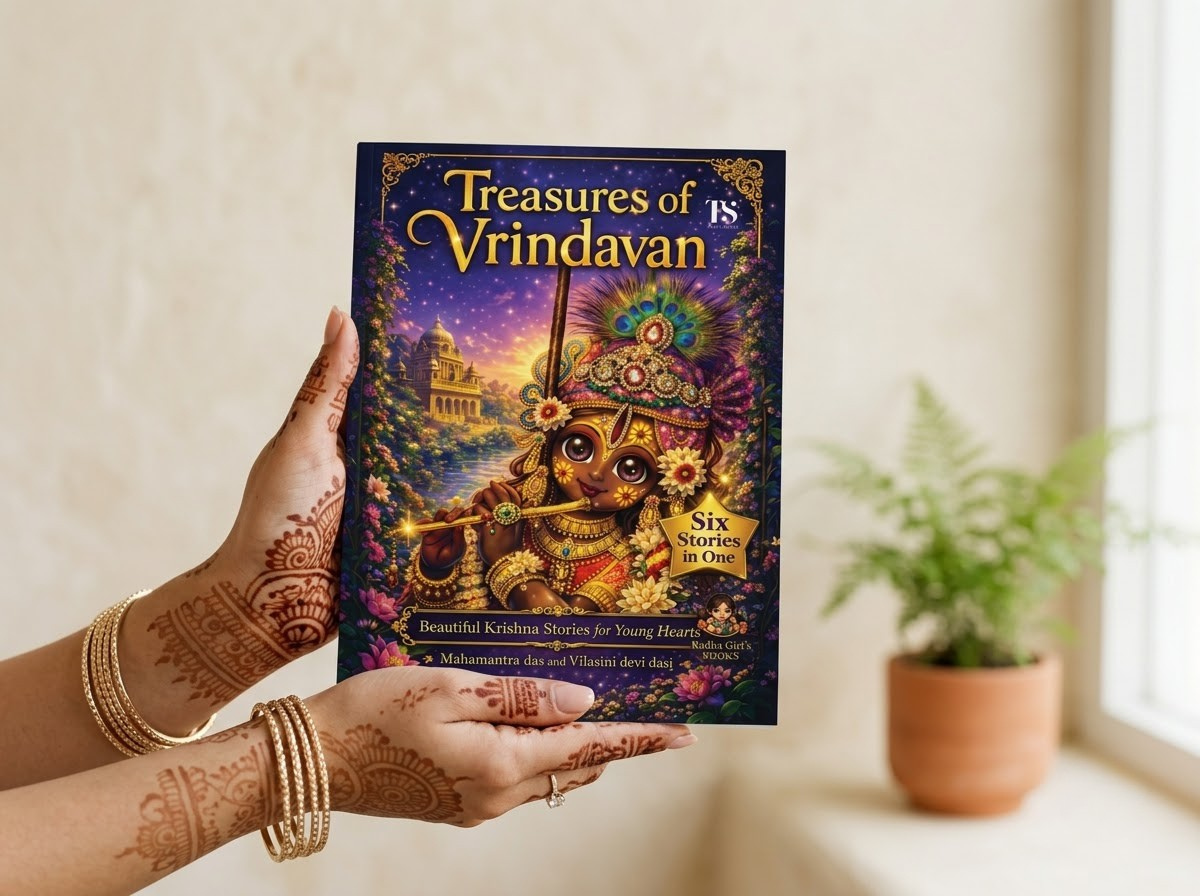
This book summary starts with the physical collection itself, which is titled Treasures of Vrindavan. Written by Vilasini Devi Dasi and Mahamantra Das, this book brings together six distinct tales based on the sacred history of Vrindavan and its famous temples. The book is about how different sacred deities were found or how they revealed themselves to their dedicated followers. Through these pages, we learn about the discovery of Govinda Dev and the appearance of Radha Raman. The writers have focused on making these spiritual events accessible for kids, using simple language to explain how these sacred places came to be.
Each of the six stories acts as a gentle introduction to the values of kindness, faith, and humility. For instance, the story of Radha Gopinath teaches children about the smiling nature of divine love, while the tale of Shyamasundar focuses on the mystical path of Shyamananda. When we look at what is it about on a deeper level, it is not just a retelling of mythology but a guide to building character. The authors, Vilasini Devi Dasi and Mahamantra Das, have carefully structured each narrative so that young minds can grasp the importance of compassion, gratitude, and friendship.
The Art and Craft of Sacred Storytelling
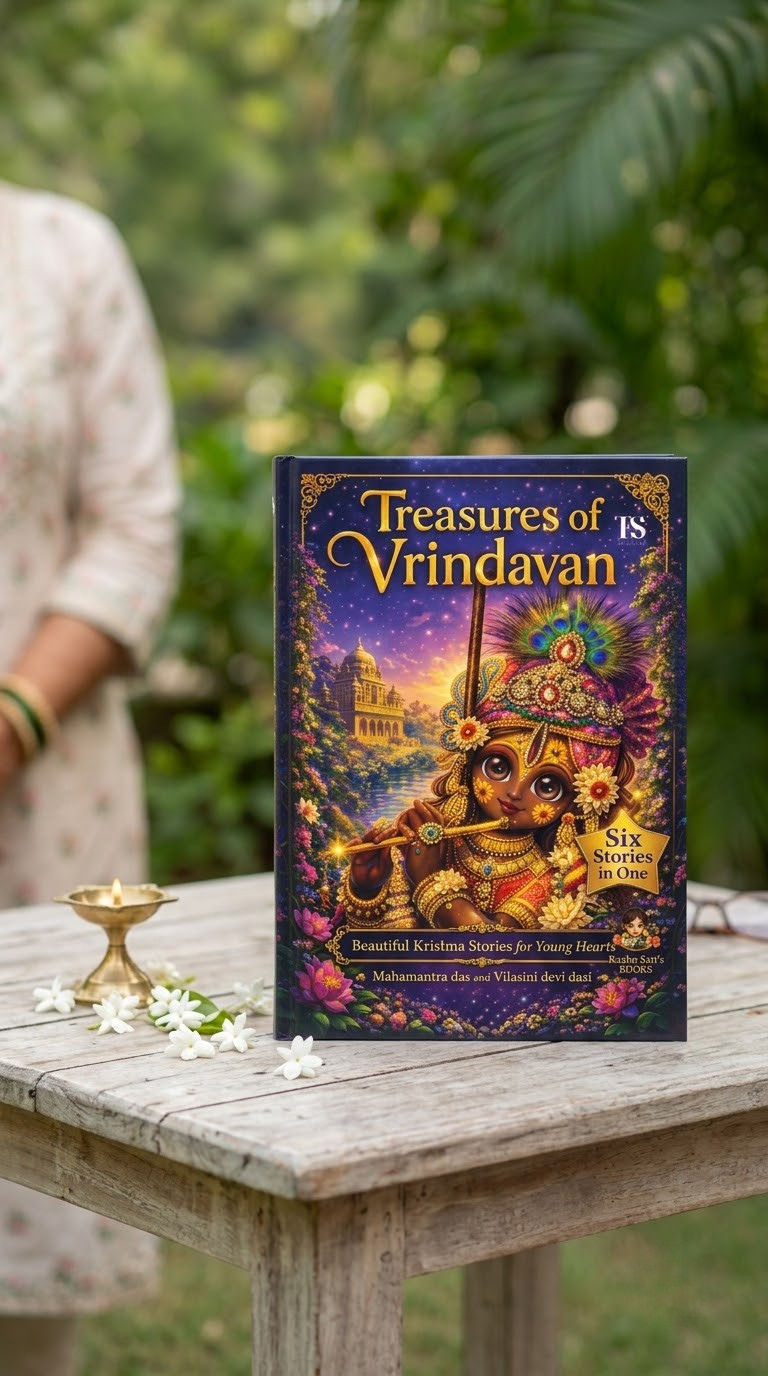
When evaluating the craft of this book, the first thing that demands attention is the stunning visual presentation. The cover art features a beautifully illustrated young Krishna with large, expressive eyes, wearing an ornate golden crown topped with a vibrant peacock feather. If you turn the book over, the back cover is equally charming, showing three adorable baby cows resting among pink lotuses, wearing delicate flower garlands around their necks. Two bright green parrots sit in the upper corners of a golden, decorative frame, which instantly makes the book look like a precious heirloom. These visual details are highly effective, because they immediately draw a child in before they even read a single word.
The narrative pacing is steady, with each of the six stories kept relatively short to match the attention span of a young child. Writing this Treasures of Vrindavan Book Review allowed me to reflect on how children’s literature has changed over the years. These stories remind me of the classic moral tales found in traditional Indian storytelling collections, where complex virtues are distilled into simple, memorable incidents for young minds. However, if I must offer a mild criticism as an editor, I felt that the dialogue could sometimes be a bit more varied. In some chapters, the characters speak in a very similar, formal tone that might feel slightly unnatural to a modern child.
Finding Peace in Gentle Lessons
The true heart of this collection lies in how it portrays the concepts of faith and simple love. I kept thinking about this scene for days where Swami Haridas expresses his deep devotion to Banke Bihari, showing how love can manifest in simple acts of service. It reminded me of my own childhood visits to ancient temples, where the air was filled with incense and ringing bells. There is a genuine innocence in the way these stories are told, and it is the kind of book that sits with you because it does not try to be overly clever or modern. I was not expecting to feel this way, but reading about Sanatan Goswami’s journey of faith made me feel a deep sense of peace.
Another beautiful aspect of the book is how it highlights the relationship between humans, animals, and nature. The back cover illustration of the three calves with flower garlands is not just a random decorative choice, because the stories emphasize respect for all living creatures. Children are naturally drawn to animals, and seeing these gentle cows sitting among pink lotuses helps them connect with the compassionate spirit of the text. The book shows young readers that true strength is not about power, but about having a gentle, humble heart. This portrayal of spiritual history is refreshing, and it made me appreciate the authors’ thoughtful approach to traditional narratives.
Who Will Cherish This Collection and Who Should Pass
If you are wondering should you read this collection or if it is worth it, the answer depends on what you want. This book is perfectly designed for parents who want to introduce their kids to Hindu devotional traditions and the culture of India. It is highly suitable for bedtime reading, Sunday schools, and families who appreciate traditional moral stories. However, if you want a fast paced adventure with modern humor and secular themes, this book will not suit your needs. The focus here is entirely devotional, centered on temple histories and saints, which means it might not appeal to families without an interest in spiritual education. Knowing this beforehand helps set the right expectations.
I also think the target age group of three to ten years old is quite broad, so the book lands differently across this range. For a three year old, the text is too dense to read alone, so they will mostly enjoy the beautiful illustrations of the calves. On the other hand, a ten year old might find the simple storytelling style a bit too basic, though they can appreciate the historical context of the temples. The sweet spot is likely around five to eight years old, where children can understand the moral lessons while still being enchanted by the visuals. It works best when read aloud by a parent, allowing for conversation.
An Honest Reflection on Vrindavan Tales
In my final assessment, this reader review finds that Treasures of Vrindavan is a sincere effort to pass down spiritual values. As I wrap up this Treasures of Vrindavan Book Review, I think about how books like this can become cherished memories for children as they grow older. The dedication of Vilasini Devi Dasi and Mahamantra Das to their heritage shines through on every page, making the book feel like a labor of love. While the language can feel a bit repetitive if you read all six stories in one sitting, the beautiful illustrations more than make up for it. It is a lovely addition to any family library.
FAQs
What is the age recommendation for Treasures of Vrindavan?
The publisher recommends this book for children aged three to ten years old. Based on my reading, the ideal age is between five and eight years old, as children in this range can fully grasp the moral values of devotion, humility, and kindness. For younger toddlers, the book works wonderfully as a read aloud picture book where they can admire the colorful illustrations of Krishna and the baby calves. Older children can read the stories independently, which helps them learn about the historical saints and temples of India in an easy and accessible format.
What is the book about in terms of the stories included?
This collection contains six beautiful stories that focus on the sacred history and temples of Vrindavan. It includes the tales of famous deities like Radha Gopinath, Radha Raman, and Banke Bihari, showing how they appeared to their beloved devotees. The book is about the journeys of saints such as Swami Haridas, Rupa Goswami, Sanatan Goswami, and Shyamananda. Each story is designed to teach young hearts about important life values like compassion, gratitude, faith, and unconditional love through gentle, age appropriate storytelling.
Is it worth it to buy this book for a secular library or classroom?
This book is highly specialized and is primarily designed for families and educators interested in Hindu devotional stories and Indian culture. If you are looking to introduce children to the diverse spiritual traditions of the world, it makes a very beautiful addition to your library. However, since the text is deeply rooted in Krishna bhakti and temple worship, it may not align with a strictly secular educational curriculum. For families who practice these traditions or want to teach their children about them, it is certainly worth it to add this illustrated collection to their bookshelf in 2026 and beyond.

With over 11 years of experience in the publishing industry, Priya Srivastava has become a trusted guide for hundreds of authors navigating the challenging path from manuscript to marketplace. As Editor-in-Chief of Deified Publications, she combines the precision of a publishing professional with the empathy of a mentor who truly understands the fears, hopes, and dreams of both first-time and seasoned writers.