
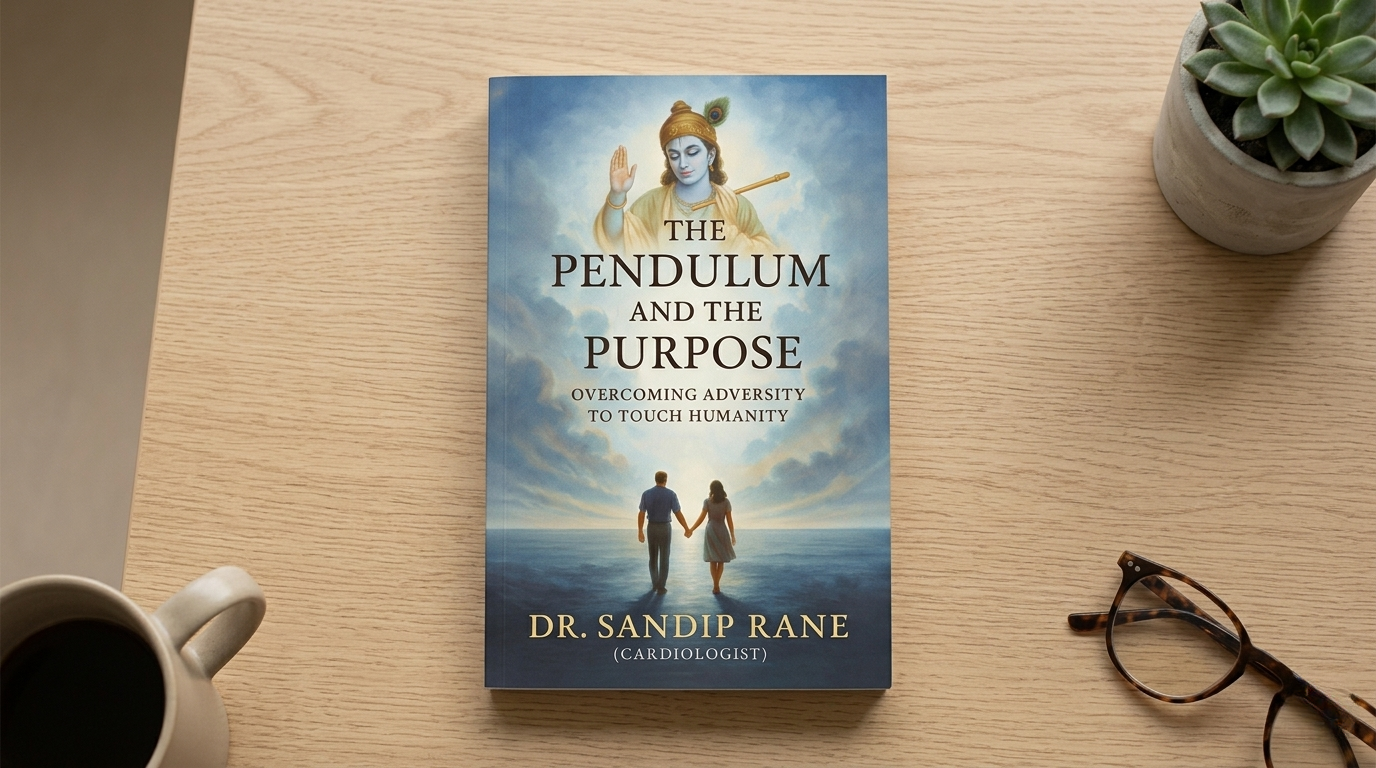
Rating:
⭐⭐⭐⭐ (4.3 out of 5)
Some books don’t try to impress you. They just sit with you. And slowly, without forcing anything, they begin to change how you see things.
That’s how I felt while reading The Pendulum and the Purpose by Dr. Sandip Rane.
I picked it up expecting something inspirational, maybe a doctor’s memoir filled with achievements and lessons. But very early on, I realized this is not that kind of book. It’s far more personal. More fragile, in a way.
There’s a line in the beginning that stayed with me. Something about how this book is for the patient holding onto strength, for the caregiver who feels invisible, for families trying to stay hopeful. I paused there. Because that’s not a typical opening. It doesn’t try to sell itself. It just quietly says, “I know what you’re going through.”
And honestly, that tone carries through the entire book.
As someone who has spent years reading and reviewing books at Deified Publication, I’ve come across many memoirs by doctors. Some are informative. Some are inspiring. But very few feel this… human.
What the Book Is About
At its heart, The Pendulum and the Purpose is a real life story of a doctor who suddenly finds himself on the other side of the hospital bed.
Dr. Sandip Rane, a cardiologist with decades of experience, writes about a time when illness entered his own home. Not gently. Not gradually. It barged in, as he says. Disrupting everything.
There’s this shift that happens in the narrative. One moment, he and his wife are the ones treating patients, guiding families, wearing white coats with certainty. And then suddenly, they are the ones waiting. Hoping. Struggling.
The chapter titled “A Journey That Chose Us” captures this transition so well. That feeling when life doesn’t ask for permission. It just changes.
Both he and his wife go through severe medical crises. There are moments involving ventilators, ICU stays, near death situations. And yet, the book never becomes dramatic in a loud way. It stays grounded. Almost restrained.
Alongside this personal journey, there’s another layer. His years of public service. Filing PILs for better air quality, fighting waste management issues in Mumbai, working towards cleaner environments.
The section “From Garbage to Governance” stood out to me because it adds a completely different dimension. You see him not just as a doctor or a patient, but as someone deeply invested in society.
So the book moves like a pendulum, just like the title suggests. Between personal suffering and larger purpose. Between vulnerability and action.
What Stood Out to Me
There are a few things that really stayed with me after finishing this book.
First, the honesty.
There’s no attempt to dramatize pain or make it poetic for effect. When he talks about sleepless nights filled with worry, or the helplessness of watching a loved one suffer, it feels very real. Almost uncomfortable at times.
I remember a passage where he describes how even with all his medical knowledge, he felt powerless in his own home. That hit hard. Because we often assume knowledge gives control. This book quietly dismantles that idea.
Second, the structure.
The chapters like “Before the Storm,” “The First Storm,” “The Battle in the Hospital (Kurukshetra)” create a sense of progression without making it feel like a rigid timeline.
Calling the hospital battle a “Kurukshetra” is such an Indian way of framing it. It immediately brings in a deeper emotional and cultural layer. Not just a medical fight, but a moral and spiritual one.
Then there are softer chapters like “Mindfulness” and “Transcending” where the tone shifts again. It becomes more reflective. Almost meditative.
Third, the writing style.
It’s simple. Very simple, actually. No complex language. No attempt to sound literary.
And yet, there are moments that stay with you.
Like when he talks about holding a hand tightly in the hospital. Or the power of a shared glance. These small details do more than any big philosophical statement.
If I had to point out something that didn’t fully work for me, I’d say at times the transitions between personal narrative and public work feel a bit abrupt. I found myself wanting a slightly smoother bridge between those worlds.
But honestly, that’s a small thing.
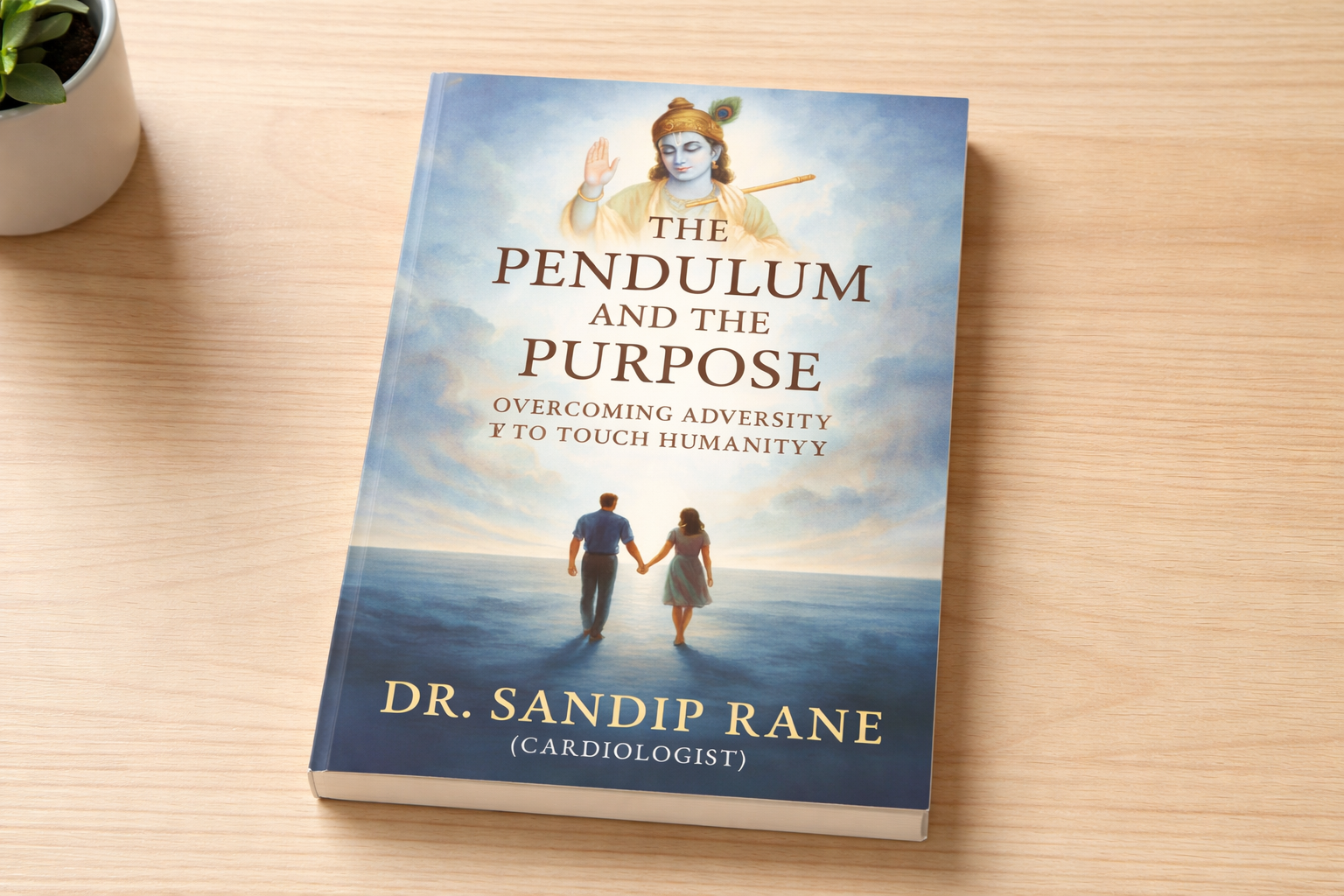
The Emotional Core
This is where the book really sits.
It’s not about illness alone. It’s about what illness does to identity.
When caregivers become patients. When doctors become dependent. When strength looks very different from what we imagined.
There’s this recurring idea that healing is not just physical. It’s emotional, spiritual, relational. And I think that’s the heart of the book.
I also appreciated how it doesn’t promise easy outcomes. It doesn’t say everything will be fine. Instead, it says something like, even in suffering, there is something sacred.
That line stayed with me for a long time.
And maybe that’s why this book feels relevant even in 2026, when so many people are still dealing with long term health issues, burnout, emotional exhaustion.
It doesn’t give solutions. It gives companionship.
Who This Book Is For
I think this book will resonate deeply with a few specific kinds of readers.
If you are someone who has gone through a serious illness, or seen a loved one go through it, this will feel very close to your experience. Sometimes a bit too close, maybe.
If you are in the medical profession, especially younger doctors, there are lessons here that no textbook teaches. About empathy. About vulnerability. About what it really means to care.
And even if you are just someone navigating life’s uncertainties, this book has something to offer. Not in a loud motivational way, but in a steady, grounding way.
That said, if you are looking for a fast paced narrative or dramatic storytelling, this might feel slow to you. It’s reflective. It takes its time.
Final Thoughts
I finished The Pendulum and the Purpose with a strange sense of calm. Not because everything in the book is calm. It isn’t. There is pain, fear, uncertainty.
But because it shows that even in the middle of all that, something meaningful can still exist.
I think what makes this book special is not what happens in it, but how it is told. With restraint. With sincerity. Without trying to impress.
As an editor and reader, I value books that stay honest to their voice. And this one does.
Will it stay with everyone in the same way? Maybe not.
But if it reaches you at the right time, it can feel like someone sitting beside you and saying, “I understand.”
And sometimes, that is enough.
FAQ
Is The Pendulum and the Purpose worth reading?
Yes, especially if you are looking for a real, grounded story about illness, healing, and purpose. It’s not flashy, but it stays with you.
Who should read The Pendulum and the Purpose?
Patients, caregivers, doctors, and anyone dealing with uncertainty in life will find something meaningful here.
What is the book about in simple terms?
It’s a real life account of a doctor who becomes a patient, and how that experience changes his understanding of healing, life, and purpose.
Is it an emotional read?
Yes, but in a gentle way. It doesn’t overwhelm you. It slowly builds and stays with you.

With over 11 years of experience in the publishing industry, Priya Srivastava has become a trusted guide for hundreds of authors navigating the challenging path from manuscript to marketplace. As Editor-in-Chief of Deified Publications, she combines the precision of a publishing professional with the empathy of a mentor who truly understands the fears, hopes, and dreams of both first-time and seasoned writers.