
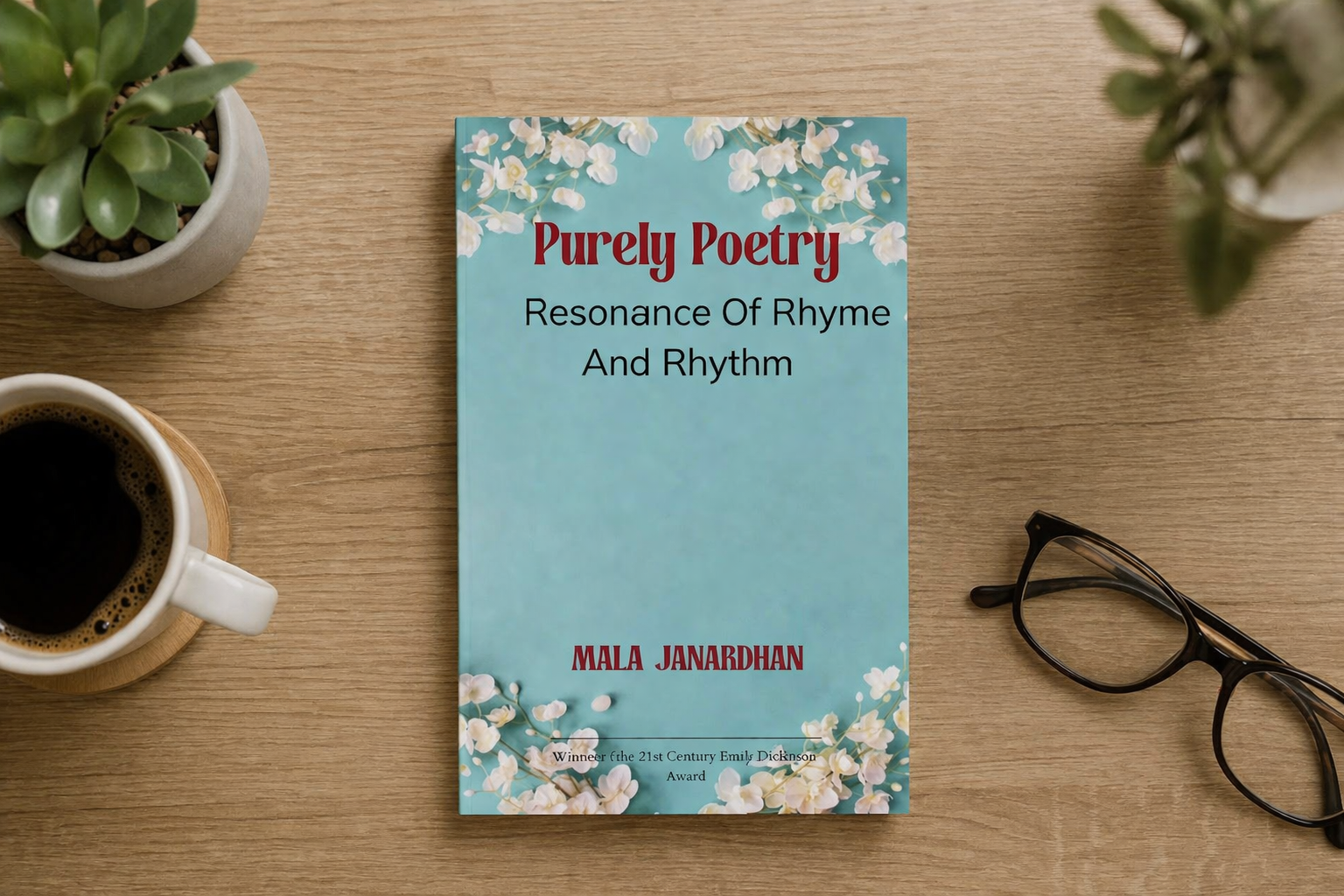
Rating:
⭐⭐⭐⭐ (4.3 out of 5)
A book that feels like a conversation with life
Some poetry books try very hard to sound profound. Purely Poetry by Mala Janardhan does something I personally value much more after years of reading across genres: it speaks simply, and yet the feeling lingers.
While reading this collection, I kept returning to one thought: this is a poet who pays attention to ordinary life. Not the loud, dramatic moments, but the small turns of thought that happen between tea, memory, friendship, nature, grief, and gratitude. The kind of reflections most of us have, but rarely pause long enough to put into words.
There is something old world and sincere in the way Mala Janardhan writes. The poems are direct, musical, and rooted in moral reflection. I found myself slowing down, not because the poems are difficult, but because they kept nudging me toward forgotten truths. Make time. Be flexible. Move forward. Value friendship. Notice life’s little wonders. These are familiar ideas, yes, but sometimes familiar truths are exactly what we need in 2026, when life feels increasingly rushed and emotionally fragmented.
I think what touched me most is that the collection never pretends to be something it is not. It is not trying to impress with obscurity. It wants to connect. Honestly, that sincerity gave the book its warmth.
What the Book Is About
At its heart, Purely Poetry is a reflective poetry collection built around life lessons, human values, nature, memory, spirituality, and emotional resilience.
The poems move across a surprisingly wide emotional and thematic range. In “Words,” the poet meditates on the power language carries, from inspiring and healing to hurting and slandering. In “Return to the Village,” there is nostalgia, class contrast, and finally a rediscovery of rootedness. That poem especially stayed with me because it captures something many urban readers will relate to: the slow realization that what once felt “backward” may actually hold emotional richness.
Then there are poems like “Make Time,” “Pause,” “Simplify,” and “Move Forward,” which almost read like lyrical meditations on how to live better. These pieces feel less like abstract poetry and more like distilled wisdom, the kind shared by an elder who has seen enough of life to know what really matters.
Nature also has a strong place in the collection. Poems such as “Tribute to the Sun,” “Says the Tree,” and “Life’s Little Wonders” reveal Janardhan’s affection for the natural world and its moral symbolism. The sun becomes divine force, the tree becomes a voice of ecological and emotional grounding, and the smallest natural images become reminders of grace.
The book also steps into deeply human territory through poems like “An Ordinary Man” and “True Friendship.” These poems celebrate unnoticed goodness, kindness, loyalty, and the emotional architecture of everyday relationships.
So if someone asks for a quick Purely Poetry book summary, I’d say this: it is a collection about how to live with more awareness, tenderness, and gratitude.
What Stood Out to Me
What stood out first was the clarity of voice.
As an editor, I read a lot of poetry where the writer mistakes vagueness for depth. Mala Janardhan does the opposite. Her lines are clear enough for almost any reader to enter, yet there is still emotional layering beneath them.
Take “Pause.” The poem builds around a simple question: is there a pause between life’s most important transitions? Between heartbeats, breaths, day and night, even death and life. It sounds simple on the surface, but the deeper invitation is philosophical. Where do meaning and awareness really happen? In the action, or in the silence between actions? I loved that idea.
Another standout is the poet’s ethical imagination. Many poems gently guide the reader toward better living without sounding preachy. “Be Flexible,” for instance, uses natural imagery like reeds and wind to talk about resilience. It reminded me of real life, honestly. The people who survive storms best are rarely the most rigid ones.
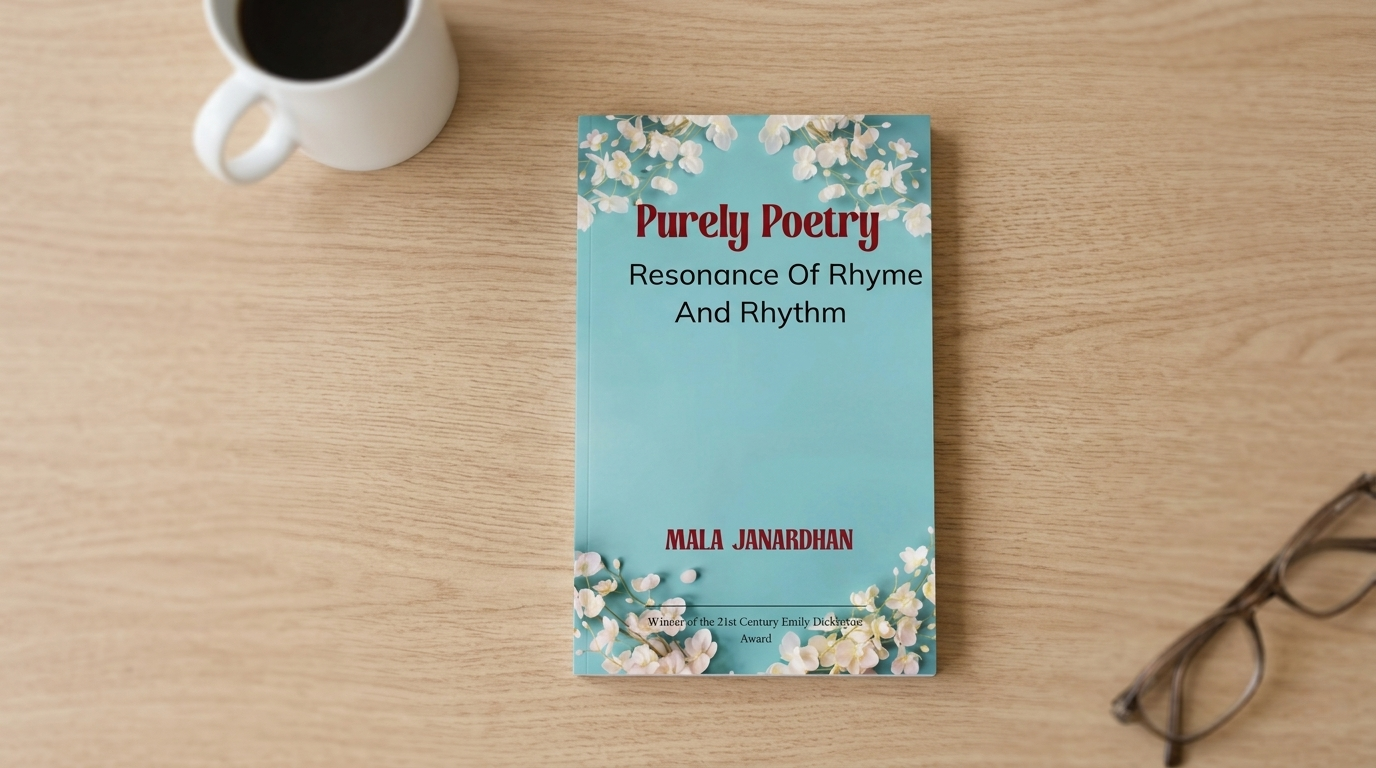
I also appreciated the formal consistency of the collection. Many poems use rhyme and rhythm in a way that feels traditional and accessible. The subtitle, Resonance Of Rhyme And Rhythm, is actually very fitting. There is a clear musical intention throughout the book, and readers who enjoy classic poetic cadence will likely enjoy that.
If I had one gentle critique, it would be that a few poems lean more toward moral reflection than layered imagery, so readers who prefer highly contemporary, experimental poetry may want more metaphorical complexity. But I don’t say that as a flaw so much as a matter of poetic preference. The strength here lies in emotional honesty and readability.
The Emotional Core
The emotional core of Purely Poetry lies in its compassion.
This is a book that seems deeply interested in helping the reader live better. Not through grand declarations, but through gentle reminders.
I felt this most strongly in “Move Forward.” The poem speaks to memory, sorrow, and the act of choosing not to remain trapped in what once hurt us. I have seen how many people quietly carry old disappointments for years. This poem gives that feeling language in a way that is comforting without being sentimental.
Then there is “The Unseen Hand,” which beautifully captures the mysterious force behind creativity and healing. As someone who has spent years with books and writers, I know how often the act of writing itself becomes recovery. This poem understands that.
Even the more socially observant poems, like “An Ordinary Man,” hold emotional tenderness. The tribute to a seemingly simple life becomes a meditation on unnoticed goodness. It made me think of people in our own neighborhoods whose kindness becomes visible only after they are gone.
And maybe that is what this collection does best. It restores dignity to small things: pauses, friendships, trees, routines, village memories, common people, simple words.
Some parts genuinely made me stop and reflect on my own pace of life.
Who This Book Is For
If you are wondering should you read Purely Poetry by Mala Janardhan, I think the answer depends on what kind of poetry you seek.
This collection is especially for:
- Readers who enjoy traditional rhyme and rhythm
- Those who like life reflection poetry over abstract modern verse
- Readers who enjoy themes of friendship, spirituality, nature, healing, and personal growth
- People looking for a giftable poetry book for parents, teachers, or thoughtful friends
- Anyone going through a phase of emotional reset, simplification, or self reflection
I also think this would work beautifully for readers who are new to poetry and often feel intimidated by denser literary collections.
This might not be for readers looking only for sharply experimental or highly fragmented contemporary poems. But for readers who want warmth, wisdom, and lyrical life observations, this book offers real comfort.
Final Thoughts
My final feeling after finishing Purely Poetry is simple: this is a deeply sincere collection.
Mala Janardhan writes with emotional clarity and a generous heart. The poems are interested in better ways of living, in seeing grace in nature, in honoring friendship, in learning from time, and in choosing softness where the world often rewards hardness.
As Editor-in-Chief at Deified Publication, I’ve spent years reading books that try to sound important. This one doesn’t try. It simply speaks from lived feeling, and that honesty gives it its charm.
I think Purely Poetry is worth reading if you want poetry that feels like reflection over evening chai, the kind that brings you back to forgotten essentials.
FAQs
Is Purely Poetry worth reading?
Yes, especially if you enjoy reflective poems about life, nature, friendship, and emotional resilience.
Who should read Purely Poetry?
Readers who love accessible poetry, classic rhyme, and meaningful life lessons.
What is Purely Poetry about?
It is a poetry collection centered on human values, nature, healing, memory, and gratitude.
Is this book good for beginners in poetry?
Absolutely. Its clarity and rhythm make it very approachable.
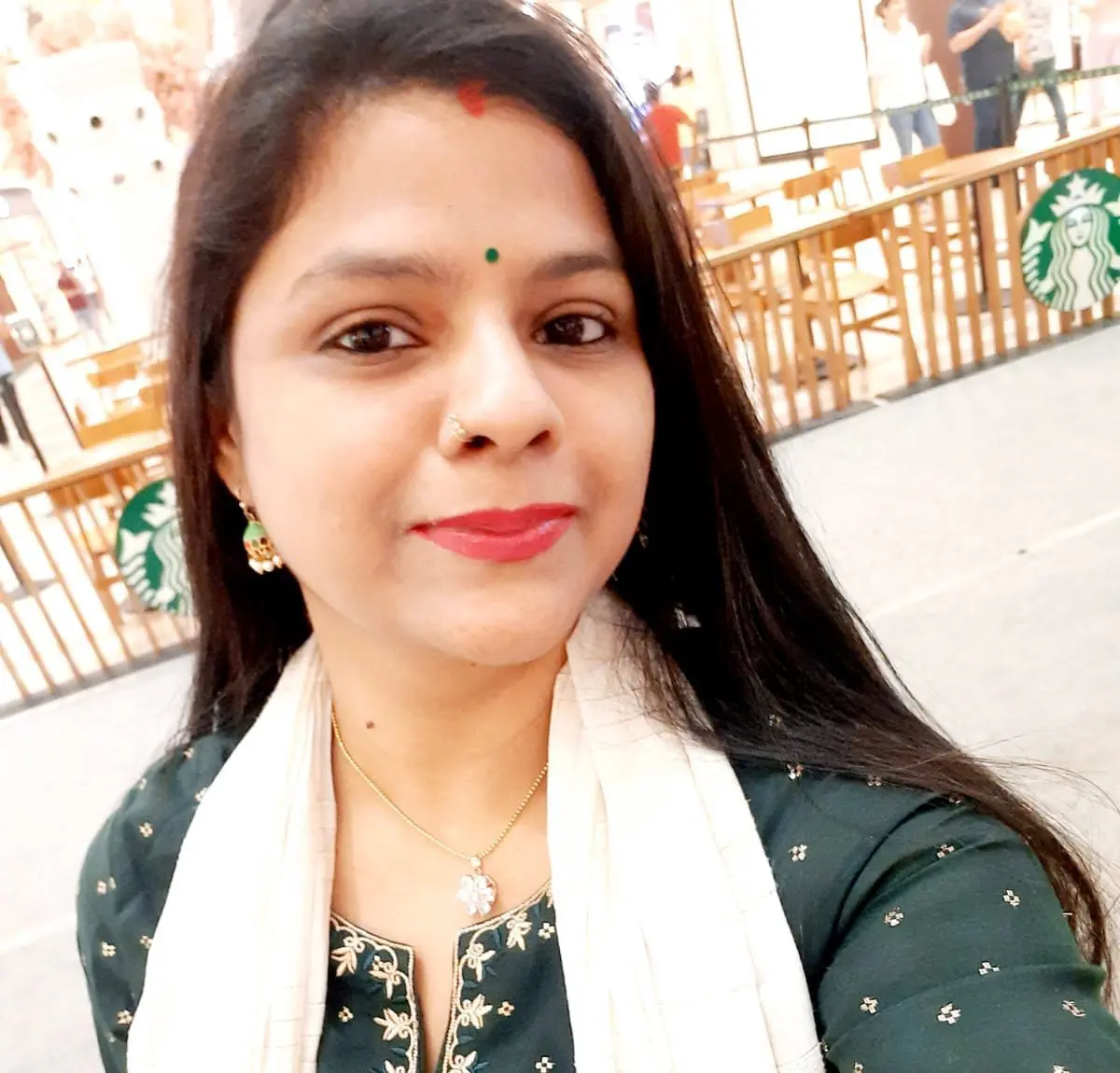
With over 11 years of experience in the publishing industry, Priya Srivastava has become a trusted guide for hundreds of authors navigating the challenging path from manuscript to marketplace. As Editor-in-Chief of Deified Publications, she combines the precision of a publishing professional with the empathy of a mentor who truly understands the fears, hopes, and dreams of both first-time and seasoned writers.