
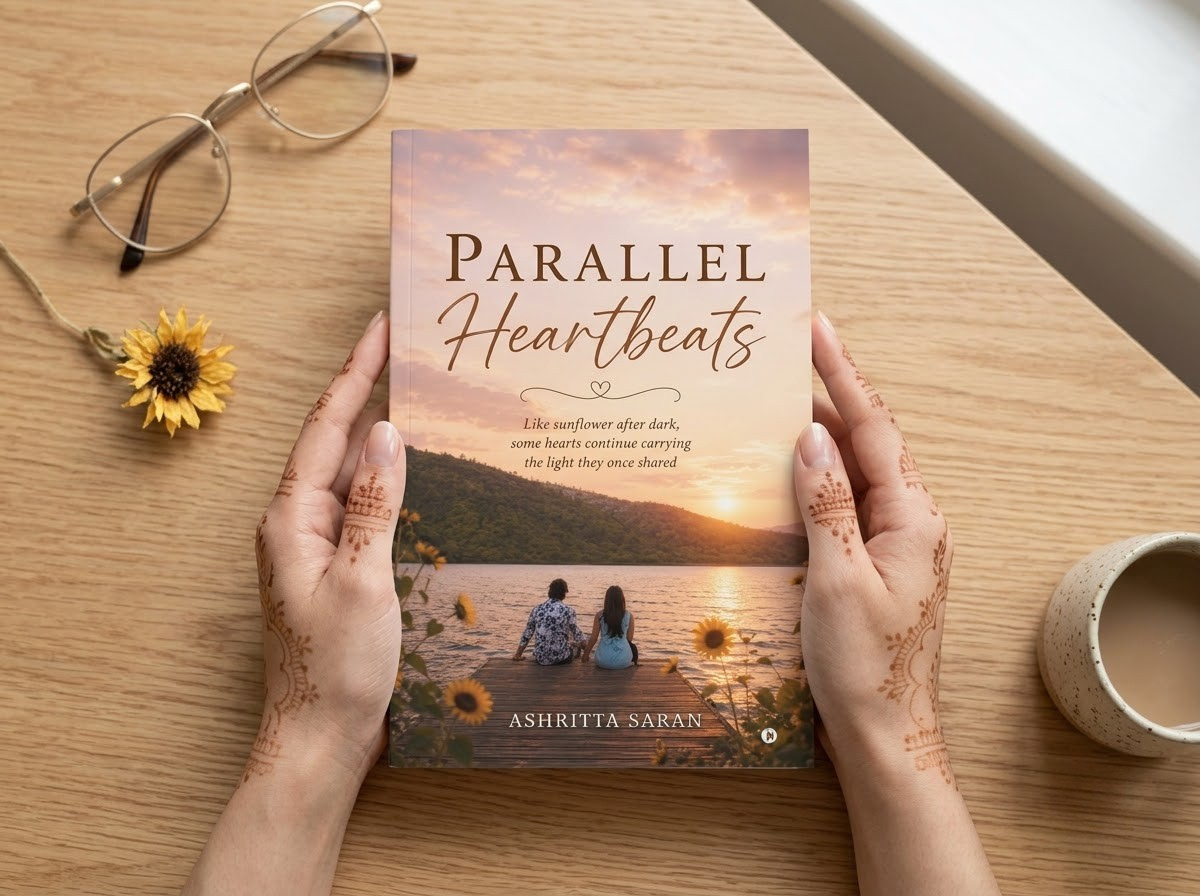
Rating: ⭐⭐⭐⭐ (4.3 out of 5)
I picked up Parallel Heartbeats on a weekend when I genuinely did not have the bandwidth for another heartbreak novel. I run Deified Publication, and after fifteen years of reading everything from literary fiction to the messiest self-published romance you can imagine, I thought I had built up some kind of immunity. Ashritta Saran’s debut broke through that anyway, and not in the loud, dramatic way I expected from the blurb. It got me in the smaller moments, the ones you almost skim past if you’re reading too fast.
What the Book Is About
At its core, Parallel Heartbeats follows Ash and Aaryan, two teenagers who meet at St. Xavier’s High School in Lucknow when Ash transfers in as the new girl everyone is quietly cataloguing. Aaryan is the kind of boy who has already learned how to charm a room without trying, the guitarist with the easy smile who is also, underneath all of it, a boy being groomed to become a doctor because his family expects nothing less. Ash is sharper, more guarded, the kind of person who observes before she commits to liking anyone. Their connection starts almost by accident, in a rehearsal room, and grows through years of school, ambition, and the kind of first love that feels less like a choice and more like weather.
What Stood Out to Me
In my years reviewing books, I’ve read a lot of first love stories, and most of them lean on big gestures to sell the romance. What struck me about Saran’s approach is how much restraint she uses instead. There’s a scene fairly early on where Aaryan sits beside Ash during a rehearsal and just starts playing, not asking permission, not performing for her, and she ends up singing along almost without deciding to. Nothing dramatic happens in that scene. Nobody confesses anything. But you can feel the whole book’s emotional grammar being set up right there, the idea that these two communicate best in the spaces around words rather than the words themselves.
I also have to mention the vase of sunflowers, because it’s doing more work than a lot of readers might notice on a first pass. After Aaryan moves out, he leaves them behind, and Ash keeps them going out of what reads like pure stubbornness rather than sentiment, watching them turn toward the light and then droop after dark. It’s such a simple, almost domestic image, but Saran uses it to track the entire emotional arc of the book without ever spelling it out. By the time you reach the epilogue and she stops needing to keep them alive, you understand exactly what that means without a single line explaining it.
The one place I felt the pacing wobble a little is in the middle stretch, where the separation drags on through repeated near misses and crossed paths in different cities. It’s clearly intentional, building the ache of two people circling each other without connecting, but there were a couple of chapters where I wanted the story to either commit to the distance or close it, rather than teasing both. It’s a minor complaint in a book this emotionally sturdy, but it’s honest, and I think readers who prefer tighter pacing might feel the same tug of impatience I did.
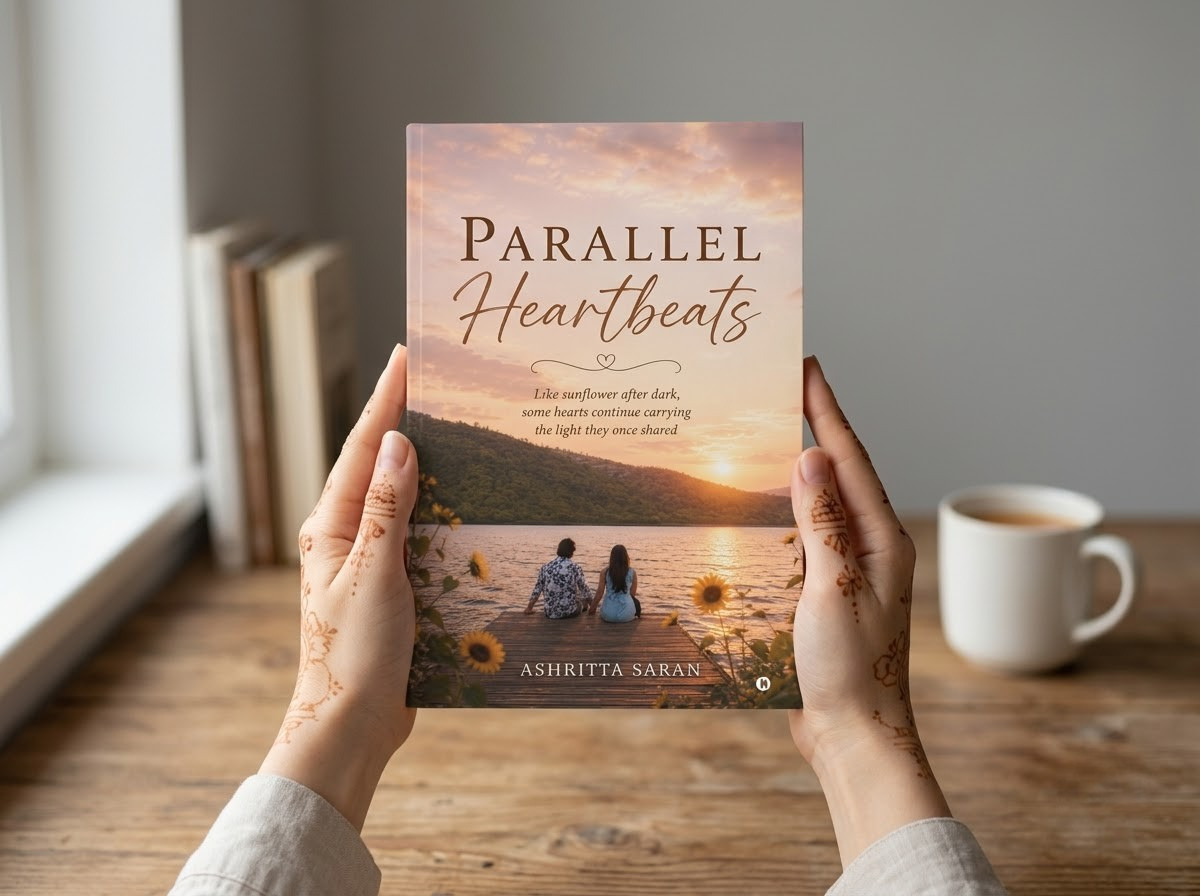
The Emotional Core
I wasn’t expecting to feel this much for two fictional teenagers who eventually become adults I still cared about years into the timeline. There’s a scene toward the end, in the Costa Coffee reunion, where Ash tells Aaryan that loving him isn’t the same thing as being able to go backwards, and honestly I had to put the book down for a second after that line. It’s not a cruel thing to say, and Saran writes it that way on purpose. Ash isn’t punishing him. She’s just telling the truth about what survival cost her, and there’s something in that honesty that felt more real to me than most breakup scenes I’ve read in adult fiction, let alone in a debut.
What got me the most, though, was learning from the author’s note that this book comes from Saran’s own life. She trained as a dentist and later worked in public health, and she writes plainly that the emotional core of this story reflects a real relationship that shaped who she became. Knowing that changes how you read certain lines, especially the ones about restraint and dignity mattering more than physical closeness. It’s not a twist or a marketing hook. It’s just a woman being honest about where the ache in her fiction actually comes from, and I respected that a great deal.
Who This Book Is For
If you loved the slow burn structure of something like Anuja Chauhan’s relationship-driven fiction, or if you gravitate toward stories where the romance is less about grand declarations and more about two people learning how to survive each other’s absence, this novel is going to land for you. Readers who enjoy dual timeline structures, where you’re watching the same two people at seventeen and then again in their late twenties, will also find a lot to like in how Saran handles the jump between those two versions of Ash and Aaryan.
I’ll be upfront that this might not be for everyone. If you want a book that moves quickly or gives you a clean resolution early, the deliberate slowness of the middle section could test your patience. This is also a book that sits mostly in interior emotion rather than plot mechanics, so if you need external stakes to stay engaged, it may feel a little inward-looking for your taste.
Final Thoughts
Is Parallel Heartbeats worth reading in 2026, when there’s no shortage of first love novels competing for your shelf space? I think so, and I say that as someone whose job is to read critically, not just kindly. Saran has written something that earns its emotional weight instead of demanding it from you upfront, and the autobiographical thread underneath the fiction gives the whole thing a kind of honesty that’s hard to fake. Some parts hit differently once you know that, and I suspect that’s exactly what the author intended.

With over 11 years of experience in the publishing industry, Priya Srivastava has become a trusted guide for hundreds of authors navigating the challenging path from manuscript to marketplace. As Editor-in-Chief of Deified Publications, she combines the precision of a publishing professional with the empathy of a mentor who truly understands the fears, hopes, and dreams of both first-time and seasoned writers.