
Rating:
⭐⭐⭐⭐1/2 (4.5 out of 5)
Every once in a while, I come across a poetry collection that feels less like a carefully decorated garden and more like a long conversation with someone who has spent decades observing people. Not necessarily agreeing with them. Not always admiring them. But watching them closely.
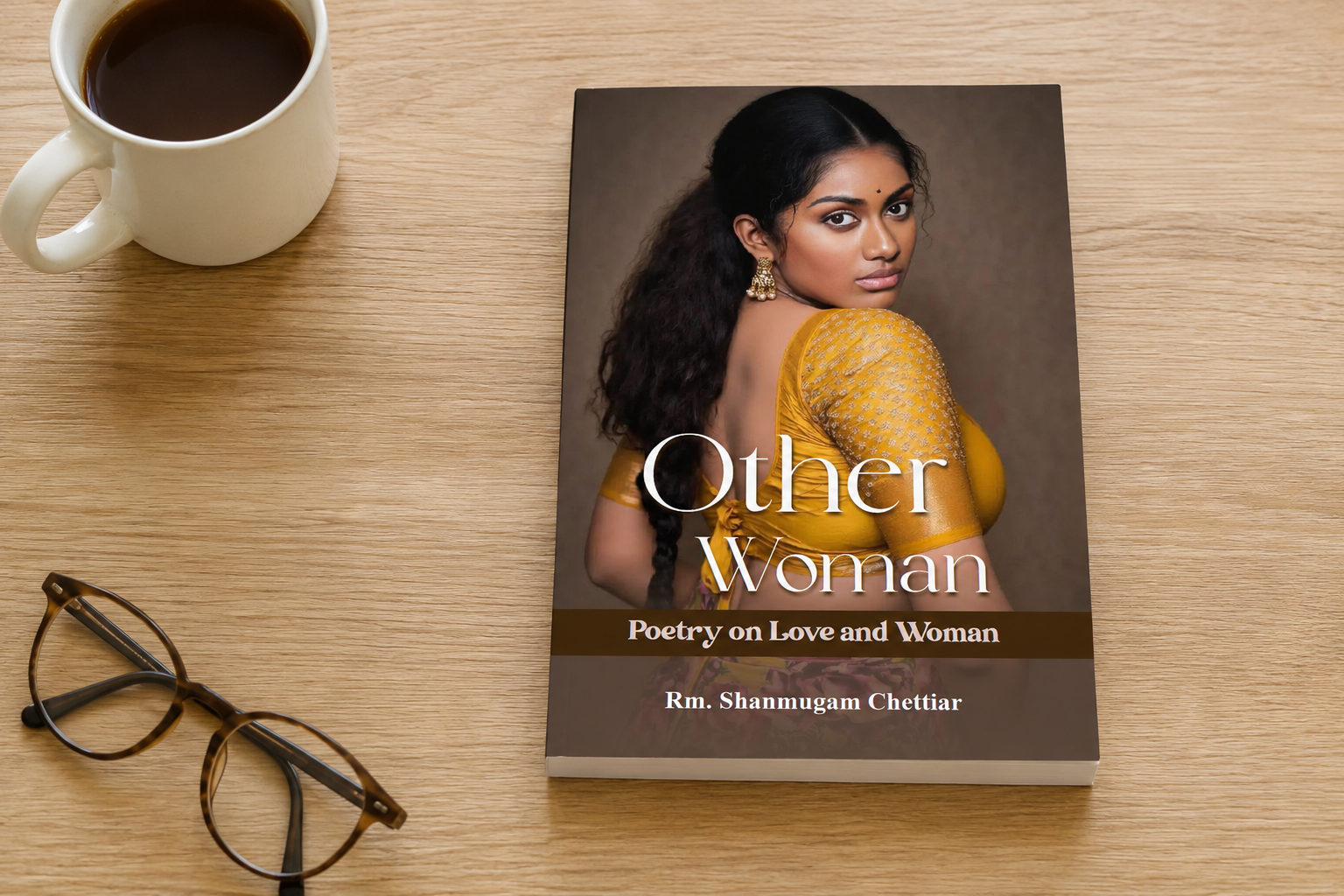
That was my experience with Other Woman: Poetry on Love and Woman by Rm. Shanmugam Chettiar.
Before opening the book, the title itself made me curious. It suggests controversy, longing, temptation, and perhaps even emotional conflict. After reading through the collection, I realized the title represents only one part of what the author is trying to do. This is not merely a book about forbidden love. It is a book about love in almost every form the author can imagine, including romantic love, desire, marriage, attraction, fidelity, memory, disappointment, longing, companionship, aging, and human weakness.
As someone who has spent more than fifteen years reading books across genres, I can honestly say that Other Woman feels different from most modern poetry collections. Whether a reader agrees with every viewpoint in the book is another matter entirely. What cannot be denied is that the author writes with conviction.
What the Book Is About
Other Woman is an anthology containing hundreds of poems divided into major sections including love, forbidden love, relationships, womanhood, and adulterous love. The author himself explains that the poems were written over several years and were inspired by observation, experience, perception, knowledge, and intuition.
The collection opens with poems on love. Here, love appears as longing, fascination, admiration, heartbreak, imagination, memory, and desire. Poems such as Radha Is Still Lucky, What Not Sweet?, Properties of Love, and The Climax of Love present love as something beautiful but also unpredictable. The author repeatedly returns to the idea that love changes how people see the world around them.
As the collection progresses, the themes become broader and more provocative. The sections on forbidden love and adulterous love do not simply celebrate such relationships. Instead, they attempt to understand why people are drawn toward them, what emotional needs they fulfill, and what consequences they create.
The section on women contains poems examining beauty, social expectations, aging, freedom, marriage, attraction, and gender roles. Some poems feel affectionate. Some feel reflective. Others will certainly generate debate among readers.
What fascinated me most was that the author rarely writes from a single emotional position. One poem might praise devotion while another questions fidelity. One poem might celebrate marriage while another examines its limitations. The result is a collection that often feels like an ongoing internal argument.
What Stood Out to Me
The first thing that stood out was the sheer volume of ideas.
Many poetry collections focus on one emotional tone. This one does not. Across hundreds of poems, the author discusses mythology, literature, psychology, sexuality, marriage, aging, memory, social customs, and personal desire. Readers encounter references to Radha and Krishna, Shakespearean characters, John Donne, Thomas Hardy, Greek mythology, and Tamil literary traditions.
I also appreciated the conversational quality of many poems. They often read like observations someone might share over tea after years of watching relationships unfold around them.
Take The Climax of Love, where the poet suggests that the most powerful moment in love is not physical union but the realization that affection is returned. That is a surprisingly tender thought hidden within a collection that often discusses desire quite openly.
Another strength is brevity. Many poems are remarkably short. The poet frequently attempts to express an entire argument or emotional insight within a few lines. Sometimes it works brilliantly. A poem like The Bed says very little, yet leaves readers considering the many meanings attached to a simple object.
The recurring examination of memory also interested me. Again and again, the poet returns to old loves, unrealized possibilities, and relationships that exist more vividly in recollection than in reality. Poems such as The First Love and Not A Burden capture this tendency especially well.
That said, this book will not be universally embraced.
Some readers may disagree strongly with certain conclusions about men, women, marriage, or attraction. The author writes directly and rarely softens his opinions. In today’s literary climate, some poems may spark debate, and honestly, perhaps that is part of the book’s purpose.
The Emotional Core
At its heart, I think Other Woman is less about romance and more about human longing.
- Longing for love.
- Longing for beauty.
- Longing for acceptance.
- Longing for emotional connection.
- Longing for something that might never fully belong to us.
Reading the collection, I often felt that the poet was wrestling with questions many people secretly ask themselves but rarely discuss openly.
- What makes love endure?
- Why do people remember some relationships for decades?
- Why does attraction sometimes survive long after circumstances change?
- Why do human beings continue searching for emotional fulfillment even when they already possess stability?
These questions appear repeatedly throughout the book.
One poem that lingered in my mind was This Is My Sorrow, where memory, admiration, and emotional hesitation intertwine. Another was Dumb Intimacy, which suggests that silence itself can become a form of connection. These moments reveal a more vulnerable side of the collection.
I also found myself reflecting on the author’s age and life experience. The introduction notes a writer who has spent decades writing poetry and observing the world around him. That perspective is visible throughout the book.
Many contemporary books discuss relationships from the perspective of youth. Other Woman often speaks from the perspective of accumulated experience. Whether readers agree with the conclusions or not, there is value in hearing that voice.
In 2026, when conversations around relationships are increasingly influenced by social media, instant communication, and changing social expectations, this collection feels like an opportunity to encounter a very different perspective.
Who This Book Is For
This book is likely to appeal to readers who enjoy reflective poetry rather than highly experimental poetry.
It is particularly suitable for readers interested in:
- Love poetry
- Relationship themes
- Human psychology
- Gender dynamics
- Classical literary references
- Philosophical reflections on attraction and companionship
If you prefer poetry that is symbolic, abstract, and intentionally difficult to interpret, this may not be your ideal collection. Rm. Shanmugam Chettiar generally prefers clarity over obscurity.
Similarly, readers looking for a modern progressive perspective on every issue may find themselves challenging some of the poet’s viewpoints.
However, readers who enjoy engaging with ideas, even ideas they may disagree with, will likely find much to consider here.
Final Thoughts
After spending time with Other Woman, I came away feeling that this is a collection driven by observation and honesty rather than literary fashion.
The author is not trying to write what readers expect him to write. He is presenting his understanding of love, desire, marriage, women, and relationships as he has experienced and interpreted them over decades. Sometimes the poems are romantic. Sometimes they are provocative. Sometimes they are philosophical. Occasionally they are contradictory. Yet that very inconsistency makes the collection feel human.
As an editor and longtime reader, I value books that encourage conversation. Other Woman certainly does that.
Will every poem resonate equally? Probably not.
Will every reader agree with every viewpoint? Definitely not.
But will readers encounter ideas worth considering? I believe so.
For readers interested in relationship poetry that is direct, reflective, and unafraid of controversy, Other Woman offers a distinctive voice and a substantial body of work to engage with.
If you’d like a complimentary digital copy of this book, feel free to contact the author directly at [email protected] or via WhatsApp at +919080455850.
FAQ
Is Other Woman worth reading?
If you enjoy poetry centered on love, relationships, attraction, and human behavior, then yes. The collection offers hundreds of poems and a wide range of perspectives.
Who should read Other Woman?
Readers interested in romantic poetry, relationship themes, and philosophical reflections on men and women will likely appreciate this collection.
What is Other Woman about?
The book explores love, forbidden attraction, marriage, womanhood, desire, fidelity, memory, and emotional longing through hundreds of poems.
Is Other Woman a modern poetry collection?
The book contains modern themes but often draws upon classical literary influences, mythology, and traditional reflections on relationships.

With over 11 years of experience in the publishing industry, Priya Srivastava has become a trusted guide for hundreds of authors navigating the challenging path from manuscript to marketplace. As Editor-in-Chief of Deified Publications, she combines the precision of a publishing professional with the empathy of a mentor who truly understands the fears, hopes, and dreams of both first-time and seasoned writers.