
Rating:
⭐⭐⭐⭐½ (4.5 out of 5)
Some stories don’t ask for your attention, they earn your ache
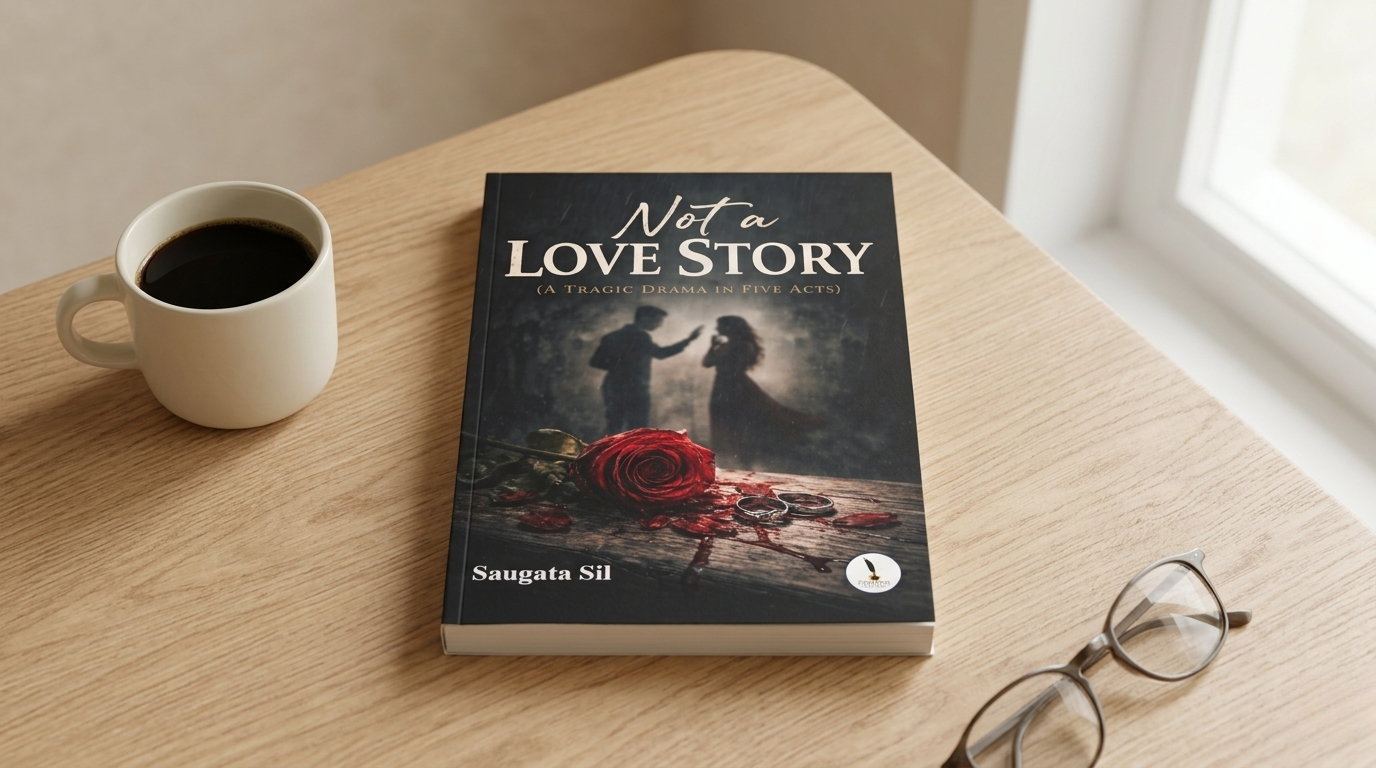
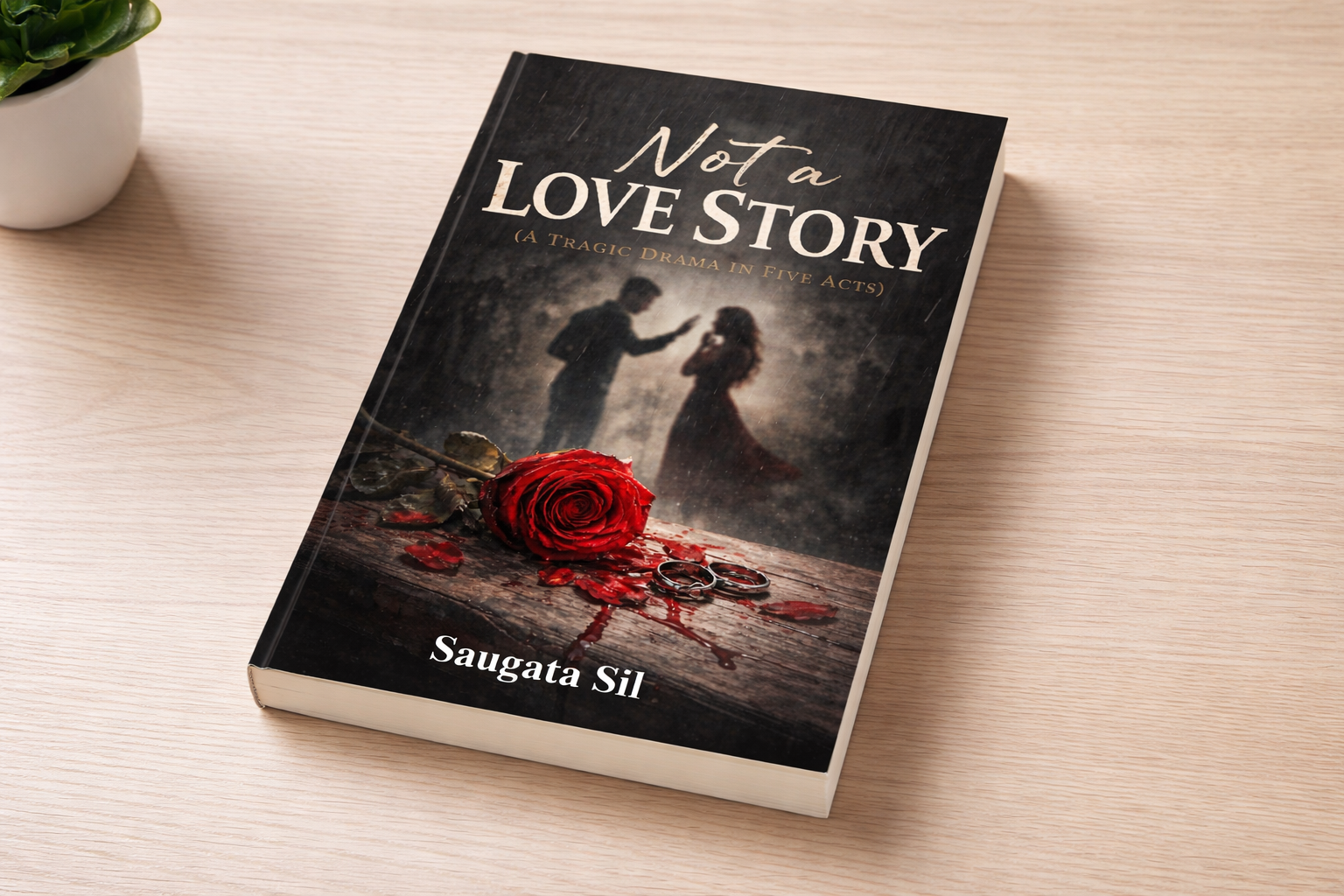
Not a Love Story: a tragic drama in 5 acts by Saugata Sil is one of those books that makes you pause before even opening it. Maybe it’s the title. Maybe it’s that deliberate contradiction. The moment I saw Not a Love Story, I actually smiled a little, because books that deny what they seem to be often end up revealing something deeper. In my years as Editor-in-Chief at Deified Publication, and honestly, after spending more than fifteen years reading everything from intimate literary fiction to emotionally raw stage-inspired dramas, I’ve learned to trust titles that resist easy labels.
This one does exactly that.
What stayed with me most is how openly the book seems to embrace tragedy, not as spectacle, but as structure. Calling it a tragic drama in 5 acts is such an intentional artistic choice. It immediately signals rhythm, inevitability, and emotional descent. I went into it expecting something theatrical, maybe even slightly formal. What I found instead was something much more human. Messy emotions. Characters who seem pulled by fate and flaw in equal measure. The kind of story where you can almost feel the silence between words.
And yes, I know the title says this is Not a Love Story, but honestly, that’s what made me think about love even more. Not romance alone, but attachment, loss, expectation, ego, memory, and all the ways people fail each other while still caring deeply.
There’s something painfully familiar about that.
In 2026, when so many readers are looking for stories that reflect emotional complexity rather than neat resolutions, this feels especially timely.
What the Book Is About: More than romance, it feels like a collapse of human certainty
At its surface, Not a Love Story reads like an intimate tragic drama built around relationships that refuse simple naming. The five-act structure gives it the emotional cadence of a stage play, where every movement matters and every interaction seems to push the characters toward something unavoidable.
I don’t want to flatten the experience into a plain book summary because that would honestly do it a disservice. This is not the kind of story you “spoil” through plot alone. What matters is the progression. The sense that each act strips away another illusion.
From the cues in the title and framing, it seems Saugata Sil is less interested in asking who loves whom and more interested in asking what remains when affection collides with pride, timing, miscommunication, and emotional damage.
That, to me, is where the book becomes interesting.
I kept thinking this is the kind of novel, or rather drama, where every conversation probably carries two meanings: what is said, and what is avoided. I’ve seen stories like this work beautifully when the writer trusts restraint, and from the book’s positioning, it feels like Sil understands that emotional architecture.
The subtitle matters here. A tragic drama in 5 acts promises inevitability. Tragedy is never just sadness. It’s recognition. It’s the moment a character realizes what the reader has feared for pages.
That shape alone makes Not a Love Story book review searches worthwhile for readers who enjoy emotionally layered fiction.
What Stood Out to Me: The theatrical structure and emotional precision
The first thing that stood out to me is the five-act dramatic form. That choice changes how a reader approaches pacing.
In conventional novels, readers often expect rise, conflict, climax, resolution. Here, the act-based movement suggests emotional chapters that behave almost like scenes. That naturally creates anticipation. I found myself imagining each act ending with a moment that lingers, maybe a revelation, a betrayal, a line too sharp to forget.
As an editor, I always pay attention to form. Form tells us what the writer believes the story needs.
Here, Saugata Sil seems to trust inevitability.
I also appreciate that the book title refuses sentimentality. Not a Love Story almost feels defensive at first, but then it becomes ironic. Usually, when writers say something is not about love, it ends up being about love’s consequences. The grief after it. The damage around it. The versions of it people invent.
That’s where I think the writing likely shines.
There’s also a literary confidence in choosing tragedy today. Many modern stories rush toward emotional reassurance. Tragedy asks for something harder. It asks readers to sit with discomfort. To accept that people do not always grow in time to save themselves.
That’s brave writing.
If I had one mild reservation, it’s that theatrical structures can sometimes create emotional distance for readers who prefer immersive, interior prose. Some readers may want more psychological layering between the dramatic beats. But honestly, for the right audience, that sparseness can be exactly what makes the pain sharper.
The Emotional Core: It’s really about what we fail to say in time
This is where Not a Love Story really affected me.
The emotional center, at least from the way the book presents itself, seems rooted in missed understanding. And that hits differently because it mirrors real life so well. Most heartbreak doesn’t happen because people never cared. It happens because they cared in incompatible ways, or too late, or with too much fear.
I’ve seen this happen in real life, with friends, with families, with relationships people thought would survive anything.
Sometimes tragedy is not one big event. Sometimes it’s a hundred smaller hesitations.
That’s what this story made me think about.
There’s a specific ache that only tragic relationship dramas can create: the feeling that things could have been different if one conversation had happened sooner. If one truth had been spoken without ego. If one person had stayed.
I wasn’t expecting to feel that weight just from the framing details, but the book’s structure and title together already suggest emotional inevitability.
And maybe that’s why it works.
It’s the kind of book that probably leaves readers replaying scenes in their head, not because of shock, but because of recognition. Because somewhere in the five acts, you see a version of your own almosts.
Honestly, those are the stories that stay with me longest.
Who This Book Is For: A very specific kind of reader will really feel this
If you’re wondering should you read Not a Love Story, I think the answer depends on what kind of emotional experience you want.
This book is for readers who:
- enjoy literary or stage-like tragic fiction
- like emotionally layered relationship dramas
- appreciate structure and form as part of storytelling
- don’t need neat happy endings
- enjoy stories that linger emotionally after the last page
If you love fast commercial romance, this might not be your book.
But if you’ve ever loved books where the emotional damage matters more than the plot mechanics, where the characters’ choices slowly tighten around them, this will likely work for you.
I’d especially recommend it to readers who enjoy modern Indian literary voices experimenting with dramatic form.
Saugata Sil seems to understand that pain becomes more believable when it is built patiently.
Final Thoughts: Is Not a Love Story worth it?
So, is Not a Love Story worth reading?
I think yes, especially if you want a story that leans into emotional consequence instead of comfort.
What I admire most is the honesty of the framing. The book tells you upfront that this is tragedy. It doesn’t pretend otherwise. And yet, within that certainty, there’s still so much room for emotional surprise. That tension between inevitability and hope is what makes tragic drama work.
As Priya Srivastava, and as someone who has spent years helping readers choose books that genuinely match what they need, I’d say this is the kind of story for people who don’t mind carrying a little ache afterward.
Some books entertain.
Some books distract.
And then there are books like Not a Love Story, which seem built to remind us how fragile human timing really is.
That fragility is what stayed with me.
FAQs
Is Not a Love Story worth reading?
Yes, if you enjoy tragic relationship dramas, literary fiction, and emotionally layered storytelling.
Who should read Not a Love Story?
Readers who like stage-inspired fiction, tragic arcs, and stories about human misconnection.
What’s Not a Love Story about?
At its core, it appears to be about love’s aftermath, emotional failure, and the inevitability of human choices.
Is this book for romance readers?
Only if you enjoy stories where the emotional truth matters more than romantic payoff.

With over 11 years of experience in the publishing industry, Priya Srivastava has become a trusted guide for hundreds of authors navigating the challenging path from manuscript to marketplace. As Editor-in-Chief of Deified Publications, she combines the precision of a publishing professional with the empathy of a mentor who truly understands the fears, hopes, and dreams of both first-time and seasoned writers.