
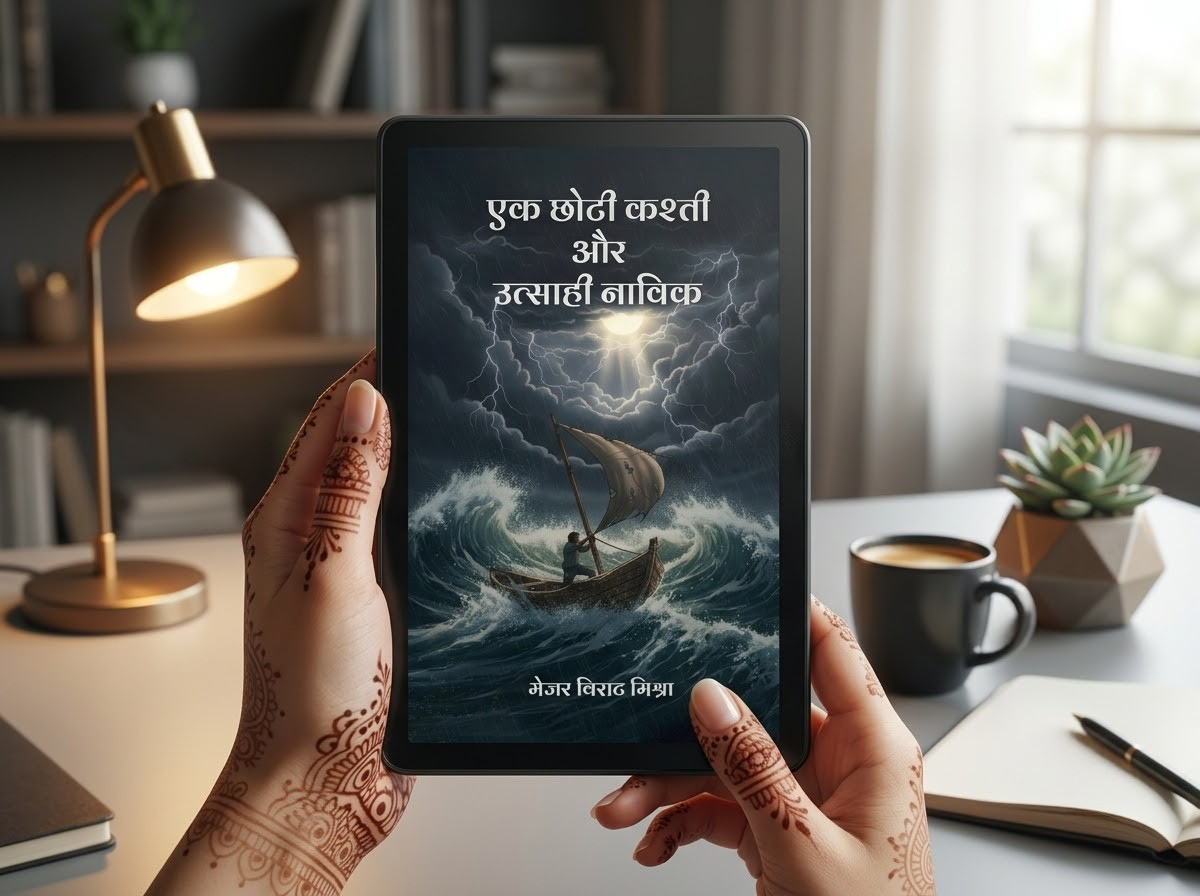
Rating: ⭐⭐⭐⭐1/2 (4.5 out of 5)
I still remember the late evening when I sat down with a hot cup of masala chai, ready to skim through another manuscript on my desk. After reading books for over fifteen years, I have developed a habit of expecting certain predictable patterns in modern poetry. Many writers tend to hide behind overly complex words that do not mean much, but this collection instantly felt different. As the Editor-in-Chief at Deified Publication, I see a lot of writing, yet there was something incredibly grounded about the very first page of this work. It did not try to impress me with flowery language, but instead, it spoke in a voice that was honest and strong. I found myself thinking about my own small struggles and how we all try to steer our lives through rough weather.
What the Book is About
If you are wondering what is it about, the book is essentially a collection of thirty-six Hindi poems that focus on the timeless battle between human effort and fate. In this Ek Chhoti Kashti Aur Utsaahi Naavik Book Review, I want to highlight how the author uses simple but powerful images, like a small wooden boat facing a massive storm, to show how we deal with difficulties. While a standard book summary can give you the outline, poetry requires a closer look at the actual words. The writer, Major Virat Misra, brings his unique perspective as a soldier into these pages, making the poems feel realistic rather than purely academic. He writes about the sheer grit it takes to build your own path and the pain of failing when you have given everything. It is not just about battlefields, but it is about the daily struggles of an ordinary worker sweating to earn a living.
The opening poem sets the stage by asking what happened to that tiny boat whose sailor was filled with so much enthusiasm. This recurring question of whether the boat sank in the dark waves is something that kept me thinking about this scene for days. There is a sense of mystery and struggle in these lines, showing us that even if the boat sinks, the spirit of the sailor remains undefeated. I was not expecting to feel this way, but the poem suggests that another enthusiastic sailor will always rise tomorrow to take up the same challenge. It is the kind of book that sits with you, especially because it does not promise easy victories but instead honors the beauty of trying.
Visual Imagery and Direct Language
What stood out to me while reading this collection was the beautiful integration of visual art with the written word. Every single poem in this book is accompanied by a detailed black and white illustration, which helps to ground the abstract emotions of the text. For instance, when you turn to the poem titled Reteela Chamkeela Samay on page forty-two, you see a striking sketch of athletes running an Olympic race, with a hand holding a stopwatch. The poem talks about how time slips away, comparing it to a wet mango seed sliding out of our hands, which is such a wonderfully ordinary and relatable image. I kept thinking about this simple metaphor, because we have all felt that desperate sensation while life rushes past.
Another moment that hit me deeply was in the poem Chavanniyan-Athanniyan on page seventy-eight, which translates to the small coins of twenty-five and fifty paise. The illustration shows coins falling from the sky like rain, but the actual lines of the poem tell a much more sobering story. There is this moment where the author describes an old steel plate on a table, holding some wrinkled rotis and a cold cup of tea. It is an image of plain, everyday struggle, representing the price people pay for daring to dream big. This detail reminded me of so many people I have known in real life, individuals who sacrifice their comfort just to keep their hopes alive.
The craftsmanship in the writing is very direct, almost like a military march, yet it maintains a soft emotional core. In Safalata ka Kakahara on page seventy, the illustration shows a soldier standing with his back to us, rifle on his shoulder, staring at a stone wall lit by a single lantern. The poem states plainly that success is easy to write down on paper, but in real life, it demands a very difficult examination. Major Virat Misra does not write like a distant academic, but instead, his words carry the dust and sweat of actual experience. The pacing of these poems is fast and energetic, which prevents the motivational themes from feeling too heavy or preachy.

The Emotional Weight of Trying
If you are looking for an Ek Chhoti Kashti Aur Utsaahi Naavik Book Review that tells you whether this book is worth it, I would say it depends on what you seek from poetry. For me, the emotional core of this collection lies in how it portrays defeat, because it does not treat failure as a shameful end. In the very first poem, when the boat finally breaks and the sailor is crushed by the heavy waves, there is a deep sadness that made me feel quite emotional. Honestly, I teared up a bit during that section because it felt so raw, yet the very next page brings a surge of hope. It reminds us that our individual lives might be small, but our collective efforts can wear down even the most stubborn obstacles.
When considering the question, should you read this collection, I think about how some parts hit differently depending on your own life experiences. If you have ever worked late into the night while the rest of the world was fast asleep, the poem about sweat not being salty but clean and bright will strike a deep chord. The author portrays the act of working hard as something sacred, comparing a sweaty forehead to a shining crown. I loved this perspective, because we often celebrate the final victory but ignore the messy process of getting there. The book celebrates the calloused hands, the tired eyes, and the soft moments of doubt that everyone faces in life.
Who Will Appreciate This Collection
I want to be completely honest with you, this book might not suit every single reader, and there are some who might want to skip it. If you prefer highly abstract, modern, or experimental poetry that focuses entirely on romantic love or complex linguistic puzzles, you might find these poems too straightforward. My only real criticism of the work is that a few poems, especially the ones dealing with national pride like Baagi Khayal, can feel slightly repetitive in their imagery of enemies and battlefields. Sometimes, the tone becomes so intensely patriotic that it borders on the familiar patriotic rhetoric we see on television, which can feel a bit loud. However, if you look past those few repetitive sections, the majority of the poems offer a much deeper, more personal kind of reflection.
Final Reflections
In the end, this is a book that I will keep on my shelf for those days when I feel overwhelmed by my own small storms and need a simple reminder of human resilience. It is a genuine, heartfelt collection that does not try to sell you a cheap version of happiness but honors the actual work of living. Major Virat Misra has given us a work that feels like a steady hand on your shoulder when you are tired. Looking ahead into 2026, I hope we see more Hindi poetry books that choose this path of simplicity and raw emotion over empty stylistic complexity. It is a solid, comforting read that is well worth your time, especially if you appreciate honest words and beautiful illustrations.
FAQs
Is it worth it to read this book if my Hindi is not very strong?
Yes, I think it is absolutely worth reading even if your Hindi is just average. The language used by Major Virat Misra is very direct and avoids heavy, complex Sanskrit words that you might find in older academic literature. He uses common words that we hear in daily life, so you will not find yourself constantly reaching for a dictionary, and the strong illustrations help you understand the core emotion of each piece instantly.
What is the main theme of Major Virat Misra’s poems?
The main theme of this book is the continuous struggle of the individual against overwhelming odds, symbolized by a small boat fighting a stormy sea. It focuses on the power of human determination, the dignity of hard labor, and the idea that even when failure seems certain, the act of striving is a victory in itself. It also carries strong undercurrents of national duty, collective responsibility, and personal sacrifice.
Are the illustrations in the book really necessary?
Personally, I feel the illustrations are a vital part of what makes this book special. They are not just simple decorative sketches, but they are detailed black and white drawings that add a whole new layer of meaning to the text. They help to make the abstract feelings in the poems visible, giving you a clear picture of the characters, whether it is a tired soldier, a racing athlete, or a family celebrating under a rain of old coins.

With over 11 years of experience in the publishing industry, Priya Srivastava has become a trusted guide for hundreds of authors navigating the challenging path from manuscript to marketplace. As Editor-in-Chief of Deified Publications, she combines the precision of a publishing professional with the empathy of a mentor who truly understands the fears, hopes, and dreams of both first-time and seasoned writers.