
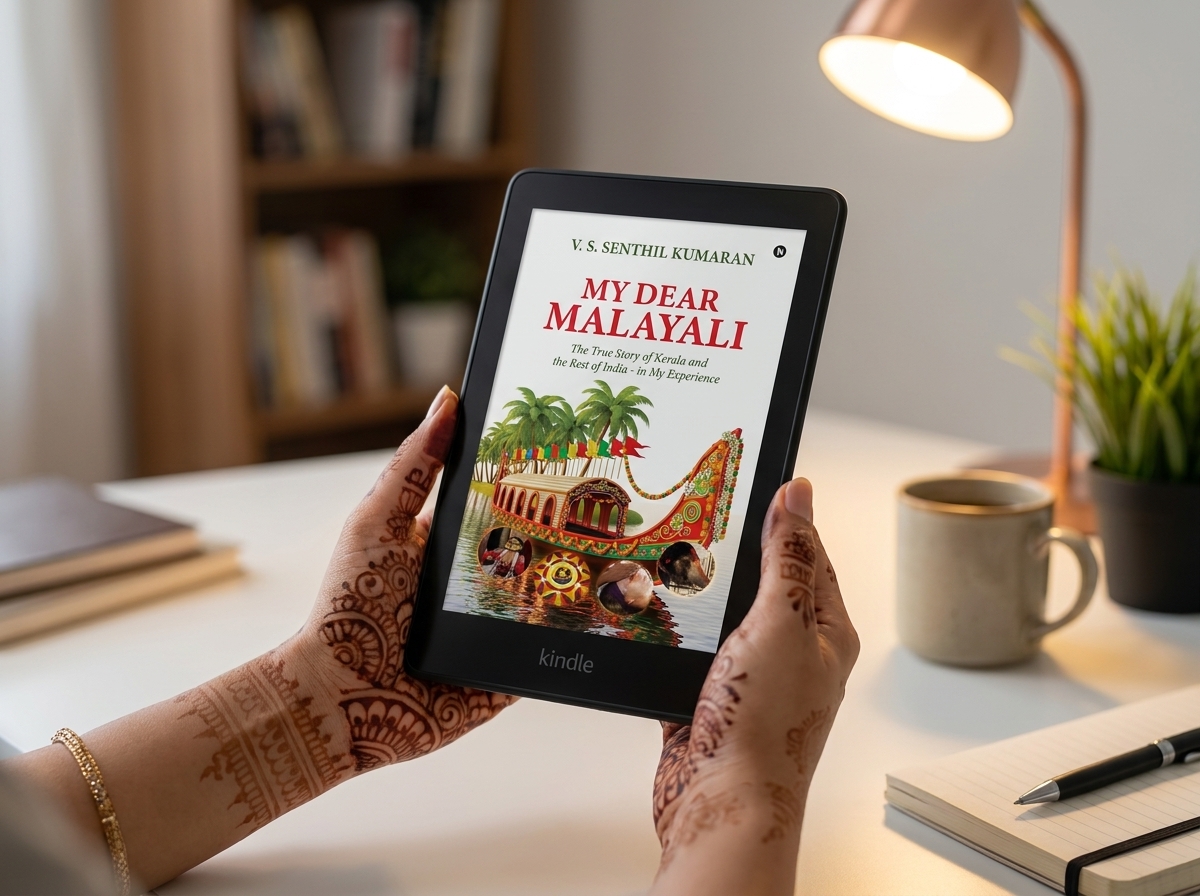
Rating: ⭐⭐⭐⭐1/2 (4.5 out of 5)
I’ll start with something honest, the kind of thing I don’t always admit before I’ve made up my mind about a book. When I heard about My Dear Malayali by V S Senthil Kumaran, I expected another travel memoir about Kerala’s backwaters and houseboats, the sort of book that treats the state like a postcard. That’s not what this is. This is a book written by someone who lived in Mahe for two years, worked alongside Malayalis every single day, and came out the other side with a genuine, sometimes uncomfortable understanding of what makes this community different. I run into a fair number of manuscripts here at Deified Publication that talk about culture from a distance. This one doesn’t. It talks about culture from inside a government health centre, on a crowded bus, in a seminar hall where somebody’s raincoat sat untouched for a week.
What This Book Actually Covers
The premise is deceptively simple. Malayalis make up less than three percent of India’s population, and yet you’ll find them running tea shops in the remotest corners of the country and holding jobs across the globe, from Gulf construction sites to European hospitals. Kumaran opens with that old, slightly absurd line about Neil Armstrong finding a Malayali running a tea shop on the moon, and uses it as a doorway into a real question. What actually sets this community apart? He doesn’t answer that with statistics alone, though there are plenty scattered through the book. He answers it by walking readers through dozens of distinct observations he made while living and working in Kerala, comparing what he saw there to what he grew up with in his own hometown of Puducherry.
That structure, built around numbered chapters, each centred on one cultural trait, means this isn’t a novel with a plot you follow from start to finish. It reads more like a long, thoughtful conversation with someone who noticed everything and wrote it down before he forgot. Some chapters cover big, visible things, like Kerala’s cleanliness or its literacy rate. Others are much smaller and, honestly, more interesting, like the entire chapter he dedicates to how Malayalis address their elders.
What Really Stood Out to Me
I want to talk about a few specific moments because they’re the reason this book works better than a simple listicle would. There’s a chapter early on where Kumaran describes losing his brand new raincoat. He’d bought it right after moving to Mahe, used it exactly once, and left it behind in the Seminar Hall at his workplace. A full week went by, with hundreds of staff and visitors moving through that hall for other events, before he thought to ask his colleague Jithesh whether it was even worth checking. Jithesh’s answer, delivered so casually it almost undersells the point, was basically that of course it would still be there. And it was. Sitting exactly where he’d left it. Kumaran writes that this one incident changed how he saw Kerala more than any statistic could have, and I believe him, because he doesn’t dress it up. He just tells you what happened and lets you sit with what it means about a place where common spaces are, as he puts it, genuinely safe for people’s belongings.
Another moment that got me was the chapter on how Malayalis address their elders. I didn’t expect a whole section on nicknames to be this charming, but Kumaran walks through example after example, how Ramachandran becomes Ramendraetta, how a friend called Vasudha Chaechi turns into Vaschi, how even famous actors like Mohan Lal get folded into this system and become Lalettan to an entire state. He mentions, almost in passing, that people started calling him Senthiletta, blending his own name into the same affectionate pattern usually reserved for people born into the culture. That detail tells you more about how he was received in Kerala than a paragraph of analysis ever could.
Then there’s a scene that’s harder to read, and I think it matters that Kumaran included it instead of smoothing it over. Early in the book, he describes a colleague in his hometown directly asking him what caste he belonged to, right in a professional setting. His reply, that if the man thought Kumaran belonged to his community then he supposed he did, gets laughed off and dropped. He places that scene right next to his observations about Kerala, where he says caste rarely surfaced at all in his daily interactions. He’s not claiming Kerala is some caste free utopia, and to his credit he doesn’t oversimplify it that way. But the contrast he draws, without needing to shout about it, says plenty on its own.
And I have to mention the incident near Noida, because it’s the sharpest, most uncomfortable image in the whole book. Kumaran describes watching two men chase down vehicles on the road, waving wooden clubs, and later learning from his cab driver that they were trying to extract illegal tolls from drivers who hadn’t paid up. He sets this right against his memories of Kerala’s roadsides, where he says he never once witnessed that kind of open intimidation. It’s not a comfortable comparison to sit with, and I don’t think it’s meant to be.
How This Book Made Me Feel
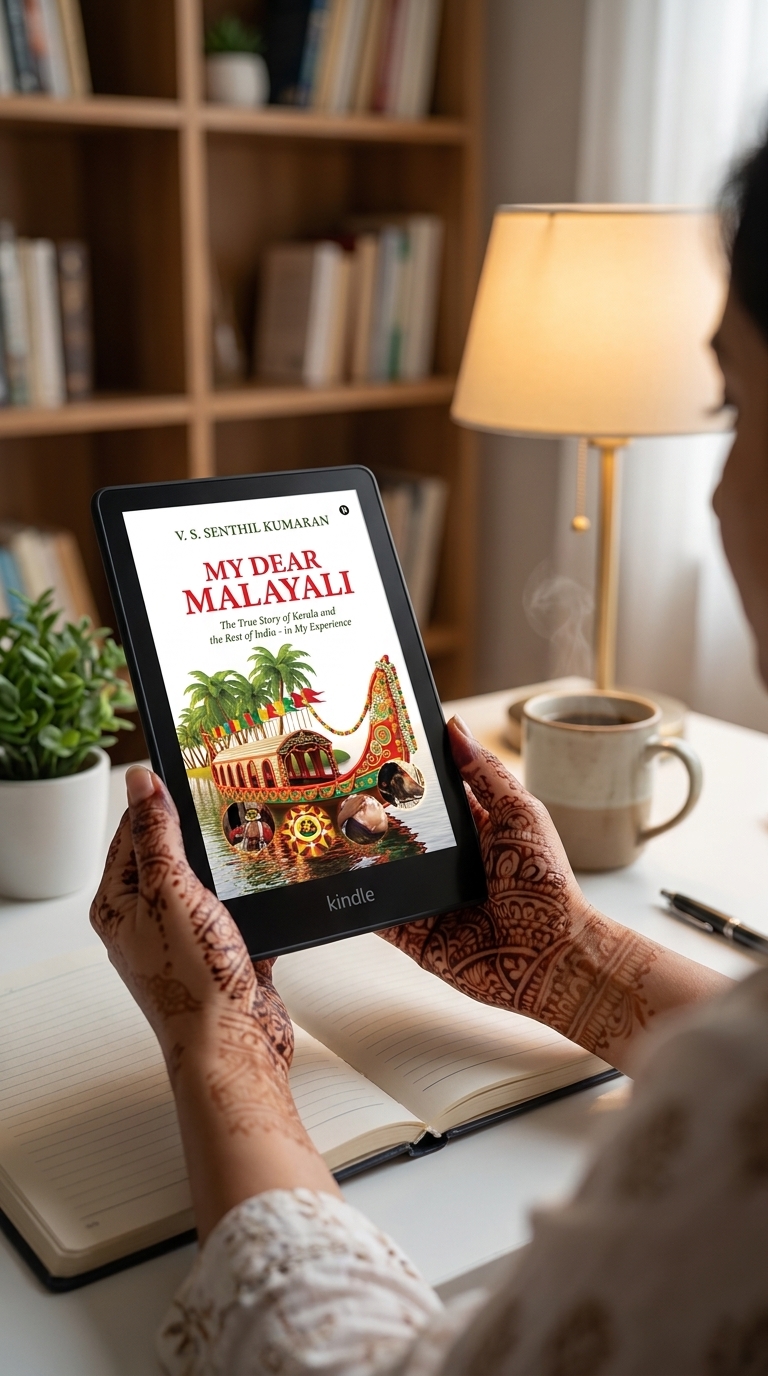
If I’m being honest, this book made me a little envious, and also a little reflective about my own hometown. Kumaran isn’t writing propaganda for Kerala, and he says as much when he notes the frustration of hartals shutting down ordinary life, or the pressure some Malayali youth feel to migrate abroad rather than build something at home. But the accumulated weight of chapter after chapter, the clean roads, the safety of public spaces, the respect shown to healthcare workers, the near total absence of casual verbal abuse in public, builds into something that made me genuinely reconsider what I’d normally accept as just how things are elsewhere in India. I found myself sitting with certain passages longer than I expected to, not because the writing demanded it, but because a specific detail hit close to something I’ve seen myself.
Who Should Pick This Up
This isn’t a book for someone looking for a plot or a tidy narrative arc. If you want fiction, or even a conventional travel memoir with a clear beginning, middle, and end, this will feel unusual to you at first. But if you’re the kind of reader who likes nonfiction built from real, lived observation, the kind of book you can open to any chapter and start reading, this is exactly that. I’d especially recommend it to anyone who has ever lived outside their home state in India and quietly noticed how differently things work elsewhere. Malayalis themselves, and the wider diaspora, will probably find a strange kind of validation in seeing their own culture described so specifically and so warmly by someone from outside it. Readers interested in Indian sociology, migration patterns, or public policy will also find real substance here, particularly in the chapters on Kerala’s development indicators and its women’s empowerment programmes like Kudumbashree.
A Few Honest Questions Readers Ask
Is My Dear Malayali worth reading?
If you care about how regional culture actually shapes daily life in India, rather than how it looks in tourism brochures, yes. It’s not flashy, but it’s substantial.
What is My Dear Malayali actually about?
It’s V S Senthil Kumaran’s account of the two years he spent living and working in Kerala, told through dozens of specific, lived comparisons between Kerala’s customs and those of his own hometown.
Who should read this book?
Anyone interested in Indian regional culture, migration, or social behaviour, and especially anyone who has lived outside their home state and noticed the small differences that add up.
Is this a memoir or a research book?
It sits somewhere in between. It reads like a memoir but leans on real data around literacy, gender ratios, and development indicators to back up what Kumaran observed firsthand.
Final Thoughts
In my years reviewing books at Deified Publication, I’ve read enough travel and culture writing to know when someone is performing affection for a place versus when they actually mean it. Kumaran means it. The book is repetitive in places, I won’t pretend otherwise. Chapter after chapter follows a similar rhythm, observation followed by comparison followed by reflection, and that can start to feel a little formulaic by the later sections. A tighter edit might have served the material well. But the specificity throughout, the names of real colleagues, the exact wording of a conversation, a raincoat that sat untouched for a week, is what carries it past being just another opinion piece about Kerala. It reads like someone who genuinely paid attention for two years and wanted to get it right. In 2026, with so much online discourse about regional identity in India getting flattened into stereotypes, a book this specific and this fair feels timely in a way its author probably didn’t even set out to achieve.

With over 11 years of experience in the publishing industry, Priya Srivastava has become a trusted guide for hundreds of authors navigating the challenging path from manuscript to marketplace. As Editor-in-Chief of Deified Publications, she combines the precision of a publishing professional with the empathy of a mentor who truly understands the fears, hopes, and dreams of both first-time and seasoned writers.