
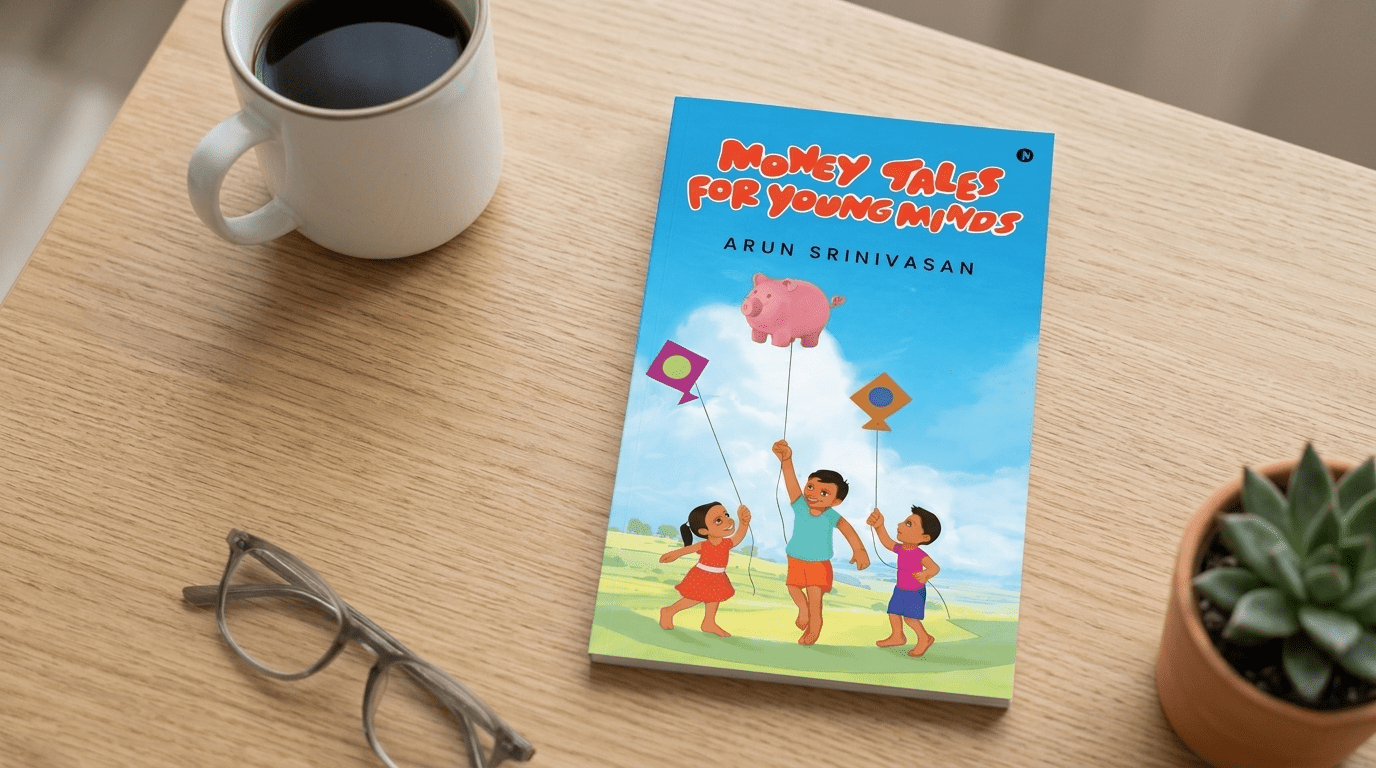
Rating:
⭐⭐⭐⭐ (4.4 out of 5)
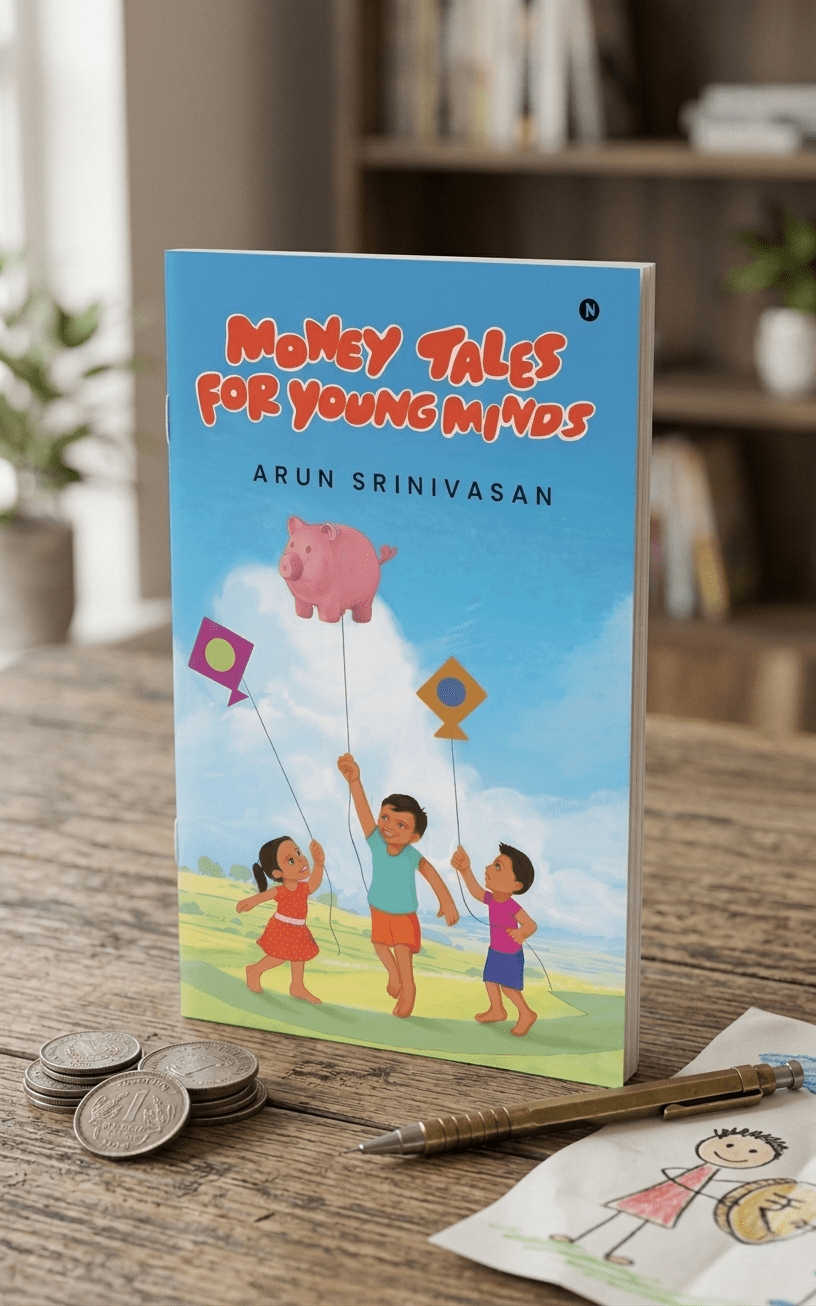
As someone who has spent more than fifteen years living inside books of every kind, I can honestly say Money Tales for Young Minds by Arun Srinivasan surprised me in the best way.
Not because it tries to be loud. It doesn’t.
What stayed with me is how gently it teaches. I found myself pausing at small moments, the kind that seem simple on the surface but open into something larger after a few seconds of thought. A fisherman unable to trade fish for apples because the apples are not in season. A banker introducing paper notes to an island that has only known barter. A family feeling safer after learning not to depend on one income source. These are not abstract finance ideas. They are human situations. And that, I think, is exactly why this book works.
In 2026, when even adults often feel intimidated by money conversations, this book feels especially timely. We are surrounded by noise, advice, reels, “expert” opinions, stock tips, crypto jargon, and fear-based financial content. Arun Srinivasan does something much wiser here. He steps away from jargon and returns to story.
And story, honestly, is how most of us truly learn.
What the Book Is About
At its heart, Money Tales for Young Minds is a storybook about how money changes the way people live, trust, plan, and sometimes panic.
The setting is a small island where life begins with barter. George trades fish, Meera trades rice, Lakshmi weaves cloth. Everyone works hard, yet the timing of needs rarely matches. One scene early in the book really stayed with me: George has fresh fish, Kalia has apples, but her apples won’t be ready until winter. His fish will spoil by nightfall. It’s such a simple example, but it beautifully captures why barter breaks down.
From there, the book slowly builds an entire financial world.
The villagers are introduced to money through a banker. Then come loans, interest, savings, debt pressure, ownership, stock-like shares in a fishing boat, market speculation, risk, diversification, and finally broader ideas of wealth beyond coins.
What I appreciated is how naturally the structure grows. The table of contents itself shows this beautiful progression:
- The Farmer and the Waiting Game
- A New Way to Trade
- The Banker’s Rule
- The Loan Spree
- The Trading Game
- The Storm and Panic
- The Wise Investor
- Don’t Put All Your Eggs in One Basket
- Kinds of Wealth
This is not random sequencing. From an editorial perspective, I really admired the narrative architecture. Arun Srinivasan understands educational pacing. Each chapter introduces one idea, but it emerges from consequences of the previous chapter. That continuity gives young readers emotional memory anchors.
They won’t just remember “stocks.”
They’ll remember Hari needing money for his daughter’s wedding and Lakshmi buying his share in George’s boat.
That’s powerful teaching.
What Stood Out to Me
The biggest strength of Money Tales for Young Minds is its emotional realism.
Take The Banker’s Rule. The banker’s explanation of interest initially sounds fair, even helpful. The villagers nod. Life improves. Trade becomes easier. Homes grow larger. More boats appear.
And then slowly the unease begins.
There’s a line where the villagers realise only one hundred notes exist, but they now owe one hundred and ten. I actually stopped there for a second because it’s such an elegant way to introduce systemic debt tension to young readers without ever sounding textbook-like.
Then in The Loan Spree, the island visibly shines. Bigger homes, more crops, better tools. The illustrations here add so much warmth. I loved how the visual storytelling mirrors the emotional seduction of easy credit. The sunny house image especially carries this “look how life improved” feeling, which makes the later tension hit harder.
Another standout section for me was the movement into ownership and investing.
The Boat of 100 Owners and The Trading Game chapters are genuinely smart. The idea of splitting ownership of George’s fishing boat into paper shares is such an accessible way to explain equity. Then when Lakshmi buys Hari’s share because he needs urgent cash, we begin to see liquidity, valuation, speculation, and market psychology emerge almost effortlessly.
I smiled when the book moved into villagers shouting prices:
“I will sell for twelve coins.”
“I will sell mine for fifteen.”
That is literally a stock market explained through human urgency and social imitation.
As an editor, I always look for whether a writer trusts the reader. Arun Srinivasan absolutely does. He doesn’t interrupt the story with over-explanation. He lets the events teach.
And the recurring “A Curious Bit” side notes are lovely. The mention of the Amsterdam Stock Exchange, ancient Babylon’s interest records, early paper money in China, even Samsung as an example of diversified business, all of these make the world feel connected to reality without becoming dry.
The illustrations deserve their own appreciation too.
They are simple, warm, and deeply inviting. The bowl of fish, the apples crate, the bank scene, the broken eggs visual, Amma teaching with baskets, the village well, the shore house, these images don’t just decorate the page. They reinforce memory. For young readers especially, that matters.
Honestly, I can already imagine a child remembering the cracked eggs image years later when thinking about diversification.
That’s good educational design.
The Emotional Core
What moved me most is that this is not really a book about money.
It is a book about trust.
Trust in systems.
Trust in patience.
Trust in shared rules.
Trust in not panicking when storms come.
Trust in spreading risk across many baskets, both financial and emotional.
The final movement into Kinds of Wealth felt especially human. After all the chapters about loans, trading, ownership, and risk, Amma tells the children that coins are not the only wealth.
Your skills are wealth.
Your health is wealth.
Your family, honesty, and trust are wealth too.
I genuinely loved this choice.
So many financial books, even for adults, forget this. They reduce wealth to numbers. Arun Srinivasan brings the conversation back to life itself.
That page, with the lesson box saying true wealth is also what you learn, who you care for, and how you live, felt like the emotional heart of the entire book.
I think many parents reading this with children may feel something unexpectedly personal there.
I know I did.
Because the older I get, the more I realise financial literacy without emotional literacy can become hollow.
This book seems to understand that.
Who This Book Is For
I think Money Tales for Young Minds is ideal for:
- children aged 8+
- parents who want to introduce money ideas without pressure
- schools looking for story-based financial literacy
- curious adults who feel overwhelmed by finance language
- educators and homeschooling families
- anyone asking “how do I explain money to a child?”
It may especially resonate with Indian families because the village-like ecosystem, trust networks, and shared labor feel culturally familiar.
That said, this is also one of those rare books adults may enjoy more than they expect.
If you’ve ever wondered should you read Money Tales for Young Minds as an adult, I’d say yes, especially if traditional finance books make you tired.
Final Thoughts
My final feeling after finishing Money Tales for Young Minds is gratitude.
Arun Srinivasan has written something rare: a book that respects young readers enough to trust their intelligence, while also respecting the emotional weight of money in real life.
The pacing is thoughtful, the lessons emerge naturally, and the illustrations add warmth and memory to every idea. If I had one mild critique, it’s that a few readers who prefer faster conflict might find the middle chapters more reflective than dramatic. But honestly, I think that slower rhythm suits the book’s teaching purpose.
As Priya Srivastava from Deified Publication, I would say this is the kind of book that can genuinely shape how a child understands fairness, patience, risk, and self-worth.
And maybe even remind adults of what wealth really means.
FAQs
Is Money Tales for Young Minds worth reading?
Yes, especially if you want a story-led way to understand money concepts like barter, loans, shares, and diversification.
Who should read Money Tales for Young Minds?
Young readers, parents, teachers, and even adults who want simple financial storytelling.
What’s Money Tales for Young Minds about?
It follows island villagers as they move from barter to money, loans, investing, market trading, and broader ideas of wealth.
Is Arun Srinivasan’s book good for children?
Very much. The language is simple, the visuals help, and the lessons come through situations children can actually understand.

With over 11 years of experience in the publishing industry, Priya Srivastava has become a trusted guide for hundreds of authors navigating the challenging path from manuscript to marketplace. As Editor-in-Chief of Deified Publications, she combines the precision of a publishing professional with the empathy of a mentor who truly understands the fears, hopes, and dreams of both first-time and seasoned writers.