
Rating:
⭐⭐⭐⭐ (4.2 out of 5)
There is a certain kind of storytelling that only comes with age.
Not polished storytelling. Not dramatic storytelling. But something slower, more reflective. Almost like someone sitting beside you in a park, taking pauses between sentences, remembering things as they speak.
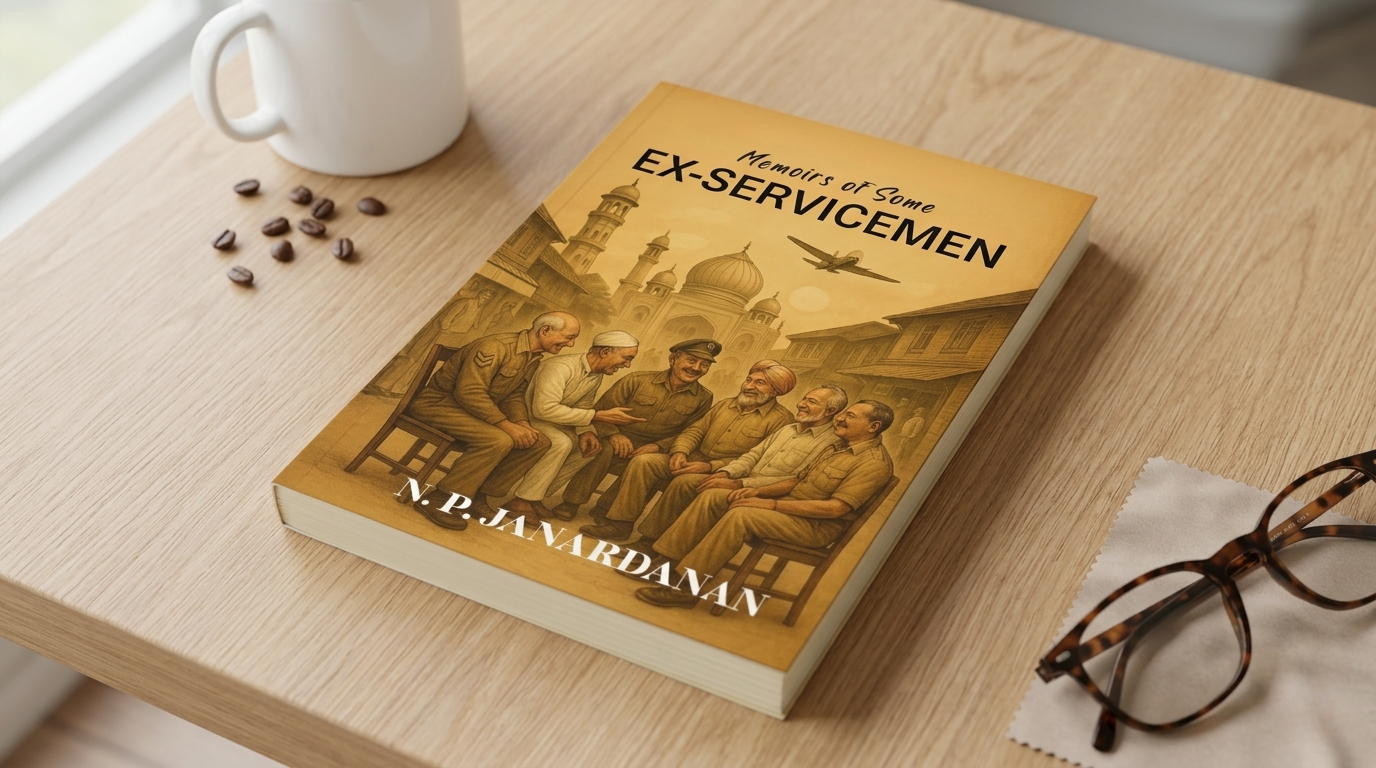
That is exactly how Memoirs of Some Ex Servicemen by N. P. Janardanan felt to me.
I did not feel like I was reading a structured book. I felt like I was listening to voices. Real voices. Slightly scattered, sometimes repetitive, sometimes unexpectedly sharp.
And I think that is what stayed with me. Not a single story, but the feeling of many lives overlapping.
What the Book Is About
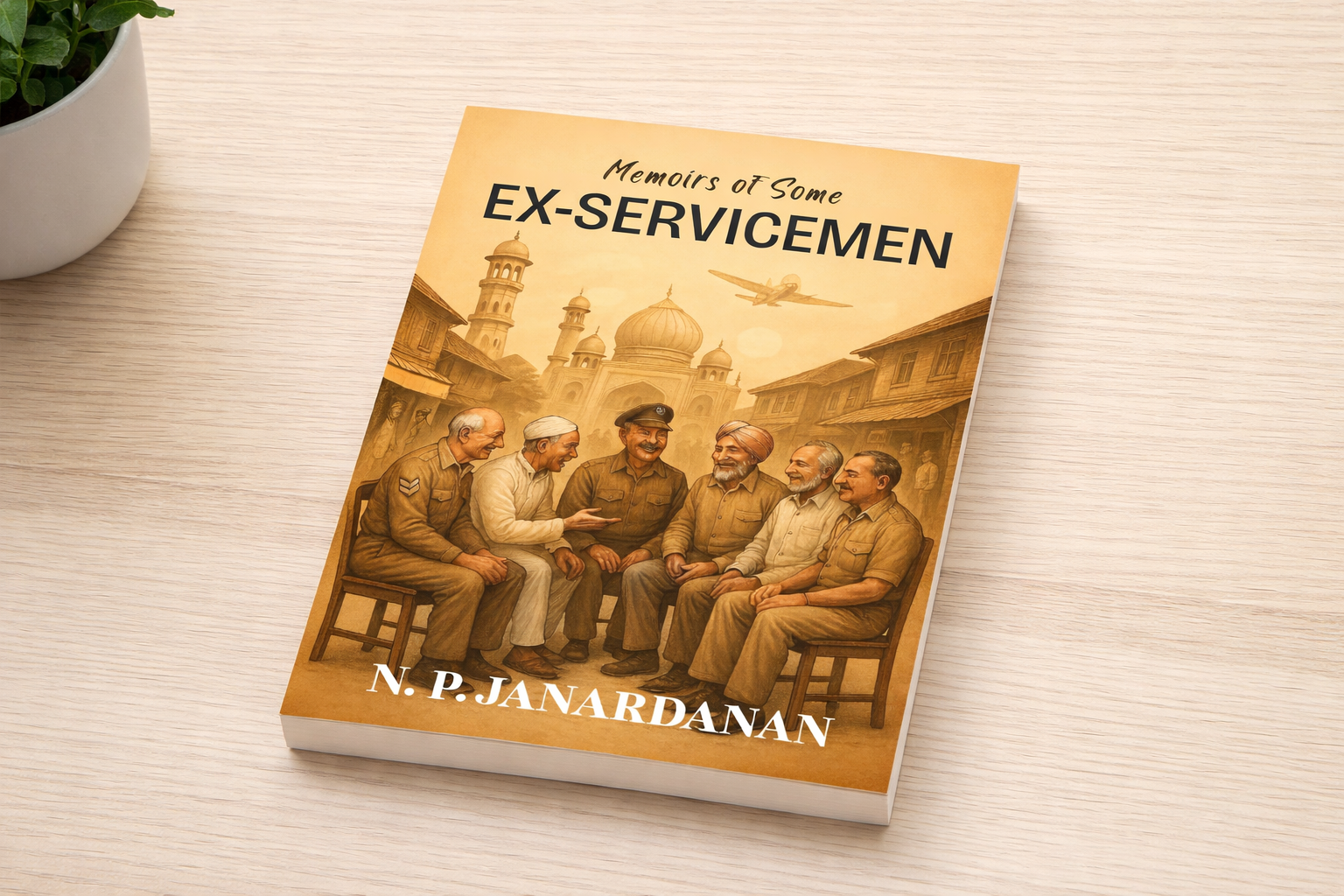
At its core, Memoirs of Some Ex Servicemen is a collection of recollections shared by elderly veterans who served during the nineteen fifties and sixties.
But the interesting part is how these memories are presented.
They come to us through conversations. Through exchanges. Almost like messages being passed around in a group of old friends who suddenly find themselves with too much time and too many memories.
The setting matters here.
These men, now in their eighties, are isolated during a period like the 2020 lockdown. Their usual routines are gone. No evening gatherings, no casual conversations in parks, no shared drinks or laughter in person.
So they turn to digital conversations.
And from that space, stories begin to emerge.
Some are deeply personal. Some are shaped by history. Some feel slightly embellished, as memories often are.
The book itself acknowledges this blend of fact and fiction, which I found quite honest.
It is not trying to present a perfect historical record. It is presenting how people remember.
And that difference is important.
What Stood Out to Me
The first thing that stood out was the structure.
This is not a linear narrative. There is no beginning, middle, and end in the conventional sense.
Instead, the book moves like conversation.
One memory leads to another. One anecdote triggers a completely different recollection.
At times, I felt slightly disoriented. But then I realized that this is exactly how real conversations work, especially among people who have lived long lives.
They don’t tell stories neatly.
They circle back. They jump. They pause.
And this book captures that beautifully.
Another thing I noticed is the tone of realism mixed with distance.
The stories carry details that feel grounded. You can sense the discipline of military life, the unpredictability of events, and the emotional weight behind certain decisions.
At the same time, there is a layer of storytelling that softens things. Names are masked. Places are blurred. Some incidents feel slightly reshaped.
I think this creates a kind of safe distance, allowing stories to be shared without becoming too exposed.
There is also something quietly moving about how these men remember their younger selves.
Not with pride alone.
But with a mix of humor, regret, and acceptance.
The Emotional Core
If I had to describe what this book made me feel, I would say it brought out a sense of time passing.
Not in a dramatic way.
In a very human way.
There are moments where you can sense loneliness. Not explicitly stated, but present in the background.
The idea that these men, who once lived intense, structured, and purpose driven lives, are now sitting with memories as their primary companions.
That hit me.
I kept thinking about how memory becomes a kind of refuge.
And also, sometimes, a burden.
There are lighter moments too. Conversations that feel warm, almost playful. The kind of teasing and shared understanding that only long friendships can hold.
But even in those moments, there is an awareness that these are people looking back more than they are looking forward.
And that adds a quiet weight to everything.
Who This Book Is For
This is not a fast read.
If someone is looking for tightly plotted narratives or dramatic storytelling, this might feel slow or even a bit scattered.
But for readers who appreciate reflective writing, especially stories rooted in lived experience, this book offers something meaningful.
I would especially recommend it to readers who enjoy memoir style writing, or those interested in human stories behind military life rather than just events.
It is also a book that might resonate more with readers who have seen different phases of life.
Younger readers might connect with parts of it, but I think the full depth becomes clearer with time.
Final Thoughts
After finishing Memoirs of Some Ex Servicemen, I found myself thinking less about individual stories and more about the collective voice of the book.
It feels like a gathering.
A gathering that had to move online because life changed.
And in that shift, something unexpected happened.
Stories that might have remained unspoken found a way out.
In 2026, when we are so used to instant content and quick storytelling, this book feels slower, almost deliberately so.
It asks you to sit.
To listen.
To not rush through memory.
If I had to point out a limitation, it would be that some narratives feel slightly lengthy and could have been tighter in places. There are moments where the flow slows down more than necessary.
But then again, real conversations are not edited.
And maybe that is part of the charm here.
N. P. Janardanan does not try to dramatize these lives.
He simply allows them to speak.
And sometimes, that is enough.
FAQ
Is Memoirs of Some Ex Servicemen worth reading?
Yes, especially if you enjoy reflective, memory driven storytelling rooted in real life experiences.
What is Memoirs of Some Ex Servicemen about?
It is a collection of recollections shared by elderly veterans, blending personal memories with historical context.
Who should read this book?
Readers interested in memoirs, military life, and human stories shaped by time and experience.
Is the book easy to read?
It is accessible in language, but the structure is conversational and non linear, which may take some adjustment.

With over 11 years of experience in the publishing industry, Priya Srivastava has become a trusted guide for hundreds of authors navigating the challenging path from manuscript to marketplace. As Editor-in-Chief of Deified Publications, she combines the precision of a publishing professional with the empathy of a mentor who truly understands the fears, hopes, and dreams of both first-time and seasoned writers.