
Rating
⭐⭐⭐⭐ (4.4 out of 5)
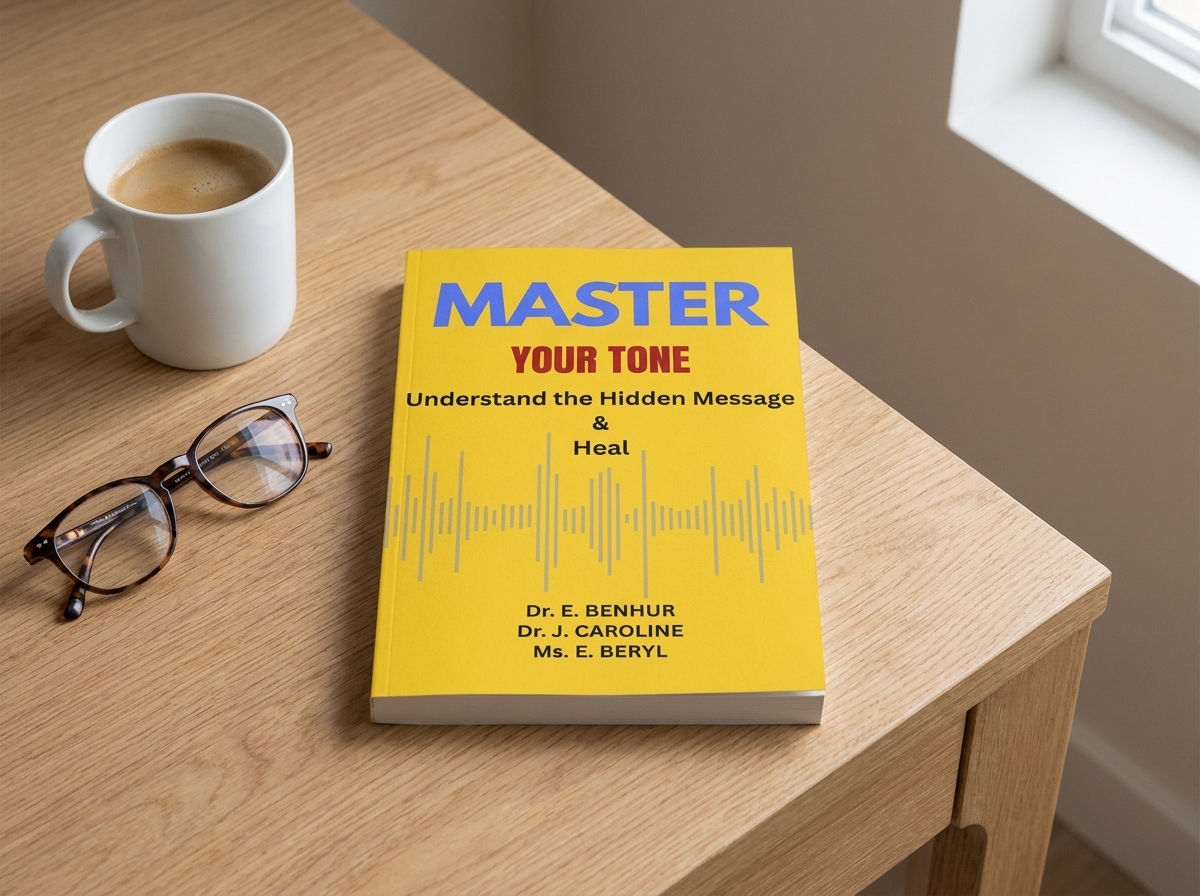
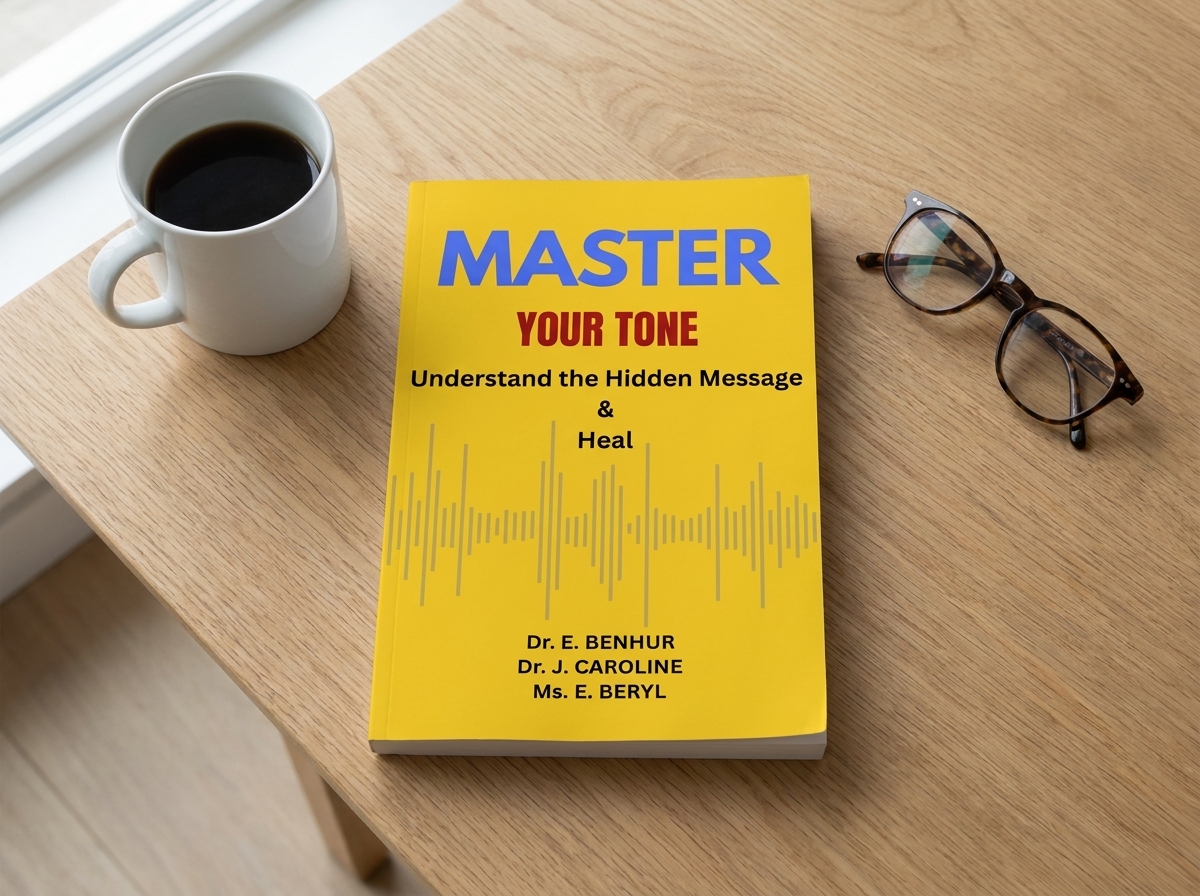
As someone who has spent years reading manuscripts, reviewing books, and discussing stories with readers from different backgrounds, I occasionally come across a book that focuses on something so ordinary that most of us overlook it completely. Master Your Tone: Understand the Hidden Message and Heal by Dr. E. Benhur, Dr. J. Caroline, and Ms. E. Beryl is one such book.
When I first began reading it, I thought it would be another communication guide filled with advice about speaking politely or choosing better words. Instead, I found a book that keeps returning to one simple idea: people often remember how we spoke more than what we actually said.
That idea sounds obvious at first. But as I moved through the chapters, the examples began to feel familiar. The mother who says something out of concern but sounds critical. The husband who intends to help but sounds judgmental. The sibling who wants to contribute but comes across as dismissive. These are not dramatic situations. They are ordinary moments that happen in homes every day.
And honestly, that is where this book finds its strength.
The authors are not trying to teach communication from a corporate boardroom or a psychology laboratory. They are looking at kitchens, dining tables, family gatherings, marriages, parent child relationships, and sibling conversations. That focus gives the book a very personal feeling.
In 2026, when so many conversations happen through screens, messages, and rushed interactions, the subject feels surprisingly relevant.
What the Book Is About
At its core, Master Your Tone argues that tone carries its own message.
The book opens by explaining that communication problems are often blamed on words when the real issue may be the emotional energy behind those words. Through examples drawn largely from Indian family life, the authors show how love, concern, frustration, advice, and disappointment can completely change meaning depending on how they are expressed.
The structure is easy to follow. The early chapters explain why tone matters and how people unconsciously learn speaking patterns from parents, relatives, and the environments they grow up in. The book then moves into common myths about communication, such as the belief that correct words automatically guarantee correct understanding.
From there, the authors introduce story based scenarios. These become a major part of the book. One memorable example involves a father correcting his son’s chess move. Another examines a woman being excluded during a family celebration. There are stories about spouses, siblings, daughters, mothers, and friends. Each situation follows a recognizable pattern.
First, an interaction takes place. Then the book breaks down what went wrong. After that, it examines the hidden message the listener may have received. Finally, it suggests how the same situation could have unfolded differently with a more mindful tone. What I appreciated was that the authors were not simply interested in changing sentences. They were interested in changing emotional interpretation.
Later chapters become increasingly practical. Readers are given exercises, reflection questions, phrase replacements, communication habits, family practices, and methods for becoming more aware of how they speak.
By the time the book reaches its final chapters, it has shifted from explanation to application.
What Stood Out to Me
The biggest strength of this book is its accessibility.
Many communication books rely heavily on research terminology, personality frameworks, or professional environments. This one chooses a different route. It teaches through stories.
As an editor, I’ve seen many authors attempt story driven self help. Often the stories feel artificial or exist only to support a lesson. Here, most situations feel believable because they are built around familiar family experiences.
The chapter featuring the statement “You always think you’re right” particularly caught my attention. The issue isn’t merely disagreement. The authors focus on how tone can transform a discussion into an attack on someone’s character.
Similarly, the story involving the phrase “You can’t ignore your body” demonstrates how advice can sound caring in one tone and critical in another. These examples work because readers can imagine themselves on either side of the conversation. Another element I liked was the recurring “4-Part Reflection” framework.
Rather than simply telling readers what to think, the book repeatedly asks:
- What went wrong?
- What happened while speaking?
- How could it have been said differently?
- What changed when tone became mindful?
This repetition creates consistency throughout the book. Some readers may find the structure repetitive after a while, but I think the repetition serves a purpose. The authors are trying to build awareness through practice rather than surprise.
I also appreciated Chapter 7, which moves beyond theory and into daily exercises.
The “Tone Checkpoints,” reflection questions, phrase substitutions, and practical examples give readers something concrete to try. Many self help books explain problems well but offer limited solutions. Here, the authors clearly want readers to experiment with different communication habits in real life.
The Emotional Core
What makes Master Your Tone different from many communication books is that it is not really about communication. It is about emotional interpretation. Throughout the book, the authors return to a recurring idea: every sentence carries two messages. There is the spoken message. And there is the emotional message. The emotional message is often the one people remember.
Several stories illustrate this beautifully. The woman who hears exclusion beneath polite words. The mother who feels invisible when her exhaustion is dismissed. The sister who interprets a rushed response as rejection. The wife who hears criticism instead of concern. Reading these examples made me think about how often misunderstandings develop without malicious intent.
In many of these situations, nobody is trying to hurt anyone. Yet hurt happens anyway. That observation feels honest. Life is rarely divided into heroes and villains. Most relationship conflicts happen between people who care about each other but fail to communicate that care effectively.
I think readers who have experienced family tension, marital misunderstandings, or communication breakdowns will recognize parts of themselves in these stories.
Some examples may feel emotionally direct. Occasionally the book explains feelings rather than allowing readers to infer them. Personally, I would have preferred slightly more subtlety in a few places. But I understand why the authors chose clarity. Their goal is teaching rather than literary ambiguity.
Who This Book Is For
This book will resonate most strongly with readers who value relationships and self reflection.
If you’re looking for advanced communication theory, negotiation techniques, leadership frameworks, or academic psychology, this may not be the right fit.
However, if you’ve ever wondered why a conversation went wrong despite saying the “right” thing, there’s a good chance you’ll find value here. I can especially see this book connecting with:
- Parents trying to communicate better with children.
- Married couples navigating everyday disagreements.
- Adult children dealing with family tensions.
- People interested in emotional intelligence.
- Readers who enjoy practical self improvement rooted in real life situations.
The Indian family context also gives the book a distinct identity. Many examples feel culturally familiar rather than imported from Western self help traditions.
That makes the lessons feel grounded and relatable.
Final Thoughts
After finishing Master Your Tone, what remained with me wasn’t a particular technique or exercise. It was a simple realization.
Many of us spend years improving our vocabulary, knowledge, qualifications, and communication skills. Yet very few people consciously think about the emotional tone that accompanies their words. The authors argue that relationships are often shaped in those small moments. Not during major life events. Not during dramatic confrontations. But during everyday exchanges.
- A reminder.
- A suggestion.
- A correction.
- A response given after a difficult day.
As Editor in Chief at Deified Publication, I’ve reviewed books across many genres and subjects. What I appreciated here was the book’s sincerity. It doesn’t try to impress readers with complexity. Instead, it focuses on a single idea and develops it consistently through examples, reflections, and practical exercises.
- Will every story resonate equally? Probably not.
- Will some readers find the repeated structure predictable? Possibly.
But I suspect many readers will finish the book paying closer attention to the way they speak and the way others speak to them. And if a book can genuinely change the way people interact with those they love, that is meaningful.
A thoughtful and practical guide that turns an often ignored aspect of communication into something readers can notice, understand, and improve in everyday life.
FAQs
Is Master Your Tone worth reading?
If you enjoy relationship focused self help and practical communication advice rooted in real life family situations, I think it is worth reading. The book focuses on everyday interactions rather than abstract theories.
Who should read Master Your Tone?
Parents, couples, educators, counselors, and anyone interested in improving relationships through better communication may find value in it.
What is Master Your Tone about?
The book examines how tone influences the way messages are received. Through stories, reflections, and exercises, it teaches readers how emotional delivery can strengthen or damage relationships.
Is Master Your Tone based on real life situations?
The book presents highly relatable family and relationship scenarios that feel inspired by everyday experiences. These examples form the foundation of its lessons on communication and emotional awareness.

With over 11 years of experience in the publishing industry, Priya Srivastava has become a trusted guide for hundreds of authors navigating the challenging path from manuscript to marketplace. As Editor-in-Chief of Deified Publications, she combines the precision of a publishing professional with the empathy of a mentor who truly understands the fears, hopes, and dreams of both first-time and seasoned writers.