
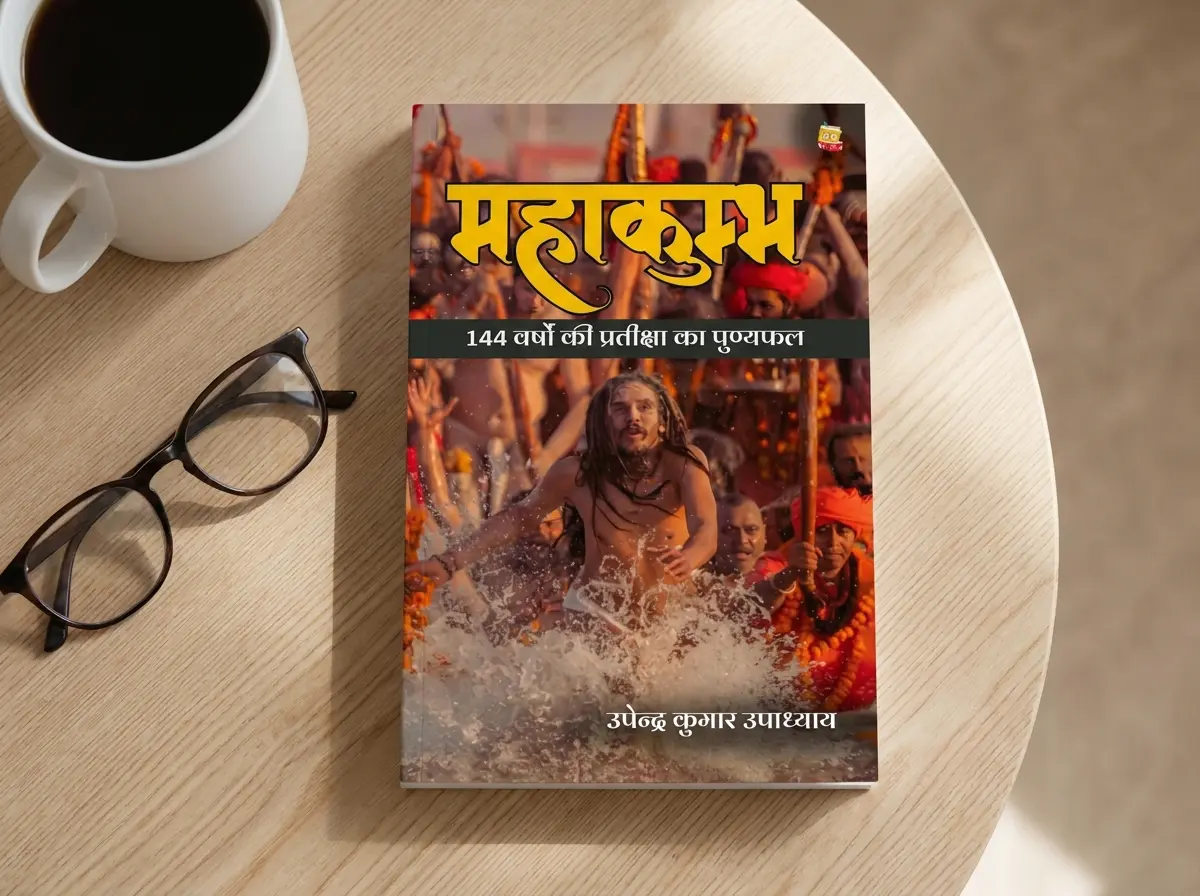
Rating: ⭐⭐⭐⭐ (4.3 out of 5)
I’ll be honest with you. I picked up Mahaakumbh on a Tuesday afternoon when I was feeling a little disconnected from everything, the kind of afternoon where you want something that reminds you there’s more to the world than deadlines and inbox counts. And this book, written by Upendra Kumar Upadhyay, did something I wasn’t expecting at all. It made me feel the weight of 144 years. Not abstractly. Physically. Like suddenly understanding that your great-grandparents were born into a world that had not yet seen this Mahakumbh, and neither would their children, and their children had to wait too, and then finally, in 2025, it arrived. Three generations of waiting. That thought kept coming back to me for days after I finished reading.
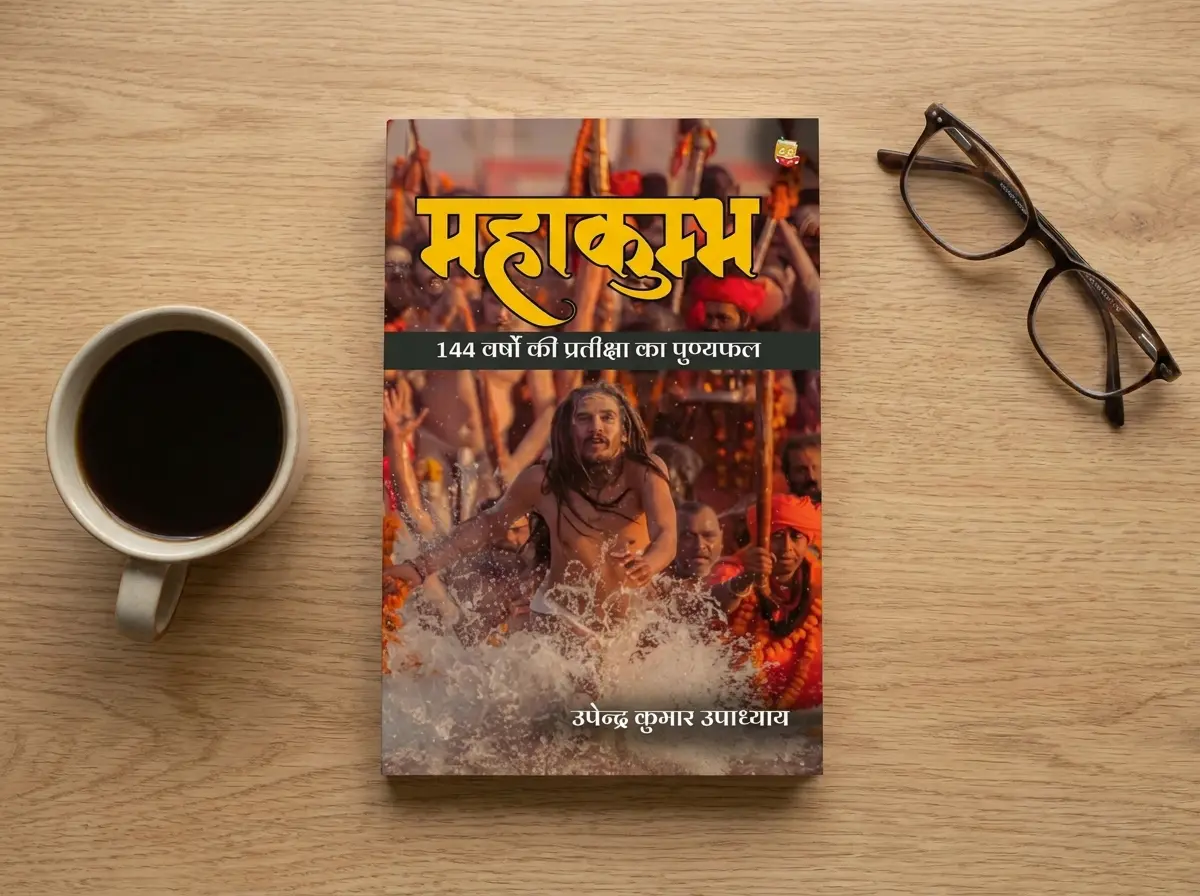
As Editor-in-Chief at Deified Publication, I’ve read a fair number of books about Indian culture, spirituality, and pilgrimage. Some are academic and dry. Some are lyrical but thin on facts. This one tries to be neither, and mostly succeeds. Upendra Kumar Upadhyay has constructed what I’d call a documentary in book form, covering the Mahakumbh 2025 at Prayagraj from almost every angle imaginable: mythological origins, historical significance, administrative logistics, economic impact, social controversies, and the extraordinary characters who gathered there. It’s ambitious, sometimes to a fault, but the ambition itself feels appropriate for a subject this large.
What the Book Is Actually About
The book opens with a detailed introduction to Prayagraj itself, Tirtharaj as it is called, the city where the Ganga, the Yamuna and the invisible Saraswati meet. Upadhyay traces this city’s identity from Vedic texts through the Puranas, through Mughal occupation when Akbar arrived in 1575 and laid a new city calling it Illahabas, through British rule, through the freedom movement, all the way to its renaming as Prayagraj in 2018. This historical grounding matters because the Mahakumbh doesn’t exist in isolation. It grows out of a place that has been sacred, contested, renamed, and reclaimed across centuries.
From there, Upadhyay moves into the mythology of Kumbh itself, explaining the Samudra Manthan, the story of Maharishi Durvasa’s curse, the story of Kadru and Vinata, and how the Amrit Kalash came to be associated with these four locations: Prayagraj, Haridwar, Ujjain and Nashik. I found this section genuinely illuminating. The explanation of why Kumbh is called Kumbh, drawing from Sanskrit texts and even the Rigveda verses about the Soma Kalash, isn’t something you’ll find presented this accessibly in most popular writing about the festival. The book also has a chapter called “Kuch Alag” which translates roughly to “Something Different,” and this is where the 2025 Mahakumbh gets distinguished from all previous Kumbhs. The saints collectively decided to replace the term “Shahi Snan” with “Amrit Snan” because they felt the word “Shahi” carried connotations of monarchy and even historical subjugation. Small change, enormous meaning.
What Stood Out to Me
There is a chapter on the 14 ratnas that emerged from the Samudra Manthan, and Upadhyay lists them in the book. Halaahal, Kaustubha, Parijat, Airavata, and so on. Reading this list in the context of the Mahakumbh, knowing that the festival is rooted in the myth of divine beings fighting over these exact treasures, it reframes the whole event. What looks like a crowd of pilgrims is actually, in this telling, a civilization enacting a cosmic memory. I’m not saying I believe all of this literally, but I found myself moved by the depth of continuity it represents. A story told in the Rigveda is still shaping how millions of people behave in 2025. That’s not nothing.
The sections on the Akhadas are fascinating, and a little uncomfortable. Upadhyay writes about the Naga Sadhus with genuine respect but also doesn’t flinch from describing the controversy around a thirteen-year-old girl being donated to an Akhada by her father, against her will. The Mahant who received this girl was later expelled from his Akhada. This section, and a broader chapter called “Kumbh ke Paap” which is basically a reckoning with exploitation and misconduct at the Mela, adds necessary moral weight to the book. A purely celebratory account would have felt dishonest. Upadhyay doesn’t let it become purely celebratory.
There’s also a remarkable passage about Prayagraj becoming temporarily the world’s largest city during the Mahakumbh, with 66 crore devotees attending over 45 days, making it the largest human gathering ever recorded anywhere on Earth. Upadhyay discusses this with appropriate awe, noting that the administration built an entire city of 4,000 hectares for the occasion with 25 sectors, 160,000 tents, lighting arrangements visible from the road in the dark, and a dedicated Vidya Kumbh initiative running 25 schools for the children of labourers who built and maintained the Mela grounds. That last detail got me. Someone thought to educate the children of the workers. That detail feels true and human in a way that the big numbers alone don’t.
I was also struck by what the book calls the “QR Ban Gaya Yaar” moment: the entire Mahakumbh city was saturated with QR codes, at intersections, in markets, at ghats, everywhere, so that a single scan could help a devotee book rail tickets, find medical help, pay for prasad, or locate a temple. The image of a Naga Sadhu standing waist-deep in the Sangam while someone nearby scans a QR code to donate digitally is somehow both funny and genuinely beautiful. Modernity and ancient practice coexisting without apology.
The Emotional Core
Here is what I think Upendra Kumar Upadhyay is really trying to say, underneath all the facts and figures and mythology: that India is a civilization which forgets itself under pressure and then remembers. The chapter titled “Kya Kahe Kumbh?” is the most philosophical section of the book, and there’s a line in it that I kept returning to. Upadhyay describes how Russian and Ukrainian citizens both came to the Mahakumbh and walked together near the Sangam, even while their countries were at war. And he asks, essentially, what does this mean? His answer is that the Kumbh is not merely a Hindu religious event. It is a laboratory of the human capacity to set aside the worst of ourselves in a shared space.
I’m not sure I fully agree with every conclusion Upadhyay draws, and in 2026, when questions about religious nationalism and minority inclusion feel more urgent than ever, some of his framing around Sanatana Dharma as the answer to the world’s divisions will read differently depending on who you are. I think the book would have been stronger with a slightly more critical eye toward some of these larger claims. But the emotional sincerity is real. You can feel that Upadhyay attended this Mahakumbh, felt something profound, and wanted to record it before the memory faded. That impulse is honourable, and it comes through on every page.
The coverage of the accident that occurred during the Mahakumbh, addressed honestly in its own chapter titled “Durghatna,” shows that this isn’t a book written to simply burnish an image. Something went wrong, people were hurt, and Upadhyay includes it. That kind of inclusion matters in a book that could easily have been pure hagiography.
Who This Book Is For
If you’ve been curious about the Mahakumbh but find purely devotional literature hard to engage with, this is the book for you. Upendra Kumar Upadhyay writes with warmth toward the tradition but also with enough journalistic instinct to keep things grounded. If you attended the 2025 Mahakumbh and want to relive it, and understand what you saw, this book will feel like a companion who was also there and took far better notes than you did. If you’re interested in how ancient festivals function in a modern democracy, how logistics and faith intersect, how India manages the extraordinary, this is a genuinely useful document.
It is written in Hindi, so English-only readers will need a translation, and I hope one comes. The book is not a smooth literary read in the Western sense: it doesn’t build toward a single narrative arc. It is more like a deeply researched, lovingly compiled almanac of a single extraordinary event. Some sections feel denser than others, and the chapter on the economic impact, while important, can feel a little list-heavy. But these are minor quibbles against the sheer scope of what Upadhyay has attempted and largely achieved.
Final Thoughts
I’ve been thinking about one particular image from the book. Upadhyay describes a sky diver named Anamika Sharma who jumped from 13,000 feet above Prayagraj on January 10, 2025, with a banner declaring “Jai Shri Ram” and “Jai Prayagraj,” the banner unfurling as she descended toward the earth below. Below her, tens of millions of people were bathing in the Sangam. Above her, the sky was open. I kept thinking about what that moment must have looked like from both directions: from the earth looking up, and from the sky looking down. That’s the Mahakumbh in miniature, something so large it can only really be understood from two places at once: inside it, and far above it. Upendra Kumar Upadhyay’s Mahaakumbh manages, remarkably, to be both at the same time.
FAQs
Is Mahaakumbh worth reading if I’m not religious?
Yes, honestly. The book works on multiple levels: as a historical document of Prayagraj’s centuries-long identity, as a journalistic account of the world’s largest human gathering, and as a study in how faith and modern administration coexist. You don’t need to be a devotee to find it interesting. Readers curious about India, civilisation, crowd management, or the intersection of the ancient and the contemporary will find plenty to engage with.
What is the Mahaakumbh book summary in brief?
Upendra Kumar Upadhyay’s Mahaakumbh is a comprehensive account of the Mahakumbh 2025 held at Prayagraj. It covers the mythological origins of the Kumbh, the history of Prayagraj from Vedic times to the present, the logistics and records of the 2025 event, controversies and accidents, the role of the Akhadas and Naga Sadhus, the economic impact, and the broader cultural significance of an event that happens only once every 144 years.
Who should read Mahaakumbh by Upendra Kumar Upadhyay?
This book is best suited for readers who want a thorough, multi-dimensional look at the Mahakumbh rather than either a purely spiritual text or a purely critical one. It works well for people who attended the 2025 Mahakumbh and want context for what they experienced, for students of Indian history and culture, and for general readers who are simply curious about one of the most remarkable events on earth.
Is the Mahaakumbh book available in English?
The book is currently written in Hindi. As of this review, an English translation has not been widely announced, but given the subject’s global significance and the international attention the Mahakumbh 2025 received, it would be a welcome addition. If you read Hindi, the original is accessible and engaging. English readers may want to watch for a translation or companion volumes on the topic.

With over 11 years of experience in the publishing industry, Priya Srivastava has become a trusted guide for hundreds of authors navigating the challenging path from manuscript to marketplace. As Editor-in-Chief of Deified Publications, she combines the precision of a publishing professional with the empathy of a mentor who truly understands the fears, hopes, and dreams of both first-time and seasoned writers.