
Rating:
⭐⭐⭐⭐ (4.1 out of 5)
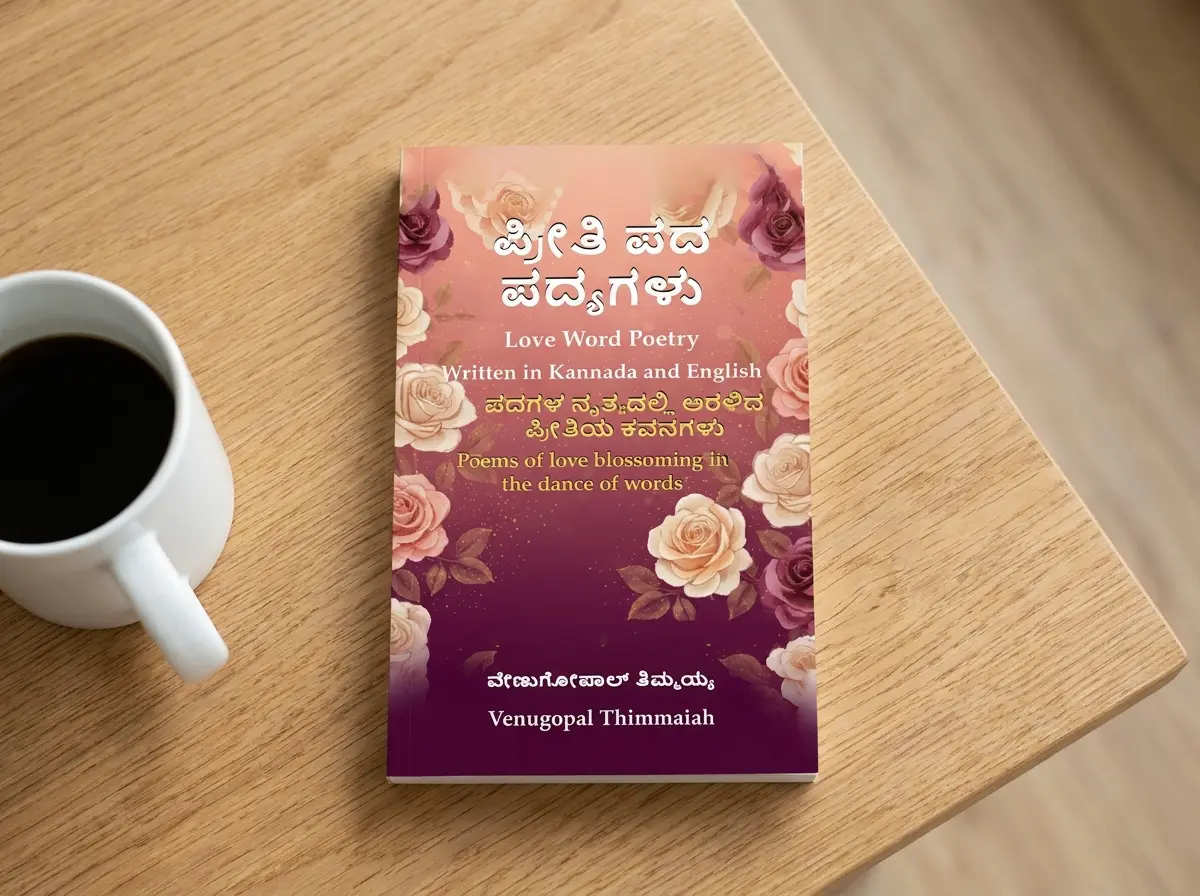
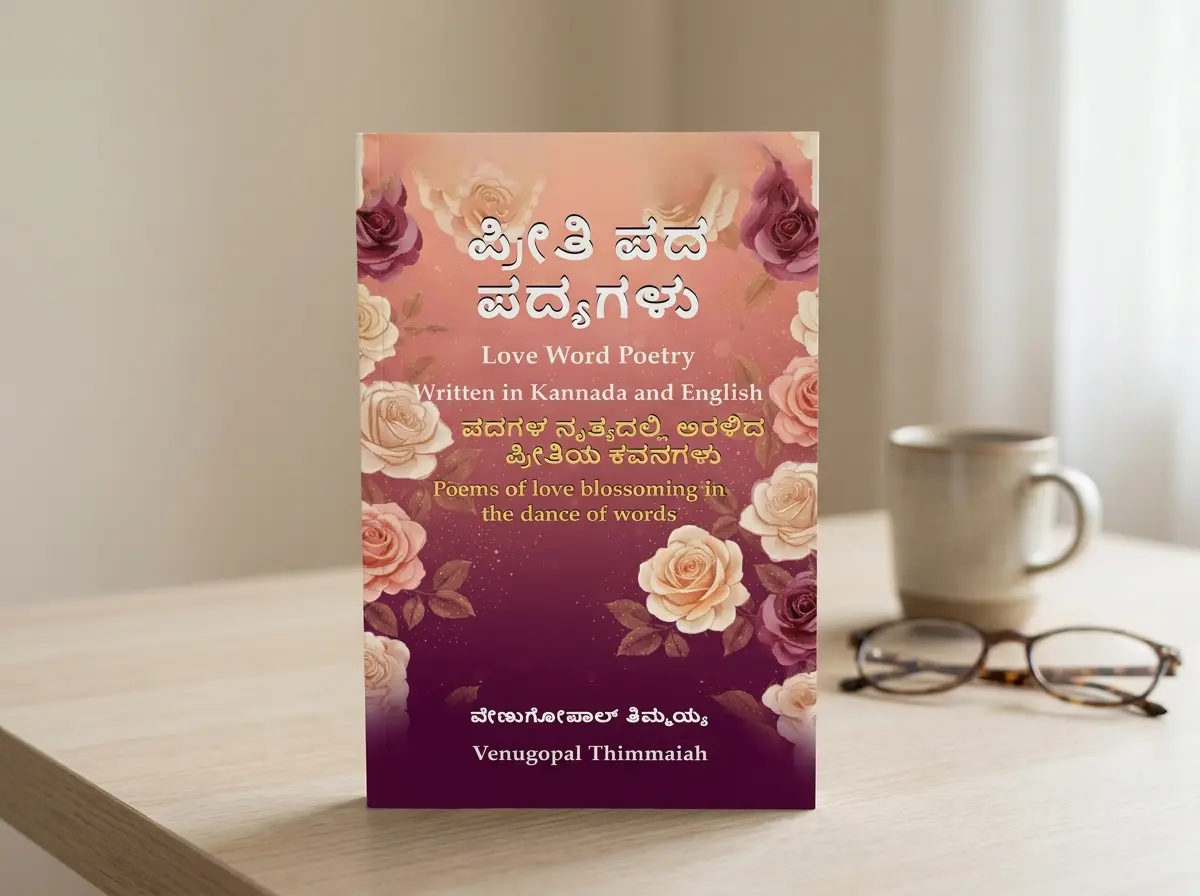
There is something that happens when you read a poem in a language you don’t fully know. You catch a word here and there, the rhythm reaches you before the meaning does, and there’s this odd, bittersweet feeling of being on the edge of something beautiful without quite being able to step inside. I think about that feeling a lot when I encounter bilingual poetry collections, because the translator’s job in those books isn’t just to find equivalent words. It’s to build a bridge without destroying what makes the original worth crossing to reach. Venugopal Thimmaiah’s “Love Words Poetry,” a collection of Kannada love poems presented alongside English translations, is exactly this kind of bridge-building exercise, and for the most part, it works in ways I genuinely didn’t expect.
I’ll be honest: when I first picked this up at Deified Publication, I wasn’t sure what to expect from a self-presented collection of Kannada love poetry. The title is simple, almost bare. The premise is straightforward. But sometimes the simplest premises hold the most sincere feeling, and that’s very much the case here. This is a collection by a poet who is clearly writing from a place of deep personal feeling, not from a desire to be fashionable or literary-scene-approved. And that sincerity comes through on nearly every page.
What This Book Actually Is
“Love Words Poetry” is a collection of twenty-four poems originally written in Kannada, each presented on the left page in the original script and on the right page in English translation. The poems are numbered and titled in both languages, and several of them include short explanatory notes at the bottom of the translation page, defining culturally specific terms or explaining the symbolic weight of certain images used in the original Kannada. The collection covers the full emotional landscape of romantic love: longing, admiration, desire, devotion, the giddiness of first attraction, and the ache of remembrance. The table of contents alone gives you a sense of the tonal range: “Wave of Memory,” “Whisper of the Eyes,” “Ride of the Heart,” “The Kajal Lotus,” “Flower Smile,” “Trace of Steps,” “Everywhere is Desire.” These aren’t decorative titles. They’re accurate signals of what’s inside each poem.
What makes this collection structurally interesting is the decision to give equal visual weight to both languages on the spread. You don’t feel like the Kannada is a secondary inclusion or a token nod to the original. It sits across from the English translation with the same decorative headers, the same formatting, the same presence. That’s a deliberate and respectful choice, and it matters more than it might seem.
What Stood Out to Me While Reading
Let me start with the poem that genuinely caught me off guard, which was “Whisper of the Eyes,” poem number nine. The English translation reads: “The words of the eyes softly stir, the life that leans in like a jasmine. What does the heart wish to tell the ears? In the end, nothing is said, I became a poet for remembrance.” That final line, “I became a poet for remembrance,” is the kind of line that makes you stop and sit with it for a moment. It reframes the entire collection retroactively. Thimmaiah isn’t just writing love poems as expressions of feeling in the present tense. He’s writing them as acts of preservation, as a way of holding onto something that might otherwise blur or fade. That’s a more melancholy and more interesting motivation than simple romantic declaration, and it gives the book a depth that I think some readers might miss if they move through it too quickly.
The poem “Wave of Memory,” which opens the collection, sets this tone immediately. It includes lines like “I, the silk worm wandering still, around you at my wish and will” and “I shall love, like the ceaseless waves, guarding devotion, unwavering always.” There’s a faithfulness in this imagery that feels genuinely felt rather than performed. The silk worm metaphor in particular is specific and unusual in a way I appreciated, it carries that Kannada poetic tradition of finding the intimate and the cosmic in natural images, something that doesn’t always survive translation but here comes through intact enough to register.
“Flower Smile,” poem twenty-four, has one of the most arresting opening lines in the collection: “Oh your smile, that playful grin, stirring the tender vine of my heart.” The poem then moves through an extended exploration of one woman’s smile as something that functions almost like a fever, never healing, always warm. The line “You bring that delight disease, never healing fevers flame” is imperfect as English but perfect as feeling. I actually think the slight roughness of the translation in places like this adds something rather than subtracting, because it keeps the foreign-origin quality of the emotion visible. You feel that this came from somewhere else, in another tongue, with a different set of images governing the imagination.
The cultural annotation in “The Kajal Lotus,” where the poet explains that Kajal means “darkness, mystery, depth, beauty” and that Lotus here is a metaphor for eyes, is one of the book’s genuinely smart inclusions. Rather than smoothing these culturally specific images into generic English equivalents, Thimmaiah chooses to let them remain specific and then explains them. This treats the English reader as someone capable of expanding their frame of reference rather than someone who needs everything pre-translated into familiar territory. I have a lot of respect for that editorial decision. Similarly, in the poem about the “pallu” of a saree, the footnote explaining that the pallu is “the end piece of a saree” and that in poetry it “often symbolizes a woman’s charm, warmth, or the emotional bond she carries” turns what could have been a confusing image into something genuinely enriching.
“Trace of Steps,” poem eighteen, is another one that I kept coming back to. The English version includes lines like “Softly she descended to the floor of my heart, as the clouds drop to earth, and corps glows, my body feels her in every corner of the store.” The grammatical imperfections here (“corps glows,” “every corner of the store”) are real, and I want to address them honestly rather than pretend they don’t exist, but what’s remarkable is that the feeling still lands despite the translation being occasionally clunky. The image of a woman’s presence felt in “every corner” of a space, filling it the way warmth fills a room, is recognizable and affecting even when the English around it isn’t perfectly calibrated.
“Ride of the Heart,” poem fourteen, includes what might be the collection’s most purely joyful lines: “A sweetness without wine, a face that stirs my heartbeat, fragrance filled with jasmine bloom, a shy blushing smile unfolds, a warm breath gently awakens, desire drifts across the sky.” This is the Thimmaiah writing at his most classically romantic, and it works because the images are specific and sensory rather than abstract. You can smell the jasmine. You can picture the shy smile. The poem doesn’t tell you that love is overwhelming; it shows you the precise physical details that constitute that overwhelming feeling.
The Emotional Core of the Collection
Reading “Love Words Poetry” from beginning to end, what I felt most consistently was the specific texture of longing that characterizes Kannada romantic poetry at its best. This isn’t the anguished, self-destructive longing of Urdu ghazals, and it isn’t the cool, ironic distance of contemporary English language love poetry. It’s warmer than either. There’s a wholesomeness to Thimmaiah’s romantic imagination, a sense that desire and devotion coexist without tension, that wanting someone and revering them are the same impulse expressed differently. The prayer included in the book’s front matter, where Thimmaiah writes “I worship the revered divine ones, it is they who write and make me write these words, I am but their humble servant,” signals that for this poet, the act of writing love poetry is itself devotional. That context shapes everything that follows.
The collection also does something I didn’t expect, which is that it made me think about what happens to feeling when it crosses a language boundary. Some of the poems arrive in English with almost all their warmth intact. Others feel like you’re receiving a postcard from an experience rather than the experience itself, and you sense the original Kannada is doing something that the English can only gesture at. That’s not a failure of the book; it’s actually an argument for learning Kannada, which I suspect Thimmaiah would consider a success.
An Honest Note on the Translation
I want to be balanced here because I think readers deserve that. The English translations in “Love Words Poetry” are not polished in the way a professionally translated literary collection would be. There are grammatical irregularities, occasional phrasing that doesn’t fully land, and moments where the English feels like a sketch of the original rather than a finished rendering. In “Trace of Steps,” the line “my body feels her in every corner of the store” is almost certainly a translation of a word meaning something like “town” or “place” or “world,” and the choice of “store” creates an inadvertent awkwardness. These moments exist in the collection, and a reader going in expecting the translation quality of something like A.K. Ramanujan’s renderings of Tamil poetry will find themselves occasionally frustrated. I think that’s worth knowing before you pick it up.
But here’s what I also think: for a poet self-presenting in a second language, for a Kannada voice trying to reach a wider readership without the mediation of a professional translator, the achievement is considerable. The emotional core of nearly every poem makes it through. The imagery is distinctive and often beautiful. And the decision to present the original Kannada alongside the English means that readers who know the language can experience the poems as they were meant to be experienced, while readers who don’t can at least hear the shape of the original in the script on the facing page.
Who This Book Is For
“Love Words Poetry” by Venugopal Thimmaiah is honestly for several different kinds of readers. If you read or understand Kannada, even partially, this collection will give you something genuinely lovely in the original and a fascinating window into how those poems translate across. If you’re interested in Indian regional poetry in English and are tired of how little of it makes it into mainstream literary conversation, this book represents exactly the kind of work that deserves more attention. If you have a personal connection to Karnataka, its language, its imagery of jasmine and sarees and moonlight and the blue of the ocean, these poems will feel like home. And if you’re simply someone who responds to love poetry that feels earned rather than performed, that comes from real feeling rather than from literary ambition, you’ll find plenty here to sit with.
This might not be the book for readers who require technically flawless English or for those who have no patience for translation imperfections. But I’d argue that demanding perfection from a poet who is reaching across a language barrier to share something personal is the wrong way to approach a collection like this one.
Final Thoughts
In 2026, when regional Indian literature is finally getting some of the attention it has always deserved and bilingual publishing is becoming a more recognized and respected form, “Love Words Poetry” arrives as a small but sincere contribution to that larger conversation. Venugopal Thimmaiah is not writing for critical acclaim. He’s writing because he felt something and wanted it to exist in a permanent form, in two languages, for two kinds of readers. The prayer at the book’s opening, “I am but their humble servant,” sets the tone for everything that follows. This is poetry as offering, not performance.
I found myself genuinely moved by several of these poems, particularly “Whisper of the Eyes,” “Flower Smile,” and “Wave of Memory.” I kept thinking about that line about becoming a poet for remembrance. It says something true about what poetry actually does, regardless of which language it’s written in. Some parts of the collection are stronger than others, and the translation is uneven, but the heart of this book is steady and warm throughout, and that counts for a great deal.
Frequently Asked Questions
Is “Love Words Poetry” worth reading if I don’t know Kannada? Yes, though with realistic expectations about the translation quality. The English renderings are imperfect in places but emotionally coherent throughout, and the cultural footnotes in several poems genuinely help a non-Kannada reader understand the imagery. You’ll get the feeling of the collection even if some nuance lives only in the original.
What kind of love poetry is in “Love Words Poetry”? The collection covers romantic admiration, longing, devotion, and desire, all expressed through imagery drawn from nature, traditional Indian cultural symbols like jasmine, the saree pallu, kajal eyes, and moonlight. It is warm and reverent rather than dark or anguished in tone.
Who should read “Love Words Poetry” by Venugopal Thimmaiah? Readers interested in Kannada literature, fans of South Indian poetry traditions, people looking for love poetry that feels personal and sincere rather than literary-scene polished, and anyone curious about what regional Indian voices are writing when they write for themselves rather than for a global market.
How is “Love Words Poetry” structured? The book contains twenty-four poems, each presented on facing pages, with the original Kannada on the left and the English translation on the right. Several poems include brief explanatory footnotes defining culturally specific terms. The collection runs approximately 71 pages.

With over 11 years of experience in the publishing industry, Priya Srivastava has become a trusted guide for hundreds of authors navigating the challenging path from manuscript to marketplace. As Editor-in-Chief of Deified Publications, she combines the precision of a publishing professional with the empathy of a mentor who truly understands the fears, hopes, and dreams of both first-time and seasoned writers.