
Rating:
⭐⭐⭐⭐1/2 (4.5 out of 5)
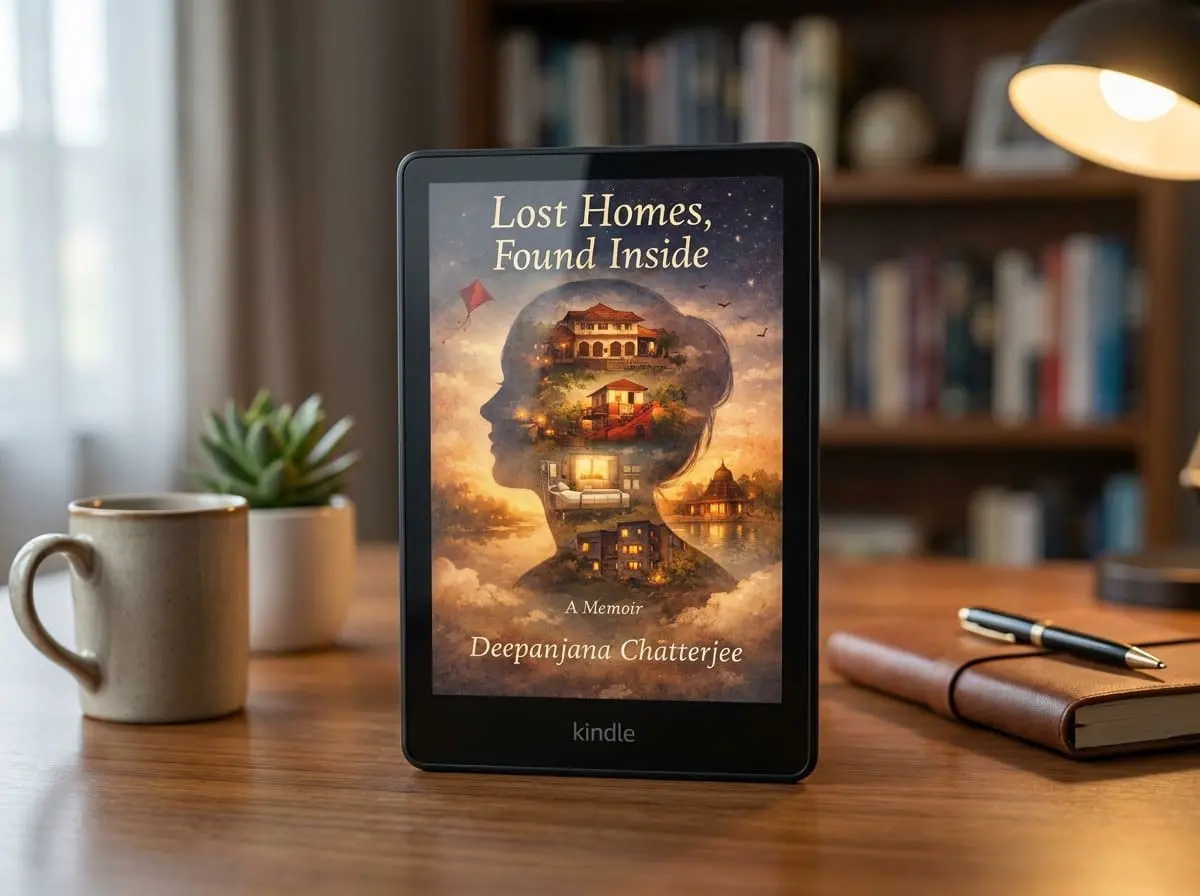
As someone who has spent more than fifteen years reading and reviewing books, and as Editor-in-Chief at Deified Publication, I have learned that every now and then a book arrives that makes me think less about the author’s life and more about my own.
Lost Homes, Found Inside: Reflections on Memory, Loss and Inner Belonging by Deepanjana Chatterjee did exactly that.
What surprised me most was that this book is not driven by dramatic twists or extraordinary events. Instead, it is built from things many of us take for granted. A staircase. A terrace. A cousin’s house. A father sitting silently. A hospital window. The smell of food. The sound of relatives moving through a crowded home.
Yet somehow, these ordinary things accumulate into something larger.
While reading, I kept thinking about the houses I have left behind. Not just physical houses, but versions of myself that existed inside them. Childhood homes. Temporary apartments. Rooms connected to particular seasons of life. Deepanjana Chatterjee seems to understand something many people feel but rarely articulate: sometimes we do not carry memories inside houses. Sometimes houses live inside memory.
That idea forms the foundation of this memoir.
What the Book Is About
At its heart, Lost Homes, Found Inside is a memoir structured around different homes and phases of the author’s life.
The book begins in Bhowanipore, where Deepanjana recalls a bustling ancestral home filled with relatives, grandparents, cousins, sounds, rituals, and the everyday chaos that often defines childhood. These chapters are not simply nostalgic recollections. They show how a child slowly absorbs values, emotional habits, and ways of seeing the world without realizing it.
One of the most memorable aspects of these early sections is the portrayal of family members. Thamma, Babi, Mamma, cousins, uncles, and other relatives are not presented as larger than life figures. They feel real. They influence the author not through lectures but through daily interactions and small gestures.
The narrative then moves through other significant homes and relationships. We spend time in Mouder Bari, where friendship, affection, family bonds, and childhood companionship shape the author’s understanding of belonging. Later chapters deal with marriage, relocation, adulthood, and the emotional complexities of leaving one home while trying to create another.
What elevates the book beyond a conventional memoir is its later movement into illness and recovery. The chapter titled The White Ceiling introduces a hospital room after a serious health crisis involving brain surgery. Rather than becoming a purely medical narrative, the hospital transforms into another kind of home, one that forces the author to reconsider life, mortality, dependence, gratitude, and identity.
The subsequent chapter, The Healing Home, examines recovery not as a heroic triumph but as a gradual rebuilding of the self through family support, rehabilitation, patience, and love.
By the time we reach the epilogue, the central idea becomes clear. The book argues that homes are not merely places we inhabit. They become part of our inner architecture.
What Stood Out to Me
The first thing that stood out was the book’s structure.
Many memoirs follow chronology. This one follows geography and emotion. Each house functions almost like a chapter of identity. Instead of asking, “What happened next?” the book asks, “Who was I in this place?”
I found that approach refreshing.
The second thing that impressed me was the author’s attention to sensory detail. Throughout the book, recurring images create continuity across decades. Clouds viewed from childhood terraces reappear in hospital windows years later. Food carries emotional meaning. Sounds become memory markers. Certain family rituals gain deeper significance when viewed from adulthood.
These recurring motifs create a sense of coherence that holds the memoir together.
I was particularly moved by the portrayal of Babi. In many memoirs, parents are either idealized or criticized. Here, the father emerges as a deeply human figure. There is a striking scene during the departure from Bhowanipore after marriage where the author witnesses her father crying. It is presented without melodrama, yet it carries enormous emotional weight because it changes the way she sees him.
Until that moment he exists primarily as father. After that moment he becomes human. Those are the kinds of transformations that good memoirs capture.
I also appreciated how Deepanjana Chatterjee handles marriage. The chapters set in Birati and later Nagerbazar avoid clichés. Instead of focusing on grand declarations, the book pays attention to companionship. There is a recurring suggestion that long relationships are built through ordinary acts of care rather than dramatic moments.
That observation felt authentic.
Another strength is the way illness is integrated into the narrative. The medical chapters could easily have become separate from the rest of the book. Instead, they reinforce the central theme. The hospital room becomes another house. Recovery becomes another form of migration. Survival becomes another chapter of belonging.
From a craft perspective, that thematic consistency is impressive.
The Emotional Core
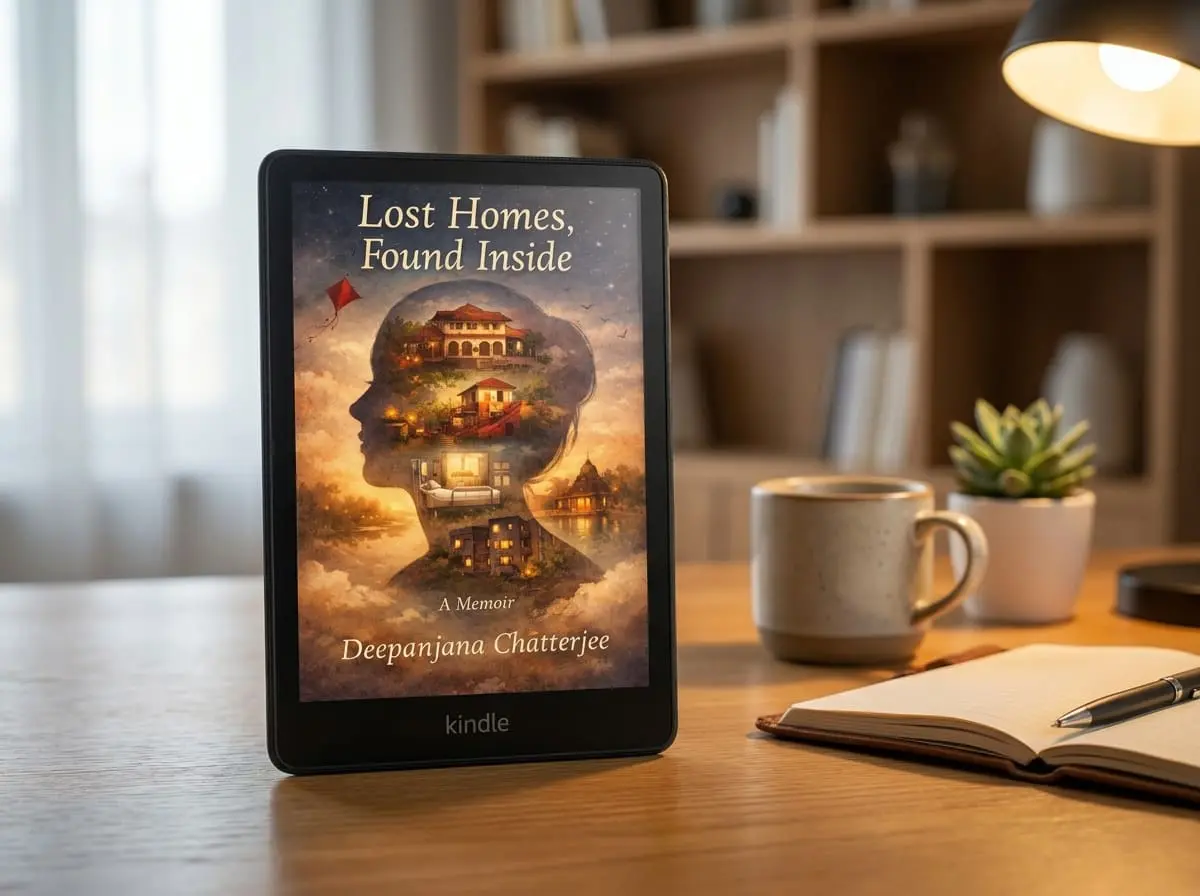
I think the emotional center of this book is not loss. It is continuity. At first glance, the book appears to be about leaving places behind. Childhood homes are sold. People age. Families disperse. Health changes. Life moves forward.
But Deepanjana Chatterjee repeatedly returns to a different idea. What matters most does not disappear. It changes form. That distinction gives the memoir its emotional power.
While reading, I found myself reflecting on how often we associate belonging with permanence. We think we belong somewhere because it remains unchanged. Yet life rarely works that way. Houses are sold. Neighbourhoods evolve. People move. Relationships shift. This book suggests that belonging survives those changes.
In 2026, that message feels particularly relevant. Many people live far from the places where they grew up. Families are scattered across cities and countries. The idea of a lifelong home has become increasingly rare. Perhaps that is why this memoir resonates. It reminds readers that home can become internal.
Another aspect that touched me was the portrayal of recovery after illness. The author does not frame healing as a sudden breakthrough. Instead, she focuses on tiny victories, learning again, rebuilding confidence, and accepting help from others.
I think many readers who have experienced illness, caregiving, or emotional upheaval will recognize themselves in these sections.
There is honesty here. And honesty creates connection.
Who This Book Is For
This book will appeal most strongly to readers who enjoy memoirs rooted in memory, family, and personal reflection.
If you prefer fast moving plots, suspense, or highly dramatic storytelling, this may not be the right fit. The book is interested in observation rather than action. It values reflection more than momentum.
However, if you enjoy writers who find meaning in everyday life, there is a great deal to appreciate here.
I would especially recommend it to:
- Readers who enjoy memoirs and life writing.
- People who have moved away from their childhood homes.
- Readers interested in family relationships and generational memory.
- Anyone recovering from a major life transition.
- Readers who enjoy reflective literary nonfiction.
I also think this book would resonate with many Indian readers because of its detailed depiction of family structures, shared households, festivals, cousins, and changing urban life. At the same time, its central themes are universal enough to connect with readers from any background.
Final Thoughts
When I finished Lost Homes, Found Inside, I did not feel as though I had read a memoir about houses.
I felt I had read a memoir about what remains.
- What remains after childhood.
- What remains after marriage.
- What remains after illness.
- What remains after people leave.
Deepanjana Chatterjee understands that memory is not an archive. It is something alive, constantly reshaping the present. The book’s greatest achievement is its ability to transform familiar experiences into something meaningful without becoming sentimental.
If I have one small criticism, it is that readers who prefer conventional narrative progression may occasionally wish for more external events and less reflection. This is a deeply introspective book, and it fully embraces that identity. For some readers that will be its greatest strength. For others it may require patience.
Still, I found much to admire here. It is sincere. It is thoughtful. And it offers a perspective that feels increasingly valuable in a world where so many people are searching for a sense of belonging.
FAQ
Is Lost Homes, Found Inside worth reading?
Yes, especially if you enjoy memoirs centered on family, memory, personal growth, and the meaning of home. It is less about plot and more about reflection and emotional insight.
What is Lost Homes, Found Inside about?
The book follows Deepanjana Chatterjee through different homes and stages of life, including childhood in Bhowanipore, family relationships, marriage, relocation, serious illness, recovery, and the search for inner belonging.
Who should read Lost Homes, Found Inside?
Readers who enjoy memoirs, literary nonfiction, reflective writing, family stories, and books about resilience will likely connect with it most strongly.
Is Lost Homes, Found Inside a memoir or a self help book?
It is primarily a memoir. However, many readers may find wisdom and comfort in its reflections on memory, healing, relationships, and belonging.

With over 11 years of experience in the publishing industry, Priya Srivastava has become a trusted guide for hundreds of authors navigating the challenging path from manuscript to marketplace. As Editor-in-Chief of Deified Publications, she combines the precision of a publishing professional with the empathy of a mentor who truly understands the fears, hopes, and dreams of both first-time and seasoned writers.