
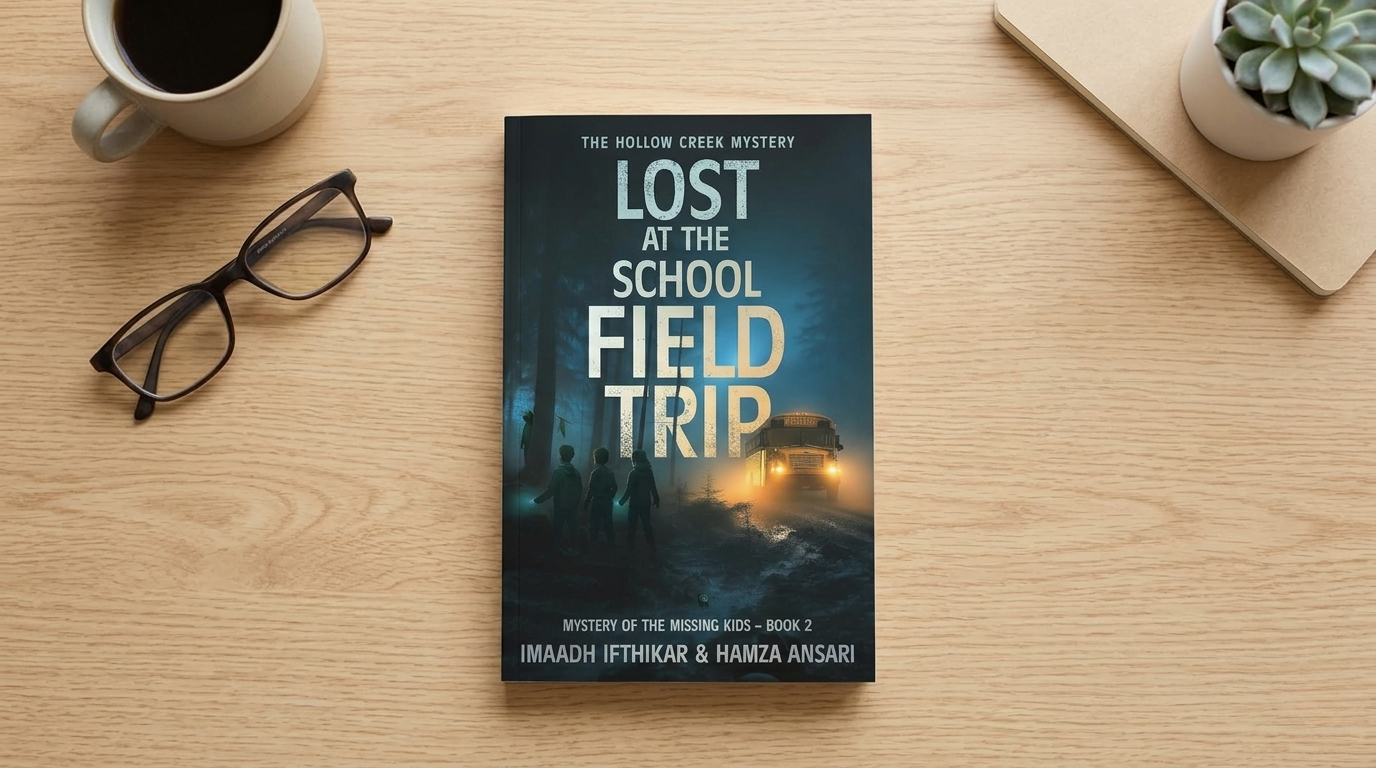
Rating:
⭐⭐⭐⭐ (4.3 out of 5)
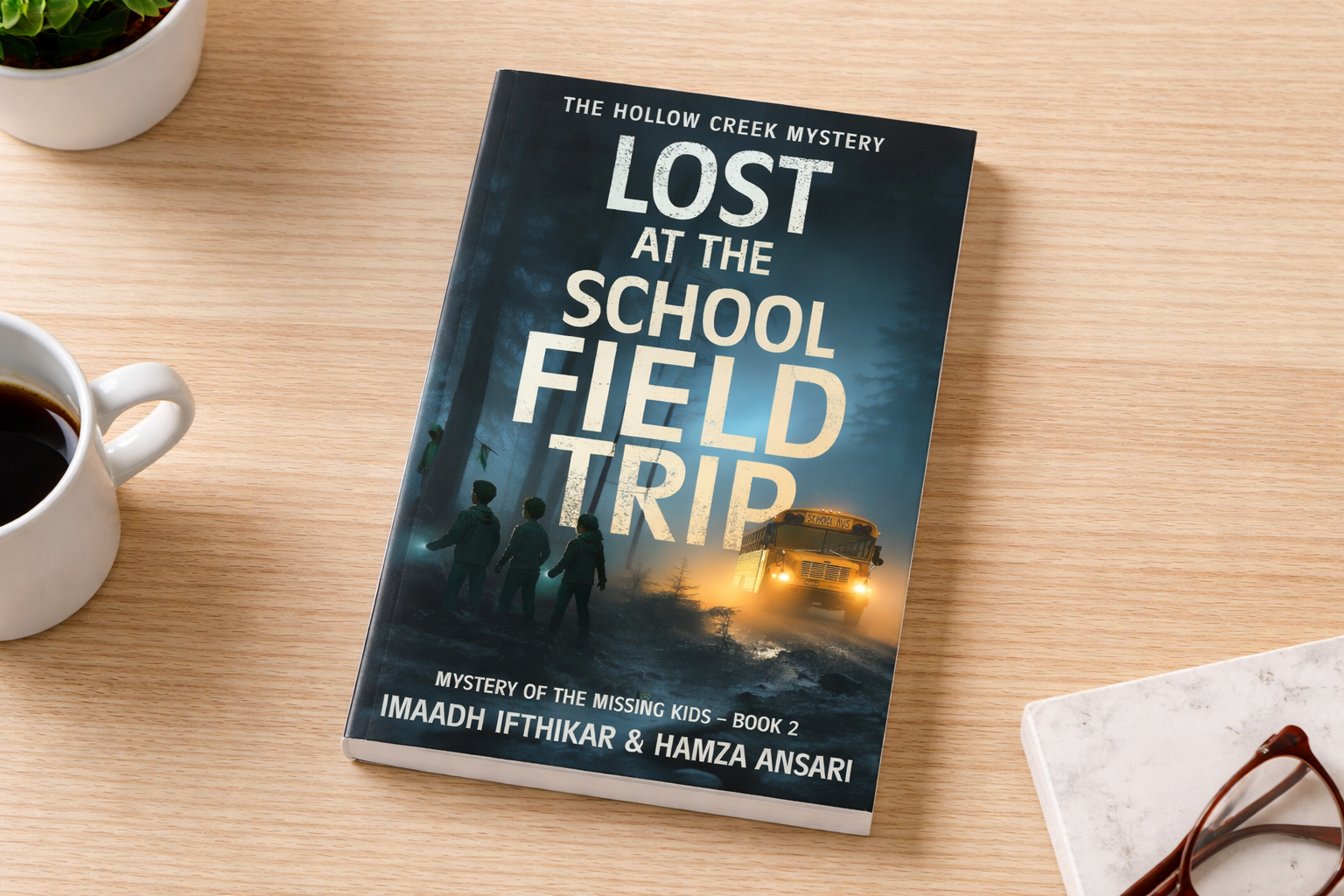
I picked up Lost at the School Field Trip – The Hollow Creek Mystery expecting a simple school adventure. You know the kind. Kids go somewhere, something strange happens, they figure it out, done. But somewhere between Levi staring at dust in the classroom sunlight and that unsettling silence in the woods, I realized this book was doing something a little more interesting.
In my years as an editor at Deified Publication, I have read plenty of middle grade mysteries. Some are fun but forgettable. Some try too hard to be dark. This one sits somewhere in between. It feels familiar, but then it slips in moments that made me pause. Not big dramatic twists, but small details. A look. A sound missing. A sentence that lingers.
And honestly, those are the moments I remember.
What the Book Is About
At its core, this story follows Levi and his group of friends as they head on what should be a normal school field trip to Hollow Creek Nature Reserve. There is that familiar classroom setup in the beginning. The announcement, the excitement, the teasing between friends. I actually smiled at Ramy’s jokes and Freddy’s over the top confidence. It felt real. Like actual kids talking, not characters trying to sound funny.
But even in those early pages, there is something slightly off. Levi feels it first. That memory of something going wrong at a swimming pool last year. That small thread of unease carries forward.
Once they reach Hollow Creek, things shift.
It is not loud horror. It is not monsters jumping out. It is silence. And that silence becomes almost a character of its own. No birds. No wind. Just the heavy presence of the forest.
Then the clues begin. Scratches on the bus. The driver muttering. Paths that do not feel right. Markers that look placed, not natural. And eventually, the idea that something or someone is guiding them, watching them.
The story builds around this tension. Kids disappearing is mentioned in the blurb, but what struck me more was how the fear grows before anything actually happens. The feeling that something is wrong long before you understand what it is.
And through all of this, the group dynamic stays central. Levi, Kellie, Ramy, Andrew, Brittany, Freddy. Each one reacting differently. Some with humor, some with logic, some with fear.
It keeps the story grounded.
What Stood Out to Me
The first thing I noticed was the writing style. It is simple, but not flat. There are small lines that carry weight.
Like when Levi notices the silence outside the bus. No birds. No wind. Just trees pressing in. That line stayed with me. I have been to places like that. Forests where suddenly everything goes still. It does something to your body. You do not need anything scary to happen. The silence is enough.
Another moment that stayed with me is the bus driver. The way he keeps muttering. The way Levi feels watched through the mirror. It is subtle, but effective. It made me slightly uncomfortable in a way I did not expect from a book aimed at younger readers.
Then there is the use of patterns. The repeated idea of three. Three scratches. Three markers. Three signals. When Sage finally explains that one is a mistake, two is an argument, three is a message, I actually stopped reading for a second. It is such a simple concept, but it ties everything together beautifully.
From a craft perspective, that is strong writing. You introduce a pattern early, let it repeat, and then give it meaning later. It rewards attentive readers.
The characters also deserve mention. Ramy brings humor, but not in an annoying way. His jokes sometimes feel like a shield. Freddy is loud and chaotic, but there are moments where even he goes quiet. Those shifts matter.
Kellie feels like the anchor of the group. Organized, observant, practical. I liked how she keeps counting, keeps track, keeps things grounded when everything else starts slipping.
And Levi. He is not the typical fearless hero. He doubts himself. He remembers past fear. He notices things but is not always sure what to do with them. That made him feel more real to me.
The Emotional Core
If I had to describe what this book feels like, I would not say fear. I would say unease.
It is that feeling when something is slightly off, but you cannot explain it. When your instincts are trying to tell you something, but you keep second guessing yourself.
There is a line where Levi thinks about how things can feel wrong before anyone else notices. That hit me. I think many of us have experienced that in real life. That quiet internal alarm.
And then there is the idea of being watched. Not in a dramatic way. Just small moments. A glance. A pause. Someone knowing more than they should.
The introduction of Sage adds another layer. Not exactly a villain, not exactly harmless. Someone trying to send a message but doing it in a way that creates fear. That moral gray area is interesting, especially for younger readers.
I also appreciated how the adults are not completely useless. Mrs. Thompson and the rangers are present, observant, making decisions. It does not turn into a story where only kids are capable. There is a balance.
And beneath all the mystery, there is something about friendship. Staying together. Watching out for each other. That rule of not splitting up might sound like a cliché, but here it actually matters.
Who This Book Is For
I think Lost at the School Field Trip – The Hollow Creek Mystery works best for readers between 9 and 14, as the blurb suggests. But more specifically, it is for kids who enjoy stories where tension builds slowly.
If a reader wants constant action, this might feel a bit slow in parts. There are moments where the story lingers. Where it observes instead of rushing forward. Personally, I liked that. But I can see how some readers might want things to move faster.
It is also a good pick for children who enjoy group dynamics. This is not just Levi’s story. It is very much about the group. Their interactions, their disagreements, their support for each other.
Parents might appreciate the underlying themes. Awareness, trust, questioning what you see, staying together. It is not heavy handed, but it is there.
And honestly, even as an adult, I did not mind spending time in this world. That says something.
Final Thoughts
I think what stayed with me most after finishing this book was not a single twist or reveal. It was a feeling.
That image of the forest holding its breath.
That idea of messages hidden in patterns.
That moment when Levi writes things down because he is not sure what else to do.
These are small things, but they add up.
If I had to point out a slight weakness, I would say that some parts could have been tightened. There are moments where the pacing slows just a bit too much, especially in transitions. But it never pulled me out completely.
Overall, this is a thoughtful, well constructed mystery for younger readers. It respects their intelligence. It trusts them to notice patterns, to feel tension, to think.
And that is something I always appreciate.
As someone who has read hundreds of stories in this space, I can say this one has its own voice. It does not shout. It whispers. And sometimes, those are the stories that stay longer.
FAQ
Is Lost at the School Field Trip worth reading?
I would say yes, especially if you enjoy slower building mysteries with strong atmosphere. It is not loud or flashy, but it stays with you.
Who should read Lost at the School Field Trip?
Kids between 9 and 14 who like suspense, group adventures, and stories where clues matter. Also works well for parents looking for something engaging but thoughtful.
Is the book scary?
Not in a typical way. It is more about unease and tension rather than jump scares or intense horror.
What makes this book different from other teen mysteries?
The focus on silence, patterns, and subtle clues. It trusts the reader to pay attention, which makes the experience more engaging.

With over 11 years of experience in the publishing industry, Priya Srivastava has become a trusted guide for hundreds of authors navigating the challenging path from manuscript to marketplace. As Editor-in-Chief of Deified Publications, she combines the precision of a publishing professional with the empathy of a mentor who truly understands the fears, hopes, and dreams of both first-time and seasoned writers.