

Rating:
⭐⭐⭐⭐ (4.4 out of 5)
Some love stories begin in friendship, and those stay with me longer
In all my years as a reader and editor at Deified Publication, the stories that tend to stay with me the longest are not the ones built only on romance, but the ones built on time.
Time changing people. Time testing promises. Time revealing what friendship was actually hiding.
That’s exactly what I felt while reading the opening sections and cover details of Jodoh: The Pair by Ganesh K. Iyer.
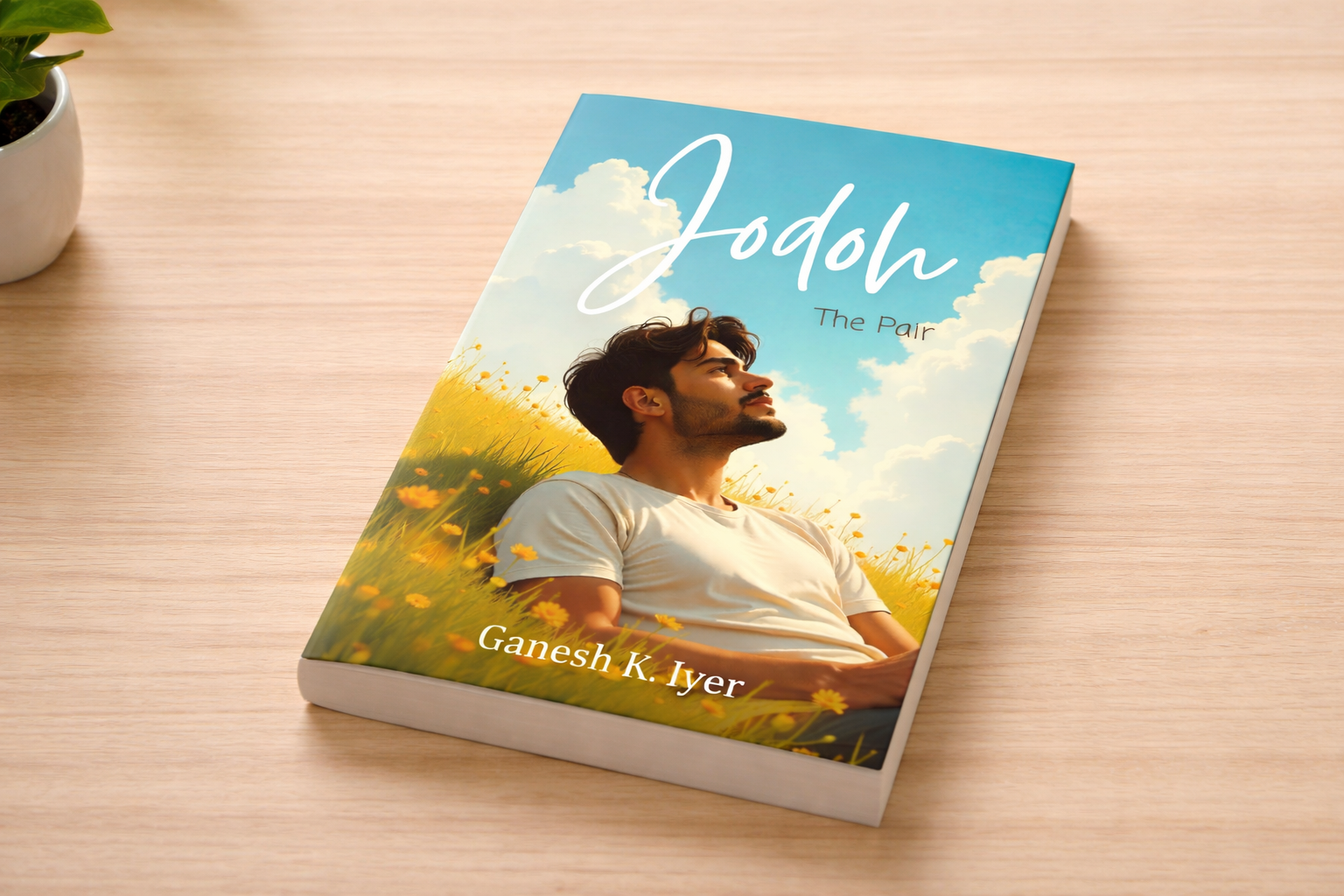
The cover has this soft, sky-filled stillness to it, almost dreamy, almost reflective. A young man sitting in a field looking upward, as if he’s thinking about everything that happened and everything that could have been. Then the back cover shifts the tone entirely and grounds the novel in a sweeping emotional premise: two people from different countries, different religions, and different cultural backgrounds, meeting as colleagues in 1998 and carrying that connection across 55 years.
Honestly, that idea alone pulled me in.
Not because it promises drama, though it clearly does, but because it asks a deeper question I’ve seen in real life too: what happens when the person who begins as your safest friend slowly becomes the emotional axis of your life?
And what makes this especially interesting in 2026 is how relevant cross-cultural relationships still feel. Even now, love is rarely just between two people. It’s between families, faiths, expectations, geography, and timing.
Jodoh Book Review, for me, became less about whether the pair “ends up together” and more about whether the years shape them into who they were always meant to be.
What the Book Is About: Friendship first, then life begins interfering
At the heart of Jodoh: The Pair, we meet Prashant and Gracy, two colleagues whose friendship begins in Jakarta in 1998.
What I loved immediately is that Ganesh K. Iyer doesn’t rush the emotional bond. The early chapters are filled with workplace banter, pranks, nicknames like “Super Boy,” and those small rituals that make affection believable. Pizza jokes, airport pickups, teasing conversations, late-night calls, concern disguised as irritation, all of it builds intimacy in a way that feels lived-in rather than manufactured.
That’s rare.
A lot of relationship novels jump straight to declarations. Here, the connection grows through shared work, emotional rescue, trust, and years of mutual presence.
But the story doesn’t stay simple.
Joseph enters as the polished, seemingly stable alternative, and suddenly the emotional balance shifts. Gracy’s decision to accept his proposal, while hiding it from Prashant, becomes one of the central tensions in the sections I read.
And what makes this work is that it’s not framed as “good vs bad.” It’s about timing, emotional confusion, religion, and the kind of life choices people make when they are trying to be practical while their heart is still figuring itself out.
I think the phrase from the blurb, “the game ended up playing them,” becomes especially meaningful here.
Because every major decision, whether it’s Gracy choosing Joseph, Prashant withdrawing to protect himself, or both of them hiding truths out of care, slowly changes the emotional rules of the relationship.
This isn’t simply a romance.
It’s a story about how friendship becomes destiny before either person is ready to admit it.
What Stood Out to Me: The emotional architecture is built on details
What stood out most to me in Jodoh by Ganesh K. Iyer is the way the emotional progression is built through routine details.
The office dynamics matter.
The Indonesia setting matters.
The years passing matter.
I really appreciated how the story lets us see the relationship in practical spaces: desks side by side, airport drop-offs, project stress, invoice deadlines, calls from hotel rooms, arguments over smoking and drinking, and those almost domestic moments where care slips out naturally.
There’s this lovely realism in how Prashant protects Gracy without turning into an over-written hero. When he insists she fly safely instead of taking a dangerous long bus ride, or when he nearly loses control after someone insults her, the care feels rooted in years of trust rather than dramatic posturing.
I’ve read enough slow-burn emotional fiction to know that this is where such stories either become memorable or collapse.
This one, at least from the major arc available, understands that love often announces itself through habits before words.
Another thing I genuinely liked is the religious and cultural tension.
Prashant’s awareness that his South Indian Brahmin family may never accept Gracy, and Gracy’s own internal conflict around faith, gives the story a believable emotional obstacle.
It reminded me of real relationships I’ve seen around me, where the love itself is never the problem, but the world surrounding the love is.
If I had one mild critique, it would be that the novel leans heavily into long explanatory passages at times, especially around work transitions and internal dilemmas. Some readers may feel the pacing stretches in these sections.
But honestly, for readers who enjoy character-first storytelling, that slower unfolding may actually be the reward.
The Emotional Core: It hurts because both people are trying to be good
This is the part that hit me most.
The sadness in Jodoh: The Pair doesn’t come from villains. It comes from good people making emotionally incomplete decisions.
That always lands harder for me.
Gracy choosing Joseph partly out of practicality, faith, and timing.
Prashant distancing himself because he believes closeness may hurt everyone involved.
Both of them protecting the friendship while also slowly damaging it through silence.
I wasn’t expecting to feel this much tenderness for the spaces between what they say.
Some parts really sat with me, especially how much care is expressed through logistics. A call to check if someone reached safely. A coffee after the airport. The refusal to let someone travel alone. The instinctive desire to protect.
This reminded me of something I’ve seen in real life: sometimes the deepest relationships are the ones that never get named at the right time.
And when life keeps moving, careers shifting, countries changing, families expecting, those unnamed things grow heavier.
The 55-year span mentioned on the cover makes me think this book is ultimately less interested in romantic drama and more interested in the long afterlife of choices.
That’s what gives it emotional weight.
It’s the kind of story where even ordinary scenes, a desk conversation, a hotel phone call, a shared joke, begin to ache later because you know what they meant in hindsight.
Who This Book Is For: Perfect for readers who love long emotional arcs
I think Jodoh will especially work for readers who enjoy:
- slow-burn friendship-to-love stories
- cross-cultural relationship fiction
- workplace relationships built over time
- emotional dilemmas around religion and family
- long-span storytelling across decades
- stories where choices matter more than twists
If you enjoy books where people grow older, wiser, and more emotionally honest over time, this one should resonate.
This might not be for readers who want fast romance beats or highly plot-driven drama.
The strength here lies in the accumulation of emotional history.
And honestly, that’s harder to write well than instant chemistry.
Final Thoughts: A story about timing, tenderness, and the lives we almost choose
I think the best thing I can say in this Jodoh Book Review is that Ganesh K. Iyer understands how affection deepens through consistency.
Not grand speeches.
Not dramatic confessions.
Just presence.
Prashant and Gracy’s connection feels believable because it grows through work, comfort, teasing, worry, and those small acts of care that become impossible to replace.
The cross-country, cross-faith emotional tension gives the story a very human ache.
And the promise of a 55-year span suggests that the novel is interested in what love becomes after youth, after mistakes, after betrayal, after life has done its shaping.
As someone who has spent years reading stories about relationships, I can say this one has the bones of something readers may keep thinking about long after.
Some passages are slower than they need to be, yes.
But the emotional sincerity is real.
FAQ
Is Jodoh: The Pair worth reading?
Yes, especially if you enjoy long-span relationship fiction built on friendship and emotional realism.
Who should read Jodoh?
Readers who enjoy slow-burn love stories, cross-cultural relationships, and character-driven fiction.
What is Jodoh about?
It follows two colleagues from different countries and faiths whose friendship evolves across 55 years through love, heartbreak, betrayal, and redemption.
Is Jodoh a romance novel?
Yes, but it’s also deeply about friendship, timing, and the emotional consequences of life choices.

With over 11 years of experience in the publishing industry, Priya Srivastava has become a trusted guide for hundreds of authors navigating the challenging path from manuscript to marketplace. As Editor-in-Chief of Deified Publications, she combines the precision of a publishing professional with the empathy of a mentor who truly understands the fears, hopes, and dreams of both first-time and seasoned writers.