
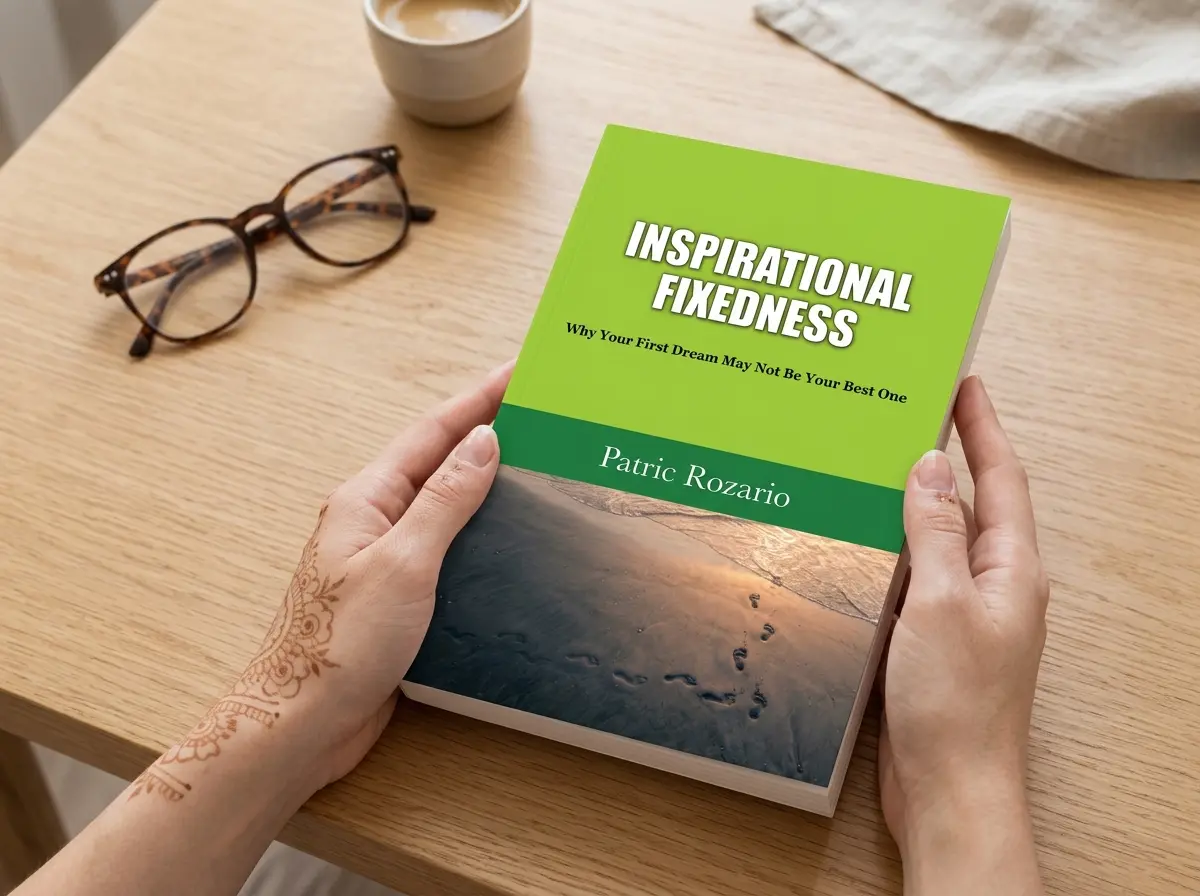
Rating: ⭐⭐⭐⭐ (4.2 out of 5)
I finished Inspirational Fixedness on a Tuesday evening, and I called my sister right after, because there’s a scene in the preface that I could not stop thinking about, and I needed to tell someone about it before I could put the book down properly. That’s not something that happens to me often, not after fifteen years of reading manuscripts for a living. In my years reviewing books at Deified Publication, I’ve read a fair number of self-help titles that promise to change how you think about your career, your ambition, your sense of direction. Most of them don’t. This one did something a little different, and I want to walk you through why.
Patric Rozario’s Inspirational Fixedness, subtitled Why Your First Dream May Not Be Your Best One, opens with his son Kushal sitting down on the wet deck of a cargo ship in Durban, South Africa, soaked through and covered in coal dust, having just realized mid-shift that the maritime career his father had chosen for him was not, in fact, his own. Rozario had spent years as a Maritime Radio Officer with Neptune Orient Lines in Singapore, and when it came time to think about his son’s future, the sea felt like the obvious answer. So he enrolled Kushal as a cadet. Two years in, on that deck, something in the boy simply stopped, and he thought to himself, this is not what I want, not anymore, not moving forward. I wasn’t expecting a business book to open with something that intimate, and it set the tone for everything that follows.
What the book is actually about, once you get past that opening, is a concept Rozario calls Inspirational Rigidity, the trap of carrying a dream that was given to you with love, by a parent or a mentor or a culture that rewards certainty, and mistaking it for a calling you chose yourself. He’s careful, and I mean genuinely careful, to say this isn’t a manifesto against commitment or a permission slip to quit the moment things get hard. He draws a real line between persistence that builds something and stubbornness that keeps you walking in the wrong direction because turning around feels like admitting the last few years were wasted. The book is split into two halves, a diagnosis section that names five different ways this rigidity shows up, and a second half he calls the escape, which is where the practical tools live.
What stood out to me most was how Rozario refuses to let this stay abstract. He tells his son’s story first, in the preface, then again with more detail in chapter one, and by the second telling you notice the small addition, that Kushal didn’t just walk away from the sea, he went back and completed his NEBOSH safety qualification and worked his way toward a role as a Designated Person Ashore, a shore based maritime position that still uses everything the sea taught him. I liked that detail a lot, because it complicates the easy version of this story. He’s not saying walk away from everything familiar. He’s saying find the place inside the same world where you actually fit. There’s a companion story in the same chapter, an old colleague named Mathiew Rajoo, once a Third Officer everyone assumed was headed for command, who now runs a maritime law firm with his wife. Rozario’s line about him, that he was not diminished by the pivot but completed by it, is the kind of sentence I found myself rereading.
The chapter on early success, which he calls the golden cage, is where I think the book earns its keep as more than a personal memoir. He uses Vera Wang’s path from competitive figure skating, missing the 1968 Olympic team, into sixteen years as a Vogue editor before she ever touched wedding dresses, to make a point that I hadn’t heard framed quite this way before, that the skills carry over even when the arena doesn’t. The eye for line and movement she built on the ice became the foundation of an entirely different career. Honestly, I’ve read enough business and self-help writing to recognize when an author is reaching for a famous name just to borrow their shine, and this didn’t feel like that. The story actually does the work the chapter needs it to do.
The emotional core of this book, for me, sits in that Durban scene and in the letter Rozario writes to close it out. The epilogue is addressed directly to the reader, not to an abstract young person or a market segment, and he writes about not knowing if you’re seventeen sitting in a room still full of old trophies, or twenty three and halfway through a career that felt right when you chose it and now feels like someone else’s clothes. I teared up a little reading that part, which is not something I say lightly in a review. It’s the kind of writing that sits with you after you’ve closed the book, mostly because it doesn’t try to resolve anything neatly. He tells you outright, this book will not answer the question of whether your current direction is genuinely yours. Only you can do that. What it offers instead is company while you work it out, and I found that more honest than most of the certainty peddled in this genre.
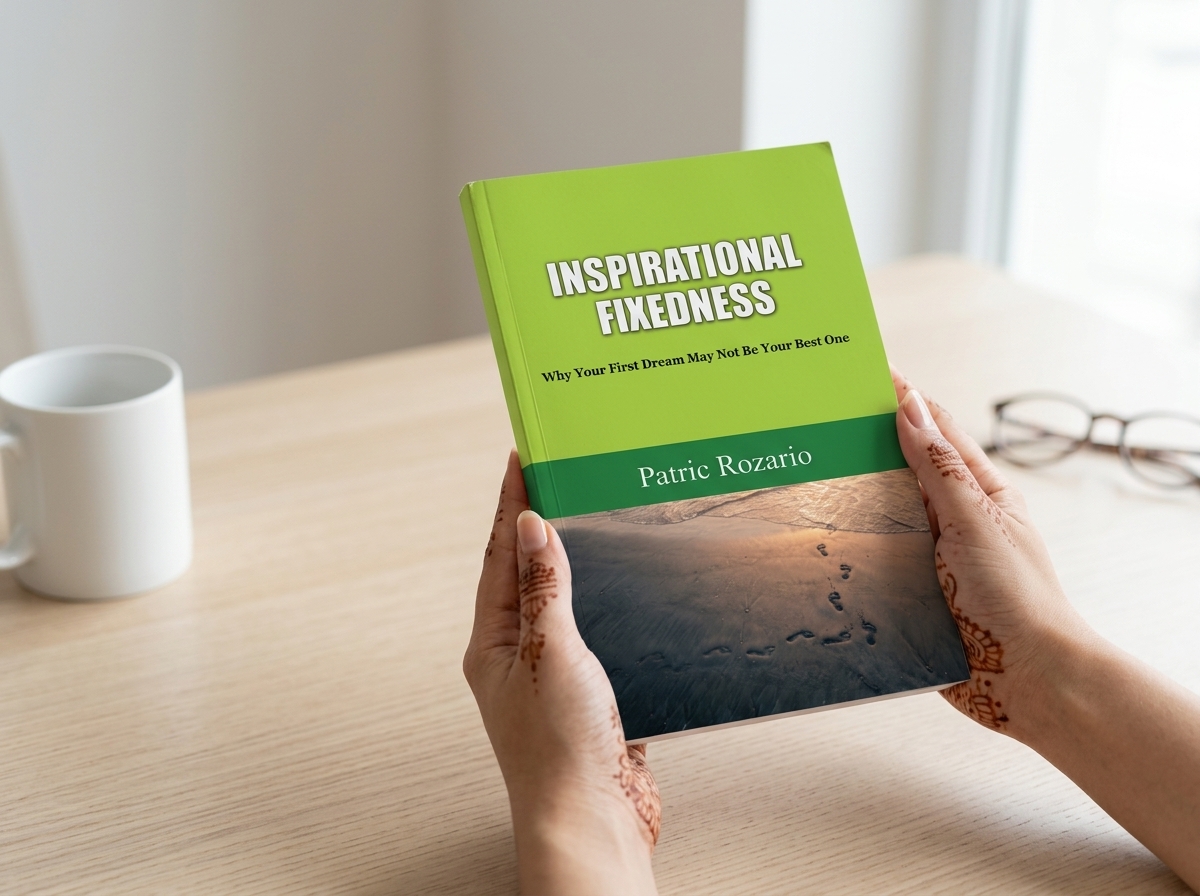
If I’m being balanced here, and I want to be, there’s a small thing worth mentioning. The book’s title is Inspirational Fixedness, but through the preface and most of the chapters, Rozario actually uses the term Inspirational Rigidity to describe the trap he’s writing about, even including a section where he explains why he chose Rigidity over an alternative title he considered. It reads like the concept and the cover title parted ways somewhere in editing, and a reader moving between the two terms might pause to double check they’re still on the same idea. It’s a small inconsistency, not a structural flaw, but it’s the kind of thing an editor’s eye catches. I also think a couple of the later chapters, particularly reading your own signals and the permission conversation, cover ground that overlaps more than it needed to, and could have been tightened without losing anything essential.
Who is this book for. Honestly, it’s for young people standing at the edge of a decision that was mostly made for them, by a parent’s pride or a school’s early streaming or a culture that treats changing direction as failure. It’s just as much for the parents reading over their kids’ shoulders, because Rozario writes directly to them too, and does it without guilt tripping anyone, which is harder to pull off than it sounds. If you’re further along in your career and already feel settled, this might not be for everyone in your circle, but I’d argue the ideas still land for anyone who’s ever wondered if the ladder they’re climbing is even leaning against the right wall.
My final thought, and I say this as someone who reads a lot of books that promise transformation and rarely deliver it, is that Inspirational Fixedness earns its emotional moments because it grounds them in specific, named, real people rather than composite inspiration-speak. Rozario writes as both the father who pointed his son toward the sea and the person who made his own career pivots, and that dual position gives the book a credibility that a purely theoretical self-help title wouldn’t have. It’s not flawless, and the title mismatch bugged me more than it probably should have, but I closed this one feeling like I’d actually been given something to sit with rather than something to forget by next week.

With over 11 years of experience in the publishing industry, Priya Srivastava has become a trusted guide for hundreds of authors navigating the challenging path from manuscript to marketplace. As Editor-in-Chief of Deified Publications, she combines the precision of a publishing professional with the empathy of a mentor who truly understands the fears, hopes, and dreams of both first-time and seasoned writers.