
Rating:
⭐⭐⭐⭐ (4.3 out of 5)
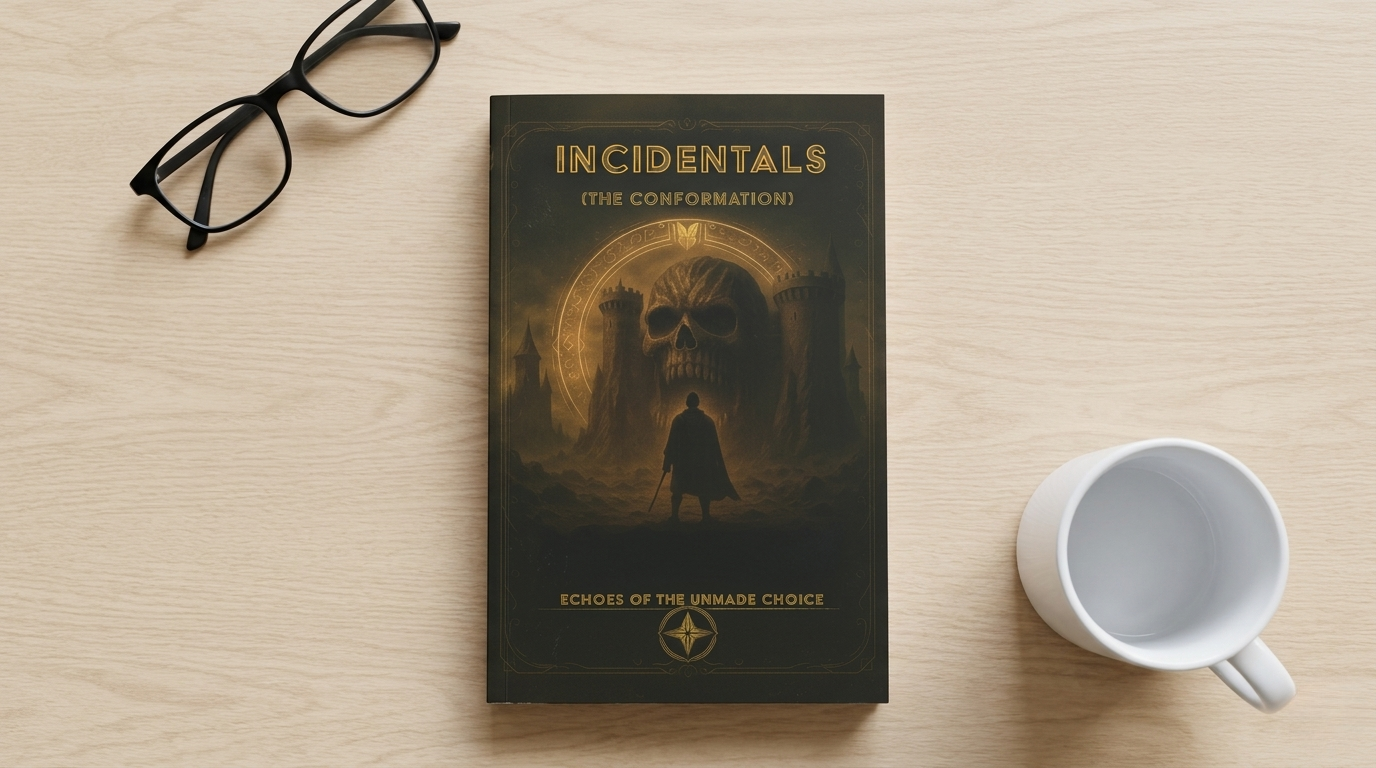
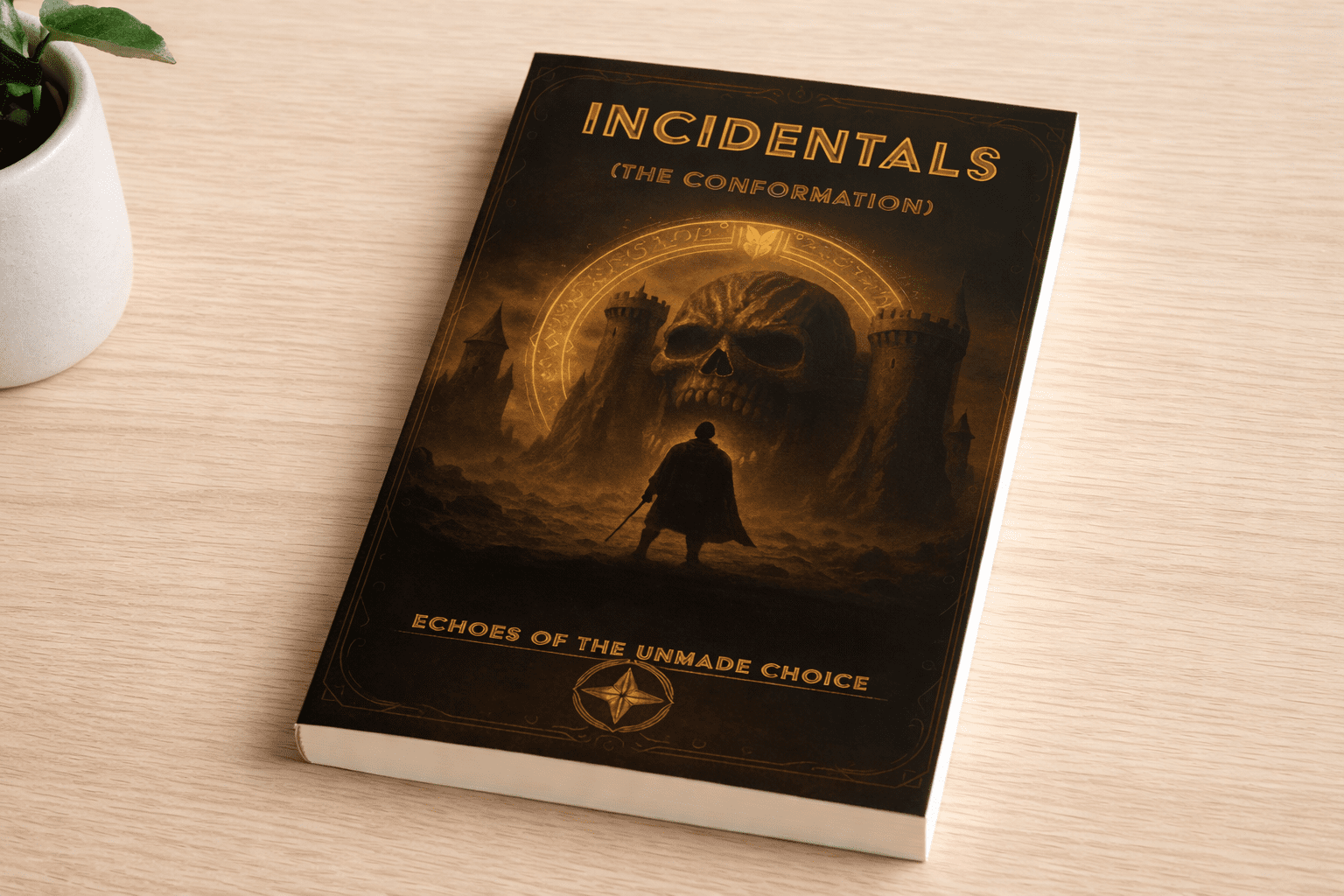
I finished Incidentals (The Conformation): Echoes of the Unmade Choice: Volume 3 a little slowly. Not because it dragged, but because I didn’t want to rush the last few chapters. There’s something about endings, especially when you’ve lived with a story across multiple books, that makes you pause more than usual.
In my years of reading fantasy series, I’ve noticed this pattern. The first book invites you in, the second complicates everything, and the third either breaks your heart or gives you closure. Sometimes both.
This one… it does both.
Before I get into this final volume, I think it’s only fair to step back for a second and talk about the journey leading here. Because honestly, this isn’t a book you read in isolation. It’s something you arrive at.
What the Trilogy Builds Toward
In the first part, what stayed with me was the sense of awakening. Arian stepping into something larger than himself, the quiet unease inside High-Grid, the feeling that knowledge itself was not entirely safe. It had that academic magic vibe, but underneath it, something felt… off. Like the world was holding its breath.
The second part deepened that tension. Relationships became more complicated. Loyalties started to shift. And more than anything, the idea of identity began to blur. Who are you if your past is not entirely yours? That question lingered.
Now coming to this third book, Incidentals (The Conformation), everything that was hinted at earlier starts to take shape. Not neatly, not cleanly, but in a way that feels earned.
What This Book Is About
At its core, this final volume revolves around a terrifying and strangely beautiful idea. Arian is not just a person moving forward in time. He is connected to a choice that was never made. An echo. A possibility that refused to disappear.
And I kept thinking about that. How many versions of ourselves never get to exist? And what if one of them did?
As darkness begins to spread beyond the polished surfaces of High-Grid, the story opens up into something much larger than a school or a single conflict. There are witches, ancient magic resurfacing, alliances forming under pressure, and this constant sense that history is not fixed.
One of the early moments that stayed with me is the stillness before everything begins to unravel. The corridors, the hum in the air, the sense that something is coming. Saptarshi Banerjee writes these pauses really well. They don’t feel empty. They feel loaded.
And then, slowly, everything starts to fracture.
Truths about bloodlines. Betrayals that don’t feel loud but cut deep. And somewhere in all of this, characters trying to hold onto something human while the world around them becomes increasingly unstable.
What Stood Out to Me
I think what impressed me most was how layered the narrative feels at this stage. By the time you reach book three, the author trusts the reader. There’s no over-explaining. You’re expected to remember, to connect, to feel the weight of earlier events.
The writing itself has a kind of rhythm. You see it in lines describing spaces. The way halls breathe, how light behaves, how silence is almost a character. I noticed this especially in scenes inside High-Grid and later in the Palace of Pearls.
There’s a moment where the environment itself seems to respond to emotion. Floors softening, light gathering, reality shifting. And it didn’t feel like spectacle. It felt like the world reacting to what the characters were going through.
Character-wise, I found myself drawn to the quieter interactions. Madhrit’s grief. The way it doesn’t explode immediately but sits there, heavy. The scene on the terrace toward the end… I won’t spoil it, but the way loss is handled there felt very real. Not dramatic in a loud way, but heavy enough that you can almost feel it pressing on your chest.
Excelensia’s arc also stood out. There’s a shift in her. From composed authority to something more raw, more grounded in emotion. And it never feels forced. It feels like someone who has seen too much and still chooses to stand up.
And then there’s the larger theme of choice. Or the absence of it. This idea that one decision, or the lack of it, can echo across realities. I’ve read fantasy that deals with destiny before, but here it feels more personal. Less about fate controlling you and more about the consequences of what you didn’t do.
The Emotional Core
This is where the book really stayed with me.
Under all the magic, the battles, the world-building, this is a story about people carrying things they cannot undo.
There’s grief here. Not just for lost people, but for lost versions of life. There’s anger too. The kind that comes when you realize something was taken from you long before you understood its value.
And then there’s that small, stubborn thread of hope.
I kept thinking about the ending scenes. The gathering. The vow. The way characters who have every reason to walk away instead choose to stay. Not because they are fearless, but because they’ve already lost enough.
It reminded me of something I’ve seen in real life. Sometimes people don’t fight because they’re strong. They fight because they’re tired of losing.
There’s also a tenderness in certain moments that surprised me. Small gestures. A hand on a shoulder. A shared silence. Those things matter in a book like this because they remind you what is at stake.
Who This Book Is For
I’ll be honest. This might not be for everyone.
If you like fast, straightforward fantasy where everything is clearly explained and wrapped up neatly, this might feel a bit dense at times. The world is layered, and it asks for your attention.
But if you enjoy stories where:
- characters carry emotional weight
- the world feels alive and responsive
- themes of identity, memory, and choice are central
then I think this will work for you.
Also, if you’ve read the first two books, you already know. This final part doesn’t suddenly change its tone. It deepens it.
For readers in 2026, I think this idea of alternate choices and fractured realities hits differently. We’re all constantly thinking about “what if.” This book just gives that question a form.
Final Thoughts
As someone who has been reviewing books for years at Deified Publication, I’ve learned to look for sincerity in storytelling. Not perfection, not spectacle, but sincerity.
And I think Incidentals (The Conformation) has that.
It’s not flawless. There are moments where the pacing slows down a bit too much, especially in the middle sections where the narrative leans heavily into atmosphere. Some readers might feel slightly distanced there.
But the payoff… especially in the final stretch, makes it worth it.
The trilogy, when taken as a whole, feels complete. Not in the sense that everything is tied up neatly, but in the sense that the emotional journey reaches a place that feels true.
I closed the last page and just sat there for a minute. Not because I was confused, but because I wasn’t ready to leave that world yet.
And honestly, that’s always a good sign.
FAQ
Is Incidentals (The Conformation) worth reading?
If you’ve followed the first two books, yes. It brings emotional closure while expanding the world in meaningful ways.
Do I need to read the previous books first?
I would strongly recommend it. This final volume builds directly on earlier events and relationships.
What genre is this book?
Fantasy with strong emotional and philosophical elements around identity, memory, and choice.
Who should read this book?
Readers who enjoy layered fantasy and don’t mind sitting with complex emotions and slower, reflective passages.

With over 11 years of experience in the publishing industry, Priya Srivastava has become a trusted guide for hundreds of authors navigating the challenging path from manuscript to marketplace. As Editor-in-Chief of Deified Publications, she combines the precision of a publishing professional with the empathy of a mentor who truly understands the fears, hopes, and dreams of both first-time and seasoned writers.