
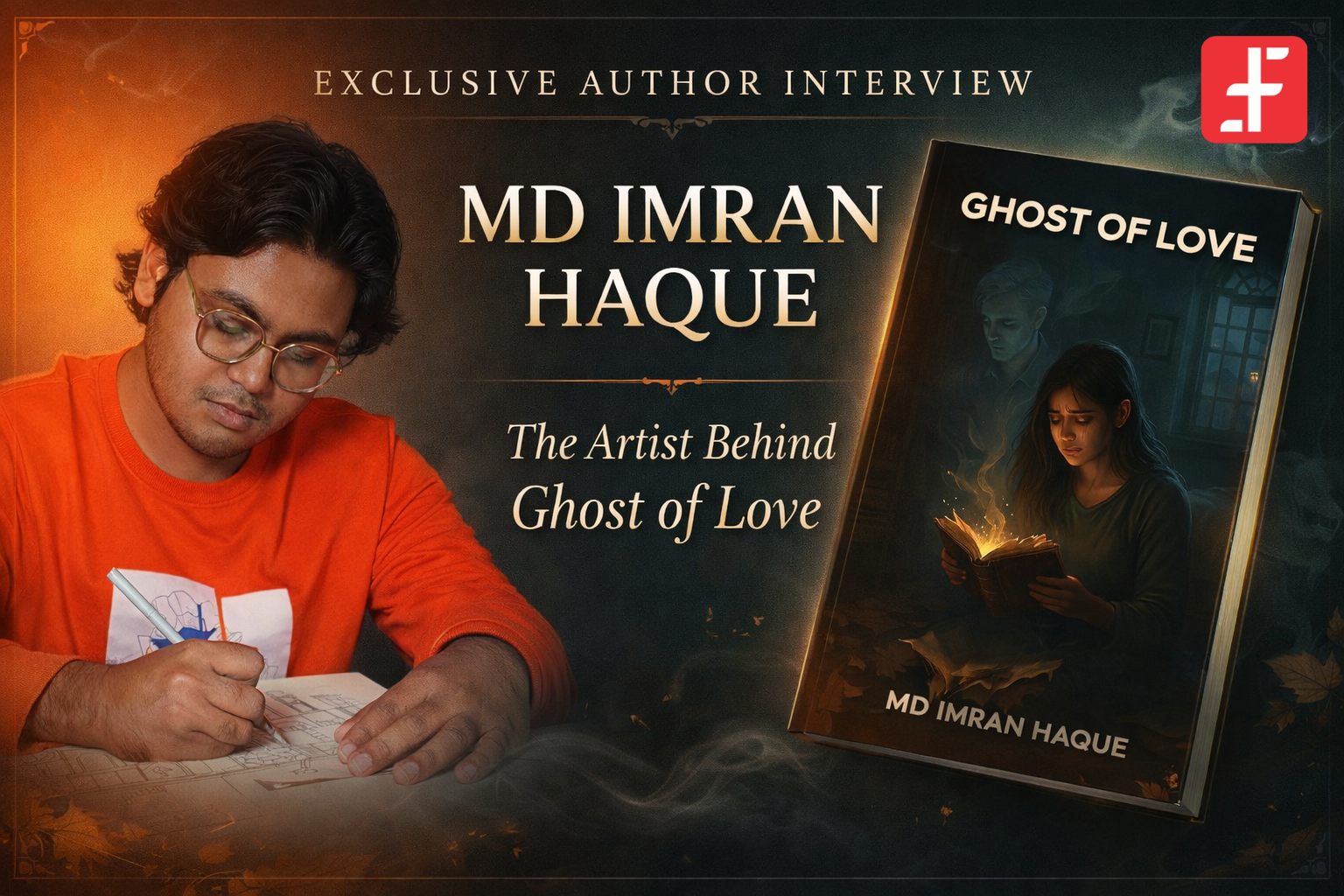
An Exclusive Interview by Priya Srivastava, Editor-in-Chief, Deified Publications
There’s something profoundly magnetic about authors who can navigate between poetry and prose with equal mastery. Md Imran Haque is one such rare literary talent—a civil servant by day, an award-winning author by passion, and a storyteller who understands that the human heart is the most mysterious thriller of all.
On a crisp January afternoon, I had the privilege of sitting down with Imran to discuss his journey from Drafts of Disturbed Mind to Ghost of Love, his evolution as a writer, and what it means to create stories that haunt readers long after the final page.
The Beginning: When Words Became Refuge
Priya Srivastava: Imran, thank you for joining me today. Let’s start at the very beginning. You’re an alumnus of Rabindra Bharati University and currently serve at the Department of Posts, Government of India. When did writing transition from a college passion to a serious literary pursuit?
Md Imran Haque: Thank you, Priya. It’s wonderful to be here. You know, I don’t think there was ever a definitive moment when I decided to “become” a writer. Writing found me during my college days—those tumultuous years when you’re trying to understand yourself and the world around you. I was drawn to romantic and psychological thrillers because they explore the depths of human emotion and the complexities of the mind.
The transition happened gradually. Working in a government department taught me discipline and patience—qualities essential for any writer. My job provides structure to my days, but writing provides meaning. The two coexist in a strange, beautiful balance.
PS: That’s a fascinating perspective. Many authors struggle with balancing a full-time career and their creative pursuits. How do you manage this duality?
IH: It’s not always easy, I’ll admit. But I’ve learned that creativity doesn’t require vast stretches of uninterrupted time—it requires consistency. I write early in the mornings before work, during lunch breaks, sometimes late into the night. The key is to show up for your craft, even if only for thirty minutes. Those fragments add up. Also, my experiences at the Department of Posts expose me to countless human stories—the letters people write, the emotions they trust to paper. It’s a constant reminder that everyone carries their own narrative.
Poetry First: Drafts of Disturbed Mind and the Emily Dickinson Award
PS: Your literary debut was Drafts of Disturbed Mind, a poetry collection that earned you the 21st Century Emily Dickinson Award. That’s extraordinary recognition for a first book. What was it about poetry that called to you initially?
IH: Poetry was my first language of emotion. When you’re young and overwhelmed by feelings you can’t quite articulate, poetry becomes this refuge where fragmented thoughts are not just acceptable—they’re beautiful. Emily Dickinson herself wrote, “Tell all the truth but tell it slant.” That resonated deeply with me.
Drafts of Disturbed Mind was exactly that—unfiltered explorations of love, loss, anxiety, and hope. I wasn’t trying to create polished verses; I was trying to capture the rawness of human experience. The fact that it received the Emily Dickinson Award was humbling beyond words. It validated not just my writing, but the vulnerability I poured into those pages.
PS: The title itself—Drafts of Disturbed Mind—suggests work-in-progress, something incomplete. Was that intentional?
IH: Absolutely. We’re all works in progress, aren’t we? Our minds are constantly drafting and redrafting who we are, what we believe, how we love. I wanted the title to reflect that perpetual state of becoming. Also, there’s honesty in calling something a “draft”—it acknowledges imperfection, and there’s tremendous freedom in that acknowledgment.
The Novelist Emerges: Ghost of Love
PS: Let’s talk about Ghost of Love, your breakthrough novel that’s garnered multiple prestigious awards including the Book Channel Author Pen Award for Best Book in Romantic Mystery and the Stage Fame Literary Honour Award. What inspired you to transition from poetry to novel-writing?
IH: Poetry taught me precision—how to make every word count. But there were stories brewing inside me that needed more space, more breadth. Ghost of Love demanded to be a novel. It’s a story about memories that refuse to die, about love that transcends physical presence, about the ghosts we all carry within us.
The transition was challenging. Poetry is like creating miniature paintings; novels are vast murals. But both require the same fundamental honesty and emotional truth.
PS: The book has been described as a romantic psychological thriller. That’s a compelling combination of genres. How do you balance the romance with the psychological suspense?
IH: I believe they’re intrinsically connected. Love itself is the greatest psychological thriller we experience. It makes us question reality, obsess over details, lose sleep, make irrational decisions. The line between passionate love and psychological obsession is incredibly thin—sometimes terrifyingly so.
In Ghost of Love, I wanted to explore how the end of a relationship doesn’t always mean the end of its presence in our lives. Sometimes people leave but their ghosts remain—in the songs we can’t listen to, the places we avoid, the dreams that wake us at 3 AM. That’s both romantic and haunting, isn’t it?
PS: You’ve mentioned that no book is written in isolation, and that Ghost of Love “carries the fingerprints of many lives and many hearts.” Can you elaborate on that?
IH: Every conversation you’ve had, every heartbreak you’ve witnessed, every stranger’s story you’ve overheard—they all seep into your writing. Writers are emotional archaeologists, excavating layers of human experience and reconstructing them into narratives.
Ghost of Love is dedicated to everyone who’s ever loved someone they couldn’t have, who’s carried memories like precious burdens, who’s found beauty in their own pain. The characters are fictional, but their emotions are borrowed from countless real lives, including my own. That’s what I mean by fingerprints—every reader might recognize a piece of themselves in these pages.
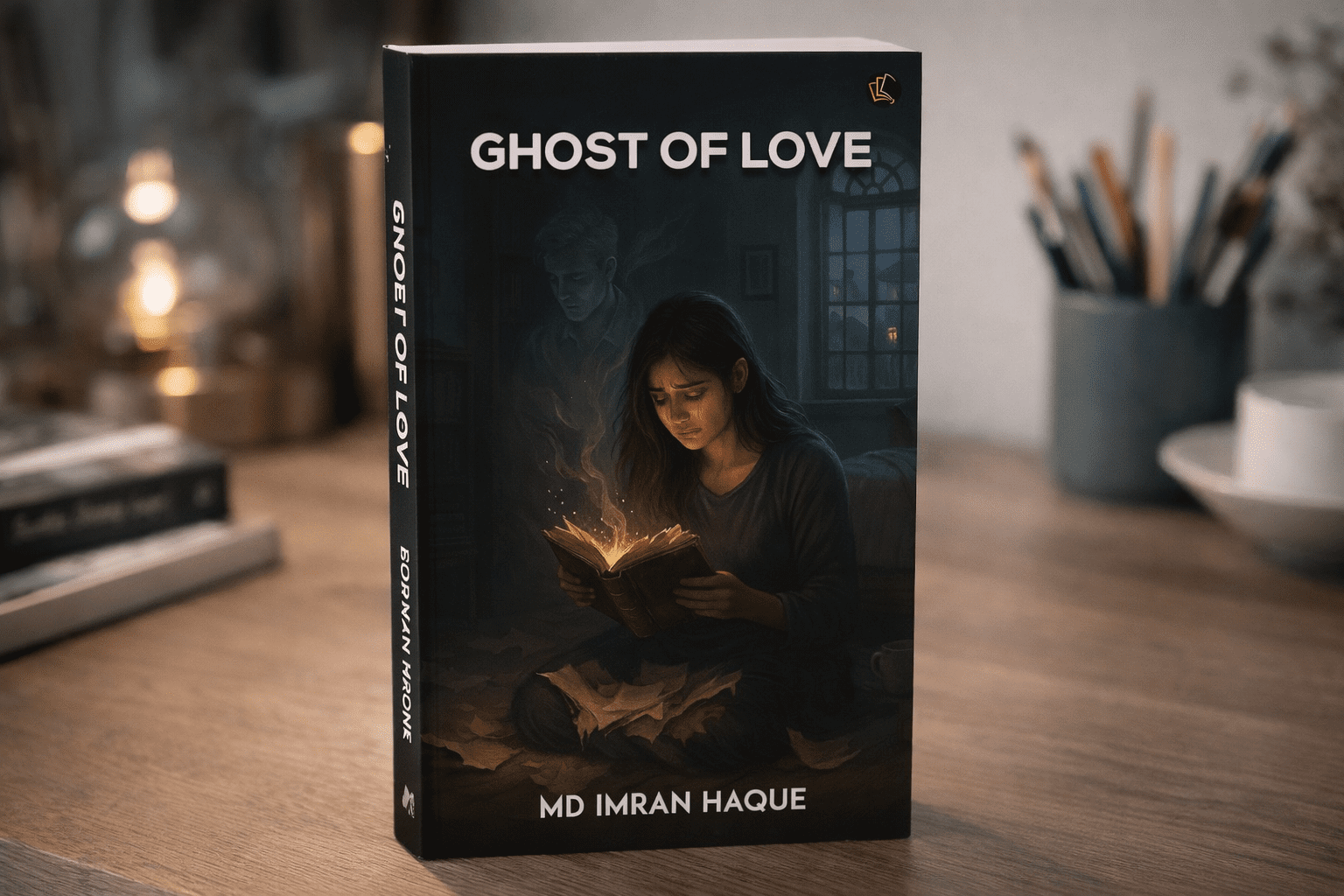
PS: The book cover itself is hauntingly beautiful—a woman reading by the light of a magical book while a ghostly figure looms behind her. How involved were you in the visual conception?
IH: Very involved. The cover needed to capture the essence of the story: the intersection of reality and memory, presence and absence, light and shadow. The woman reading represents our protagonist, searching for answers in the written word, while the ghost symbolizes the past that refuses to stay buried. The ethereal glow from the book suggests that stories themselves can be a kind of séance—they summon what we’ve lost.
I’m incredibly grateful to the design team for bringing this vision to life so perfectly.
Craft and Process: Inside the Writer’s Mind
PS: You’ve won multiple awards and received a nomination for the Ukiyoto Award for Best Emerging Writer in Contemporary Fiction. How has critical recognition impacted your writing process or confidence?
IH: Recognition is validating, but it can also be intimidating. Each award raises expectations—both external and internal. I’ve had to consciously resist the pressure to replicate what worked before. Every book deserves to be written on its own terms, not as a shadow of previous successes.
That said, these honors have given me confidence to take bigger risks, to trust my instincts, and to believe that readers are hungry for emotionally complex, genre-blending narratives.
PS: Speaking of process, can you walk us through your approach to writing a novel? Are you a plotter or a pantser?
IH: I’m somewhere in between—a “plantser,” if you will. I begin with a strong emotional core: a feeling I want the reader to experience. For Ghost of Love, it was that aching mixture of nostalgia and dread you feel when you unexpectedly encounter something that belonged to a lost relationship.
I outline the major emotional beats and character arcs, but I leave room for discovery. My characters often surprise me with what they say or do. Some of the best moments in Ghost of Love weren’t planned—they emerged organically during the writing process.
I also revise extensively. The first draft is about getting the story down; the subsequent drafts are about making it sing.
PS: Your poetry background clearly influences your prose. Can you give an example of how poetic sensibility enhances your novel writing?
IH: Poetry teaches you rhythm, imagery, and the power of subtext. In Ghost of Love, there are passages where I wanted the prose to feel almost lyrical, to mirror the protagonist’s heightened emotional state. For instance, there’s a scene where she encounters her ex-lover’s handwriting, and I needed the language to convey how something as simple as penmanship can unlock floods of memory.
Poetic sensibility also helps with restraint—knowing what to leave unsaid, trusting the reader to fill in emotional gaps. Sometimes the space between words carries more weight than the words themselves.
Psychological Thrillers and the Human Psyche
PS: You mentioned your passion for psychological thrillers began in college. What draws you to exploring the darker corners of the human mind?
IH: Because that’s where truth lives—in the shadows, in the parts of ourselves we’re afraid to examine. Psychological thrillers aren’t really about external villains or plot twists; they’re about internal landscapes. They ask: What happens when memory becomes unreliable? When love turns to obsession? When grief distorts reality?
These questions fascinate me because they’re universal. We all have psychological fault lines—traumas, insecurities, irrational fears. Exploring them through fiction is a way of understanding ourselves and each other more deeply.
PS: Do you think there’s been a shift in how contemporary Indian fiction approaches psychological themes?
IH: Absolutely. Indian readers and writers are increasingly embracing complex psychological narratives. We’re moving beyond stereotypical romance or purely plot-driven thrillers toward stories that examine mental health, toxic relationships, generational trauma, and the psychological cost of social expectations.
There’s growing recognition that psychological depth isn’t a Western monopoly—it’s inherently human. Indian authors are bringing culturally specific perspectives to universal psychological experiences, and that’s incredibly exciting.
Return to Poetry: Epitaph
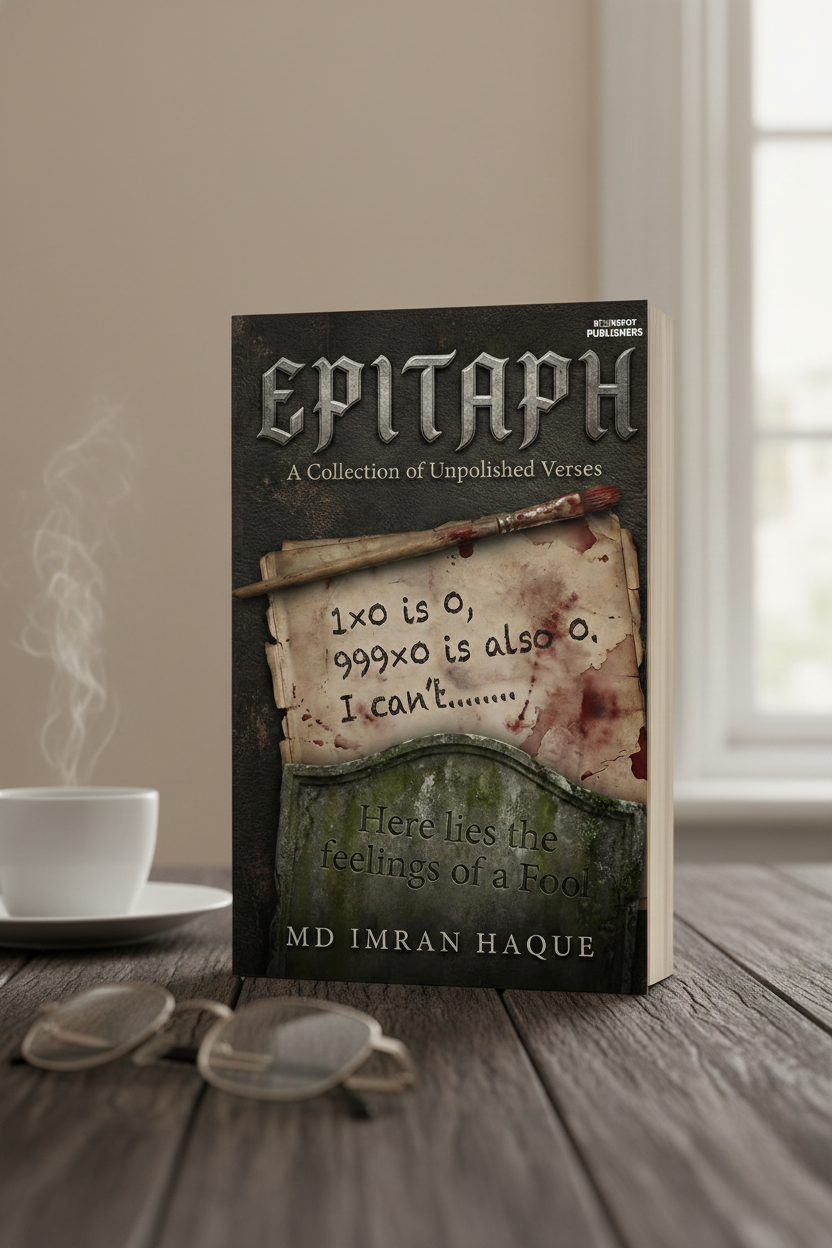
PS: Your most recent publication is Epitaph, a return to poetry. What prompted this homecoming to your first literary form?
IH: Poetry is where I process what prose can’t quite capture. After the intensity of writing Ghost of Love, I felt this need to return to fragmented, distilled emotion. Epitaph is about endings, about what we leave behind when we’re gone—not just in death, but in relationships, in phases of life.
An epitaph is supposed to sum up a life in a few words. These poems explore that impossibility—how do you condense human complexity into brief inscriptions? The collection is my meditation on legacy, memory, and the words we wish we’d said.
PS: So you move fluidly between genres. Do you see yourself continuing to alternate between poetry and prose, or do you have a preference?
IH: I don’t think I could choose one over the other anymore. They serve different creative needs. Novels let me build entire worlds and character arcs; poetry lets me capture lightning in a bottle. I imagine I’ll keep dancing between the two for as long as I’m writing.
I’m also interested in exploring how the two might intersect more explicitly—perhaps a novel told partially in verse, or poetry collections with narrative threads. The boundaries between genres are more permeable than we sometimes acknowledge.
Influences and Inspirations
PS: Every writer stands on the shoulders of those who came before. Who are the authors that shaped your literary sensibility?
IH: That’s a long list! In poetry, Emily Dickinson obviously—her ability to convey vast emotion in compact forms is unmatched. Rabindranath Tagore, for the musicality of his language and his understanding of the human heart. Sylvia Plath, for her unflinching honesty about psychological darkness.
In fiction, I’m deeply influenced by Daphne du Maurier’s gothic psychological suspense, the emotional intensity of Khaled Hosseini, and the psychological complexity of Gillian Flynn. From Indian literature, I admire Ruskin Bond’s simplicity and emotional clarity, and Amitav Ghosh’s ability to weave history with personal narrative.
But honestly, I’m influenced as much by filmmakers, musicians, and visual artists as by writers. Storytelling transcends medium.
PS: Are there specific books that made you think, “I want to write like this”?
IH: Rebecca by Daphne du Maurier was transformative. The way she builds psychological tension through atmosphere and the narrator’s internal monologue is masterful. After reading it, I understood that the most terrifying hauntings happen in the mind.
More recently, The Seven Husbands of Evelyn Hugo by Taylor Jenkins Reid showed me how romance and mystery could interweave with social commentary to create something profound and commercially successful.
Advice for Aspiring Authors
PS: You’ve achieved remarkable success relatively early in your career. What advice would you give to aspiring authors, especially those trying to balance writing with demanding day jobs?
IH: First, abandon the myth that you need perfect conditions to write. You don’t need a cabin in the woods or a trust fund. You need commitment and consistency. Write in the margins of your life until your life rearranges itself around your writing.
Second, read voraciously and eclectically. Read outside your genre, outside your comfort zone. Every book teaches you something—even the badly written ones teach you what to avoid.
Third, embrace vulnerability. The writing that connects most deeply is the writing that costs you something emotionally. If you’re not a little scared to publish something, you might be playing it too safe.
Finally, remember that publishing success is wonderful, but it shouldn’t be the only measure of your worth as a writer. The act of creating, of transforming internal chaos into coherent narrative, is valuable in itself.
PS: What about the practical aspects—finding publishers, navigating the industry, building a platform?
IH: The industry has changed dramatically. Traditional publishing, self-publishing, hybrid models—there are more pathways than ever. Research which route aligns with your goals and resources.
Invest in professional editing. I cannot stress this enough. Your manuscript might be brilliant, but if it’s riddled with structural issues or grammatical errors, it won’t get the readership it deserves.
Build genuine connections, not just a platform. Engage authentically with readers, other writers, book bloggers. The literary community is generally supportive if you approach it with humility and genuine interest rather than transactional networking.
And be patient. Overnight success stories usually have years of invisible groundwork behind them.
The Future: What’s Next for Md Imran Haque
PS: You’ve accomplished so much already. What’s on the horizon? Can you give us any hints about upcoming projects?
IH: I’m working on my second novel, which pushes even deeper into psychological territory. I don’t want to reveal too much, but it explores the concept of inherited trauma—how psychological wounds pass from generation to generation, and whether we can ever truly break those cycles.
I’m also considering a collection of interconnected short stories. The short form offers unique narrative possibilities—you can take greater stylistic risks, experiment with structure in ways that might not sustain a full novel.
And I’m always writing poetry. Epitaph won’t be my last collection.
PS: Will you continue blending romance with psychological elements?
IH: Definitely. To me, they’re inseparable. The psychological thriller genre becomes infinitely richer when you add the unpredictability of human emotion and desire. Romance isn’t just about happy endings—it’s about the transformation that love, or the absence of it, creates in people.
I’m interested in complicated love stories—the kind where there isn’t a clear villain or victim, where both people are flawed and trying their best, where the ending might not be conventionally happy but feels emotionally truthful.
The Philosophy Behind the Stories
PS: Your work seems to grapple with fundamental questions about memory, identity, and loss. What drives this thematic focus?
IH: I think I’m obsessed with the question of what persists. What remains when relationships end? When people die? When our younger selves fade into who we’ve become?
Memory is unreliable, yet it’s all we have. We’re constantly reconstructing our pasts, often unconsciously editing them to serve our present narratives. That’s both beautiful and terrifying—beautiful because it means we have agency in our own stories, terrifying because we can never be certain what actually happened versus what we’ve convinced ourselves happened.
My stories explore these uncertainties. They ask readers to consider: Which version of the past is true? Can we love ghosts? Can we become ghosts to ourselves?
PS: There’s a melancholic undercurrent in your work, even in the romantic elements. Is that reflective of your worldview?
IH: I prefer to think of it as bittersweetness rather than pure melancholy. Life is simultaneously beautiful and heartbreaking—often in the same moment. The most profound joy is tinged with the awareness that it won’t last. The deepest love carries the seed of potential loss.
I’m not interested in writing escapist fantasy. I want to create stories that honor the full spectrum of human experience—the light and the shadow, the hope and the grief. Readers deserve complexity, not just comfort.
On Reader Connection and Legacy
PS: You’ve mentioned that Ghost of Love is dedicated to everyone who’s carried memories like precious burdens. Have readers shared with you how the book has resonated with them?
IH: The reader responses have been overwhelming. People have shared incredibly personal stories about their own “ghosts of love”—relationships that ended but never really left, people they can’t forget even when they want to.
What’s been most meaningful is hearing from readers who felt seen. One reader wrote, “You put words to feelings I didn’t know how to express.” That’s the highest compliment a writer can receive—not just that someone enjoyed your book, but that it helped them understand themselves better.
Several readers have told me they couldn’t read certain passages without crying, but they kept reading because it felt cathartic. That’s the power of fiction—it creates safe spaces to feel dangerous emotions.
PS: What do you hope your literary legacy will be?
IH: That’s a big question! I suppose I hope to be remembered as someone who wrote honestly about the human heart—its capacity for both extraordinary love and self-destruction. I want my books to be companions to people in their loneliest moments, mirrors that help them see their experiences reflected and validated.
I’d like to contribute to expanding the definition of Indian literature—showing that we can write psychological thrillers, gothic romance, genre-blending narratives that are distinctly ours while being universally resonant.
But honestly, if even one reader finishes one of my books and feels less alone in their complicated emotions, I’ll consider my writing life successful.
The Intersection of Service and Storytelling
PS: Before we close, I want to return to your dual identity as a government employee and an author. Do these two aspects of your life ever inform each other in unexpected ways?
IH: Constantly. Working at the Department of Posts keeps me grounded in everyday reality—the bureaucracy, the routine, the ordinary people living extraordinary internal lives. It prevents me from disappearing entirely into the ivory tower of literary introspection.
I’ve also learned patience from government work. Publishing moves slowly; bureaucracy moves slowly. You learn to focus on what you can control—the quality of your work—and let go of what you can’t.
There’s dignity in service, whether it’s postal service or literary service. Both involve facilitating connection—one delivers letters, the other delivers emotional truth. I’m fortunate to do both.
PS: That’s a beautiful way to frame it. What keeps you motivated on difficult writing days?
IH: The belief that stories matter. That they can change minds, heal wounds, build empathy, preserve what might otherwise be forgotten. On days when the words won’t come or self-doubt creeps in, I remember why I started—because I had stories inside me that demanded to be told.
And I think about readers I haven’t met yet who might need the exact story I’m struggling to write. That responsibility—to the story, to potential readers—keeps me showing up to the page.
Final Thoughts
PS: Imran, this has been a truly enriching conversation. Before we part, what message would you like to leave with our readers, both aspiring writers and book lovers?
IH: To the writers: Write the book only you can write. Don’t chase trends or try to replicate what’s already succeeded. Your unique perspective, your specific constellation of experiences and emotions—that’s your greatest asset. Honor it.
To the readers: Thank you. Seriously, thank you. In a world drowning in distractions, choosing to spend hours with a book is an act of faith in the power of narrative. Your reading is what keeps stories alive. Review books you love, recommend them to friends, support authors however you can. You’re not just consumers; you’re collaborators in keeping literature vital.
And to everyone: Pay attention to the ghosts you carry. The memories, the might-have-beens, the people who shaped you and then left. Those ghosts aren’t hauntings to be exorcised—they’re part of your story, threads in the tapestry of who you’ve become.
PS: Thank you, Imran, for your time, your wisdom, and for the beautiful, haunting stories you’ve given us. I can’t wait to see what you write next.
IH: The pleasure was entirely mine, Priya. Thank you for asking such thoughtful questions.
This interview was conducted in January 2026 and has been edited for length and clarity while preserving the author’s voice and intent.
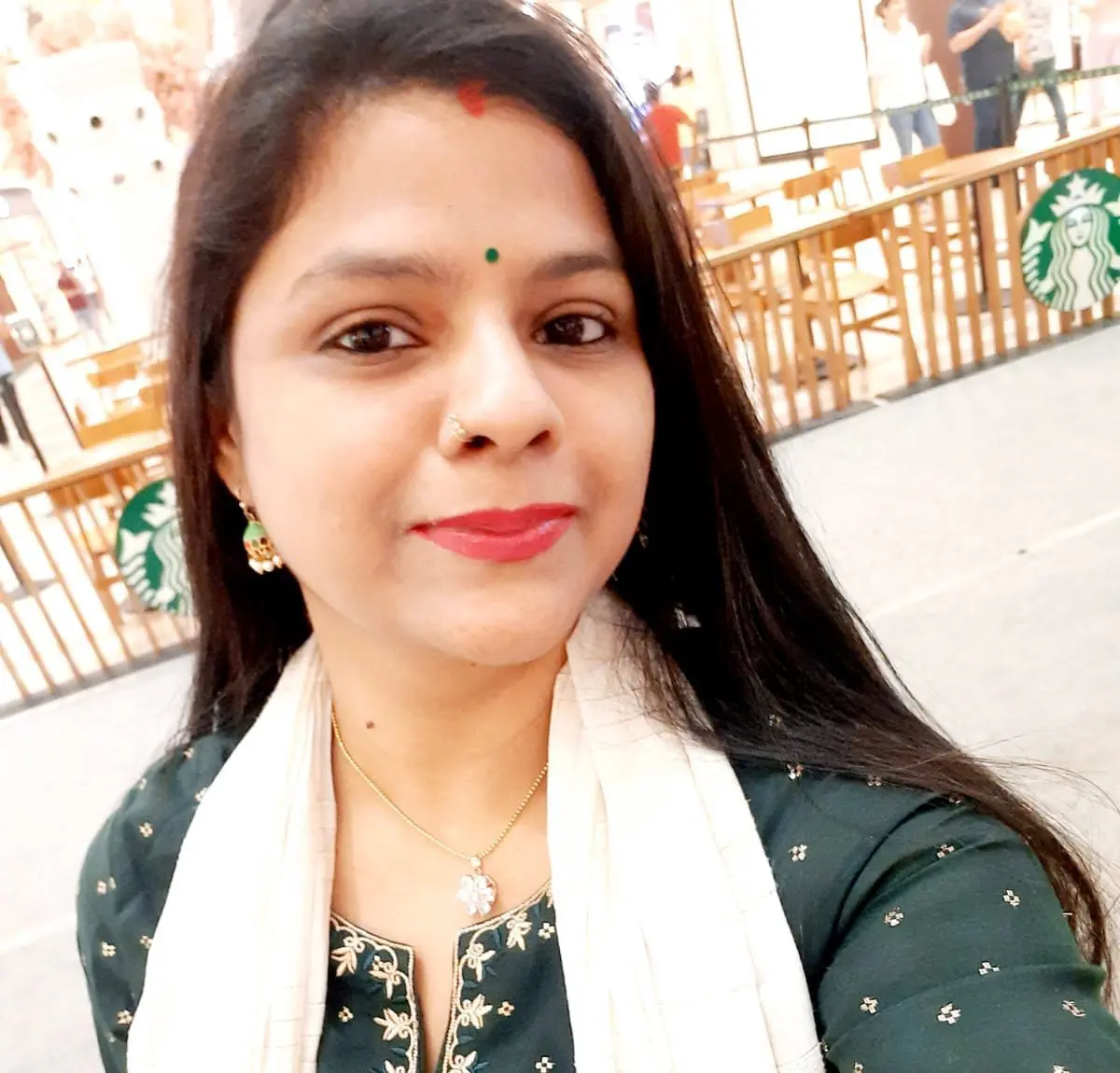
With over 11 years of experience in the publishing industry, Priya Srivastava has become a trusted guide for hundreds of authors navigating the challenging path from manuscript to marketplace. As Editor-in-Chief of Deified Publications, she combines the precision of a publishing professional with the empathy of a mentor who truly understands the fears, hopes, and dreams of both first-time and seasoned writers.